
 English
 русский
 Español


Home / Author / Ayesha Rahman — Product After-Sales Service Manager / Deep-Freeze Labels for Reliable Cold Chain Product Identification
News

Deep-Freeze Labels for Reliable Cold Chain Product Identification
2026-11-04
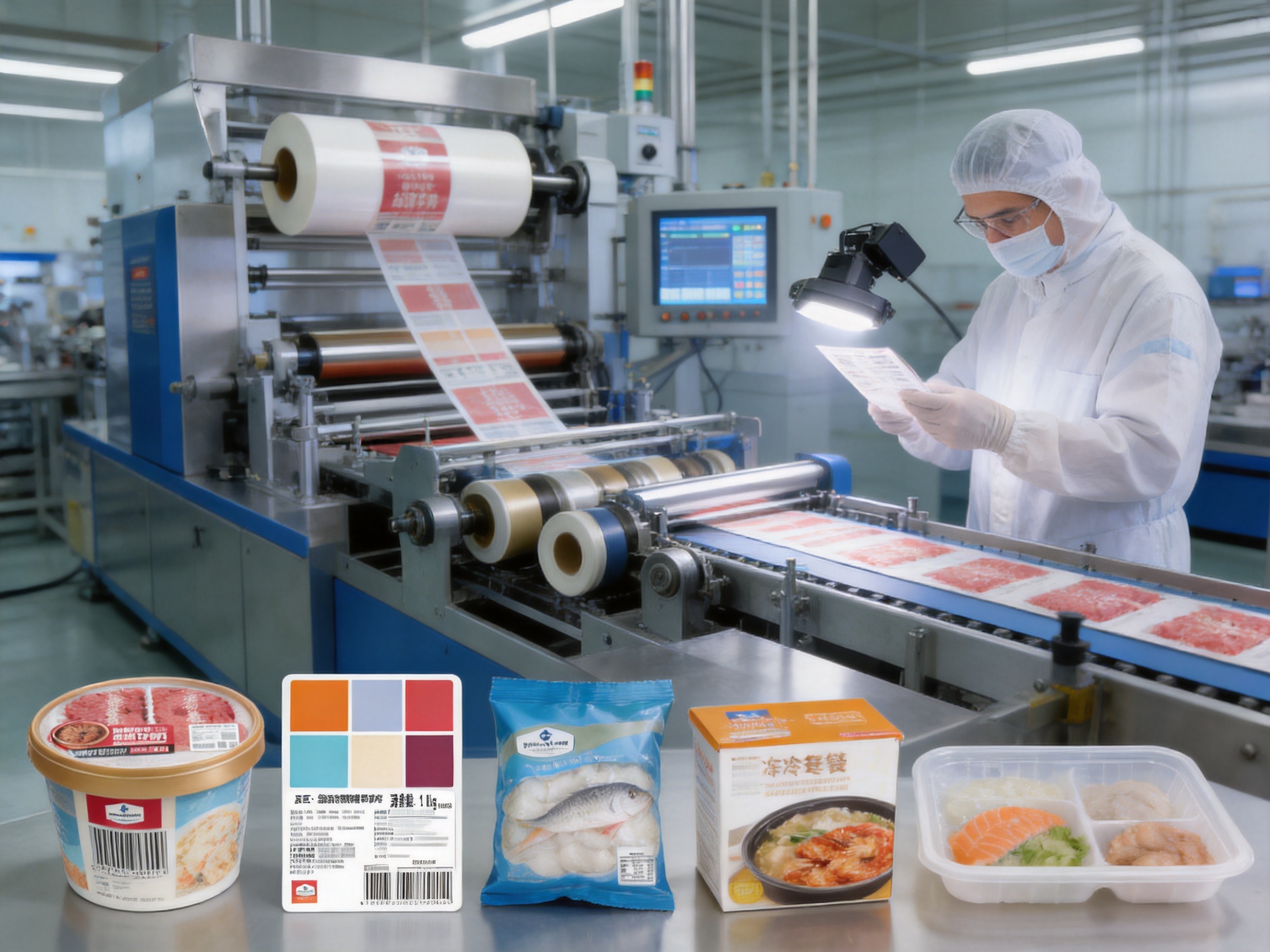
In frozen food production and distribution, a label is not merely a printed decoration or a carrier of basic product information. It is an essential part of packaging performance, regulatory communication, inventory control, brand presentation, and cold chain traceability. When products are stored and transported at temperatures far below freezing, ordinary paper labels and conventional adhesives can lose their flexibility, adhesion, clarity, and print integrity. The result may be edge lifting, label detachment, surface whitening, cracking, unreadable information, or complete loss of identification.
Low-temperature resistant freezing labels are engineered to solve these problems. Designed specifically for deep-freezing environments from -40℃ to -25℃, they combine a specialized low-temperature film, freeze-resistant adhesive, and printing ink formulated to withstand freezing conditions and repeated freeze-thaw cycles. This integrated construction enables the label to remain attached, legible, and visually stable on frozen meat, seafood, ice cream, frozen pasta, pastries, and other temperature-sensitive products.
For food manufacturers, cold storage operators, retailers, logistics providers, and exporters, reliable freezing labels support the uninterrupted flow of product information from production to final sale. They help preserve batch numbers, production dates, expiration dates, barcodes, ingredients, allergen statements, storage instructions, and traceability data throughout the cold chain.
The Role of Labels in Frozen Food Packaging
Frozen products pass through multiple environments during their life cycle. A package may be labeled in a processing plant, moved into a blast freezer, transferred to a cold warehouse, loaded into a refrigerated vehicle, displayed in a supermarket freezer, and eventually handled by consumers in a domestic freezer. Each stage can expose the label to severe temperature changes, condensation, ice crystals, surface frost, mechanical abrasion, and repeated handling.
At normal room temperature, many standard self-adhesive labels perform adequately. However, the same label may become unreliable after entering a deep-freezing environment. Paper facestock can absorb moisture and lose dimensional stability. Adhesives may harden and become less able to wet out against the packaging surface. Plastic films can become brittle if they are not designed for low-temperature service. Printing inks may crack, smear, fade, or lose contrast.
These failures create practical and commercial risks. A detached label can leave a frozen package without vital product information. A damaged barcode may fail during warehouse scanning or checkout. An unclear lot code can complicate recall management. Whitening or wrinkling can make the package appear poorly presented, even when the food inside remains safe and high quality. In high-volume operations, small labeling failures can become costly sources of waste, rework, delays, and customer complaints.
Low-temperature resistant freezing labels address these challenges through coordinated material selection and manufacturing control. Rather than treating the adhesive, film, and print layer as separate components, the product is developed as a complete labeling system for the frozen food application.
Purpose-Built Performance from -40℃ to -25℃
The defining advantage of these labels is their ability to remain functional across a deep-freezing temperature range of approximately -40℃ to -25℃. This range covers many demanding applications, including blast freezing, frozen storage, refrigerated transportation, and long-term freezer display.
At extremely low temperatures, materials tend to lose flexibility. A label that feels soft and conformable in a warm production area may become stiff or brittle after freezing. The specialized low-temperature film used in freezing labels is selected to preserve flexibility and dimensional stability under these conditions. This helps the label follow the contours of the package instead of cracking, shrinking excessively, or separating from the surface.
The film also provides a stable foundation for printing. It supports clear text, graphics, barcodes, and variable data while helping the label retain its appearance after exposure to cold, moisture, and handling. This makes it suitable for both functional information and high-quality product presentation.
The temperature range is especially important for products that experience rapid cooling. Blast-freezing processes can expose packaging to a sudden and severe temperature drop. A label must adapt quickly without losing adhesion or developing visible defects. The low-temperature construction is designed for this transition, helping maintain performance during freezing, storage, transportation, and distribution.
| Performance Requirement | Challenge in Frozen Applications | Low-Temperature Label Response |
|---|---|---|
| Adhesion | Adhesive may harden or lose contact with the package surface | Freeze-resistant adhesive supports reliable attachment in deep-freezing conditions |
| Flexibility | Ordinary films and papers may become brittle or crack | Specialized film maintains flexibility at approximately -40℃ to -25℃ |
| Moisture resistance | Condensation and ice crystals can weaken the label structure | Material construction resists whitening, lifting, and moisture-related damage |
| Print durability | Ink may crack, fade, or become unreadable during freeze-thaw cycles | Freeze-resistant ink helps preserve printed information |
| Barcode readability | Wrinkles, frost, and surface damage can interfere with scanning | Stable label surfaces support clearer, more consistent scanning |
| Appearance | Edge lifting and whitening reduce visual quality | Controlled materials help retain a clean and professional appearance |
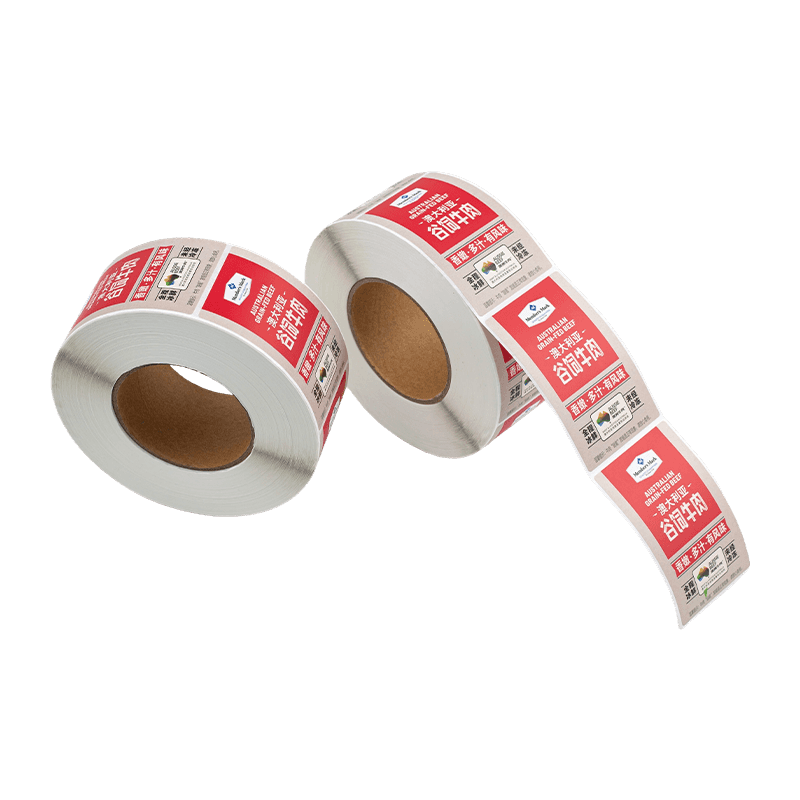
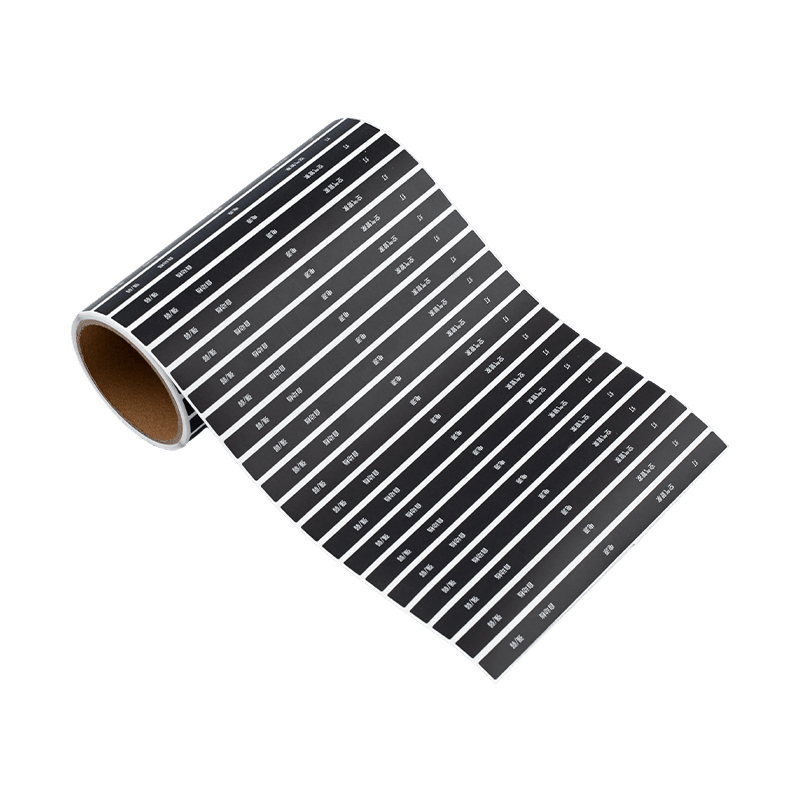
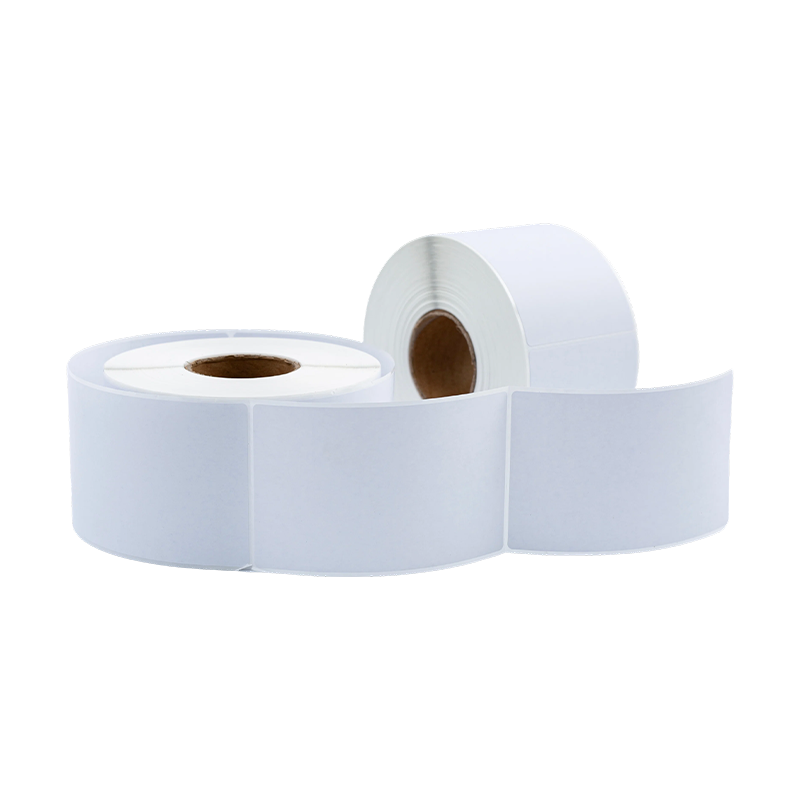
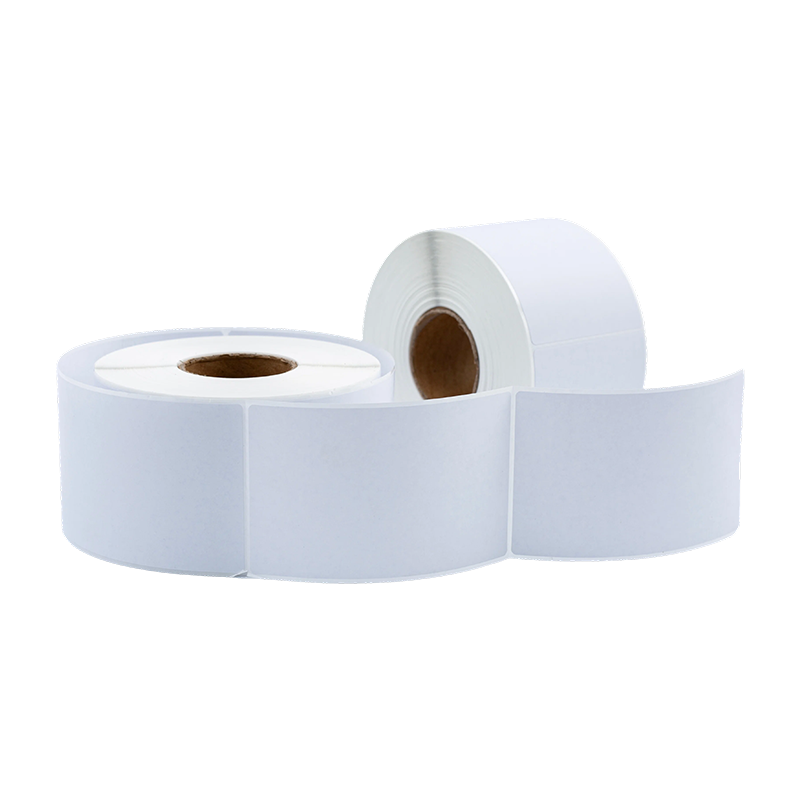
Low-temperature resistant freezing labels
Freeze-Resistant Adhesion for Secure Attachment
Adhesion is one of the most important performance characteristics of a frozen food label. A label must remain attached even when the packaging surface is cold, damp, frosted, curved, textured, or exposed to repeated temperature changes. Standard general-purpose adhesives are not always capable of meeting these requirements.
The freeze-resistant adhesive used in this product is engineered to maintain bonding performance in deep-freezing environments. It is formulated to remain effective after the package is cooled and to resist the loss of tack that can occur when conventional adhesives become rigid. This helps reduce the risk of partial detachment, corner lifting, and complete label separation.
Adhesive performance is also influenced by the packaging substrate. Frozen food packages may use plastic pouches, coated cartons, rigid containers, laminated films, glass, metal, or other surfaces. The adhesive must be capable of making reliable contact with the intended substrate while accommodating differences in surface energy, texture, curvature, and cleanliness.
Application conditions matter as well. In a production environment, labels may be applied before freezing, during chilled processing, or to packaging that has already reached a low temperature. The right adhesive system helps provide dependable attachment across these situations, although application procedures should always be validated for the specific packaging material, temperature, and line speed.
Unlike a label designed only for short-term indoor use, a low-temperature freezing label is developed around the complete service life of the package. Its purpose is not simply to stick initially, but to remain bonded through cold storage, transportation vibration, freezer handling, condensation, and consumer use.
Resistance to Condensation and Ice Crystal Formation
Freezing environments are rarely dry and static. Products may move from a humid processing area into a freezer, from a cold warehouse into a warmer loading area, or from a refrigerated vehicle into a retail environment. These temperature changes can produce condensation on the package surface. If the package returns to a colder environment, moisture may freeze into a layer of frost or ice crystals.
Condensation can affect both the label surface and the adhesive interface. Water may enter at the label edge, weaken the bond, create a cloudy appearance, or encourage lifting. Ice crystals can exert additional mechanical stress as they form and expand. If the facestock absorbs moisture, it may swell or become distorted. These effects are common causes of whitening, wrinkling, bubbling, and edge failure.
The freezing label is designed to resist these conditions. Its film-based construction helps limit the moisture-related dimensional changes associated with conventional paper materials. The adhesive is selected to maintain attachment despite cold moisture and freeze-thaw exposure. As a result, the label can retain a cleaner appearance and reduce the likelihood of visible degradation.
Resistance to condensation is valuable not only for aesthetics but also for information security. A label that remains smooth and transparent supports clearer reading of small text, product graphics, regulatory details, and machine-readable codes. In busy warehouses and retail operations, preserving legibility reduces the need for manual verification.
Reliable Printing Through Freeze-Thaw Cycles
Printed information must remain intact for the entire distribution period. Frozen products may be stored for weeks or months, and they can experience repeated temperature fluctuations during loading, transportation, inspection, display, and customer handling. If ink is not suitable for this environment, printed lines may crack, fade, smear, or lose contrast.
These labels use freeze-resistant printing ink to help protect the integrity of printed content. The ink system is selected for compatibility with the label surface and for improved resistance to the stresses associated with low temperatures and moisture. This supports the retention of key information such as product names, ingredient lists, net weight, country of origin, production dates, expiration dates, storage instructions, and lot codes.
Printing performance is particularly important for variable information. Production lines often print changing batch numbers, barcodes, QR codes, pricing details, and traceability data. These elements must remain sharply defined and scannable after freezing. A label may have excellent adhesive performance, but if the variable data becomes unreadable, the package can still create operational problems.
High-quality print also contributes to brand consistency. Frozen products compete for attention in crowded freezer displays, where packaging is viewed through glass, frost, lighting, and visual clutter. Strong color reproduction, sharp text, and clean graphics help products maintain a professional appearance while communicating essential information.
Applications Across Frozen Food Categories
Frozen Meat
Frozen meat packaging requires dependable labeling because products often carry extensive information. Labels may include cut descriptions, weight, preparation instructions, production and expiration dates, batch identification, origin information, certification marks, and handling requirements.
Packaging may be exposed to blood residue, surface moisture, condensation, cold storage, and rough handling. A freezing label helps keep identification information attached and readable during the full distribution process. It can be applied to vacuum packs, plastic trays, cartons, shrink-wrapped products, and other common meat packaging formats.
Frozen Seafood
Seafood products often travel through long and complex cold chains. Fish, shellfish, and prepared seafood may be processed near the point of harvest, transported internationally, stored in distribution centers, and sold through retail or foodservice channels. Packaging can encounter salt residue, moisture, ice, and significant temperature variation.
A low-temperature label provides a stable surface for species information, catch or processing details, weight, origin, lot codes, and storage instructions. Its resistance to edge lifting and whitening helps preserve a clear presentation even when the package is surrounded by frost or handled in wet environments.
Ice Cream and Frozen Desserts
Ice cream and frozen desserts rely heavily on visual presentation. Consumers expect clean, attractive packaging that communicates flavor, ingredients, nutrition, and brand identity. Labels must remain smooth and visually appealing despite storage at low temperatures and frequent movement through freezer cabinets.
The flexible film and moisture-resistant construction help reduce cracking, wrinkling, and whitening. The product can therefore support both decorative branding and functional information. It is suitable for cups, tubs, cartons, wrapped bars, multipacks, and other frozen dessert packaging formats, subject to substrate and application validation.
Frozen Pasta and Prepared Foods
Frozen pasta, dumplings, pastries, vegetables, ready meals, and other prepared foods require labels that combine product information with dependable logistics performance. These products may be packed in pouches, cartons, trays, or multi-layer flexible films.
Labels can carry cooking instructions, allergen information, nutritional data, barcodes, promotional messages, and traceability details. Their ability to resist freeze-thaw damage supports clear communication from the processing plant to the consumer’s freezer.
Advantages Over Conventional Labels
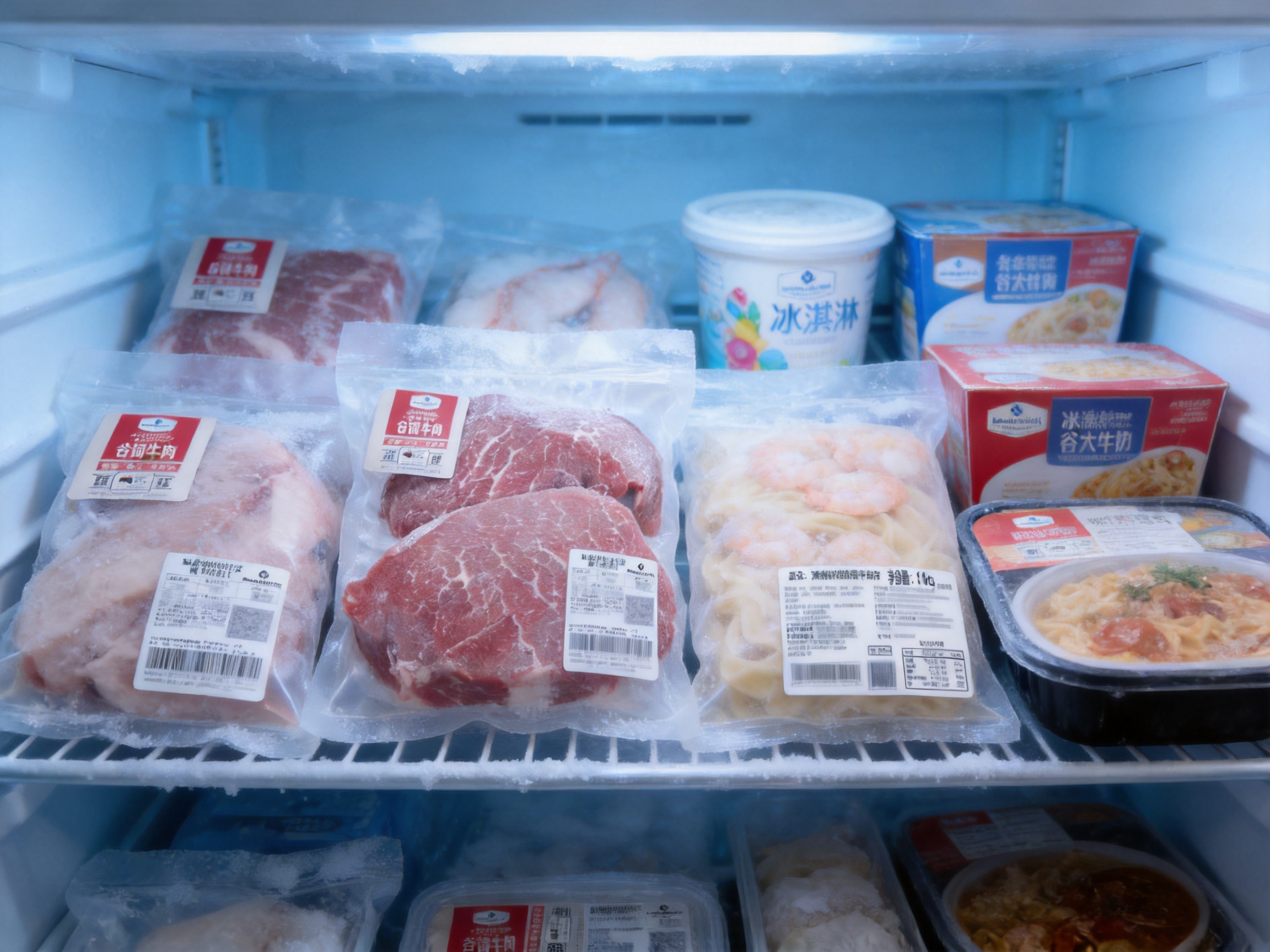
The principal difference between a deep-freeze label and an ordinary adhesive label lies in application-specific engineering. General-purpose labels may be designed for ambient storage, short-term use, or dry indoor environments. They may not provide the necessary balance of flexibility, adhesive strength, moisture resistance, and print durability in a freezer.
Paper labels can offer cost advantages in suitable applications, but they may absorb moisture and lose their original appearance when subjected to condensation or frost. Standard films may resist moisture but can become stiff or brittle if their low-temperature properties are inadequate. General adhesives may initially bond well yet lose performance after prolonged exposure to subzero temperatures.
The specialized freezing label addresses these weaknesses with a coordinated material system. Its low-temperature film helps preserve flexibility. Its freeze-resistant adhesive supports lasting contact. Its moisture-resistant construction helps prevent whitening and edge lifting. Its freeze-resistant ink protects the clarity of printed information.
Compared with labels designed only for chilled storage, the product is intended for more demanding deep-freezing environments. Chilled applications may operate near 0℃ to 5℃, while frozen products can remain at -18℃ or below. The difference is substantial because adhesive behavior, film flexibility, moisture formation, and handling conditions all change as temperatures fall.
Compared with temporary freezer markings, these labels are designed to provide durable product identification across a longer and more complex logistics cycle. They are therefore suitable for commercial packaging where information must remain available through production, warehousing, transportation, retail, and consumer use.
| Label Type | Typical Strength | Potential Limitation in Deep Freezing | Benefit of the Specialized Freezing Label |
|---|---|---|---|
| Standard paper label | Economical and printable | May absorb moisture, whiten, wrinkle, or lose strength | Film construction offers improved resistance to cold moisture |
| General-purpose film label | Good surface appearance and moisture resistance | May become brittle or lose adhesion below its intended temperature range | Low-temperature film is selected for deep-freezing flexibility |
| Chilled-food label | Suitable for refrigerated products | May not withstand extended exposure below freezing | Designed for approximately -40℃ to -25℃ environments |
| Temporary freezer marking | Useful for short-term identification | May not offer long-term print and adhesion stability | Supports extended cold chain identification and presentation |
| Deep-freeze label | Purpose-built for frozen applications | Requires correct material selection and application control | Combines film, adhesive, ink, and converting expertise in one solution |
Manufacturing Process and Quality Control
Reliable performance begins with controlled manufacturing. A label intended for food and cold chain use must be produced with consistent materials, accurate coating, precise printing, controlled die-cutting, and systematic inspection. Even a technically advanced material can fail if production tolerances are not maintained.
Material Selection and Incoming Inspection
The manufacturing process begins with the selection of suitable films, adhesive components, liners, inks, and other raw materials. Materials are evaluated according to their intended application, temperature performance, surface compatibility, appearance, thickness, and processing behavior.
Incoming inspection helps verify that materials meet defined specifications before they enter production. Important checks may include film thickness, surface uniformity, adhesive coating condition, liner release behavior, color consistency, and physical defects. Controlling raw materials at this stage supports stable performance throughout the finished label.
Precision Adhesive Coating
Adhesive coating must be applied evenly across the web. Variations in coating weight can affect adhesion, die-cutting, dispensing, and final appearance. Too little adhesive may reduce bonding strength, while excessive or uneven coating can create ooze, contamination, liner problems, or application defects.
Advanced automated production lines support more consistent coating control than manual or loosely controlled processes. Process parameters can be monitored and adjusted to maintain a stable adhesive layer. This is especially important for freeze-resistant adhesives, whose performance depends on the correct formulation and coating structure.
Printing and Color Management
Printing is controlled to ensure that text, graphics, barcodes, and variable data meet the customer’s requirements. Accurate registration is essential for multilayer designs, fine text, complex graphics, and die-cut formats. Color management helps maintain consistency between production batches and across different product sizes.
Freeze-resistant ink is selected and processed in a way that supports adhesion to the label surface and durability in the intended environment. Drying or curing conditions are controlled to reduce the risk of smearing, incomplete bonding, or print defects. Inspection systems can identify missing text, contamination, poor registration, and other issues before finished rolls or sheets are released.
Die-Cutting and Converting
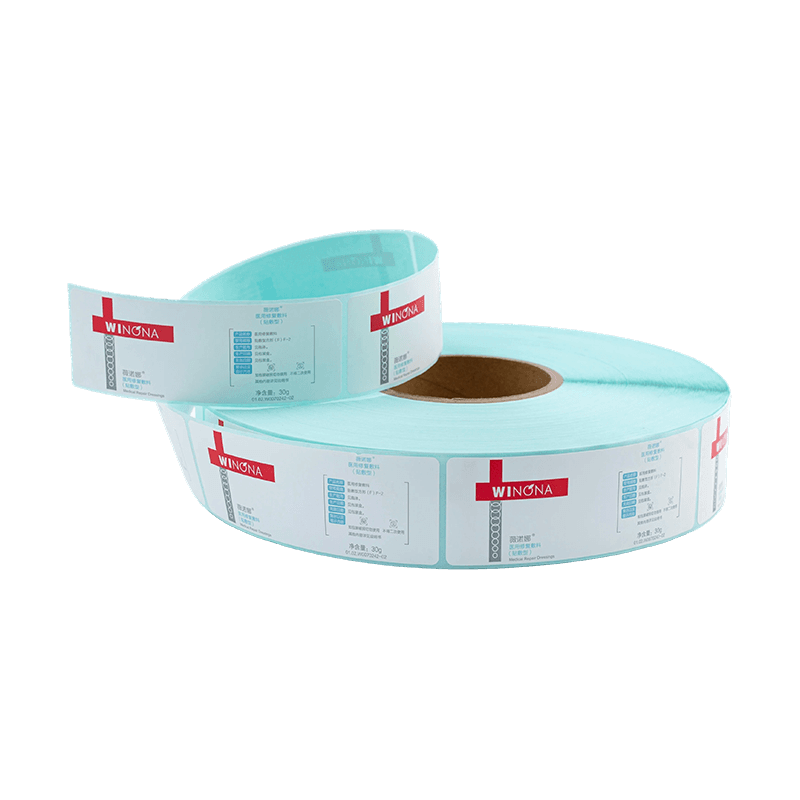
Labels may be supplied in rolls, sheets, fan-fold formats, or custom shapes depending on the customer’s application equipment. Precision die-cutting creates the required label geometry while preserving liner integrity. Clean edges help reduce lifting and support smooth dispensing on automated packaging lines.
Converting also includes slitting, rewinding, sheeting, inspection, and packaging. Roll tension must be controlled carefully. Excessive tension can deform the label web or complicate dispensing, while insufficient tension can create telescoping or loose winding. Consistent roll quality is particularly important for high-speed food packaging operations.
Inspection and Release Control
Quality control continues throughout the production cycle. Automated inspection equipment and precision measurement systems help verify appearance, print accuracy, registration, dimensions, and material uniformity. Finished products are checked against customer specifications before shipment.
Depending on the project, quality verification may include low-temperature adhesion testing, temperature cycling, condensation exposure, rub resistance, barcode verification, and visual inspection after freezing. These tests help confirm that the finished label is suitable for the intended substrate, temperature range, and service duration.
Advanced Production Capabilities
The manufacturer operates advanced automated production lines, precision inspection equipment, and a structured quality management system. This combination supports repeatable output for both standard and customized label programs. Automation helps reduce variation and improve production efficiency, while inspection systems provide measurable control over critical characteristics.
Integrated research and development capabilities allow the company to develop solutions for demanding applications rather than relying solely on standard catalog materials. This is important because frozen food packaging varies widely in substrate, shape, surface treatment, storage duration, and application temperature.
The company’s experience covers pressure-sensitive labels for food and beverage, fast-moving consumer goods, pharmaceuticals, logistics, retail, and other sectors. This broad application background provides useful knowledge when adapting label construction to specific customer requirements.
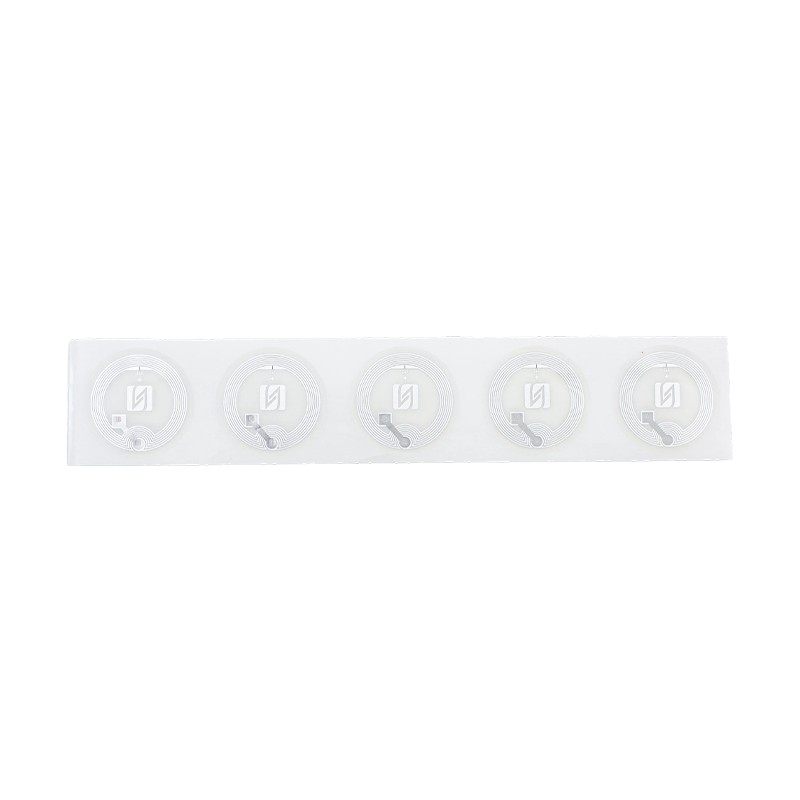
In addition to conventional pressure-sensitive labels, the company supplies RFID inlays, tags, and finished products in HF and UHF frequencies. This capability is relevant to customers seeking to combine visible product labeling with digital identification, warehouse automation, asset tracking, or supply chain visibility.
Special-function solutions include anti-counterfeiting labels, high-temperature labels, removable adhesive products, specialized die-cut labels, promotional labels, and other customized formats. The ability to work across multiple label technologies supports more integrated packaging and logistics projects.
Customization for Different Packaging Requirements
Frozen food producers do not all use the same packaging materials or production systems. A small ice cream tub, a vacuum-packed seafood pouch, and a frozen meal carton may require different label sizes, adhesive properties, face materials, roll formats, and print specifications.
Customization can include label dimensions, shape, corner radius, film appearance, adhesive strength, print colors, surface finish, variable data areas, barcode placement, and delivery format. The label can also be designed to work with automatic application equipment, hand application, or a customer’s existing packaging line.
For curved containers, the label must be flexible enough to conform without excessive stress at the edges. For flexible pouches, it must accommodate package movement and handling. For cartons, it must bond reliably to the board coating while maintaining a clean visual appearance. For products exposed to frost or moisture, the facestock and adhesive combination must be selected accordingly.
Artwork and prepress support are also important. Accurate templates help prevent text from entering the die-cut safety zone, ensure barcode quiet zones are preserved, and maintain consistent positioning of regulatory information. A well-controlled prepress process reduces costly corrections during production.
Food Packaging, Compliance, and Traceability
Labels for food and dairy products must support the communication of legally and commercially important information. Requirements vary by market, product category, and distribution channel, but commonly include product identity, ingredients, allergen declarations, nutritional information, net quantity, dates, storage instructions, manufacturer details, and traceability codes.
In frozen food logistics, traceability is particularly important because products may travel long distances and pass through multiple storage locations. A stable label helps preserve lot and batch information that can be used for stock rotation, quality investigations, targeted recalls, and inventory reconciliation.
Machine-readable data can further improve efficiency. Barcodes and two-dimensional codes may be used for receiving, warehouse movement, order fulfillment, retail checkout, or consumer engagement. A label that remains flat, clean, and legible after freezing supports more reliable scanning and reduces manual data entry.
Customers should determine the specific regulatory and food-contact requirements applicable to their products and markets. The label construction, ink system, adhesive, and packaging combination should be reviewed for the intended use. Technical documentation and application testing are recommended before full-scale deployment.
Benefits for Cold Chain Logistics
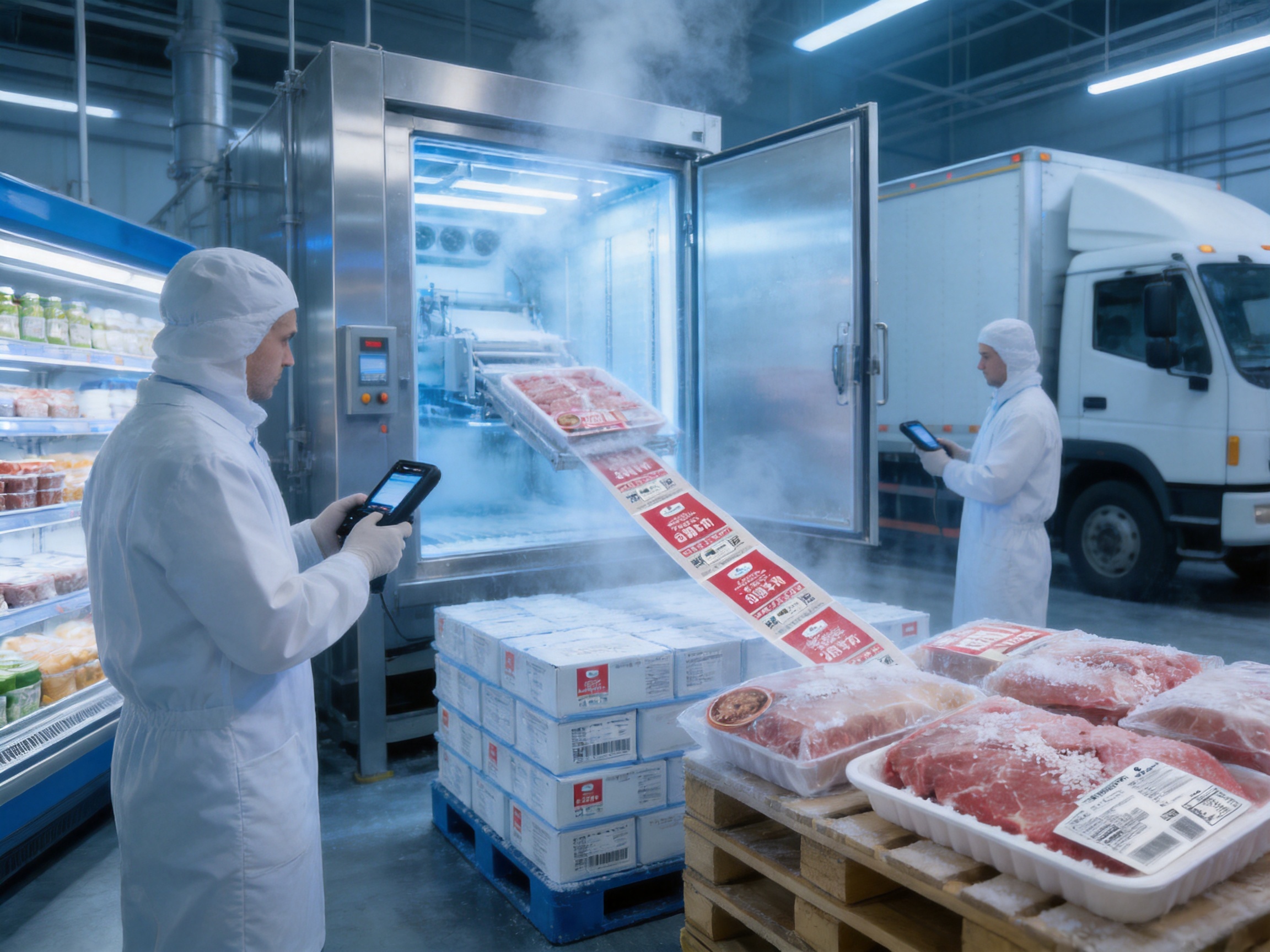
Cold chain logistics depends on accurate information at every handoff. Products may be received by a processing plant, transferred to a freezer warehouse, loaded onto a refrigerated truck, delivered to a distribution center, and stocked in retail freezers. At each point, personnel and systems need to identify the package quickly and accurately.
Labels that remain attached and readable help reduce receiving errors and improve stock control. Clear lot numbers support first-expired, first-out inventory practices. Strong barcodes improve scanning speed. Consistent package identification helps prevent product mixing, especially when similar frozen products are stored together.
Reliable labeling also contributes to operational continuity. When labels detach or become unreadable, staff may need to re-label products manually, inspect individual packages, or hold shipments for verification. These interventions consume time and may interrupt production or distribution schedules. A purpose-built freezing label helps reduce such risks.
For exporters, cold chain reliability is even more important. Products may remain in frozen storage during customs inspection, port handling, intermodal transportation, and overseas distribution. A label must withstand long periods of low temperature and multiple handling stages without losing essential information.
Sustainability and Operational Efficiency
Label sustainability involves more than selecting a thinner material. It also includes reducing production waste, minimizing rejected labels, improving application efficiency, and extending the useful life of packaging information. A label that remains attached and readable can reduce rework and prevent unnecessary disposal of otherwise acceptable products.
Automated production and precision inspection help control material usage and reduce defects. Accurate die-cutting and slitting can improve yield from each raw material roll. Consistent roll winding can reduce application stoppages and waste on high-speed packaging lines.
Customers may also consider the relationship between label construction and the overall package recycling system. The suitability of a particular facestock, adhesive, liner, or ink depends on the package substrate and the recycling infrastructure in the target market. Sustainability decisions should therefore be evaluated as part of the complete packaging system rather than in isolation.
The company’s ISO 14001 certification reflects a structured approach to environmental management. Its ISO 9001 certification supports quality management and continual improvement. Together, these systems provide a framework for managing quality, environmental responsibilities, process consistency, and customer requirements.
Company Strengths and Global Supply Capability
Shanghai Rongyang Industrial Development Co., Ltd. is an integrated provider of pressure-sensitive labels and RFID smart label solutions. Its activities include research and development, manufacturing, sales, and service, enabling customers to work with one supplier across multiple stages of a labeling project.
Founded in 2008, the company has developed experience serving customers in food and beverage, consumer goods, pharmaceuticals, logistics, retail, and industrial applications. This cross-sector knowledge supports the development of labels that must meet specific requirements for performance, appearance, automation, and traceability.
Production facilities in China and Malaysia provide additional capacity and support international customer requirements. Multiple production locations can help serve different regional supply needs while supporting large-scale orders and continuity planning.
The company has obtained ISO 9001 and ISO 14001 certifications and has passed a SMETA social responsibility audit. These qualifications demonstrate attention to quality management, environmental management, ethical business practices, and responsible operations.
Its service model includes technical consultation, product development, artwork coordination, manufacturing, inspection, delivery, and after-sales support. This integrated approach is valuable for customers who need more than a standard label and require assistance with material selection, cold chain performance, or production compatibility.
Recommended Application and Validation Process
Before adopting a new freezing label, customers should define the complete application environment. Important factors include the lowest storage temperature, expected storage duration, freeze-thaw frequency, package substrate, surface cleanliness, application temperature, line speed, label size, dispensing method, and required print information.
A representative trial should be conducted using the actual packaging material and production conditions. Laboratory testing alone may not reproduce all practical factors, such as package curvature, condensation, vibration, compression, and manual handling.
The following validation sequence can provide a useful framework:
Confirm the package material, surface treatment, shape, and dimensions.
Define the minimum and maximum temperatures encountered from application through final use.
Identify whether labels are applied before freezing, after chilling, or directly in a cold environment.
Test initial adhesion and edge contact after application.
Expose labeled samples to the intended freezing temperature and storage duration.
Evaluate the labels after freeze-thaw cycles, condensation, frost, and routine handling.
Verify barcode readability and the clarity of variable data.
Confirm roll format, dispensing performance, and compatibility with packaging equipment.
Approve the final specification and establish quality criteria for ongoing production.
This process helps ensure that the selected label construction is matched to the real application rather than judged only by appearance at room temperature.
Why Material Integration Matters
A freezing label performs as a system. The film, adhesive, ink, liner, coating, and converting process must work together. A strong adhesive cannot compensate for a brittle facestock. A moisture-resistant film cannot guarantee performance if the ink cracks or the adhesive loses contact. Excellent printing cannot solve a label edge that lifts during freezer storage.
Integrated development allows each component to be considered in relation to the others. The film provides the surface and flexibility. The adhesive provides bonding. The ink communicates information. The liner supports release and application. The converting process determines the final dimensions, roll quality, and handling performance.
This system-based approach is a major advantage over selecting unrelated components from different sources without application testing. It allows the manufacturer to balance performance, appearance, cost, and production efficiency according to the customer’s priorities.
Frequently Asked Questions
What temperature range are these labels designed to withstand?
The labels are designed for deep-freezing environments approximately from -40℃ to -25℃. The exact performance depends on the package substrate, application conditions, storage duration, and environmental exposure. Customers should conduct application-specific validation before commercial use.
Can the labels be used on frozen meat and seafood?
Yes. They are suitable for frozen meat, seafood, and other products exposed to low temperatures, condensation, frost, and handling. The final adhesive and facestock selection should be confirmed against the specific packaging material and surface condition.
Will the labels remain attached during freeze-thaw cycles?
The freeze-resistant adhesive and low-temperature film are designed to maintain attachment and flexibility during freeze-thaw exposure. Testing should consider the actual number of cycles, temperature changes, moisture conditions, and package surface used in the customer’s supply chain.
Do the labels resist condensation and ice crystals?
Yes. The label construction is designed to resist condensation and ice crystal formation effects that can lead to whitening, edge lifting, wrinkling, and loss of clarity. Proper application to a clean, suitable surface remains important for achieving the best result.
Can variable data and barcodes be printed on the labels?
Yes. The labels can support product information, lot numbers, dates, barcodes, QR codes, and other variable data. Freeze-resistant ink helps protect printed content during cold storage and freeze-thaw conditions. Barcode verification is recommended for the final design and print process.
Are the labels suitable for ice cream and frozen desserts?
Yes. Their low-temperature flexibility, print durability, and resistance to whitening make them suitable for ice cream, frozen dessert cups, tubs, cartons, bars, and multipacks, subject to packaging material and application testing.
Can the labels be customized in different sizes and shapes?
Yes. Custom sizes, shapes, die-cut profiles, print designs, roll formats, and adhesive constructions can be developed according to the customer’s packaging and application equipment. Technical details should be confirmed during the quotation and sampling process.
Can the labels be applied automatically?
They can be produced in roll formats suitable for many automatic labeling systems. Roll direction, core size, winding method, spacing, label dimensions, and dispensing requirements should be specified to ensure compatibility with the customer’s equipment.
What information should be provided when requesting a quotation?
Useful information includes package material, label size, shape, artwork, quantity, temperature range, application temperature, storage duration, expected freeze-thaw cycles, printing requirements, barcode type, roll specifications, and destination market. Providing complete information helps the manufacturer recommend an appropriate construction.
Does the manufacturer provide other special-function labels?
Yes. The company provides pressure-sensitive labels, RFID inlays and tags, anti-counterfeiting labels, high-temperature labels, removable labels, promotional labels, logistics labels, and specialized die-cut solutions for different industries.
Can the manufacturer support international orders?
Yes. With production facilities in China and Malaysia, international experience, integrated manufacturing resources, and global customer service capabilities, the company can support large-scale and overseas labeling requirements.
Conclusion
Low-temperature resistant freezing labels provide a dependable solution for the demanding conditions of frozen food packaging and cold chain logistics. By combining a flexible low-temperature film, freeze-resistant adhesive, and freeze-resistant printing ink, they help maintain adhesion, clarity, appearance, and information integrity from approximately -40℃ to -25℃.
Their resistance to condensation, ice crystal formation, whitening, and edge lifting gives them important advantages over ordinary labels that are not designed for deep-freezing environments. Their suitability for frozen meat, seafood, ice cream, frozen pasta, pastries, and prepared foods makes them useful across a broad range of food packaging applications.
Performance is supported by advanced automated production lines, precision inspection equipment, controlled adhesive coating, professional printing, accurate die-cutting, and structured quality management. The manufacturer’s experience in pressure-sensitive labels, RFID technology, special-function products, and international supply provides customers with a broad technical foundation for customized solutions.
For food producers and logistics operators, selecting the correct freezing label can improve product identification, reduce rework, support traceability, increase scanning reliability, and protect brand presentation. When combined with proper application testing and quality control, these labels form a reliable foundation for efficient and resilient cold chain packaging.
References
1. General principles of pressure-sensitive label construction, adhesive selection, and converting technology.
2. Packaging requirements for frozen foods, refrigerated distribution, and cold chain identification.
3. Technical guidance on polymer film flexibility, moisture resistance, and low-temperature material performance.
4. Quality management principles based on ISO 9001 requirements.
5. Environmental management principles based on ISO 14001 requirements.
6. Social responsibility assessment practices associated with SMETA audits.
7. General barcode verification and machine-readable identification practices for food and logistics packaging.
Product: Low-temperature resistant freezing labels


Messae Us Right Now!

- Quick Links
- Products
- Quality Control
- Our Story
- News
- Contact
- Our Product
-
- Beauty and Personal Care Labels
- Home cleaning and laundry care labels
- Liquor and Beverage Labels
- Food and dairy product labels
- Healthcare Labels
- Promotional and Interactive Labels
- Specialty and industrial solution
- Labels Thermal printing and logistics labels
- Anti-counterfeiting traceability and RFID Labels
- Contact us
- Tel:+86-573-86867861
- Phone:+86-18621872035
- E-mail:allen.men@rylabel.com
- Add:No. 111 Xincheng Road, Haiyan Economic Development Zone, Jiaxing City, Zhejiang Province


