
 English
 русский
 Español


Home / Author / Ayesha Rahman — Product After-Sales Service Manager / High-Performance Sterilization-Resistant Labels for Medical Devices and Long-Term Traceability
News

High-Performance Sterilization-Resistant Labels for Medical Devices and Long-Term Traceability
2026-11-02
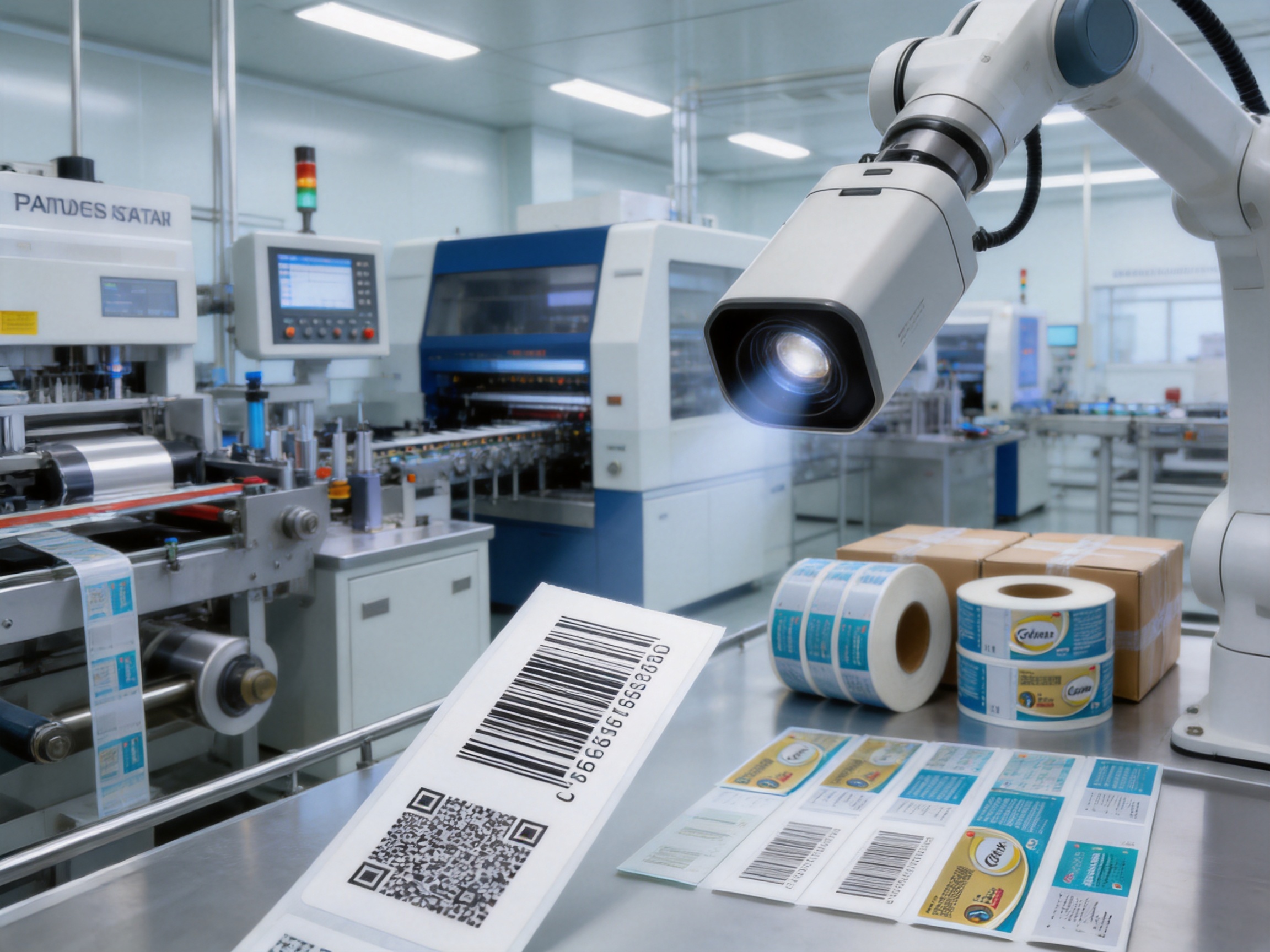
In modern healthcare, a label is far more than a printed identification surface. It is an essential part of a medical device’s information system, supporting identification, inventory control, sterilization management, quality assurance, maintenance, and full-life-cycle traceability. When labels are applied to reusable surgical instruments, implant packaging, or high-end diagnostic equipment, they must remain attached and readable through demanding operating conditions that ordinary paper or general-purpose plastic labels cannot withstand.
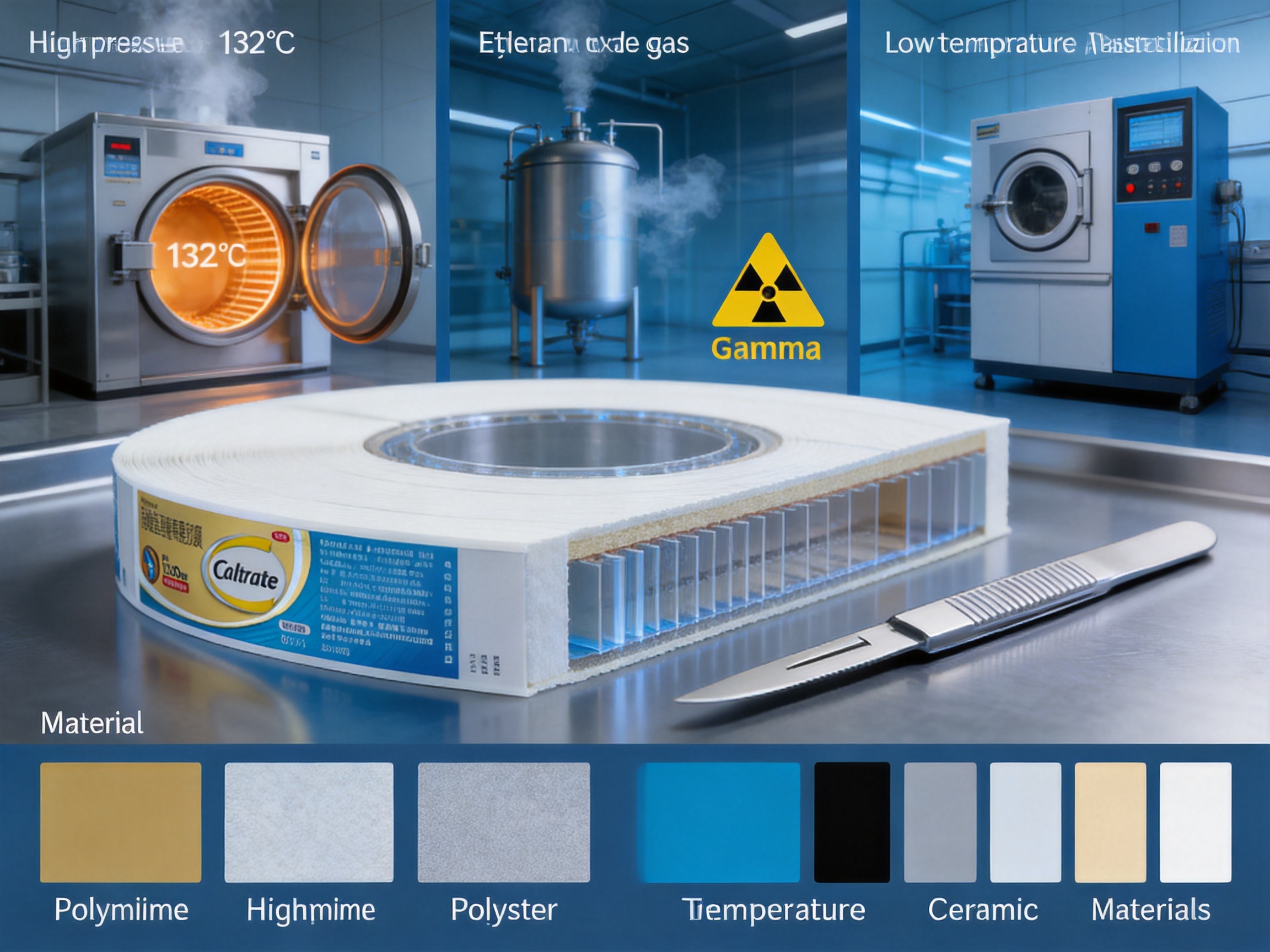
Specialty product labels developed for healthcare applications are engineered to perform in extreme sterilization environments. They combine high-temperature-resistant face materials, specialized coatings, durable printing, and aggressive chemical-resistant adhesives. Depending on the application, the construction may incorporate polyimide, high-temperature polyester, or ceramic-coated substrates. These materials are selected to help the label tolerate repeated exposure to high-pressure steam above 132°C, ethylene oxide gas, gamma radiation, and plasma sterilization.
The purpose of this article is to explain how advanced specialty medical labels address the limitations of conventional labels, why material and adhesive selection are critical, and how an integrated manufacturer can deliver consistent quality at scale. It also examines the product’s applications, performance characteristics, production process, customization options, and role in medical-device traceability.
The Critical Role of Labels in Healthcare Traceability
Healthcare organizations depend on accurate product information at every stage of a device’s life cycle. A label may carry a product name, model number, serial number, lot number, manufacturing date, sterilization status, reprocessing information, barcode, Data Matrix code, RFID identifier, or other data required by internal procedures and regulatory systems.
For a disposable product, the label may need to remain stable throughout storage, transport, and use. For a reusable surgical instrument, the performance requirements are substantially more demanding. The instrument can pass through multiple cleaning, disinfection, sterilization, handling, and storage cycles. Each cycle may expose the label to heat, steam, pressure, moisture, detergents, disinfectants, mechanical abrasion, and rapid changes in temperature.
If the label lifts, curls, cracks, fades, blurs, or changes dimensions, the information may become difficult to scan or read. In the worst case, the device may no longer be reliably identifiable. This can create delays in operating rooms, complicate instrument management, increase the risk of inventory errors, and weaken traceability records.
Specialty healthcare labels are therefore designed as functional components rather than decorative accessories. Their construction must be considered alongside the surface energy of the application substrate, sterilization method, cleaning chemicals, storage conditions, printing technology, application process, and expected service life.
Product Overview: Specialty Product Labels for Extreme Medical Environments
These specialty product labels are specifically developed for reusable surgical instruments, implant packaging, and advanced diagnostic equipment. They are built around a carefully matched combination of durable face stock, protective surface treatment, permanent adhesive, and application-specific printing or coding technology.
The product can be configured for flat surfaces, curved components, compact instruments, packaging materials, equipment panels, trays, containers, and other medical or high-precision products. The exact construction can be customized according to the sterilization process, application temperature, substrate, label size, required print method, and expected number of sterilization cycles.
Polyimide substrates are suitable for applications requiring strong thermal performance and dimensional stability. High-temperature polyester can provide a balanced combination of durability, printability, chemical resistance, and visual clarity. Ceramic-coated materials may be selected when the application requires an especially robust surface layer and enhanced resistance to demanding environmental exposure.
These substrates are paired with high-chemical-resistance adhesives designed to maintain attachment during sterilization and subsequent handling. The adhesive system must provide strong initial tack, reliable bonding, resistance to softening or migration, and long-term adhesion after exposure to heat, moisture, sterilants, and cleaning agents.
The result is a label solution intended to preserve three fundamental properties after repeated processing: adhesive integrity, information readability, and dimensional stability. These properties are central to effective device identification and long-term traceability.
Why Conventional Labels Often Fail in Sterilization Applications
General-purpose labels are commonly manufactured for office, retail, logistics, or short-term packaging use. They may perform well under ordinary indoor conditions, but they are not necessarily designed for medical sterilization environments.
Paper labels can absorb moisture, wrinkle, tear, or lose surface integrity when exposed to steam. Standard films may shrink, soften, deform, or release from the substrate when subjected to elevated temperatures. Inadequate adhesives can lose cohesion, bleed at the edges, transfer residue, or detach after repeated cleaning and sterilization cycles.
Printing is another common weakness. Ink or thermal-transfer markings that appear clear before sterilization may fade, smear, crack, or become difficult to scan afterward. Surface treatments that are suitable for consumer packaging may not provide sufficient protection against steam, chemicals, abrasion, and repeated handling.
Even when a label remains physically attached, a slight curl or edge lift can create operational problems. A raised edge can catch on gloves, trays, or cleaning equipment. It can also provide a pathway for moisture or chemical penetration. Dimensional change can affect barcode quality, alignment, or fit within a designated application area.
Specialty healthcare labels address these risks through a systems-based design approach. The face material, coating, adhesive, ink, liner, die-cut geometry, and application instructions are evaluated as a complete construction rather than as isolated components.
Core Performance Advantages
Resistance to High-Temperature Steam
High-pressure steam sterilization, commonly referred to as autoclaving, exposes labels to elevated temperature, pressure, moisture, and condensation. The product is designed to withstand steam sterilization above 132°C when the selected construction is properly matched to the application.
Thermal resistance alone is not sufficient. The adhesive must also retain its bonding performance, while the face stock must resist distortion and the printed information must remain legible. A well-designed label construction minimizes shrinkage, curling, cracking, and loss of adhesion during repeated autoclave cycles.
For hospitals and medical-device manufacturers, this performance can reduce the need to replace labels after routine reprocessing. It also supports more reliable identification of instruments that move repeatedly between operating rooms, central sterile service departments, storage areas, and maintenance locations.
Compatibility with Ethylene Oxide Sterilization
Ethylene oxide, or EO, sterilization is used for products and materials that may not be suitable for high-temperature steam. EO environments introduce their own requirements, including exposure to gas, humidity, aeration conditions, and extended processing times.
A label intended for EO applications must resist changes in adhesion, print appearance, and dimensional stability. The label construction should be selected according to the specific EO cycle and the device or packaging substrate. Specialty materials and chemical-resistant adhesives provide a stronger foundation for maintaining label performance in this environment than ordinary pressure-sensitive label constructions.
Resistance to Gamma Radiation
Gamma sterilization can affect polymers, adhesives, pigments, and printed information. Depending on the dose and exposure conditions, some materials may become brittle, discolor, lose adhesion, or experience changes in surface properties.
Specialty labels for gamma-exposed applications use carefully selected materials and validated constructions. Their purpose is to preserve essential identification information and attachment performance after exposure. Selection should consider the radiation dose, product geometry, packaging configuration, and the number of exposure events expected during the product life cycle.
Adaptability to Plasma Sterilization
Plasma sterilization uses reactive species and controlled process conditions to treat medical products at relatively low temperatures. The chemical environment may challenge adhesives, inks, and coatings that are not engineered for sterilization service.
Labels designed for plasma applications must maintain their surface integrity and information quality while remaining securely bonded. A suitable construction helps prevent fading, delamination, edge lifting, and loss of scanability.
Long-Term Adhesive Strength
Adhesion is one of the most important performance characteristics for a medical label. A label that is highly readable but detaches during processing cannot support reliable traceability.
The specialty product uses high-chemical-resistance adhesive systems selected for demanding substrates and sterilization conditions. These adhesives are intended to maintain strong contact with metal, coated surfaces, engineered plastics, packaging materials, and other application substrates when the correct construction and application procedure are used.
Performance depends on several variables, including surface cleanliness, surface energy, roughness, application pressure, application temperature, dwell time, and exposure conditions. For this reason, an effective manufacturer does not treat adhesive selection as a one-size-fits-all decision. It evaluates the intended substrate and process before recommending a final construction.
Clear Information Display
Medical labels must remain readable to people and machines. Text, symbols, barcodes, Data Matrix codes, and other variable information must retain sufficient contrast and definition throughout the expected handling and sterilization cycle.
Specialty labels can be configured with surface treatments and printing methods that support clear information display. Protective layers may help reduce the effects of moisture, chemicals, abrasion, and repeated handling. The objective is to preserve the information needed for visual identification and automated data capture.
Dimensional Stability
Dimensional stability is particularly important when a label contains a barcode, is applied to a narrow space, or must align with a device surface or packaging feature. Excessive shrinkage, expansion, warping, or curling can reduce the quality of printed codes and create installation problems.
Polyimide, high-temperature polyester, and ceramic-coated materials provide options for applications where dimensional control is important. The selected substrate should correspond to the sterilization environment, label geometry, and expected exposure duration.
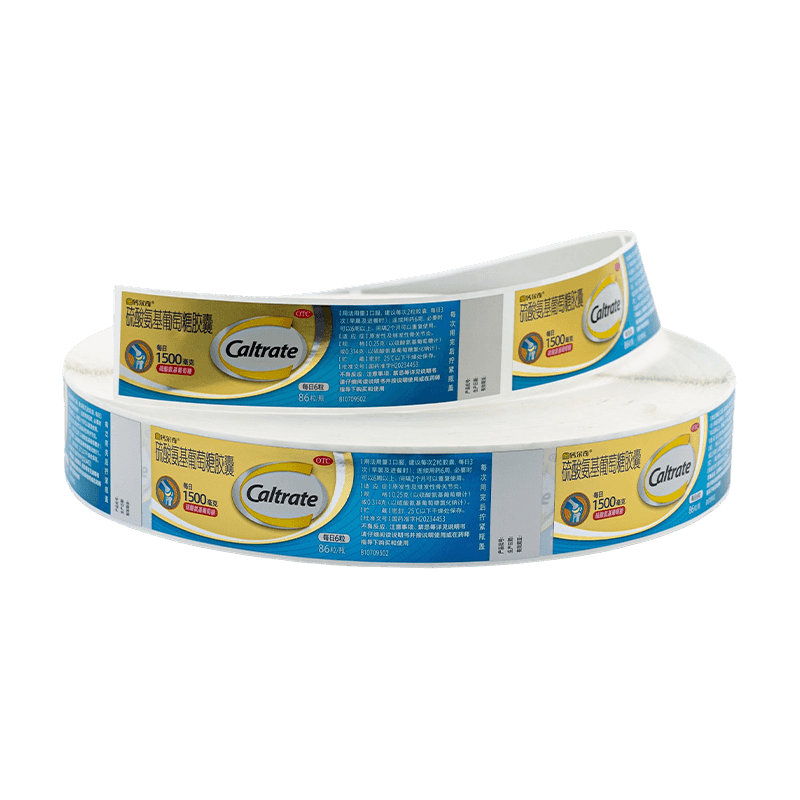
Specialty product labels
Material Engineering for Medical Specialty Labels
The performance of a sterilization-resistant label begins with material engineering. A medical label is normally composed of several layers, each contributing to overall performance.
Face Material
The face material provides the primary surface for printing and visual identification. It must balance thermal resistance, chemical resistance, flexibility, dimensional stability, and print receptivity.
Polyimide is recognized for its ability to perform in demanding high-temperature environments. It can be suitable for compact component identification, instrument markings, and applications where thermal stability is a major priority.
High-temperature polyester offers a versatile alternative for applications requiring a durable, clean-looking label with strong resistance to moisture, chemicals, and handling. It can support detailed printing and a range of label shapes and sizes.
Ceramic-coated substrates may be selected when the application requires an additional protective surface layer. The coating can help protect the printed information and provide a robust surface for challenging processing conditions.
Adhesive Layer
The adhesive layer must bond the label to the application surface while resisting sterilization, cleaning, and chemical exposure. Its properties include initial tack, ultimate adhesion, shear strength, peel strength, temperature resistance, and chemical compatibility.
Adhesive selection must account for the substrate. Stainless steel, anodized aluminum, glass, polycarbonate, polypropylene, and coated surfaces can have very different surface energies and levels of adhesion difficulty. Curved or textured surfaces may also require a more flexible or aggressive adhesive construction.
In healthcare applications, adhesive residue is an important consideration. An adhesive that bonds strongly but leaves contamination on the instrument or packaging may not be acceptable. The objective is to achieve secure attachment without compromising cleaning, maintenance, or product appearance.
Protective Coating
A protective coating can provide an additional barrier against moisture, cleaning agents, abrasion, and sterilization exposure. It may also improve the durability of printed information and enhance resistance to scratching or scuffing.
The coating must be compatible with the selected printing technology and should not interfere with scanning or visual inspection. Gloss, matte, transparency, and surface texture can be customized according to the application.
Liner and Converting Components
The release liner supports the label during manufacturing, storage, die-cutting, and application. Its release characteristics must be matched to the adhesive so that labels can be dispensed efficiently without premature lifting, tearing, or deformation.
For automated application, roll direction, winding, spacing, core size, and label gap can be customized. For manual application, sheets, fan-fold formats, or individually separated labels may be more convenient.
Applications Across Medical and High-Precision Equipment
Reusable Surgical Instruments
Reusable surgical instruments are exposed to repeated cleaning and sterilization cycles. They may be handled by several departments and stored in trays, cabinets, or transport containers. A durable label can help identify instrument type, asset number, location, maintenance status, and processing history.
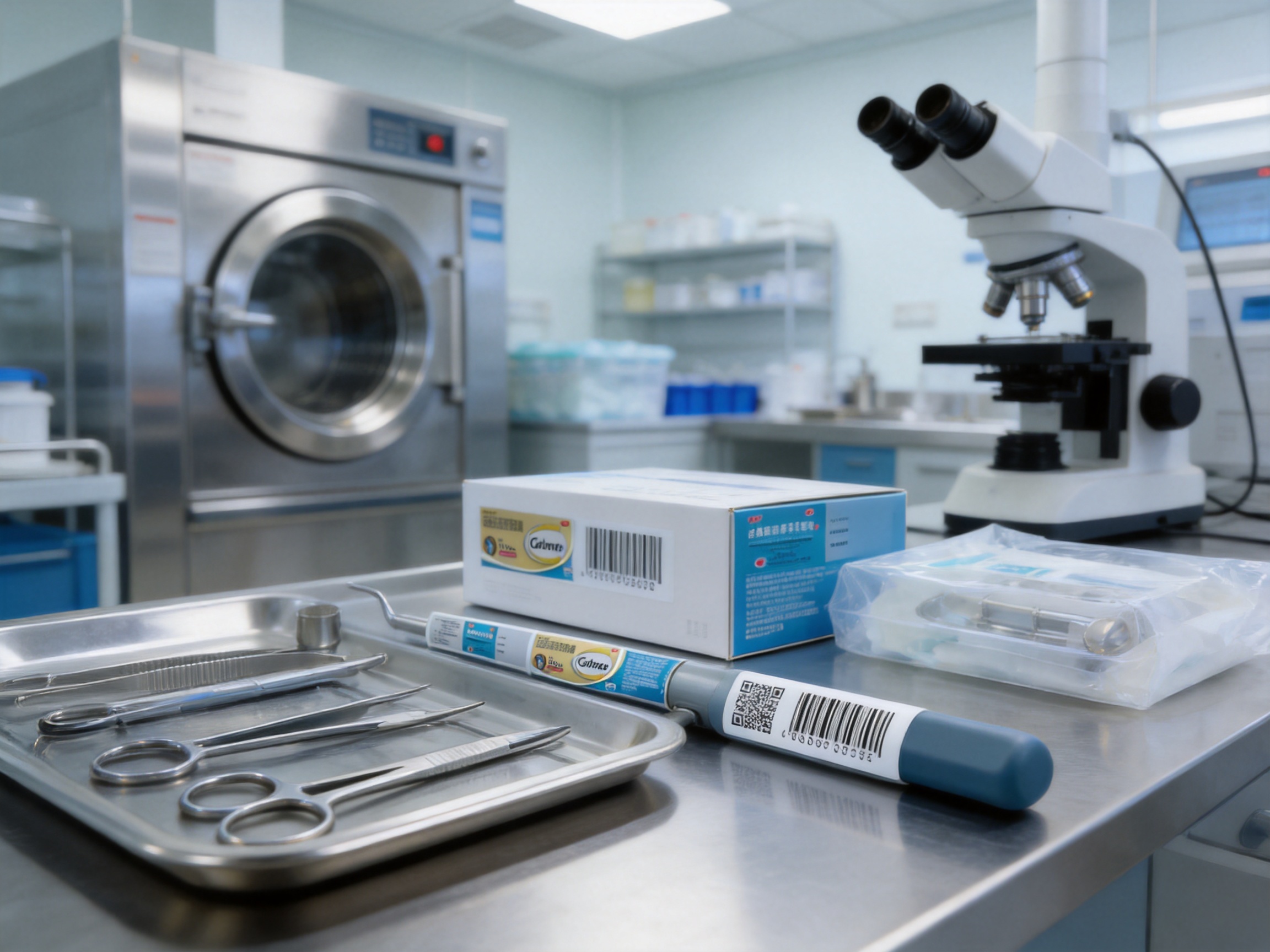
The label may be applied directly to an instrument, handle, case, tray, or associated packaging. The construction should be matched to the available surface area and the instrument’s exposure profile. Compact labels can be produced for small components, while larger formats can support more detailed information.
Implant Product Packaging
Implant packaging requires dependable identification throughout manufacturing, sterilization, storage, distribution, and clinical use. Packaging labels may carry product codes, lot information, expiration dates, sterilization indicators, instructions, and machine-readable identifiers.
Because implant-related information can remain important for many years, the label must support long-term readability and stable attachment. Material selection should consider the packaging substrate, sterilization method, storage temperature, humidity, and the risk of abrasion during transportation.
High-End Diagnostic Equipment
Diagnostic equipment often includes control panels, removable modules, cables, accessories, maintenance points, and replaceable components. Labels may be used for asset identification, safety information, operating instructions, calibration records, or service tracking.
In equipment environments, labels may encounter disinfectants, repeated wiping, heat generated by operation, mechanical contact, and frequent handling. A durable specialty label can provide a more reliable information surface than a standard paper or low-performance film label.
Medical Trays and Containers
Sterilization trays, cases, containers, and storage systems require identification before and after processing. Labels can help personnel confirm the contents, processing status, department ownership, or location of each unit.
Because these items often move through repeated cycles, the label should be chosen for strong adhesion, resistance to moisture and cleaning agents, and clear text or barcode performance.
Laboratory and Precision Equipment
Laboratory instruments and precision equipment may be exposed to solvents, disinfectants, temperature variation, and repeated cleaning. Labels can identify equipment numbers, calibration dates, sample-handling zones, or maintenance information.
The same principles used for medical-device labels apply to many laboratory and industrial environments where traceability and durability are essential.
Advantages Over General-Purpose and Lower-Performance Alternatives
The main advantage of a specialty sterilization-resistant label is application-specific reliability. Rather than using a standard label and hoping it survives the process, the product is designed around the actual sterilization environment and service requirements.
Compared with paper labels, specialty film and coated constructions provide improved resistance to moisture, tearing, and deformation. Compared with ordinary polyester labels, high-temperature versions offer better suitability for repeated thermal exposure. Compared with generic permanent adhesives, chemical-resistant adhesive systems are more appropriate for sterilization and cleaning environments.
Another important advantage is the ability to combine multiple performance characteristics in one construction. A label may need to be heat-resistant, chemical-resistant, dimensionally stable, printable, scannable, and strongly adhesive at the same time. The product can be engineered to balance these requirements rather than optimizing only one property.
Customization is also a competitive advantage. Different medical devices require different dimensions, corners, adhesives, coatings, colors, print technologies, and packaging formats. An integrated label manufacturer can adjust these variables to meet the customer’s process rather than forcing every application into a standard catalog specification.
Consistent manufacturing is equally important. A material may perform well in laboratory testing but fail to provide dependable results if coating thickness, adhesive application, printing, die-cutting, or inspection varies from batch to batch. Advanced production equipment and quality control help reduce this risk.
The product also supports broader digital traceability strategies. It can be printed with barcodes, two-dimensional codes, serialized information, or other identifiers. Where appropriate, label programs can be integrated with RFID or smart-label systems for inventory, asset, and process management.
Advanced Manufacturing Processes
Technical Requirement Review
Production begins with a technical review of the customer’s requirements. Important information includes the label’s application surface, dimensions, sterilization method, number of expected cycles, temperature range, chemical exposure, printing content, application method, and storage conditions.
This review helps determine whether polyimide, high-temperature polyester, ceramic-coated material, or another construction is appropriate. It also guides adhesive selection, coating requirements, printing technology, die-cut design, and packaging format.
Material Matching and Supplier Control
Raw materials must be selected according to performance requirements rather than appearance alone. Face stock, adhesive, ink, coating, and liner all influence the finished label.
A controlled manufacturing system evaluates incoming materials and maintains production records. Material identification, batch management, and storage conditions help protect consistency and traceability from the beginning of the process.
Precision Coating and Lamination
Coating and lamination processes must be controlled carefully. Uneven coating can create weak areas, visual defects, inconsistent print receptivity, or reduced resistance to moisture and chemicals.
Precision equipment helps maintain consistent layer formation, while controlled tension reduces wrinkles, bubbles, and dimensional variation. Lamination can add a protective film or combine different functional layers into a unified label construction.
High-Resolution Printing
Printing is selected according to the label’s information requirements and service environment. Variable data may include serial numbers, batch information, barcodes, Data Matrix codes, symbols, and multilingual text.
Print quality depends on ink compatibility, surface treatment, resolution, registration accuracy, drying or curing, and inspection. For sterilization-resistant labels, the printed information must be protected against the conditions expected during use.
Precision Die-Cutting
Die-cutting determines the final label shape and supports efficient application. Medical labels may require small radii, rounded corners, narrow widths, custom apertures, or complex shapes that fit around instrument features.
Accurate die-cutting helps ensure that labels separate cleanly from the liner and that the adhesive does not squeeze excessively beyond the face material. Rounded corners can reduce the risk of edge lifting, especially on surfaces that experience repeated handling.
Automated Inspection
Automated inspection equipment can verify print quality, registration, barcode readability, missing elements, color variation, surface defects, and dimensional accuracy. Inspection systems are particularly valuable when labels contain variable data or serialized identifiers.
Combining automated inspection with trained personnel provides a stronger quality-control process than relying solely on visual sampling. Defective labels can be identified before shipment, reducing the risk of errors in the customer’s production or sterilization workflow.
Rewinding, Slitting, and Packaging
After printing and converting, labels may be slit and rewound into rolls or prepared in sheet format. Roll configuration should be compatible with the customer’s dispenser or application equipment.
Packaging protects labels from dust, moisture, crushing, and contamination during transportation. For healthcare-related applications, clean handling and suitable packaging practices are important to preserve product quality before application.
Quality Management and Validation Support
A high-performance medical label should be supported by documented quality procedures. An integrated manufacturer with research and development, production, inspection, sales, and service capabilities can manage the product more effectively across its entire life cycle.
Shanghai Rongyang Industrial Development Co., Ltd. operates automated production lines, precision inspection equipment, and a structured quality-control system. The company’s stated capabilities cover pressure-sensitive labels, RFID inlays, RFID tags, finished smart-label products, and specialty constructions for demanding applications.
The company was founded in 2008 and has obtained ISO 9001 and ISO 14001 certifications. It has also passed the SMETA social responsibility audit. These credentials indicate an established focus on quality management, environmental management, and responsible business practices, although each customer should review the specific certificates, scope, and current validity relevant to its project.
For medical-device applications, validation should be based on the actual label construction and intended process. A customer may evaluate adhesion, readability, barcode scan rate, dimensional stability, chemical resistance, edge lifting, print durability, and appearance after defined sterilization cycles.
Testing should use representative instruments or packaging materials whenever possible. A label that performs well on stainless steel may behave differently on a coated polymer. Similarly, a label tested under one autoclave cycle may require additional assessment under a different temperature, pressure, exposure time, or drying profile.
Proper validation does not mean that one universal label is suitable for every medical application. Instead, it confirms that the selected construction is appropriate for a defined use case. This application-specific approach is a major strength of customized specialty label manufacturing.
Customization Options
Size and Shape
Labels can be customized to fit small instruments, curved surfaces, packaging panels, equipment housings, trays, or containers. Width, length, corner radius, gap, and orientation can be adjusted to support the customer’s application process.
Adhesive Selection
Adhesive selection can be tailored to metal, plastic, glass, coated surfaces, or other substrates. The desired balance may involve high initial tack, high final adhesion, clean removability, resistance to chemicals, or performance on curved surfaces.
Surface Finish
Gloss, matte, transparent, or protective finishes may be used according to appearance, scanning, writing, and durability requirements. A matte finish can reduce glare during visual inspection, while a protective coating may improve resistance to abrasion and cleaning.
Printing and Variable Data
Specialty labels can support logos, product information, serial numbers, lot codes, barcodes, Data Matrix codes, warning symbols, and other variable content. Information architecture should be considered carefully so that the most important data remains readable after processing.
Color and Identification Systems
Color coding can support departmental organization, instrument classification, maintenance status, or visual grouping. Color selection should not replace machine-readable identification, but it can improve quick recognition in busy healthcare environments.
RFID and Smart-Label Integration
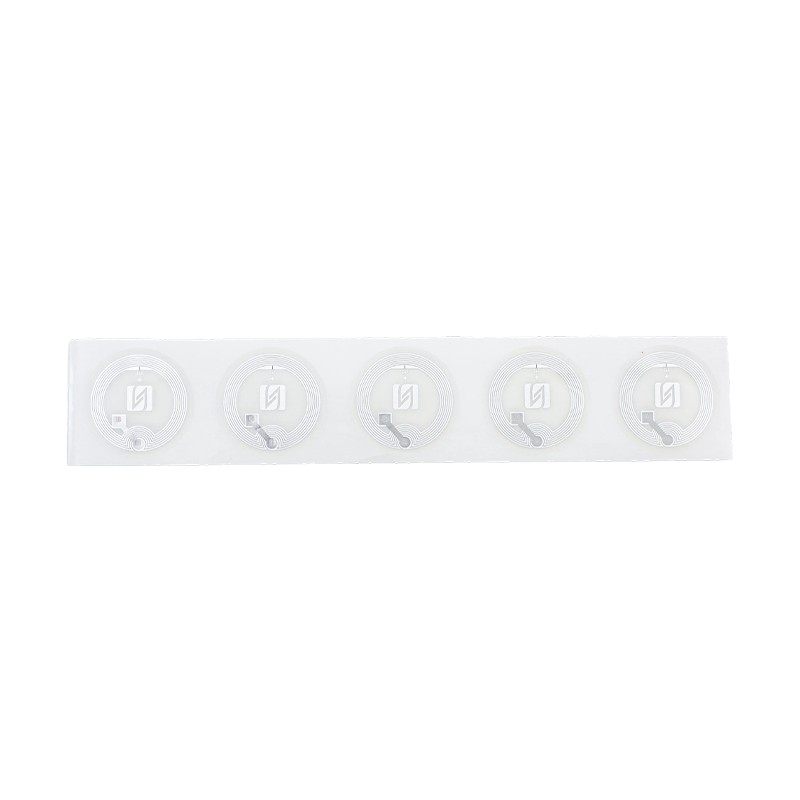
Where an organization requires automated identification, RFID technologies can complement printed labels. HF and UHF RFID products may be used for asset management, warehouse logistics, retail, smart manufacturing, or other tracking requirements, subject to application-specific testing.
Printed information remains useful even when RFID is included. A hybrid solution can provide visual identification for staff and electronic identification for inventory or process-management systems.
Manufacturing Strengths of an Integrated Label Supplier
An integrated supplier can provide more than printed material. It can combine product design, material engineering, production, quality inspection, packaging, technical communication, and after-sales service.
Rongyang’s product range covers pressure-sensitive labels for fast-moving consumer goods, food and beverage, pharmaceuticals, logistics, and retail, together with RFID inlays, tags, and finished products. This broad experience supports cross-industry knowledge in adhesives, printing, converting, variable data, and smart identification.
The company maintains production facilities in China and Malaysia, supporting large-scale and international customer requirements. Multiple production locations can provide additional supply flexibility, although customers should confirm the applicable manufacturing site, quality system, capacity, lead time, and transfer procedures for each project.
Advanced automated lines are important for repeatability. Automation can reduce manual variation in coating, printing, inspection, slitting, and rewinding. Precision inspection equipment supports the identification of defects before products reach the customer.
Research and development capability is also valuable for specialty labels. Medical and high-precision applications often require a combination of properties that cannot be achieved by selecting a standard stock item. The ability to develop or adjust constructions helps address unusual substrates, sterilization cycles, label geometries, and information requirements.
Environmental responsibility is another consideration. ISO 14001 certification reflects the presence of an environmental management framework. Customers may additionally request information about material efficiency, waste reduction, liner handling, packaging, and production energy management.
Recommended Application Procedure
Even a high-performance label can fail if it is applied incorrectly. The surface should be clean, dry, and free from oil, dust, release agents, loose particles, and cleaning residues. Where appropriate, the customer should follow a documented cleaning and preparation procedure.
The label should be applied with firm, even pressure across the entire surface. Air pockets, wrinkles, folds, and trapped contamination should be avoided. On curved surfaces, the label should be positioned carefully so that the edges do not experience unnecessary stress.
Application temperature can affect adhesive performance. If a label is applied in a cold environment, the adhesive may require additional dwell time to build final adhesion. If the label is applied to a warm surface, the customer should confirm that the adhesive remains stable and that application can be performed safely.
After application, the label may need a dwell period before sterilization or aggressive cleaning. The required dwell time depends on the adhesive, substrate, temperature, and process. Customers should establish this condition during validation rather than assuming immediate full performance.
Labels should be inspected before entering service. Any visible lifting, wrinkling, poor printing, missing data, or barcode defects should be investigated. A documented application and inspection procedure helps maintain consistent results across departments and production shifts.
Traceability Benefits for Healthcare Organizations
Reliable labels help connect a physical product to digital and paper-based records. For reusable instruments, this can support tracking through cleaning, packaging, sterilization, storage, use, maintenance, and retirement.
Clear identification can reduce manual searching and support faster confirmation of instrument identity. It can also help staff distinguish similar products, reduce sorting errors, and improve inventory visibility.
For implant packaging, durable labels help preserve lot and product information during storage and distribution. For diagnostic equipment, labels can support asset registers, calibration schedules, service records, and location management.
Traceability also supports quality investigations. If a product issue or process deviation occurs, reliable identification allows organizations to locate affected items and review the relevant history more efficiently.
The label itself does not replace a complete traceability system. It is one element within a broader process that includes data management, scanning equipment, software, staff training, and controlled procedures. However, the label is the physical link between the tracked object and its recorded information, making performance at the point of use essential.
Environmental and Operational Considerations
Healthcare labels must be designed for real working conditions, not only laboratory specifications. Medical staff may handle instruments while wearing gloves, work under time pressure, and operate in environments with moisture, disinfectants, and frequent movement.
Rounded corners, suitable flexibility, strong edge adhesion, and high contrast can improve practical performance. Label size should be large enough for reliable reading but compact enough to avoid interfering with instrument function or packaging seals.
Environmental management should also consider the label’s full life cycle. Material selection, liner waste, packaging, production scrap, and disposal may all be relevant. An ISO 14001-based environmental management system can help organize improvement activities, though specific environmental performance should be reviewed for the individual product and project.
Selection Guide for Buyers
When selecting a sterilization-resistant label, buyers should begin by documenting the intended use. The following questions are useful:
Which sterilization method will be used: high-pressure steam, EO gas, gamma radiation, plasma, or a combination?
What is the maximum temperature, pressure, exposure time, humidity level, or radiation dose?
How many sterilization cycles must the label withstand?
What is the label applied to: stainless steel, aluminum, glass, plastic, coated material, packaging film, or another substrate?
Will the label be exposed to detergents, disinfectants, solvents, oils, or mechanical abrasion?
What information must remain readable, and will the label be scanned by barcode or Data Matrix equipment?
Will labels be applied manually or automatically?
Is the label required to be permanent, removable, repositionable, or cleanly removable after service?
What roll, sheet, liner, or packaging format is required?
What validation evidence, inspection records, or quality documentation is needed?
Answering these questions allows the supplier to recommend a construction that is technically appropriate and economically practical. It also reduces the risk of selecting a material based only on price or appearance.
Q&A: Specialty Sterilization-Resistant Labels
What are specialty product labels used for?
They are used for applications that require durable identification under demanding conditions. Typical applications include reusable surgical instruments, implant packaging, sterilization trays, medical containers, high-end diagnostic equipment, laboratory instruments, and other high-precision equipment.
Can these labels withstand autoclave sterilization?
Selected constructions are designed to withstand high-temperature, high-pressure steam sterilization above 132°C. The exact performance depends on the material combination, sterilization cycle, application substrate, and number of cycles. Customers should validate the final construction under their actual process conditions.
Are the labels suitable for EO sterilization?
Yes, specialty constructions can be developed for EO sterilization. The face material, adhesive, coating, and printing system should be selected according to the EO cycle, humidity, aeration, and packaging environment.
Can they be used with gamma sterilization?
They can be considered for gamma-exposed applications when the selected construction is compatible with the required radiation dose and exposure profile. Validation is recommended because radiation effects vary according to material composition and processing conditions.
What materials are available?
Common options include polyimide, high-temperature polyester, and ceramic-coated substrates. The most suitable material depends on temperature, chemical exposure, dimensional stability, printing requirements, and application surface.
Why is adhesive selection so important?
The adhesive must maintain attachment when exposed to heat, steam, moisture, sterilants, cleaning chemicals, and mechanical handling. A label can fail even when the face material remains intact if the adhesive loses strength or lifts at the edges.
Will the printed information remain readable?
The product is designed to maintain clear information display after repeated sterilization cycles. Print technology, ink, surface treatment, protective coating, and code design should be matched to the intended environment. Barcode and Data Matrix readability should be verified during application validation.
Can the labels be customized in shape and size?
Yes. Size, shape, corner radius, adhesive type, coating, color, printing, variable data, liner, roll direction, and packaging format can be customized for the application.
Can the labels include barcodes or Data Matrix codes?
Yes. Labels can be configured for human-readable information and machine-readable identifiers. Code size, contrast, quiet zone, print resolution, and protective surface treatment should be considered to maintain reliable scanning.
Are RFID options available?
The supplier also provides RFID inlays, tags, and finished RFID products in HF and UHF frequencies. RFID may complement printed labels for asset management, warehouse logistics, smart manufacturing, and other identification systems, subject to application testing.
How should the label be applied?
The application surface should be clean and dry. The label should be positioned accurately and pressed firmly across the full surface without wrinkles or trapped air. A dwell period may be required before sterilization, depending on the adhesive and application conditions.
Can one label construction be used for every sterilization process?
No. Steam, EO, gamma, and plasma sterilization create different environmental stresses. A construction that performs well in one process may require modification for another. Application-specific selection and validation are recommended.
What quality systems support production?
The manufacturer operates automated production lines, precision inspection equipment, and a structured quality-control system. It has stated ISO 9001 and ISO 14001 certifications and has passed a SMETA social responsibility audit. Customers should request current documentation and confirm the scope applicable to their order.
Can the supplier support international orders?
The company has production facilities in China and Malaysia and serves international customers. Project discussions should confirm manufacturing location, available capacity, lead time, export documentation, packaging requirements, and continuity arrangements.
Conclusion
Specialty sterilization-resistant labels provide a dependable identification solution for healthcare and high-precision equipment exposed to extreme processing conditions. Their value comes from the coordinated performance of high-temperature face materials, protective coatings, durable printing, and chemical-resistant adhesives.
By supporting resistance to high-pressure steam above 132°C, EO gas, gamma rays, and plasma sterilization, these labels help preserve the three essentials of device traceability: secure attachment, readable information, and dimensional stability. Their applications extend from reusable surgical instruments and implant packaging to diagnostic equipment, sterilization containers, laboratory systems, and other products requiring repeated processing or long-term identification.
The product’s competitive advantage lies in application-specific engineering, customization, integrated manufacturing, automated production, precision inspection, and support for both conventional pressure-sensitive labels and RFID-enabled identification systems. A disciplined validation program remains essential, but a properly selected specialty label can become a durable foundation for medical-device traceability and operational efficiency.
References
1. ISO 9001, Quality Management Systems — Requirements.
2. ISO 14001, Environmental Management Systems — Requirements with Guidance for Use.
3. ISO 11607, Packaging for Terminally Sterilized Medical Devices.
4. ISO 17665, Sterilization of Health Care Products — Moist Heat.
5. ISO 11135, Sterilization of Health-Care Products — Ethylene Oxide.
6. ISO 11137, Sterilization of Health Care Products — Radiation.
7. ISO 14971, Medical Devices — Application of Risk Management to Medical Devices.
8. ASTM F88, Standard Test Method for Seal Strength of Flexible Barrier Materials.
9. ASTM D3330, Standard Test Method for Peel Adhesion of Pressure-Sensitive Tape.
10. ASTM D3654, Standard Test Methods for Shear Adhesion of Pressure-Sensitive Tapes.
11. Manufacturer technical information for specialty healthcare labels, high-temperature materials, chemical-resistant adhesives, and RFID label solutions.
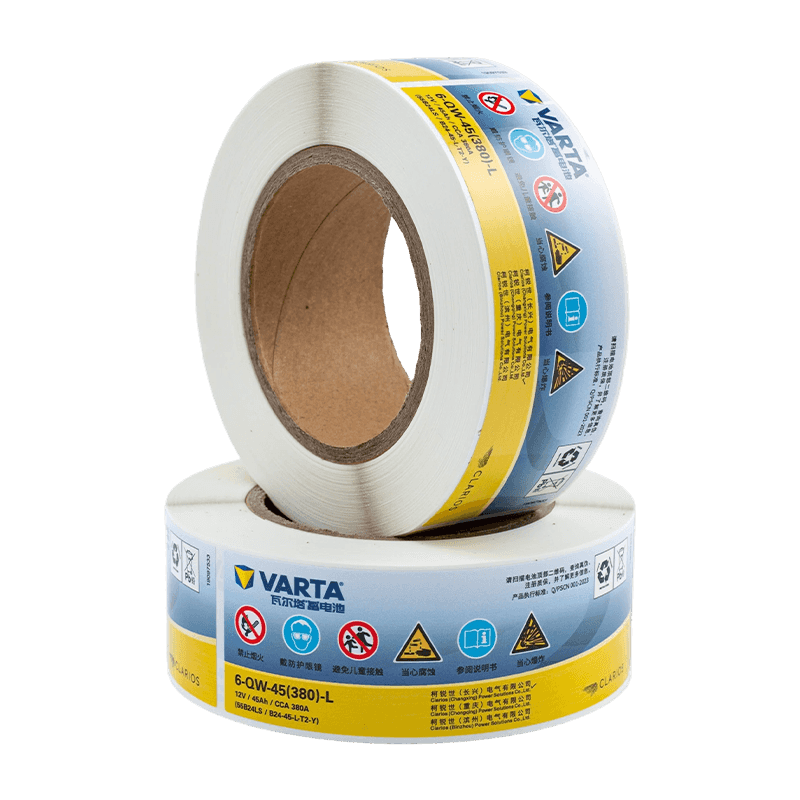
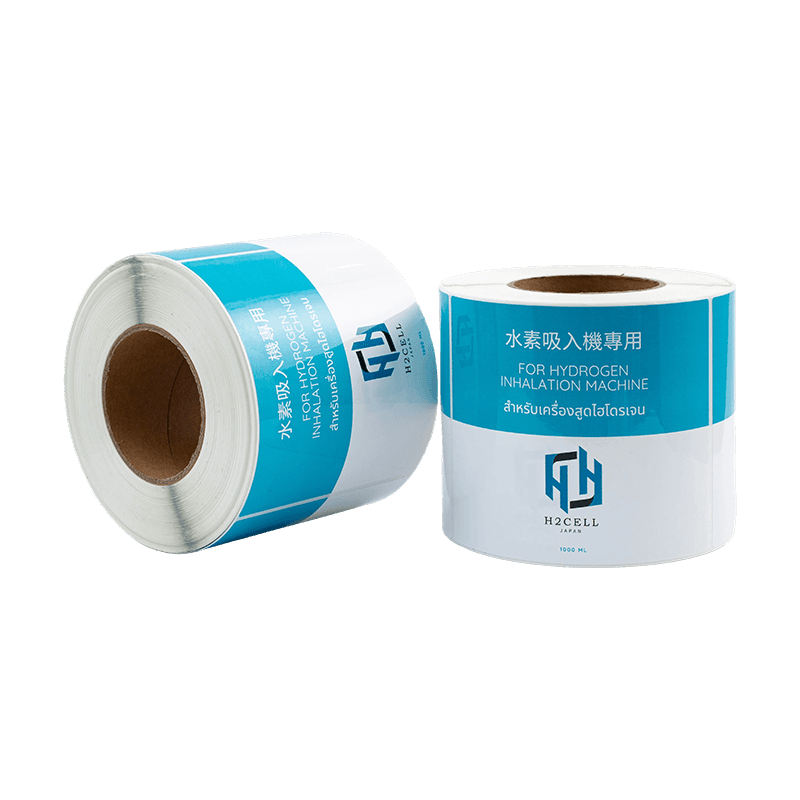
Product: Specialty product labels



Messae Us Right Now!

- Quick Links
- Products
- Quality Control
- Our Story
- News
- Contact
- Our Product
-
- Beauty and Personal Care Labels
- Home cleaning and laundry care labels
- Liquor and Beverage Labels
- Food and dairy product labels
- Healthcare Labels
- Promotional and Interactive Labels
- Specialty and industrial solution
- Labels Thermal printing and logistics labels
- Anti-counterfeiting traceability and RFID Labels
- Contact us
- Tel:+86-573-86867861
- Phone:+86-18621872035
- E-mail:allen.men@rylabel.com
- Add:No. 111 Xincheng Road, Haiyan Economic Development Zone, Jiaxing City, Zhejiang Province


