
 English
 русский
 Español


Home / Author / Lin Yuchan — International Sales Manager / Medical Devices and Pharmaceuticals Pressure-Sensitive Labels: Reliable Identification for Healthcare Applications
News

Medical Devices and Pharmaceuticals Pressure-Sensitive Labels: Reliable Identification for Healthcare Applications
2026-09-19
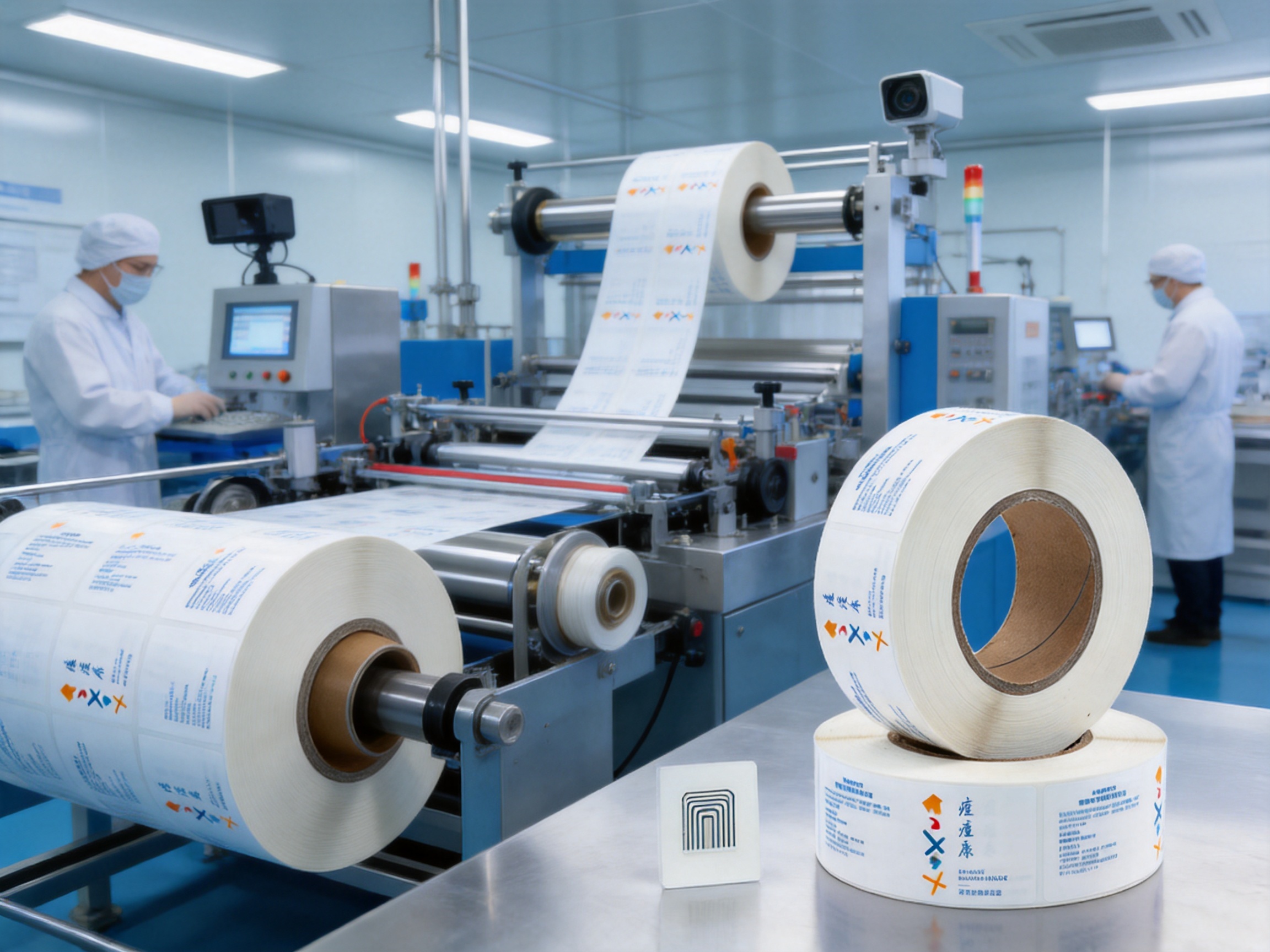
Medical devices and pharmaceuticals depend on accurate, durable, and readable identification. A label may appear small, but it often carries information that supports patient safety, regulatory compliance, inventory control, traceability, and correct product use. The device name, product model, lot or batch number, expiration date, storage instruction, handling information, and usage guidance must remain visible throughout the intended life of the package or record. If a label peels away, becomes unreadable, smears during printing, or loses adhesion after routine cleaning, the consequences can extend well beyond an unattractive package.
Medical devices and pharmaceuticals pressure-sensitive labels provide a practical and adaptable solution for these requirements. The product uses medical-grade paper or film combined with a biocompatible pressure-sensitive adhesive. This structure allows the label to be applied efficiently to medical device packaging, pharmaceutical bottles, cartons, containers, paper forms, and other commonly used healthcare surfaces. The label can be supplied in rolls, sheets, or customized die-cut formats according to the customer’s equipment and application process.
The central value of this label solution is balance. It is designed to provide clear printing, dependable adhesion, material compatibility, and stable performance in ordinary medical environments without introducing unnecessary complexity into large-scale labeling operations. It is suitable for applications that require reliable daily performance, including pharmaceutical packaging, medical device identification, laboratory and hospital records, and related healthcare documentation.
Shanghai Rongyang Industrial Development Co., Ltd. develops and manufactures pressure-sensitive labels and RFID smart labels for customers in China and international markets. Through research and development, production, quality control, sales, and service, the company provides customized label solutions for healthcare, food and beverage, retail, logistics, industrial, and other sectors. Its healthcare label capabilities are supported by automated production lines, precision inspection equipment, structured quality management, and experience in producing labels with different substrates, adhesives, printing requirements, and finishing specifications.
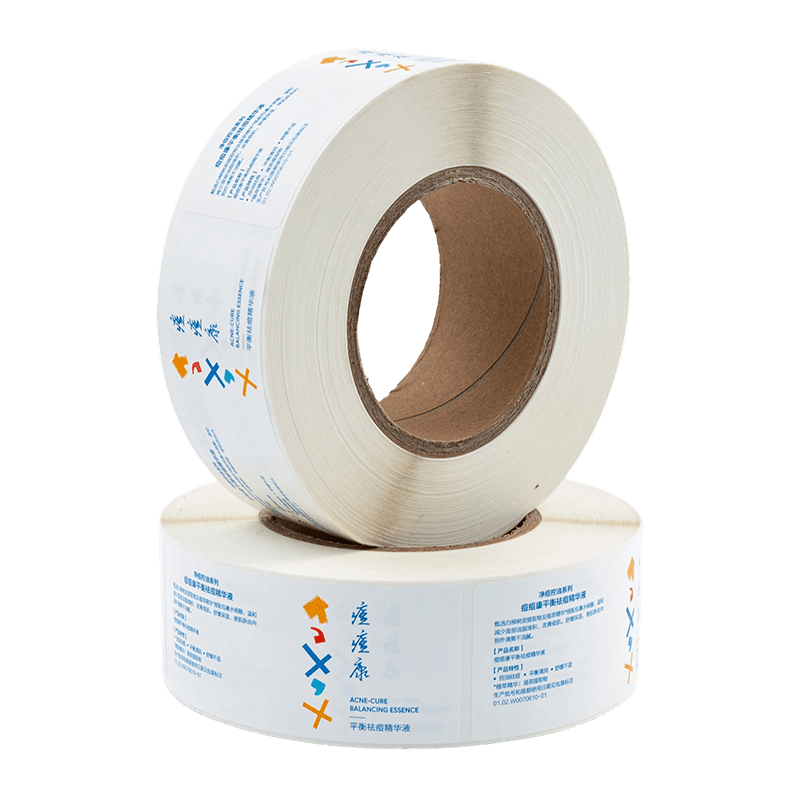
medical devices and pharmaceuticals Pressure-sensitive labels
Why Healthcare Labels Require a Specialized Approach
Labels used in healthcare applications operate under stricter practical expectations than many general-purpose commercial labels. They must communicate information accurately while remaining attached to a specific product or record. The label may be handled by warehouse staff, pharmacists, nurses, clinicians, patients, laboratory technicians, or quality personnel. Each user must be able to identify the information quickly and confidently.
Healthcare packaging also includes a wide range of surfaces. A label may need to adhere to coated cartons, pharmaceutical glass bottles, plastic containers, metal medical devices, flexible pouches, rigid trays, or paper forms. These surfaces differ in smoothness, energy, curvature, porosity, and resistance to moisture or cleaning agents. A label construction that works well on a flat carton may not perform equally on a small bottle or a curved device housing.
In addition, many medical and pharmaceutical products pass through multiple handling stages. They may be printed, inspected, packed, stored, transported, placed into an inventory system, dispensed, opened, and retained for documentation. During this lifecycle, the label can be exposed to friction, changes in temperature, short-term contact with disinfectants, and repeated handling. The label must therefore combine print stability with sufficient adhesion and dimensional consistency.
A specialized healthcare label is not defined by one feature alone. The face material, adhesive, liner, printing process, die-cutting accuracy, roll configuration, and application conditions must work together. The correct combination helps preserve information integrity and reduces the risk of labels lifting at corners, falling off during ordinary use, or becoming difficult to scan or read.
Product Construction and Functional Design
Medical-Grade Face Materials
The product can be produced with medical-grade paper or film, depending on the intended application. Paper is a practical choice for many cartons, pharmaceutical packages, forms, and general identification tasks. It offers a smooth and printable surface and can support clear text, barcodes, batch information, and variable data. Paper labels are also suitable when the application environment is relatively controlled and cost efficiency is important.
Film materials can provide an alternative for applications that require additional resistance to moisture, handling, abrasion, or surface deformation. Film may be especially useful for labels applied to medical device housings, plastic containers, curved surfaces, or packages that may be exposed to routine cleaning operations. Material selection can be adjusted according to the required flexibility, opacity, dimensional stability, surface finish, and printing method.
The purpose of offering both paper and film options is not simply to create more product choices. It allows the label construction to be matched to the actual application. A pharmaceutical carton, a small bottle, and a reusable medical device may have very different label requirements. Selecting the appropriate face material at the beginning can improve production consistency and help maintain the appearance and legibility of the finished label.
Biocompatible Pressure-Sensitive Adhesive
The adhesive is a critical part of the product structure. The pressure-sensitive adhesive is designed to develop adhesion when the label is pressed onto the target surface. This supports efficient application without requiring water, heat, or additional curing steps. The adhesive is selected and adapted for healthcare-related uses, with attention to the expected surface characteristics and normal application conditions.
A suitable adhesive must provide an initial bond strong enough to hold the label in position while also maintaining adhesion during storage and routine handling. It must be compatible with common packaging materials and should help limit edge lifting, shifting, and premature detachment. For medical device packaging, pharmaceutical bottles, and paper records, the adhesive structure is designed to support a tight fit without easy warping or falling off.
The term biocompatible in a label specification should always be understood in relation to the intended application and applicable technical requirements. The label is designed for healthcare-related packaging and identification uses, but customers should confirm the exact material, adhesive, substrate, sterilization exposure, and regulatory requirements for their specific product. This application-based approach helps prevent the use of a general label where a more specialized construction is necessary.
Release Liner and Converting Accuracy
The release liner supports smooth dispensing and conversion. Its release characteristics must be balanced so that the label separates cleanly during automated or manual application while remaining stable during transport and storage. An unsuitable liner can cause dispensing interruptions, label deformation, adhesive transfer, or difficulty during high-speed application.
Precision die-cutting is also important. Clean edges and accurate dimensions help the label fit the designated package area and reduce waste during application. For small pharmaceutical bottles or compact medical devices, even a minor dimensional error can affect positioning, readability, or the ability to wrap the label around the surface correctly. Advanced converting and inspection processes help maintain consistency across production batches.
Core Advantages of the Pressure-Sensitive Label Solution
Clear and Stable Information Output
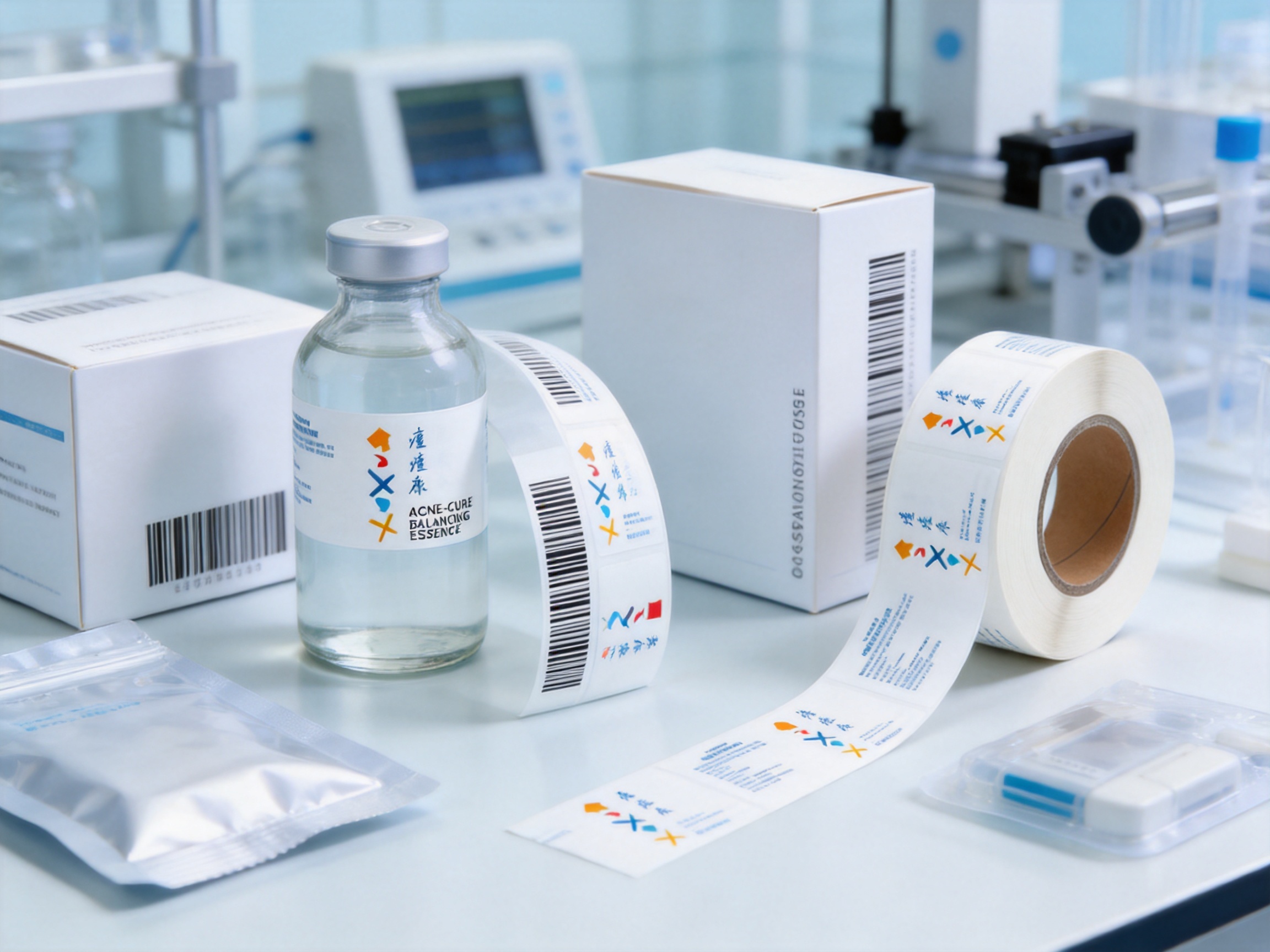
The primary function of a healthcare label is to present information clearly. The product is designed for compatibility with common printing processes used in medical and pharmaceutical operations. It can support printed product names, model numbers, batch codes, expiration dates, instructions for use, storage statements, warning information, and other variable data.
A clear label improves the efficiency of identification at multiple points in the supply chain. Warehouse personnel can distinguish products more easily, pharmacy staff can confirm package information, and medical teams can refer to device or treatment details without unnecessary delay. In documentation applications, clear printed information also supports organized records and easier manual review.
The label surface is selected to support stable ink or toner transfer. Print clarity depends on the complete system, including the label material, printer, ink, ribbon, print settings, storage conditions, and curing or drying process. When these elements are properly matched, the label can provide sharp text and dependable barcode or variable-data output for ordinary healthcare labeling tasks.
Reliable Adhesion on Common Healthcare Surfaces
Healthcare packaging is rarely limited to one uniform substrate. The product is developed to match the characteristics of medical device packaging, pharmaceutical bottles, and paper record forms. This adaptability supports a broad range of uses while preserving the basic requirement that the label remain firmly attached during normal handling.
On cartons and paper forms, the adhesive can create a practical bond with porous or coated surfaces. On glass or plastic bottles, the label construction can be adjusted to accommodate smooth surfaces and curved geometries. On device housings, material flexibility and adhesive selection can help the label follow the surface without excessive lifting or wrinkling.
Good adhesion also supports label integrity during transport and storage. A label that remains in place reduces the possibility of lost product information, mixed inventory, or uncertainty about package identity. It also provides a more professional appearance, which is important for pharmaceutical and medical device manufacturers operating under documented quality systems.
Resistance to Routine Cleaning and Short-Term Disinfectant Contact
Labels used in medical settings may encounter routine cleaning operations and short-term contact with disinfectants. The product is designed to maintain adhesion and information integrity in normal clean environments and under short-term disinfectant exposure. This helps reduce the risk of smearing, bubbling, lifting, or information blurring during everyday use.
This characteristic is particularly relevant to medical device identification. A device may be wiped before or after use, moved between departments, or stored in an area where cleaning procedures are frequent. A label that cannot tolerate ordinary surface maintenance may deteriorate before the device reaches the end of its intended use cycle.
Resistance performance depends on the specific disinfectant, concentration, contact time, temperature, wiping method, and label construction. For demanding applications, customers should request a validated material combination and conduct application-specific testing. Nevertheless, the standard product provides a dependable foundation for common healthcare environments where short-term exposure is expected rather than continuous immersion or severe chemical processing.
Adaptability to Different Label Formats
Pressure-sensitive construction supports a variety of label formats. Labels can be produced for small bottles, cartons, device panels, trays, bags, forms, and other packaging components. They may be supplied as individual labels, rolls for automatic dispensing, or customized shapes produced through die-cutting.
Format adaptability is valuable because healthcare manufacturers often operate several packaging lines and product sizes. A label supplier that can support different dimensions, layouts, core sizes, winding directions, and print requirements can simplify procurement and reduce the need to coordinate multiple vendors.
Customized formats can also help improve application efficiency. The label can be designed around the available print area, the shape of the package, the position of a barcode, or the requirements of a dispensing machine. Practical structural design reduces unnecessary material and supports consistent placement from one package to the next.
Suitability for Standardized, Large-Scale Operations
Medical and pharmaceutical production requires repeatability. Labels must be available in the correct specification, delivered in the required quantity, and manufactured with consistent dimensions and print performance. The product is intended to support large-scale and standardized labeling operations by combining industry-adapted materials with controlled production processes.
Consistent label supply can help customers maintain stable packaging workflows. It reduces the likelihood of frequent machine adjustments, unexpected roll changes, label misalignment, or variation in appearance between production lots. When specifications are documented and controlled, the label becomes a dependable component of the wider packaging system.
| Requirement | Product Response | Operational Benefit |
|---|---|---|
| Readable medical and pharmaceutical information | Printable paper or film face materials with stable surface performance | Clear product identification, variable data, and instructions |
| Adhesion to bottles, cartons, devices, and forms | Application-adapted pressure-sensitive adhesive | Reduced lifting, shifting, and accidental detachment |
| Routine cleaning exposure | Construction designed for normal clean environments and short-term disinfectant contact | Better preservation of label appearance and information integrity |
| High-volume manufacturing | Automated production and controlled inspection procedures | Repeatable dimensions, quality, and delivery performance |
| Different package geometries | Customized sizes, shapes, materials, and winding formats | Improved application efficiency and equipment compatibility |
| Traceability and product control | Support for batch numbers, expiration dates, barcodes, and other variable data | More reliable inventory, quality, and distribution management |
Comparison with General-Purpose Label Products
General-purpose labels may be suitable for office organization, promotional packaging, temporary marking, or low-risk applications. However, healthcare labeling introduces requirements that ordinary adhesive labels may not address. A label intended for a retail display or short-term shipping carton is not automatically appropriate for pharmaceutical bottles or medical devices.
One difference is material selection. General-purpose products may prioritize low cost or broad commercial availability, while healthcare labels require closer attention to substrate compatibility, print clarity, adhesive behavior, and environmental exposure. The face material must support the required information, and the adhesive must remain stable on the actual package surface.
Another difference is performance consistency. In healthcare operations, a label failure can cause more than a cosmetic defect. It may create uncertainty about the identity of a device, obscure an expiration date, or interfere with inventory and documentation. A product designed around healthcare applications provides a more suitable starting point for risk reduction than an untested general label.
The pressure-sensitive solution also offers an advantage over some non-adhesive identification methods. It can be applied quickly, does not normally require a separate wetting or heating step, and can be produced in formats compatible with manual or automated processes. It can also be replaced or customized more easily than printed information permanently integrated into a package, depending on the customer’s approved labeling procedures.
Advantages Compared with Lower-Grade Adhesive Labels
Lower-grade adhesive labels may show inconsistent tack, poor edge adhesion, surface cracking, or weak resistance to routine handling. These problems often become apparent only after the labels have been applied and exposed to storage or use conditions. The resulting rework can involve relabeling, sorting, repacking, inventory review, or disposal of affected packages.
A healthcare-adapted construction seeks to prevent these issues through material selection and production control. The face stock, adhesive, liner, and finished dimensions are evaluated as a system. This integrated approach is more reliable than choosing an inexpensive material based solely on its initial appearance or purchase price.
The product also offers a stronger foundation for documentation. When the construction is standardized, the customer can maintain records for the approved label specification, printing method, surface type, and application conditions. Such records support repeatability and make it easier to investigate any deviation that may occur during production.
Advantages Compared with Over-Engineered Specialty Labels
Not every healthcare application requires extreme chemical resistance, sterilization resistance, tamper evidence, or long-term outdoor durability. Over-specifying a label can add cost and complexity without improving the actual use case. The standard pressure-sensitive healthcare label is intended to meet fundamental and crucial labeling requirements without forcing every customer to purchase features they do not need.
This balanced design can be advantageous for pharmaceutical cartons, routine bottle labeling, basic medical device identification, and paper record applications. It provides reliable adhesion and clear printing for normal healthcare conditions while leaving room for customized constructions when the application demands more advanced properties.
When stronger features are required, the manufacturer can develop specialized solutions. These may include anti-counterfeiting functions, removable adhesion, higher-temperature materials, specialized die-cutting, or RFID integration. The ability to begin with a standard healthcare label and then adapt the construction helps customers control cost while maintaining a path toward higher functionality.
Applications in Medical Device Packaging
Medical device packaging labels identify products before they reach the end user. They may display the device name, model, size, batch or serial information, expiration date, storage conditions, manufacturer details, and handling instructions. The label must remain readable while the package is stored, transported, inspected, and opened.
For primary or secondary packaging, the label can be applied to cartons, pouches, trays, bottles, boxes, and rigid containers. The choice between paper and film depends on the packaging material and environmental conditions. The label format can also be adapted to available space, helping manufacturers place mandatory information without compromising layout or readability.
Medical device labels may also be applied directly to the device rather than its outer package. In that situation, surface curvature, texture, cleaning requirements, and handling frequency become especially important. A suitable adhesive and flexible face material can help the label remain attached while following the contours of the device.
Because medical devices can be used in different departments and facilities, clear identification supports inventory management and operational safety. A consistent label can help staff distinguish similar devices, verify the correct model, and locate information during inspection or preparation.
Applications in Pharmaceutical Packaging
Pharmaceutical bottles and containers require labels that present essential information in a clear and organized manner. Product names, strengths, dosage information, lot numbers, expiration dates, storage instructions, and warnings may need to fit into a limited area. The label must therefore provide an effective printing surface while maintaining adhesion on the selected container.
Glass and plastic bottles can have smooth, curved, or low-energy surfaces. The label construction should be chosen according to the bottle material, diameter, curvature, and expected handling conditions. For small containers, accurate die-cutting and controlled placement are particularly important because a poorly sized label may wrinkle, overlap, or obscure critical information.
Pharmaceutical cartons provide a larger print area and may use paper labels or directly printed information depending on the packaging design. Pressure-sensitive labels offer flexibility when products require variable data, localized information, product-specific labels, or late-stage identification. They can also support changes in packaging configuration without redesigning the entire carton.
During distribution, pharmaceutical packages may experience vibration, friction, temperature changes, and repeated handling. Reliable adhesion and stable print quality help preserve the information throughout these stages. Customers should still validate the complete package and label system under their own storage and transportation conditions.
Applications in Healthcare Records and Forms
Paper record forms remain important in many healthcare environments. Labels may be used for patient records, specimen identification, equipment logs, sample tracking, storage boxes, laboratory documentation, and internal process control. In these applications, the label should adhere smoothly to paper and provide clean, legible information.
Pressure-sensitive labels are efficient for record applications because they can be printed in advance or on demand and applied without additional adhesive preparation. They can carry patient or sample identifiers, dates, codes, department information, and handling instructions. Consistent dimensions also help organize documents and reduce visual confusion in busy work areas.
For laboratory or specimen-related uses, customers must choose a construction that matches the temperature, moisture, chemical, and storage conditions involved. The standard healthcare label is suitable for fundamental record and identification applications, while more demanding conditions may require specialized low-temperature, moisture-resistant, or chemical-resistant solutions.
Advanced Manufacturing and Quality Control
Integrated Product Development
Shanghai Rongyang Industrial Development Co., Ltd. integrates research and development, manufacturing, sales, and service. This structure allows the company to evaluate a label from the perspective of materials, converting, printing, application, and customer use rather than treating production as an isolated step.
Integrated development is valuable when customers require a customized label. The supplier can review the package surface, label dimensions, printing technology, application method, storage conditions, and expected handling environment. Based on this information, the construction can be adjusted to provide an appropriate balance of adhesion, flexibility, printability, and resistance.
The company’s product range includes pressure-sensitive labels for fast-moving consumer goods, food and beverage, pharmaceuticals, logistics, and retail, along with RFID inlays, tags, and finished products. Experience across these sectors supports a broader understanding of label materials, adhesive technologies, variable data, and automated production requirements.
Automated Production Lines
Automated production lines help improve repeatability and manufacturing efficiency. Automation can support accurate material feeding, printing, coating, laminating, die-cutting, slitting, rewinding, and packaging. It also helps reduce variation caused by manual handling and enables consistent processing for larger orders.
For healthcare labels, automation is particularly useful when customers require stable dimensions and reliable roll presentation. A well-controlled roll should unwind smoothly, maintain consistent spacing, and support the customer’s dispensing or printing equipment. Production control at this stage can reduce line interruptions and improve application efficiency.
Automation does not replace technical judgment. Material selection, machine settings, adhesive behavior, curing or drying conditions, and inspection standards must still be managed by experienced personnel. The best results come from combining automated equipment with documented processes and trained quality teams.
Precision Inspection Equipment
Inspection is essential for labels carrying critical information. Precision inspection equipment can be used to monitor dimensions, registration, die-cutting, printing quality, surface defects, and roll consistency. Depending on the product specification, inspection may include checks for missing print, incorrect positioning, edge damage, adhesive contamination, or other deviations.
Inspection controls help identify problems before products are shipped. They also provide information for process improvement. If a recurring deviation is detected, the production team can review raw materials, machine settings, environmental conditions, or operator procedures and take corrective action.
For variable-data labels, inspection can be coordinated with the customer’s approved artwork and data requirements. The exact inspection scope depends on the product and the customer’s quality agreement, but the overall objective remains the same: to deliver labels that are consistent, usable, and fit for their intended application.
Raw Material and Finished Product Control
Label quality begins with raw materials. Paper, film, adhesive, liner, ink, coating, and packaging components should be selected according to the finished product specification. Variations in thickness, surface energy, moisture content, release force, or adhesive properties can affect printing and application performance.
A controlled manufacturing system evaluates materials before they enter production and monitors the product through key processing stages. Finished rolls or sheets can then be checked against approved dimensions, appearance, packaging, and labeling requirements. This systematic approach supports more predictable results for repeated orders.
Rongyang operates a stringent quality control system covering raw materials and finished products. Its management framework includes ISO 9001 and ISO 14001 certifications, while the company has also passed the SMETA social responsibility audit. These certifications and audits do not replace application-specific validation, but they demonstrate a structured commitment to quality management, environmental responsibility, and responsible business practices.

Customization Options for Healthcare Customers
Healthcare customers often need more than a standard rectangular label. Customization can involve the face material, adhesive, size, shape, corner radius, color, print method, liner, roll direction, core size, winding position, and packaging configuration. The objective is to create a label that fits the customer’s existing equipment and packaging process.
Artwork and variable data requirements should be reviewed before production. Important information must remain legible at the selected label size, and barcode or two-dimensional code areas should be positioned to support reliable scanning. The print method should be chosen according to the required resolution, color, variable-data capability, and production volume.
Adhesive selection is another important customization area. A label for a clean, dry carton may use a different adhesive from one applied to a curved plastic bottle or a reusable medical device. The supplier can evaluate the surface and intended conditions before recommending a construction. Customer testing remains important because actual package surfaces may include coatings, mold-release residues, textures, or other factors that influence adhesion.
Specialized finishing can also improve functionality. Rongyang provides customized solutions that may include anti-counterfeiting features, removable adhesion, high-temperature resistance, and specialized die-cutting. These options can be considered when a healthcare customer needs additional security, temporary identification, heat exposure tolerance, or a unique label shape.
RFID and Traceability Development Potential
Pressure-sensitive labels can serve as a foundation for more advanced identification systems. When a customer needs electronic tracking, RFID inlays or tags may be integrated into suitable label constructions. RFID can support inventory visibility, asset management, warehouse operations, retail control, and smart manufacturing applications.
Rongyang supplies HF and UHF RFID inlays, tags, and finished products. HF and UHF technologies address different reading distances, operating environments, and system requirements. The appropriate technology depends on the customer’s reader infrastructure, item density, material composition, read range, and data management system.
For healthcare applications, RFID may complement rather than replace printed information. The printed label remains useful for human-readable identification, while the RFID component can support automated data capture and process visibility. This combination can help connect physical products with digital inventory, quality, and distribution records.
RFID integration should be evaluated carefully when labels are applied to products containing metal, liquids, or other materials that may affect radio-frequency performance. The label design, antenna type, chip selection, encoding process, and placement must be validated for the specific item and operating environment.
How to Select the Right Label Specification
Identify the Application Surface
Start by documenting the material and shape of the target surface. Note whether it is glass, plastic, metal, coated paper, uncoated paper, cardboard, flexible film, or a composite structure. Record whether the surface is flat, cylindrical, irregular, textured, or curved. These factors influence adhesive selection and face-material flexibility.
Define the Environmental Conditions
List the expected exposure conditions, including temperature range, humidity, condensation, friction, cleaning, disinfectant contact, sterilization, refrigeration, freezing, and chemical exposure. The standard product is intended for normal clean environments and short-term disinfectant contact, but applications involving severe or prolonged exposure should be discussed separately.
Confirm the Required Information
Determine the information that must appear on the label. This may include static artwork, variable text, batch numbers, expiration dates, barcodes, two-dimensional codes, symbols, instructions, or multilingual content. The required information determines the available print area, resolution, contrast, and inspection needs.
Review the Application Method
Labels may be applied manually, semi-automatically, or through a high-speed automated line. Provide information about the applicator, dispensing direction, roll core, outside diameter, winding direction, label gap, and application speed. These details help the manufacturer supply a roll configuration that performs correctly on the customer’s equipment.
Validate the Complete System
Before approving a large production order, test the label on the actual package using the intended printer, ribbon or ink, applicator, and cleaning process. Observe initial adhesion, edge lifting, print quality, barcode readability, dimensional stability, and performance after storage or handling. Application-specific testing helps confirm that the label is suitable for the complete packaging system rather than only for an isolated material sample.
Manufacturing and Supply Strengths
Rongyang was founded in 2008 and has developed production facilities in China and Malaysia. This international manufacturing capability can support customers with different sourcing requirements, regional supply strategies, and order volumes. Multiple facilities may also provide additional flexibility for production planning and international delivery, subject to the customer’s project specifications and logistics arrangements.
The company’s role extends beyond label conversion. It provides technical services and customized solutions, allowing customers to discuss the label as part of a broader packaging or identification project. This is useful when the customer needs to change substrates, move from manual to automated application, add traceability, or develop a more specialized label structure.
Advanced equipment, inspection systems, and quality procedures support production consistency. The company’s experience with labels for pharmaceuticals, logistics, retail, food and beverage, and industrial uses provides a broad technical base. While each industry has unique requirements, cross-sector experience can help identify practical solutions for printing, adhesion, finishing, and supply management.
Environmental and social responsibility are also part of the company’s stated management approach. ISO 14001 certification reflects an environmental management framework, while SMETA audit experience indicates attention to social responsibility practices. For international customers, these factors may support supplier qualification and responsible sourcing programs.
Quality, Compliance, and Customer Responsibility
A label supplier’s quality system is important, but the final suitability of a label depends on the complete use case. Customers should identify the applicable regulations, packaging standards, quality agreements, and internal procedures before selecting materials. The label specification should be reviewed by the relevant quality, regulatory, engineering, and purchasing teams.
Customers should also confirm whether the label will contact a product, a primary container, a secondary package, or only an external record surface. The requirements can differ significantly. Direct contact, sterilization, temperature exposure, or use in a controlled production area may require additional documentation and testing.
Rongyang can provide a basis for customized label development, but each project should be evaluated according to its own conditions. Important validation topics may include adhesion after aging, resistance to cleaning agents, print permanence, barcode readability, dimensional stability, dispensing performance, and compatibility with the package material.
Clear communication at the quotation and sampling stage helps avoid misunderstandings. Customers should provide drawings, sample packages, application photographs, storage information, printer details, and performance expectations whenever possible. The more accurately the use environment is described, the more effectively the label structure can be selected.
Practical Benefits for Healthcare Manufacturers
Reliable labels can improve production continuity. When labels feed smoothly, print consistently, and remain attached after application, operators spend less time correcting misalignment, replacing damaged labels, or investigating package identification problems. Stable supply and repeatable specifications can also simplify production planning.
Clear labeling supports operational efficiency throughout the product lifecycle. Warehouse teams can identify stock, quality personnel can review batches, and distribution staff can process packages with less uncertainty. In healthcare environments, this clarity contributes to better organization and supports the accurate handling of products and records.
The product also allows manufacturers to balance performance and cost. Paper can be selected for suitable controlled applications, while film or specialized adhesives can be used where additional resistance is justified. This application-based strategy avoids treating every label as identical and helps direct higher-performance materials to the areas where they provide the greatest value.
Customization can further reduce waste and improve usability. A label that fits the package correctly uses the available surface more efficiently, reduces excessive overlap, and supports a cleaner application process. Accurate die-cutting and roll configuration can also improve compatibility with automatic equipment.
Recommended Evaluation Workflow
The evaluation process should begin with a technical consultation. The customer explains the product type, package material, dimensions, printing process, application method, and environmental conditions. The supplier then reviews potential face materials, adhesives, liners, and finishing options.
The next stage is sample development. Samples should use the intended dimensions and, where possible, the intended materials. The customer can test printing, scanning, application, storage, cleaning, and handling using actual production equipment. Any issues should be documented with photographs, test conditions, and observations.
After testing, the specification can be finalized. It should identify the face material, adhesive type, liner, label size, corner shape, print requirements, roll configuration, packaging method, inspection criteria, and approved artwork. A controlled specification reduces variation in future orders.
For larger or recurring programs, customers may also establish a quality agreement covering change notification, batch identification, inspection records, nonconforming product handling, and delivery expectations. This is especially useful when the labels are part of a validated pharmaceutical or medical device packaging process.
Questions and Answers
What are medical devices and pharmaceuticals pressure-sensitive labels?
They are adhesive labels designed for identifying medical devices, pharmaceutical packaging, healthcare records, and related products. The construction generally combines a medical-grade paper or film face material with a pressure-sensitive adhesive selected for the intended healthcare application.
What information can be printed on these labels?
Typical information includes product names, model numbers, batch or lot numbers, expiration dates, storage conditions, instructions for use, warnings, barcodes, two-dimensional codes, and other static or variable data required by the customer.
Can the labels be used on pharmaceutical bottles?
Yes. The labels can be developed for pharmaceutical bottles made from materials such as glass or plastic. The final construction should be selected according to the bottle surface, diameter, curvature, storage conditions, and printing method.
Are the labels suitable for medical devices?
Yes. They can be used on medical device packaging and, where appropriate, directly on device surfaces. Customers should provide information about the device material, shape, cleaning process, and expected service conditions so that the face material and adhesive can be properly matched.
Can the labels tolerate disinfectants?
The standard product is designed to maintain adhesion and information integrity in normal clean environments and during short-term exposure to conventional disinfectants. Performance depends on the specific disinfectant and exposure conditions, so demanding applications should be validated with representative samples.
Are both paper and film materials available?
Yes. Paper is suitable for many cartons, records, and controlled applications, while film may be selected when greater flexibility, moisture resistance, or handling durability is required. The correct choice depends on the package and environment.
Can the labels be customized?
Yes. Customization may include size, shape, adhesive, face material, liner, printing, die-cutting, roll direction, core size, and packaging format. Specialized functions such as removable adhesion, high-temperature resistance, anti-counterfeiting, or RFID integration may also be considered.
Can the labels be supplied for automated application?
Yes. Roll configuration can be adapted to automatic or semi-automatic equipment. Customers should provide the applicator requirements, core size, winding direction, label gap, roll diameter, and application speed to support correct production setup.
What makes this product different from a general-purpose label?
The product is developed around healthcare-related requirements, including medical-adapted materials, biocompatible adhesive options, clear information output, reliable adhesion on common healthcare surfaces, and performance during normal cleaning and short-term disinfectant contact. It is intended to provide a more appropriate balance of reliability and practicality than an untested general label.
Does the product support traceability?
Printed labels can carry batch numbers, expiration dates, barcodes, and other traceability information. For electronic identification, RFID inlays, tags, and finished products in HF and UHF frequencies can be developed for suitable applications.
How should customers validate the labels?
Customers should test the labels on actual package surfaces using the intended printer, applicator, and handling conditions. Testing may include print quality, barcode readability, initial adhesion, aging, cleaning exposure, storage, friction, and dimensional stability. The validation scope should reflect the customer’s quality and regulatory requirements.
What certifications and manufacturing capabilities does the supplier have?
Shanghai Rongyang Industrial Development Co., Ltd. operates automated production lines, precision inspection equipment, and a quality control system covering raw materials and finished products. The company has obtained ISO 9001 and ISO 14001 certifications and has passed the SMETA social responsibility audit. It also operates production facilities in China and Malaysia.
Conclusion
Medical devices and pharmaceuticals pressure-sensitive labels provide a dependable foundation for healthcare identification. Their value comes from the coordinated performance of the face material, adhesive, liner, printing surface, die-cutting, and finished roll or sheet format. When these elements are selected correctly, the label can remain clear, attached, and useful through normal packaging, storage, transportation, cleaning, and handling activities.
The product offers practical advantages over ordinary labels by focusing on healthcare-adapted materials, biocompatible adhesive options, reliable adhesion, stable printability, and short-term resistance to routine disinfectant contact. It also avoids unnecessary over-engineering for applications that require fundamental and crucial labeling performance rather than extreme specialty properties.
Shanghai Rongyang Industrial Development Co., Ltd. strengthens this product offering through integrated research and development, automated manufacturing, precision inspection, quality management, customized converting, and international production capabilities. Its wider experience with pressure-sensitive labels, RFID products, anti-counterfeiting solutions, removable labels, high-temperature materials, and specialized die-cutting provides customers with options for both standard and advanced identification programs.
For healthcare manufacturers, the best result comes from treating the label as part of the complete packaging and traceability system. By defining the surface, environment, print requirements, application equipment, and validation criteria in advance, customers can select a label specification that supports reliable production and clear product identification. This approach helps turn a small packaging component into a consistent contributor to quality, safety, and operational efficiency.
References
1. ISO 9001, Quality Management Systems—Requirements.
2. ISO 14001, Environmental Management Systems—Requirements with Guidance for Use.
3. ISO 15378, Primary Packaging Materials for Medicinal Products—Particular Requirements for the Application of ISO 9001.
4. ISO 11607, Packaging for Terminally Sterilized Medical Devices.
5. International Organization for Standardization, guidance on pressure-sensitive adhesive label materials and performance evaluation.
6. World Health Organization, recommendations concerning pharmaceutical product labeling, storage, and traceability.
7. GS1 Healthcare, standards and guidance for barcodes, identification, and healthcare supply-chain traceability.
8. Association for the Advancement of Medical Instrumentation, guidance on medical device packaging and labeling considerations.
9. International Pharmaceutical Excipients Council, general principles for pharmaceutical packaging and product information management.
10. Shanghai Rongyang Industrial Development Co., Ltd., product information and manufacturing capabilities for pressure-sensitive labels and RFID smart labels.
Product: medical devices and pharmaceuticals Pressure-sensitive labels


Messae Us Right Now!

- Quick Links
- Products
- Quality Control
- Our Story
- News
- Contact
- Our Product
-
- Beauty and Personal Care Labels
- Home cleaning and laundry care labels
- Liquor and Beverage Labels
- Food and dairy product labels
- Healthcare Labels
- Promotional and Interactive Labels
- Specialty and industrial solution
- Labels Thermal printing and logistics labels
- Anti-counterfeiting traceability and RFID Labels
- Contact us
- Tel:+86-573-86867861
- Phone:+86-18621872035
- E-mail:allen.men@rylabel.com
- Add:No. 111 Xincheng Road, Haiyan Economic Development Zone, Jiaxing City, Zhejiang Province


