
 English
 русский
 Español


Home / Author / Sofía Velasco — Customer Success and Technical Support Executive / High-Performance Ointment and Gel Tube Packaging Labels for Reliable Medical Applications
News

High-Performance Ointment and Gel Tube Packaging Labels for Reliable Medical Applications
2026-10-01
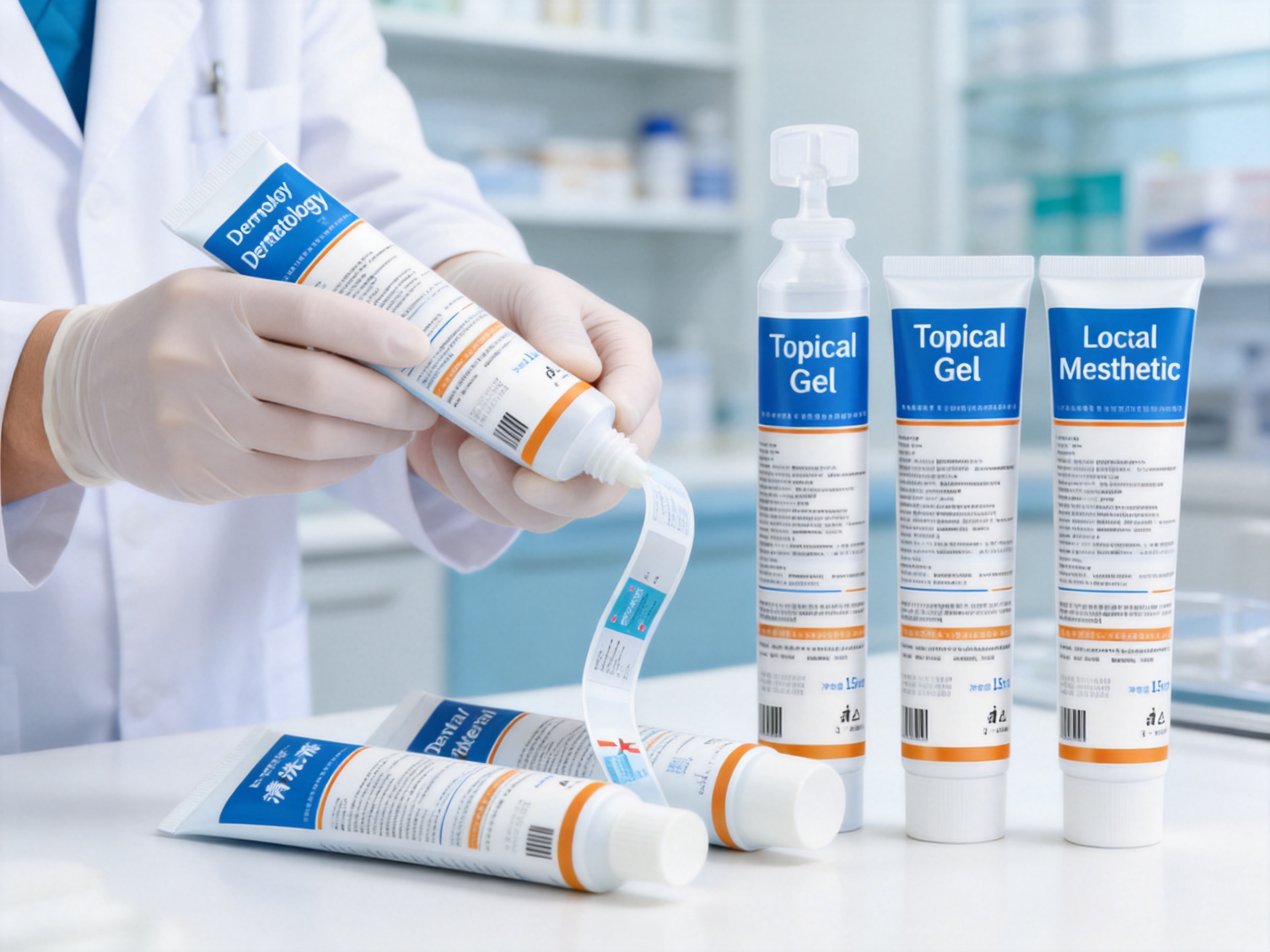
Ointments, gels, medical adhesives, dermatological preparations, local anesthetics, and dental impression materials are often packaged in tubes that must be squeezed, rolled, folded, and handled repeatedly during normal use. Although the tube itself protects the product, the label performs an equally important role. It identifies the product, communicates instructions and warnings, supports brand recognition, and contributes to the professional appearance expected of healthcare packaging. A label that wrinkles, lifts at the edges, cracks, or becomes unreadable can weaken consumer confidence and create practical problems throughout the product lifecycle.
Ointment/Gel Tubes Packaging Labels are developed specifically for these demanding conditions. Using highly flexible PE or PP film, combined with a strong, migration-resistant adhesive, the label is designed to conform closely to curved tube surfaces and remain securely attached during repeated compression. The construction helps maintain a clean appearance, stable printing, and information integrity from the time the product leaves the filling line until the final application by the user.
Unlike ordinary paper stickers or rigid film labels designed for flat containers, these tube labels are engineered around the mechanical behavior of squeezable packaging. The material must bend without breaking, stretch or move with the tube without excessive distortion, and resist the influence of the contents or surrounding environment. High-precision die-cutting further supports accurate application across different tube diameters and sizes.
For manufacturers seeking a dependable packaging label supplier, the product combines flexible materials, durable printing, controlled adhesive performance, and customized production capabilities. These characteristics make it suitable for healthcare packaging that requires both technical reliability and a polished visual presentation.
Why Tube Packaging Requires a Specialized Label Construction
A tube is not a static packaging surface. During filling, sealing, transportation, storage, and use, it may be exposed to pressure, bending, rolling, friction, temperature changes, and contact with creams, gels, oils, or other formulation components. Every one of these conditions can challenge a label.
When a conventional label is applied to a curved tube, it may initially appear acceptable but develop problems over time. The edges can lift as the tube is squeezed. The face material may wrinkle when the tube is compressed. The adhesive may lose strength if it encounters migrating ingredients. Printed information may become abraded through handling. If the label is too rigid, it can resist the natural movement of the tube and create stress at the label edges or around the seam.
These issues are especially important for healthcare products because the label is more than a decorative element. It may carry product identification, dosage instructions, active ingredient information, batch details, expiration data, storage conditions, usage directions, warnings, and regulatory content. Any loss of adhesion or legibility can make the packaging appear unreliable and may complicate product handling in professional or household environments.
Ointment/Gel Tubes Packaging Labels address these challenges by combining a flexible film face with an adhesive system selected for secure bonding and resistance to migration. The label is designed to move with the tube rather than fight against it. This allows the finished package to preserve its appearance and information integrity even when the tube is repeatedly squeezed, folded, curled, or rolled.
The construction is also adaptable to different tube designs. Whether the package has a narrow diameter, a larger body, a tapered shoulder, or a customized printable area, high-precision die-cutting can produce a label that matches the required dimensions. Accurate sizing reduces unnecessary overlap, edge exposure, and visual irregularities while supporting a consistent appearance across a product family.
Core Product Advantages
Highly Flexible PE and PP Film Substrates
The base material is made from highly flexible polyethylene or polypropylene film. These materials are well suited to tube packaging because they can conform to curved surfaces without the brittleness associated with many paper materials. Their flexibility helps the label follow the movement of the tube as the contents are dispensed.
PE and PP films also support a clean and professional surface for high-quality printing. Depending on the selected construction and finishing requirements, the label can be produced with a visual effect that supports pharmaceutical, medical, personal care, or technical product positioning. The film face helps preserve the label’s shape and appearance during ordinary handling while providing a stable foundation for product information and graphic design.
For tube packaging, flexibility is not simply a visual benefit. It is a functional requirement. A face material that bends smoothly reduces the mechanical stress transferred to the adhesive layer. It also minimizes the formation of creases when the tube is squeezed or folded. This improves the likelihood that the label will remain smooth and readable throughout the tube’s service life.
Strong Adhesion on Curved Surfaces
The adhesive is selected to create a firm bond between the label and the tube surface. Curved containers can be more difficult to label than flat cartons or rigid bottles because the label is constantly subject to directional forces. As the tube changes shape, the label must remain attached around the body, along the edges, and near areas where curvature changes.
A strong adhesive helps prevent lifting, bubbling, edge bursting, and detachment. This is particularly important at the beginning and end of a label wrap, where stress can accumulate. Secure adhesion also contributes to the overall perception of quality. A label that sits flat and remains aligned presents a more reliable and professionally controlled package.
The adhesive system is designed to resist migration, helping reduce the risk that components from the ointment, gel, or adhesive formulation will move into the label structure and weaken its performance. This feature is valuable for products that remain in contact with the package for extended periods or contain ingredients that may challenge ordinary adhesive systems.
Resistance to Repeated Compression and Folding
Many ointment and gel tubes are opened and closed repeatedly. Users may squeeze the same area several times per day, roll the tube from the bottom, fold it to remove the remaining contents, or carry it in a bag or medical kit. These actions create repeated compression and flexing cycles.
Ointment/Gel Tubes Packaging Labels are designed to withstand these actions without easily breaking or separating from the tube. The flexible film follows the package movement, while the adhesive maintains contact with the substrate. This helps the printed surface stay intact and reduces the risk of visible creases or exposed edges.
Improved compression resistance offers practical benefits to both manufacturers and end users. Manufacturers can reduce complaints related to damaged packaging labels, while users can continue to identify and handle the product even after prolonged use. For healthcare products, this continuity is particularly important because the package may need to retain instructions or identifying information until the tube is completely empty.
Resistance to Wrinkles and Edge Lifting
Wrinkles are one of the most noticeable problems associated with unsuitable labels on squeezable tubes. They can occur when the face material cannot adapt to the tube’s changing shape or when the adhesive does not wet the surface evenly. Edge lifting can begin as a small separation and become more serious as the tube is handled.
The flexible film and strong adhesive combination helps the label stay closely fitted to the curved surface. The result is a smoother appearance and a lower risk of the label catching on clothing, packaging materials, or other objects during handling. Maintaining flat, secure edges also supports a more hygienic and orderly appearance for healthcare packaging.
By controlling the relationship between film flexibility, adhesive strength, label dimensions, and application conditions, manufacturers can produce labels that are better suited to the actual behavior of a tube. This is a more reliable approach than applying a general-purpose label and expecting it to perform under repeated deformation.
Stable, Wear-Resistant Printing
Medical and healthcare labels must remain legible throughout distribution and use. Printed graphics and text can be exposed to friction, handling, moisture, oils, and contact with other packages. If the print fades, smears, or wears away, the package may lose important visual and functional information.
These tube labels are produced with printed designs that are intended to remain vibrant and wear-resistant. Stable colors help products maintain a consistent appearance across production batches. Clear text and strong graphic definition support quick product recognition by consumers, healthcare personnel, warehouse operators, and retailers.
Printing can be adapted to the product’s design requirements, including brand colors, technical instructions, regulatory information, warning symbols, identification codes, and visual differentiation between product variations. The printed surface can be coordinated with the tube color and overall packaging system to create a unified presentation.
For manufacturers managing several ointment or gel formulations, consistent printing quality can simplify product identification. Different strengths, flavors, applications, or treatment categories can be distinguished through controlled use of color, typography, icons, and layout while retaining a common packaging architecture.
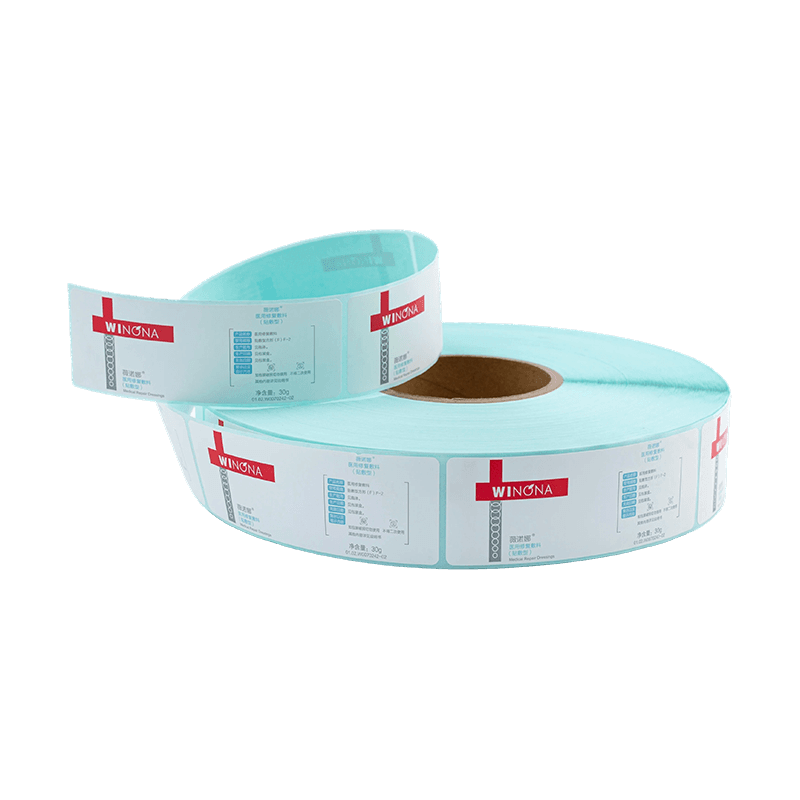
Ointment/Gel Tubes Packaging Labels
High-Precision Die-Cutting for Different Tube Sizes
Tube packaging is available in many diameters, lengths, shoulder shapes, cap configurations, and printable areas. A label that fits one tube may not be suitable for another. Accurate die-cutting is therefore essential for achieving a clean application and repeatable production result.
High-precision die-cutting enables labels to be manufactured according to specific tube dimensions. The label can be designed to fit the circumference and height of the package while maintaining appropriate clearances around seams, shoulders, caps, openings, and other structural features. This supports a neat and standardized appearance across different formats.
Precision cutting also reduces unnecessary material around the label. A controlled outline can improve the visual balance of the finished package and reduce the chance of exposed corners lifting during use. Special shapes, rounded corners, registration features, and customized panel layouts can be considered during product development.
For contract packers and healthcare manufacturers, repeatable die-cutting supports line efficiency. Consistent label dimensions make it easier to calibrate labeling equipment, maintain application accuracy, and control production quality. When label size and position are stable, operators can reduce manual adjustments and improve packaging consistency.
Support for Customized Label Geometry
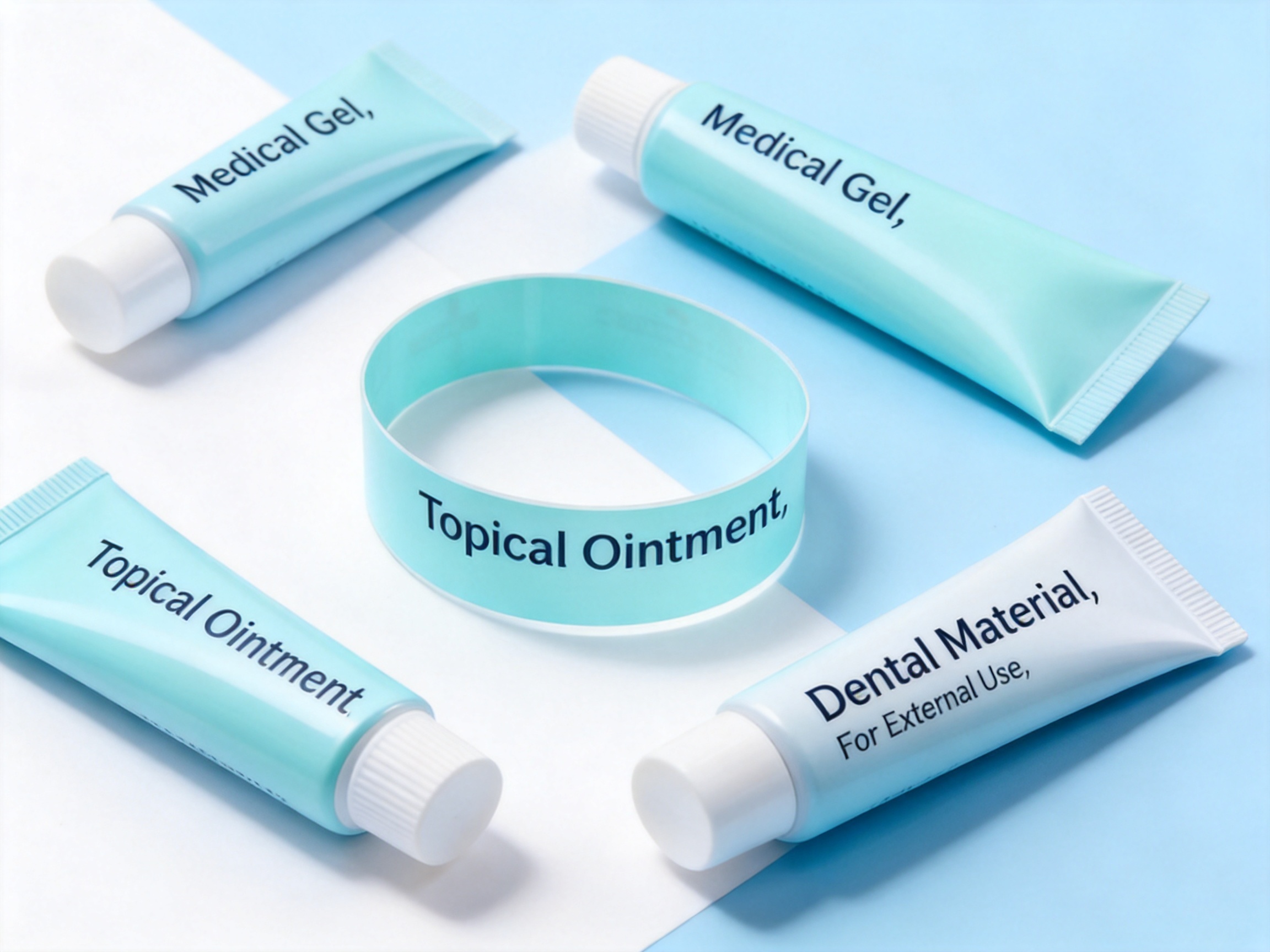
Different products may require different label configurations. A small dermatological tube may need a compact wraparound label, while a larger dental material tube may require a wider information panel. A product with a tapered body may need a specially shaped label to minimize wrinkling near the shoulder.
Customized die-cutting makes it possible to address these packaging conditions instead of forcing every product into a generic format. The label design can take into account the tube’s diameter, curvature, sealing method, printable area, and required information. This is valuable for product lines that include several package sizes or specialized medical applications.
Customization can also support premium packaging design. A carefully proportioned label, precise corner radius, and accurate alignment can make the product appear more refined. In healthcare markets, professional presentation can reinforce perceptions of quality, cleanliness, technical competence, and reliability.
Applications in Healthcare and Medical Packaging
Dermatological Medications
Dermatological creams and ointments are commonly packaged in squeezable tubes for controlled dispensing. These products may be used daily, often in bathrooms, clinics, travel bags, or home medicine cabinets. The label must withstand repeated handling while preserving product identification and instructions.
A flexible, securely bonded label helps the tube remain presentable throughout its use. It can provide space for active ingredients, usage directions, warnings, storage information, lot numbers, and expiration details. Stable printing is particularly important when the product is used over several weeks or when multiple tubes are stored together.
Local Anesthetics and Topical Gels
Topical gels and local anesthetic products may require clear distinction between strengths, application areas, and usage instructions. Their packaging can be handled frequently in clinical, dental, or personal care environments. A durable label helps ensure that the product remains identifiable after transport and repeated dispensing.
The migration-resistant adhesive system is valuable for formulations that may contain oils, solvents, or other ingredients capable of challenging ordinary label constructions. Selecting a suitable material and adhesive combination helps reduce the chance of adhesive failure or label deterioration during storage and use.
Dental Impression Materials and Medical Adhesives
Dental impression materials and medical adhesives may be packaged in tubes or similar flexible containers. These products often require a professional presentation and clear technical information. Labels must remain readable and firmly attached even when the packaging is squeezed or stored alongside other clinical supplies.
High-precision die-cutting allows the label to be matched to the specific tube format. A stable label can improve identification in treatment rooms, laboratories, distribution centers, and inventory systems. The finished appearance also supports a consistent product image across a broader professional healthcare portfolio.
Related Healthcare and Personal Care Products
The same label construction can be considered for a variety of products that use flexible tubes, including therapeutic gels, protective creams, first-aid products, skin treatment preparations, oral care materials, and specialized personal care formulations. Suitability depends on the tube substrate, formulation, storage conditions, labeling regulations, and required performance tests.
Because the labels can be customized in material, dimensions, printing, and die-cut shape, they provide a practical platform for different product categories. Manufacturers can develop a consistent labeling system while adjusting the details required for individual products.
Advantages Over General-Purpose Labels
General-purpose labels are often designed for relatively stable surfaces such as cartons, glass bottles, rigid plastic containers, or metal cans. These products may not experience the same level of repeated deformation as a squeezable tube. Applying a standard label to a tube can lead to performance problems that are not immediately visible during initial inspection.
Paper labels may absorb moisture, crease under compression, or tear when the tube is folded. Rigid films may resist the tube’s movement and create edge stress. Adhesives intended for flat surfaces may not maintain a strong bond around a curved, flexible package. In addition, an unsuitable label may become distorted during application or develop bubbles and wrinkles as the tube is used.
Specialized tube labels offer several competitive advantages:
| Performance Requirement | General-Purpose Label Risk | Ointment/Gel Tube Label Advantage |
|---|---|---|
| Conformance to curved surfaces | Wrinkles, bubbling, or incomplete contact | Flexible PE/PP film closely follows the tube profile |
| Repeated squeezing | Cracking, creasing, or edge lifting | Flexible construction moves with the tube |
| Contact with formulations | Adhesive weakening or migration-related failure | Migration-resistant adhesive supports stable performance |
| Long-term readability | Print wear, smearing, or fading | Vibrant, stable, and wear-resistant printing |
| Different tube formats | Limited standard sizes | High-precision custom die-cutting |
| Professional appearance | Uneven edges or visible deformation | Accurate fit and clean application support presentation quality |
The main advantage is not one isolated feature, but the interaction of the complete label system. Flexible film, suitable adhesive, durable printing, accurate cutting, and controlled production must work together. A strong adhesive cannot compensate for a brittle face material, and a flexible film cannot guarantee performance if the label dimensions are inaccurate. The product is therefore developed as an integrated solution for tube packaging.
Manufacturing Process and Quality Control
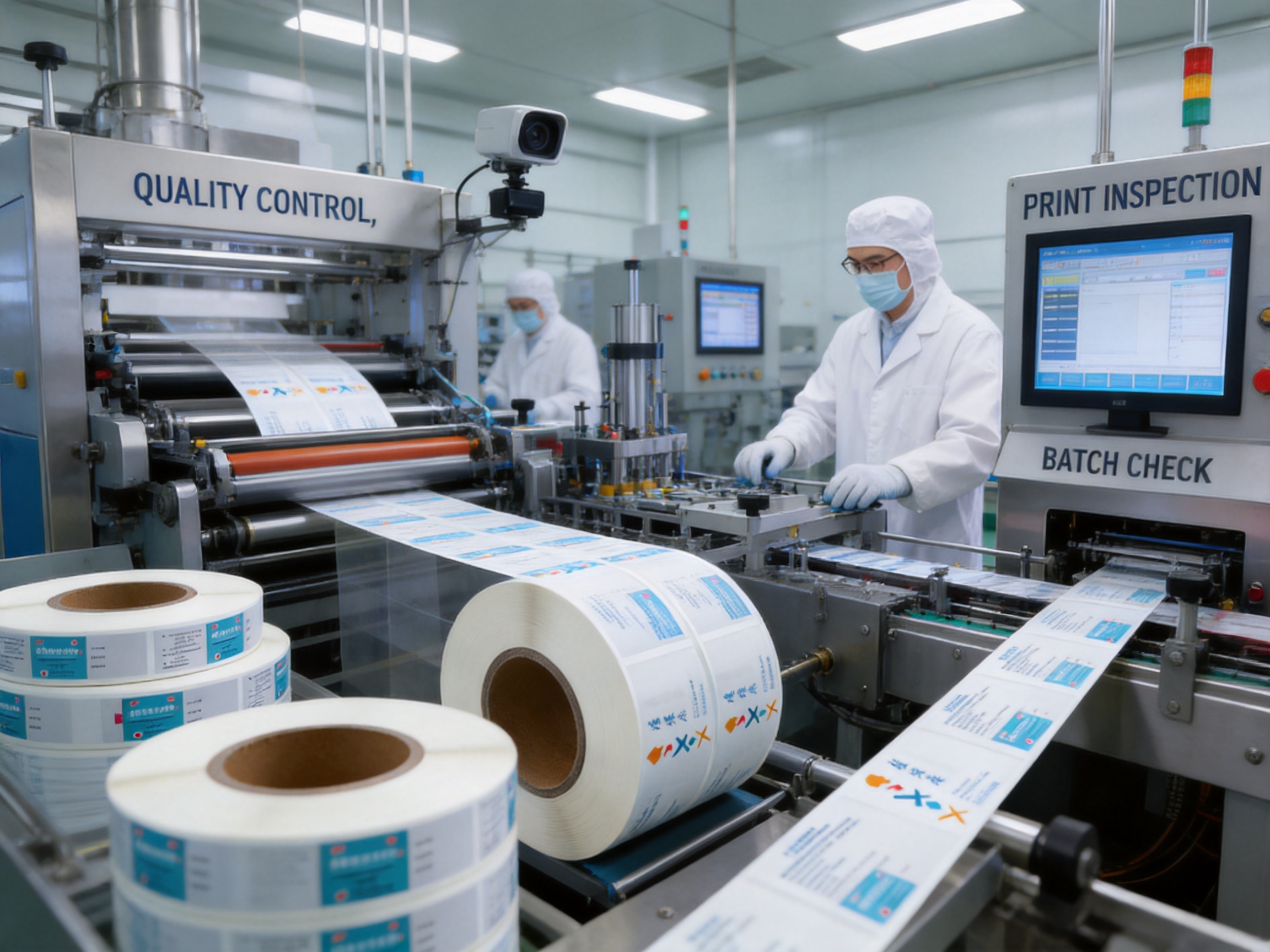
Reliable tube labels depend on disciplined manufacturing from raw material selection through finished-product inspection. Advanced automated production lines help maintain consistency in coating, printing, converting, die-cutting, rewinding, and packaging. Process control is especially important when labels are supplied for healthcare applications, where appearance and performance must remain stable across production batches.
Material Selection and Incoming Inspection
The process begins with the selection of PE or PP film appropriate for the intended application. Material characteristics may include thickness, flexibility, surface energy, print receptivity, dimensional stability, and compatibility with the adhesive system. Incoming materials are inspected to verify that they meet defined specifications before entering production.
Adhesive materials are also selected according to the tube substrate, formulation environment, expected use conditions, and required bonding performance. A migration-resistant construction is important for products whose contents may challenge the adhesive layer. Controlling these variables at the beginning of production helps reduce downstream variation.
Precision Coating and Lamination
Where the construction requires adhesive coating or multiple layers, controlled coating and lamination processes help maintain uniformity. Even adhesive distribution supports consistent bonding across the label surface. Excessive variation can create weak areas, bubbles, transfer problems, or application defects.
Lamination and web handling equipment must preserve the alignment and flatness of the material. Proper tension control helps prevent stretching, curling, or deformation before printing and cutting. These process controls are important because small dimensional changes can affect the final fit on a curved tube.
High-Quality Printing
Automated printing equipment supports repeatable color, registration, and image quality. The printing process can be configured for detailed graphics, fine text, variable product information, and different visual effects. Inspection systems help identify defects such as color variation, missing print, smearing, registration errors, or surface contamination.
For healthcare products, print inspection is especially useful because labels may contain small but important information. Controlled print reproduction supports readability and helps manufacturers maintain a consistent appearance across multiple production runs. Color management also assists in differentiating related products within the same product family.
Precision Die-Cutting and Waste Removal
After printing, the label web is processed through high-precision die-cutting equipment. The cutting tools and registration systems are adjusted to match the approved label design. Accurate cutting creates consistent dimensions, smooth edges, and reliable spacing between labels.
Waste removal and rewinding are also controlled to ensure that the finished rolls are clean, stable, and suitable for automated application. Poorly rewound rolls can cause telescoping, loose edges, uneven tension, or feeding problems on the customer’s labeling line. Careful finishing improves the usability of the labels during packaging operations.
Inspection and Quality Assurance
Quality control does not end with visual inspection. Depending on the project requirements, performance evaluation may include adhesion testing, dimensional checks, print rub resistance, flexibility assessment, and compatibility review. Test methods can be selected according to the tube material, label design, adhesive system, and intended storage or use conditions.
A stringent quality control system helps ensure that materials and finished labels meet established standards. Inspection records, process documentation, equipment maintenance, and corrective action procedures support traceability and continuous improvement. These systems are particularly relevant to customers supplying healthcare, pharmaceutical, dental, and personal care markets.
Integrated Manufacturing Strengths
Shanghai Rongyang Industrial Development Co., Ltd. operates as an integrated provider of pressure-sensitive labels and RFID smart label solutions. Its capabilities cover research and development, manufacturing, sales, and service. This integrated model allows customer requirements to be evaluated across the complete product lifecycle rather than treated as an isolated printing order.
For ointment and gel tube labels, this approach can support material selection, structural development, artwork preparation, prototyping, production, inspection, and delivery coordination. Customers benefit from a more direct connection between technical requirements and manufacturing execution. When a project involves unusual tube dimensions, special adhesive needs, or demanding performance conditions, integrated technical support can simplify communication and development.
The company operates advanced automated production lines and precision inspection equipment. Automation helps reduce process variation and supports stable output for both standard and customized labels. Inspection equipment contributes to the control of print quality, dimensions, registration, adhesive performance, and finished-roll condition.
Its product portfolio includes pressure-sensitive labels for fast-moving consumer goods, food and beverage, pharmaceuticals, logistics, and retail. This broad experience is valuable because it exposes the manufacturing organization to different substrates, adhesives, application environments, printing requirements, and quality expectations.
In addition to conventional adhesive labels, the company provides specialized solutions such as anti-counterfeiting labels, high-temperature-resistant labels, removable labels, specialized die-cut products, and RFID inlays, tags, and finished products. These capabilities indicate a strong foundation in functional label engineering rather than a narrow focus on decorative printing alone.
Production facilities in China and Malaysia support international customer requirements and large-scale supply programs. A geographically diversified manufacturing structure can assist with capacity planning, regional service, supply continuity, and export coordination. The company’s experience serving customers worldwide also supports communication across different markets and packaging systems.
Certifications and Management Systems
The company was founded in 2008 and has obtained ISO 9001 and ISO 14001 certifications. ISO 9001 reflects a structured quality management approach, while ISO 14001 relates to environmental management practices. The company has also passed a SMETA social responsibility audit.
These certifications and audit results do not replace product-specific testing, but they provide useful evidence of an organized management framework. For customers purchasing healthcare packaging components, supplier evaluation often includes quality systems, environmental responsibilities, social compliance, traceability, and continuous improvement. A manufacturer with established management systems is better positioned to support these procurement requirements.
Continuous improvement is also important for flexible tube labels because packaging materials and formulations continue to evolve. New tube substrates, smaller formats, sustainable material preferences, higher-speed application equipment, and more complex product information can all affect label design. An organization committed to research, process development, and technical service can adapt more effectively to these changes.
Design Considerations for Healthcare Tube Labels
Information Hierarchy
A successful tube label must present required information in a clear and organized manner. Product name, application, strength, net contents, instructions, warnings, storage conditions, batch information, and expiration data should be arranged so that users can locate them easily. The available printable area may be limited, making layout planning important.
Flexible film can provide a stable surface for small text and detailed graphics, but artwork should still be prepared with suitable type sizes, contrast, spacing, and line weights. The label design must account for the curvature of the tube so that essential information does not fall across a seam, edge, or highly distorted region.
Color and Product Differentiation
Color can help distinguish product strengths, applications, or product families. Vibrant and stable printing supports this function over the life of the package. However, colors should be selected with attention to readability, contrast, printing tolerances, and the underlying tube color.
A consistent color system can reduce selection errors when several related products are stored together. It can also support brand recognition while allowing each product variation to remain visually distinct. The label manufacturer can help assess how the selected artwork will reproduce on PE or PP film and how it will appear after application to the tube.
Label Position and Application
Tube labels may be applied manually, semi-automatically, or through high-speed automatic equipment. The label format should be matched to the application method. Roll direction, core size, winding direction, gap specifications, label spacing, and web tension can all affect machine compatibility.
The tube surface should be clean, dry, and free from excessive contamination before application. Appropriate application pressure allows the adhesive to establish contact with the substrate. For curved tubes, application equipment should be configured to minimize trapped air and maintain alignment around the package.
Accurate label dimensions support consistent placement. If the label is too large, it may overlap improperly or create excessive stress at the edges. If it is too small, it may leave an unattractive gap or fail to provide sufficient information space. High-precision die-cutting helps the label meet the required application geometry.
Benefits for Manufacturers and Product Owners
Improved Product Presentation
A smooth, securely attached label contributes to a professional package appearance. This can be especially valuable for healthcare products sold through pharmacies, clinics, hospitals, dental practices, medical distributors, and e-commerce channels. Consistent printing and accurate alignment help communicate manufacturing control and product reliability.
Reduced Label-Related Complaints
Labels that detach, wrinkle, or become unreadable may generate customer complaints even when the product itself remains effective. By selecting a construction designed for repeated tube deformation, manufacturers can reduce common packaging-related problems. Better label performance may also lower the need for manual rework, repacking, or replacement.
Support for Product Traceability
Healthcare packaging may require batch codes, expiration information, barcodes, QR codes, or other identification features. A stable label surface supports the readability and durability of these elements. Depending on the application, variable data can be incorporated into the printing or applied through subsequent coding processes.
Clear traceability information supports inventory control, distribution management, product verification, and customer service. When label dimensions and print quality remain consistent, scanning and visual inspection are more reliable.
Scalable Custom Production
Manufacturers may require small custom runs for a new product, followed by larger volumes after market introduction. An experienced label supplier can support this progression through structured artwork review, prototyping, production planning, and quality control. The ability to manufacture different sizes and shapes also helps customers manage product line expansion.
Rongyang’s integrated facilities, automated lines, and international production capability provide a foundation for both customized projects and larger recurring orders. Production planning can be coordinated around material availability, artwork approval, inspection requirements, and delivery schedules.
Recommended Product Development Process
A successful tube label project begins with the collection of accurate packaging information. Customers should provide tube material, diameter, length, surface finish, cap configuration, product formulation characteristics, expected storage conditions, application method, label dimensions, artwork files, and estimated order volume.
The label supplier can then recommend a suitable PE or PP film and adhesive construction. If the formulation contains oils, solvents, or other ingredients that may affect the label, compatibility should be considered early. Samples or prototypes can be applied to actual tubes and evaluated through handling simulations.
Testing may include repeated squeezing, folding, rolling, storage exposure, abrasion, and visual inspection. The purpose is to observe whether the label remains smooth, attached, legible, and correctly positioned under representative conditions. Results can guide adjustments to material thickness, adhesive type, label dimensions, corner geometry, or printing protection.
Artwork should be reviewed for technical and regulatory suitability before production. Important information should be placed away from areas likely to experience curvature or distortion. Barcodes and small text should be checked for sufficient contrast and size. The final proof should show the intended color, die line, winding direction, and application orientation.
After approval, production controls should be established for the label run. These may include approved material specifications, color standards, print inspection criteria, die-cut tolerances, roll configuration, packaging requirements, and sampling plans. Maintaining the same controls across repeat orders supports product consistency.
Environmental and Operational Considerations
PE and PP film labels are selected primarily for flexibility, durability, and compatibility with squeezable tubes. When evaluating environmental performance, customers should consider the complete package system, including the tube material, label composition, adhesive, inks, and end-of-life conditions. Material choices should be assessed in relation to local recycling infrastructure and applicable packaging policies.
ISO 14001 certification demonstrates that the manufacturer maintains an environmental management framework. This can support customers that include environmental performance in supplier qualification. Process efficiency, waste control, responsible material use, and continual improvement can contribute to more sustainable manufacturing operations.
Operational efficiency is also influenced by label quality. Consistent rolls, accurate dimensions, reliable adhesion, and stable print registration can reduce machine stoppages and material waste on the customer’s packaging line. A label that applies correctly the first time supports more efficient production and reduces the need for rework.
Frequently Asked Questions
What makes these labels suitable for ointment and gel tubes?
They are made with highly flexible PE or PP film and a strong, migration-resistant adhesive. This combination is designed to conform to curved tube surfaces and remain attached during repeated squeezing, folding, curling, and rolling.
Can the labels be used on different tube diameters?
Yes. High-precision die-cutting allows the labels to be customized for different tube diameters, lengths, shapes, and printable areas. The final design should be based on actual tube dimensions and the required application method.
Will the label wrinkle when the tube is squeezed?
The flexible construction is intended to reduce wrinkling and distortion during normal tube use. Performance depends on the tube material, label dimensions, application quality, formulation, and storage conditions, so testing on the actual package is recommended.
Can the adhesive resist contact with ointments or gels?
The adhesive is designed with migration resistance to support stable performance when used with suitable ointment, gel, and medical adhesive packaging. Compatibility should be confirmed for each formulation, especially when the product contains oils, solvents, or other potentially aggressive ingredients.
Are the printed colors durable?
The printed designs are produced for stable color and wear resistance. The exact performance depends on the selected ink system, surface finish, handling conditions, and any additional protective requirements. Product-specific print testing can be arranged when necessary.
Can the labels include batch numbers, barcodes, or expiration information?
Yes. The label layout can be developed to include product identification, instructions, warnings, batch information, expiration data, barcodes, QR codes, and other required content. The available space and printing or coding method should be reviewed during artwork development.
Are custom shapes and rounded corners available?
High-precision die-cutting supports customized label geometry, including special outlines, rounded corners, and format-specific dimensions. The design should be optimized for the curvature and movement of the target tube.
Can the labels be supplied for automatic application?
They can be produced in roll formats suitable for many automated or semi-automated labeling processes. Core size, winding direction, label spacing, roll diameter, and other specifications should be confirmed with the packaging equipment requirements.
What information is needed to request a quotation?
Useful information includes the tube material, diameter, length, label size, artwork, quantity, adhesive requirements, printing colors, application method, roll specifications, delivery destination, and any testing or certification requirements.
How should the labels be stored before application?
Labels should generally be stored in their original packaging in a clean, dry environment away from excessive heat, moisture, direct sunlight, and contamination. Customers should follow the supplier’s specific storage recommendations and use the labels within the advised period.
What healthcare products can use this label solution?
Potential applications include dermatological ointments, topical gels, local anesthetics, dental impression materials, medical adhesives, first-aid preparations, therapeutic creams, oral care products, and other formulations packaged in flexible tubes. Final suitability depends on the product and package conditions.
Why choose an integrated label manufacturer?
An integrated manufacturer can coordinate material selection, structural design, printing, die-cutting, inspection, and delivery through a connected production system. This can simplify communication, improve process consistency, and provide technical support when a project requires customized performance.
Conclusion
Ointment/Gel Tubes Packaging Labels are designed for the demanding mechanical and functional requirements of squeezable healthcare packaging. Their highly flexible PE or PP film conforms to curved surfaces, while the strong, migration-resistant adhesive supports secure attachment during repeated compression, folding, curling, and rolling. Stable printing helps preserve product information and visual quality, and high-precision die-cutting enables an accurate fit for different tube formats.
Compared with general-purpose labels, this specialized construction offers stronger support for long-term tube use, improved resistance to wrinkles and edge lifting, better compatibility with curved packaging, and greater flexibility in customized dimensions. These benefits can improve product presentation, reduce label-related failures, support traceability, and enhance packaging line consistency.
Shanghai Rongyang Industrial Development Co., Ltd. strengthens this product solution through integrated research and development, automated manufacturing, precision inspection, quality management, environmental management, and international production capabilities. Its experience in pressure-sensitive labels, RFID solutions, specialized functional labels, and diverse packaging markets provides a broad technical foundation for healthcare tube applications.
For manufacturers of dermatological medications, local anesthetics, dental materials, medical adhesives, gels, and related products, the right label is an essential part of packaging performance. A carefully engineered tube label protects the appearance and usability of the package while helping the product communicate professionalism, reliability, and quality throughout its journey from production to final use.
References
1. ISO 9001, Quality Management Systems—Requirements.
2. ISO 14001, Environmental Management Systems—Requirements with Guidance for Use.
3. International Organization for Standardization, General Principles for Pressure-Sensitive Adhesive Label Production and Quality Control.
4. Pressure-Sensitive Tape Council, Test Methods for Adhesion, Tack, Shear, and Peel Performance.
5. Association of International Research Organizations for the Paper and Packaging Industries, Packaging Material Testing Principles.
6. United States Pharmacopeia, General Packaging and Storage Considerations for Healthcare Products.
7. Technical guidance on flexible plastic packaging, label adhesion, print durability, and package compatibility for healthcare applications.
8. Supplier technical documentation for flexible PE and PP films, migration-resistant adhesives, precision die-cutting, and pressure-sensitive label manufacturing.
Product: Ointment/Gel Tubes Packaging Labels


Messae Us Right Now!

- Quick Links
- Products
- Quality Control
- Our Story
- News
- Contact
- Our Product
-
- Beauty and Personal Care Labels
- Home cleaning and laundry care labels
- Liquor and Beverage Labels
- Food and dairy product labels
- Healthcare Labels
- Promotional and Interactive Labels
- Specialty and industrial solution
- Labels Thermal printing and logistics labels
- Anti-counterfeiting traceability and RFID Labels
- Contact us
- Tel:+86-573-86867861
- Phone:+86-18621872035
- E-mail:allen.men@rylabel.com
- Add:No. 111 Xincheng Road, Haiyan Economic Development Zone, Jiaxing City, Zhejiang Province


