
 English
 русский
 Español


Home / Author / Sofía Velasco — Customer Success and Technical Support Executive / Iced Moisture-Proof Liquor Labels for Chilled Beverage Packaging
News

Iced Moisture-Proof Liquor Labels for Chilled Beverage Packaging
2026-11-14
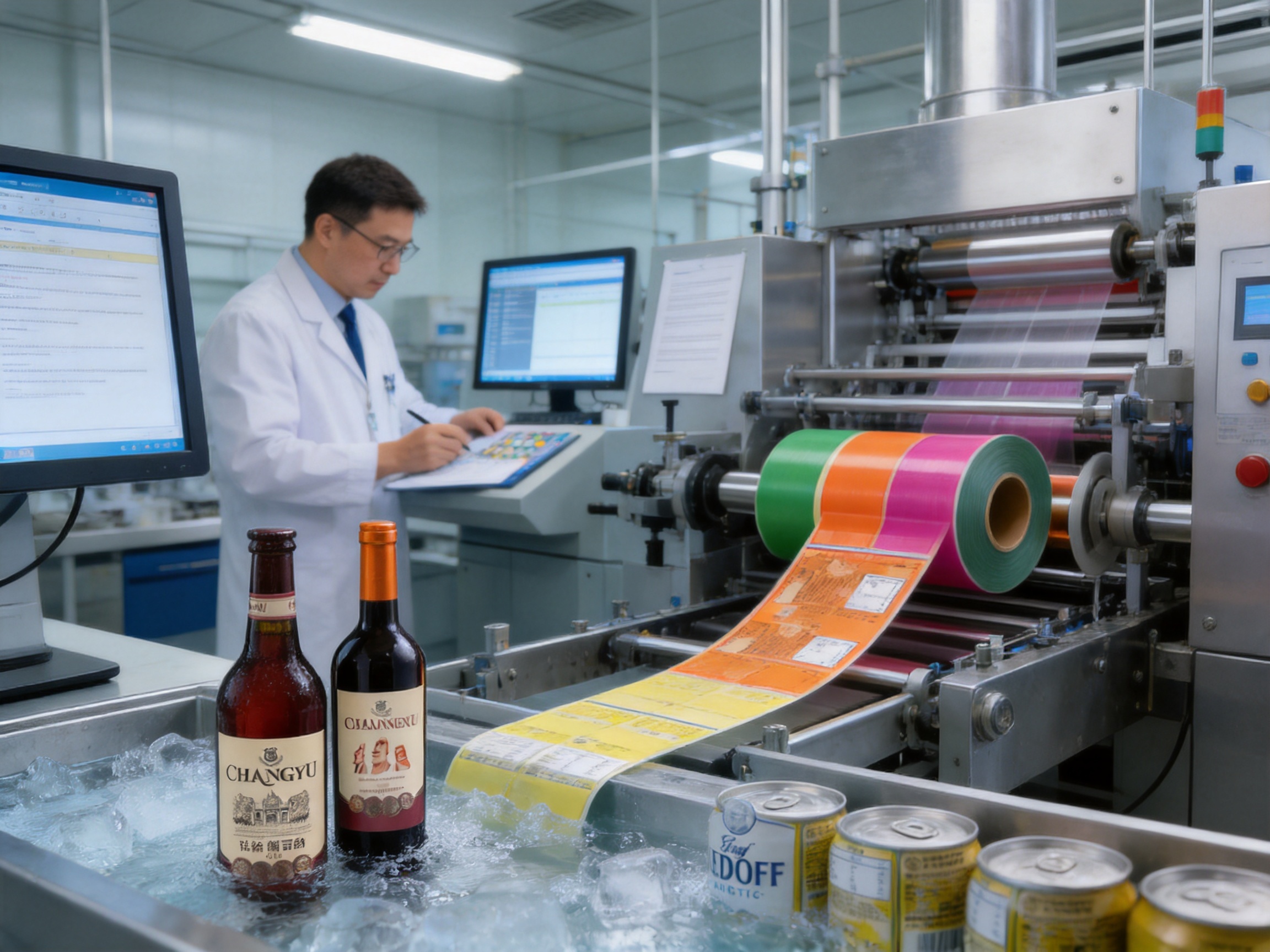
In the beverage industry, packaging must perform under demanding conditions. Bottles and cans are frequently moved from ambient warehouses into refrigerated displays, ice buckets, chilled transport containers, and wet retail environments. During these transitions, condensation forms on the package surface. Water may collect around the label, run down the bottle, or remain trapped between the container and the label for extended periods. Standard paper labels and ordinary adhesives can quickly lose their appearance and bonding strength in these conditions.
Iced moisture-proof liquor labels are developed specifically to address this challenge. They use synthetic paper or specialized film as the face material, together with a permanent waterproof adhesive system and a moisture-resistant backing layer. Their construction helps the label maintain adhesion, dimensional stability, and print clarity when exposed to refrigeration, condensation, ice water immersion, and repeated handling.
These labels are suitable for beer bottles, sparkling wines, premixed cocktails, ready-to-drink beverages, chilled spirits, flavored alcoholic drinks, and other products that require long-term refrigerated display. They are designed for chilled environments commonly ranging from 0°C to 4°C, where ordinary labeling materials may curl, bubble, peel, wrinkle, smear, or become difficult to read.
For beverage producers, the label is more than a decorative component. It communicates the product name, brand identity, ingredients, volume, regulatory information, barcode, batch details, and promotional messaging. A label that remains clear and firmly attached helps protect product presentation, consumer confidence, and operational efficiency throughout the supply chain.
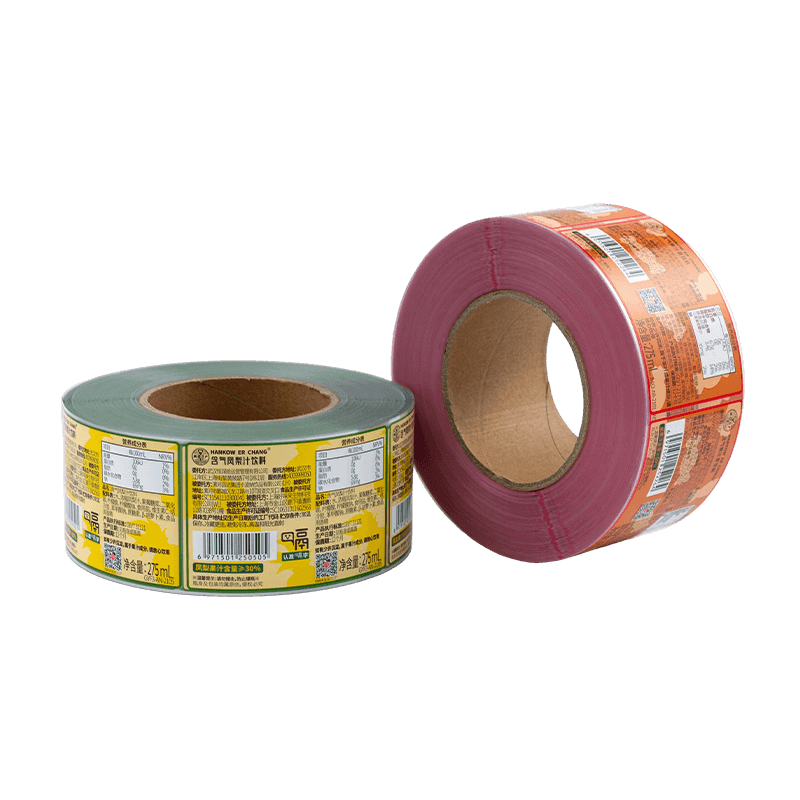
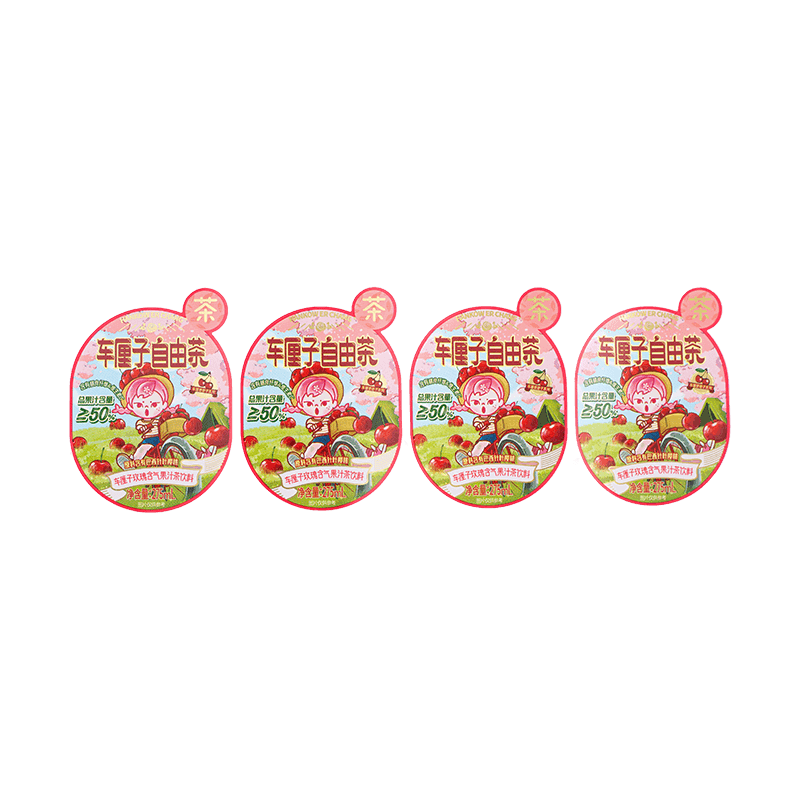
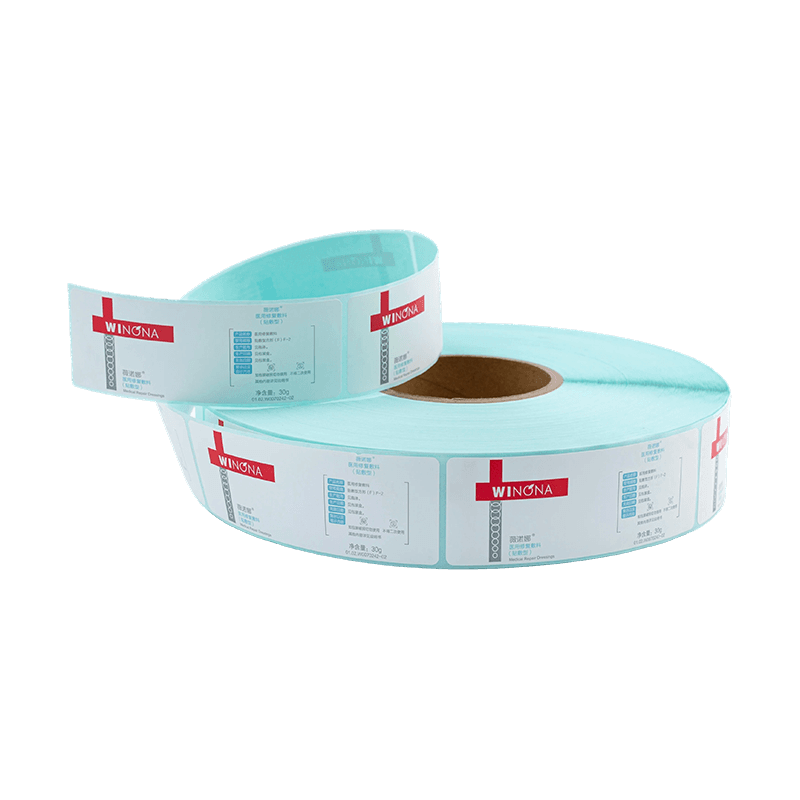
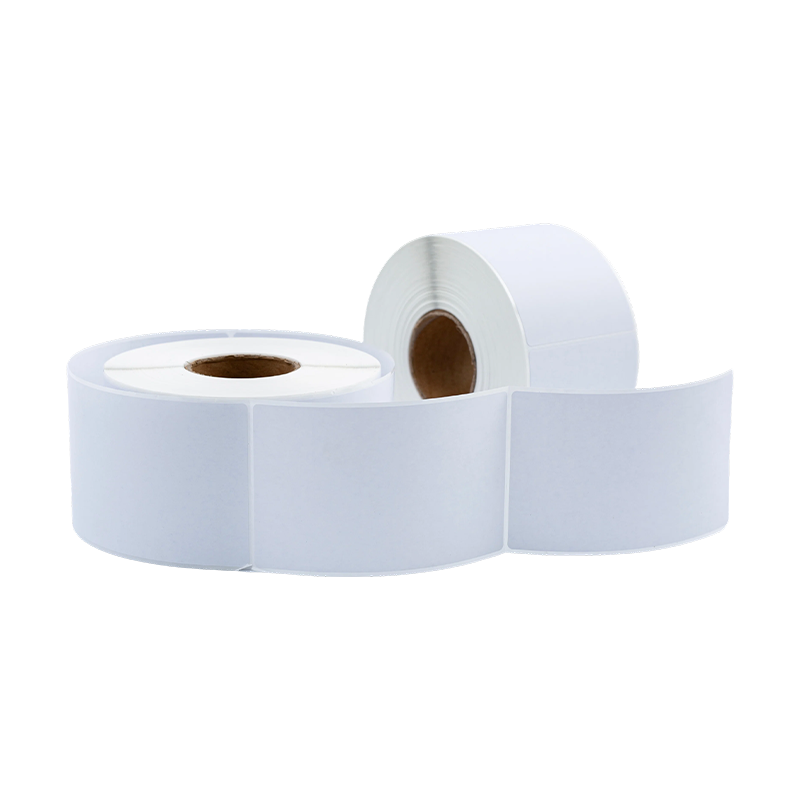
Iced moisture-proof liquor labels
Why Chilled Beverage Labels Require Specialized Construction
Moisture creates several risks for conventional labels. When a cold bottle is removed from refrigeration, warmer air causes water vapor to condense on its surface. The resulting moisture can penetrate paper fibers, soften water-sensitive coatings, and weaken the adhesive interface. If the bottle is placed in an ice bucket or cooler, the label may also be exposed to direct water contact, temperature fluctuations, friction, and repeated handling.
Traditional labels designed for dry ambient conditions are often not suitable for these applications. A standard paper face may absorb water and expand. Once the paper absorbs moisture unevenly, the label can develop ripples or wrinkles. If the adhesive softens or loses tack, the edges may begin to lift. Continued exposure can cause the entire label to detach.
Ink performance is another concern. Water can cause printed graphics to blur, bleed, fade, or lose contrast. This is particularly problematic when the label includes fine typography, detailed illustrations, barcodes, QR codes, legal statements, or variable information such as production dates and lot numbers.
Iced moisture-proof liquor labels are engineered to reduce these failures. The face material, surface treatment, adhesive, and release liner are selected as a coordinated system. Instead of relying on a decorative paper layer alone, the construction is designed to withstand moisture while preserving the visual and functional properties required for beverage packaging.
Condensation Resistance
Condensation resistance is one of the most important performance characteristics for chilled beverage labels. The label surface must resist water penetration, while the adhesive must remain bonded to glass, coated glass, aluminum, plastic, or other common container materials.
A moisture-resistant face material helps limit water absorption. A properly selected adhesive maintains contact with the container even when a layer of moisture is present. The combination reduces the risk of edge lifting, bubbling, and premature separation during refrigerated storage and retail display.
Resistance to Ice Water Exposure
Many beverages are displayed in ice-filled tubs, coolers, or buckets. In these situations, labels can be partly or fully exposed to water. Bottles may also be removed from the ice repeatedly, creating friction between the label and wet hands, packaging, or neighboring containers.
The specialized construction of iced moisture-proof liquor labels is intended to provide reliable performance during this type of exposure. The label remains more stable than ordinary paper alternatives, helping the package retain a clean and professional appearance during service, transportation, and retail handling.
Print Stability in Wet Conditions
Label graphics must remain readable even when the package surface is wet. Surface treatment helps resist ink diffusion and supports sharper printed patterns, text, and symbols. This is valuable for high-impact brand graphics as well as essential product information.
Stable print performance also supports scanning operations. Barcodes and other machine-readable elements need sufficient contrast and definition. If water causes the printed image to spread or become distorted, scanning errors and manual processing may increase.
Core Product Construction
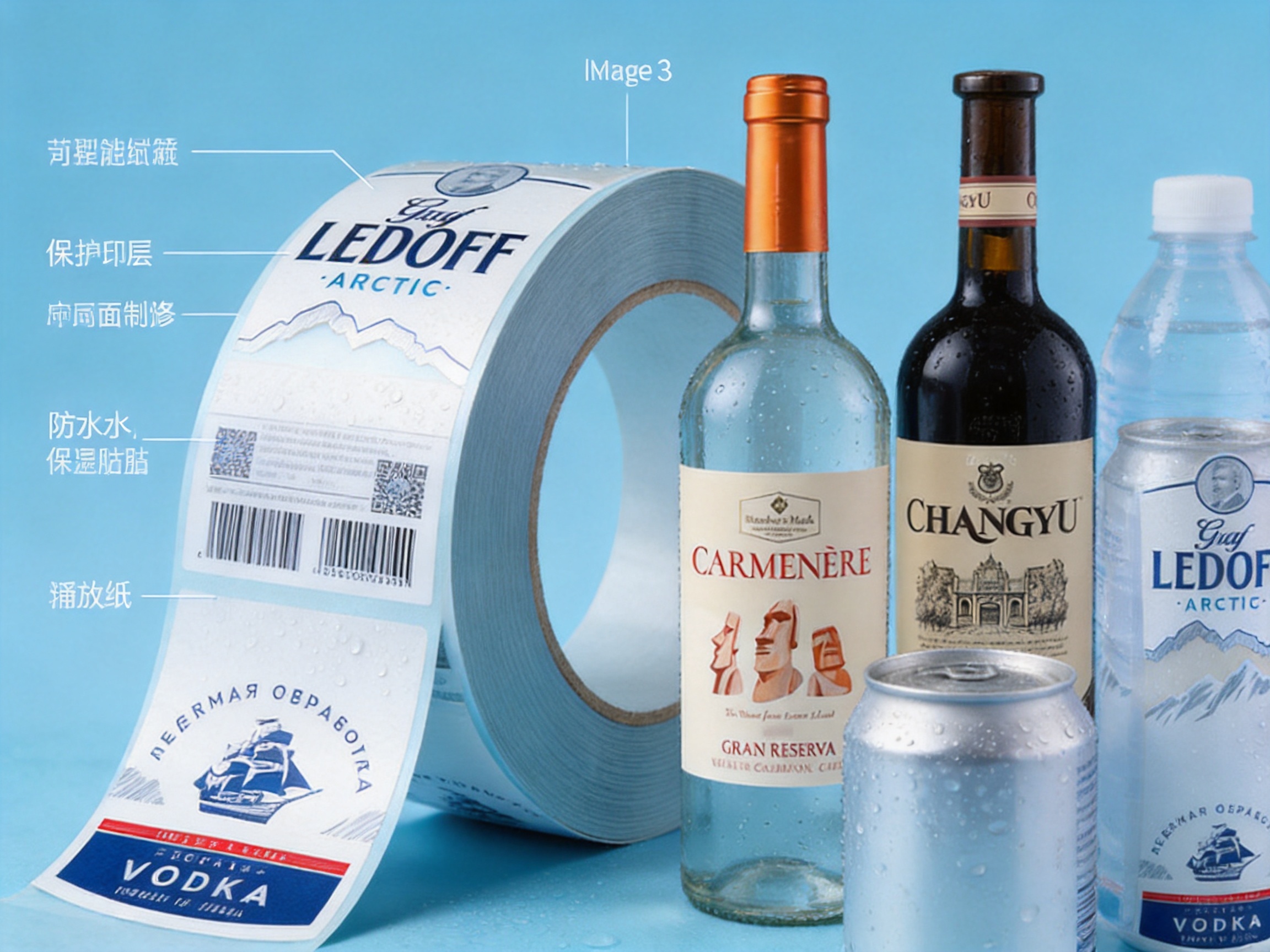
The performance of an iced moisture-proof liquor label comes from the interaction of several components. Each layer contributes to the final result, and the materials can be adjusted according to the container type, beverage category, printing method, application environment, and expected service life.
Synthetic Paper or Special Film Face Material
The face material is the visible layer of the label. Synthetic paper and special films are often selected for applications requiring moisture resistance, strength, dimensional stability, and consistent print quality.
Synthetic paper can provide a paper-like appearance while offering improved resistance to water and tearing. It is suitable for brands that want a more traditional label texture without accepting the limitations of untreated paper. Special films can provide additional flexibility, toughness, smoothness, or visual effects, depending on the chosen structure.
Compared with ordinary paper, these materials are less likely to swell, wrinkle, or disintegrate when exposed to condensation. Their dimensional stability supports a more consistent appearance across the entire bottle surface.
Waterproof Adhesive
The adhesive is responsible for securing the label to the package. For chilled beverage applications, a permanent waterproof adhesive is used to support reliable bonding under wet and cold conditions.
Adhesive selection must account for the container surface, application temperature, bottle curvature, storage duration, and exposure to condensation. A label may perform differently on smooth glass, textured glass, coated metal, or certain plastics. For this reason, product specifications and application conditions should be reviewed before mass production.
The adhesive system is designed to maintain stable contact after application. It helps minimize edge lifting, bubbles, peeling, and label movement during refrigeration and water exposure.
Moisture-Resistant Backing Layer
The back of the label includes a moisture-resistant adhesive layer and release liner system. This construction supports clean dispensing and application while helping prevent condensation from compromising the bond between the label and the container.
A well-matched liner also contributes to efficient converting and automated labeling. It must release consistently without causing label deformation, adhesive transfer, or feeding problems. The correct balance between release performance and label stability is particularly important for high-speed beverage production lines.
Surface Treatment
The label surface can be professionally treated to improve water resistance and resistance to ink diffusion. Depending on the desired finish, the label may be produced with a gloss, matte, satin, textured, or specialty appearance.
Surface treatment affects both visual quality and practical performance. A controlled surface can support more consistent ink anchorage, improved color definition, and better resistance to smearing during wet handling. It can also influence the tactile impression of the package, which is important for premium spirits, craft beverages, and gift-oriented products.
| Construction Element | Primary Function | Benefit in Chilled Beverage Applications |
|---|---|---|
| Synthetic paper or special film | Provides the printable and visible label surface | Improves moisture resistance, dimensional stability, and durability |
| Waterproof permanent adhesive | Bonds the label to the container | Supports stable adhesion during refrigeration, condensation, and wet handling |
| Moisture-resistant adhesive layer | Helps prevent moisture-related bond failure | Reduces peeling, bubbling, curling, and edge lifting |
| Surface treatment | Protects printed content and controls appearance | Helps resist ink diffusion and preserves clarity |
| Release liner | Supports converting, storage, and dispensing | Enables consistent application on manual or automated equipment |
Performance Advantages Over Conventional Labels
The main advantage of iced moisture-proof liquor labels is their ability to maintain functional and visual performance in conditions that challenge standard label products. This advantage can be evaluated through adhesion, appearance, print quality, handling, and long-term display stability.
Stable Adhesion at 0°C to 4°C
Chilled beverage storage commonly occurs at temperatures between 0°C and 4°C. At these temperatures, certain adhesives may become less flexible or may not wet the container surface effectively. If condensation is also present, the risk of poor adhesion increases.
The specialized adhesive system is designed for this operating range. It helps the label remain attached during prolonged refrigerated display instead of losing contact as the product cools. Stable adhesion is particularly important for beverage brands that expect products to remain in coolers or refrigerated shelves for days or weeks.
Resistance to Curling
Curling occurs when different parts of a label respond differently to moisture or temperature. Ordinary paper may expand while the adhesive and container remain relatively stable. This difference can create stress at the edges and cause the label to lift.
Synthetic face materials and moisture-resistant construction help reduce these dimensional changes. A flatter label presents a more orderly appearance and lowers the chance that edges will catch on neighboring packages or handling equipment.
Reduced Bubbling and Wrinkling
Bubbles can form when moisture, air, or adhesive movement creates uneven contact between the label and the container. Wrinkles may occur when the face material loses stiffness or changes dimension after absorbing water.
The engineered material combination helps maintain a more uniform label surface. This is especially useful for curved bottles, where a label must conform smoothly to the container without visible distortion.
Clear and Durable Graphics
Packaging graphics often represent a major part of a beverage brand’s identity. Sharp logos, strong color contrast, detailed illustrations, and legible product information all contribute to shelf impact.
Surface treatment and moisture-resistant materials help preserve the printed image. The label is less likely to become cloudy, blurred, or visually degraded after exposure to condensation. This supports consistent brand presentation from the production line through retail display and final consumption.
Improved Product Presentation
A beverage with a damaged or peeling label can appear old, poorly stored, or low in quality, even when the liquid inside remains unaffected. This is particularly significant for premium liquor, sparkling wine, craft beer, and gift packaging.
A label that remains clean and securely attached supports a stronger perception of quality. It allows the bottle to maintain its intended appearance in display coolers, hospitality venues, restaurants, bars, supermarkets, convenience stores, and event settings.
Suitability for Long-Term Refrigerated Display
Some products are chilled only briefly before consumption. Others remain in refrigerated distribution channels for extended periods. A label designed for prolonged exposure offers a greater margin of reliability across different logistics and merchandising conditions.
Long-term display performance helps reduce the need for relabeling, repacking, manual correction, or replacement of visually damaged stock. It can also support better inventory consistency across multiple markets and sales channels.
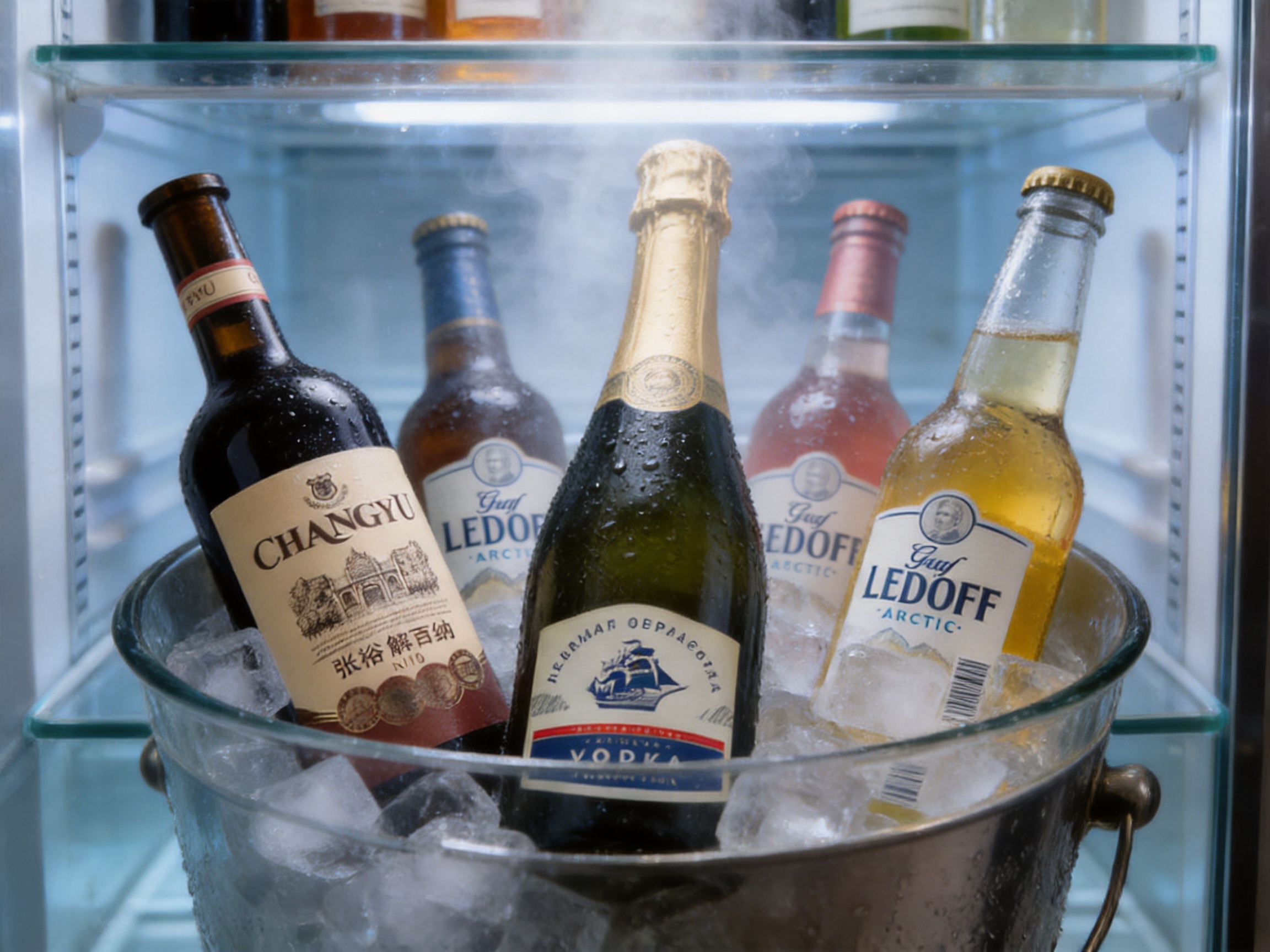
Applications Across the Liquor and Beverage Industry
Iced moisture-proof liquor labels can be adapted for a broad range of beverage packaging formats. The specific material, adhesive, finish, size, shape, and printing configuration can be selected according to the product and container.
Beer Bottles
Beer is commonly stored and served cold, making moisture resistance essential. Bottles may be placed in refrigerated displays, ice-filled containers, or wet service areas. A label that resists curling and peeling can help maintain consistent presentation during transport, retail display, and consumption.
Beer labels may require strong color reproduction, fine illustrations, metallic effects, barcodes, nutritional information, and legally required statements. A stable face material and controlled print surface help preserve these details.
Sparkling Wine
Sparkling wine is often chilled before serving and may be placed in ice buckets during hospitality service. The label must remain attractive despite direct contact with cold water and condensation.
For sparkling wine, appearance is frequently associated with celebration, premium quality, and gifting. A moisture-proof label can help protect decorative effects, elegant typography, and high-end finishes throughout the service period.
Premixed Cocktails
Premixed cocktails and ready-to-drink alcoholic beverages are often sold in cans or bottles and are commonly consumed chilled. Their packaging may feature colorful graphics, promotional campaigns, seasonal artwork, or limited-edition designs.
Moisture-resistant labels help preserve these visual elements when products are stored in coolers or displayed in ice. The construction also supports variable product information, barcodes, and promotional codes when these are required.
Chilled Spirits and Flavored Alcoholic Drinks
Some spirits and flavored alcoholic drinks are served cold or kept refrigerated after opening. Products in this category may use glass bottles with curved surfaces, distinctive shapes, or premium finishes.
Label performance must take account of container geometry and application conditions. A suitable adhesive and flexible face material can help maintain smooth conformity on curved or contoured surfaces.
Hospitality and Event Packaging
Hotels, bars, restaurants, clubs, catering companies, and event organizers frequently handle beverages in wet environments. Bottles may be stored in ice buckets, transported in coolers, or served with condensation on the surface.
Labels that remain legible and secure help staff identify products quickly and preserve the visual standard expected by customers. They also reduce the likelihood of loose label fragments or unreadable product information during service.
Printing and Customization Possibilities
A moisture-proof label should not be viewed as a basic protective sticker. It can be customized to support brand positioning, regulatory compliance, logistics, and consumer engagement.
Brand Graphics
Labels can carry logos, product names, illustrations, color systems, patterns, and other brand assets. The selected face material and finish influence the final appearance of these elements. Gloss finishes can create a bright, high-contrast effect, while matte finishes can provide a softer and more refined visual impression.
Variable Information
Many beverage labels require variable data, including lot numbers, production dates, expiration information, serial numbers, or market-specific content. The print surface should support sharp and durable variable printing where applicable.
Barcodes and QR Codes
Retail barcodes, logistics codes, and QR codes require reliable contrast and definition. The label surface should help preserve the accuracy of these elements during storage and handling. Clear printing is essential because poor readability can slow checkout, inventory management, or consumer interaction.
Decorative Finishes
Depending on the design and production process, labels may be customized with specialized finishes, shaped die-cutting, contrasting textures, metallic effects, or other decorative treatments. These features can help products stand out in crowded beverage categories.
Customization should be balanced with the operating environment. A decorative finish must remain compatible with refrigeration, condensation, and wet handling. Material selection and testing are therefore important before finalizing a large production run.
Different Shapes and Sizes
Labels can be produced in formats suitable for front panels, back panels, neck labels, wraparound designs, shoulder labels, seals, promotional areas, and other packaging positions. Die-cutting can be adjusted to fit round, oval, rectangular, irregular, or custom-shaped designs.
Correct sizing is essential for smooth application. The label should allow sufficient clearance at edges, seams, bottle contours, and other package features. A properly designed format helps reduce wrinkles and supports consistent positioning on automated lines.
Advanced Manufacturing and Quality Control
The performance of a specialized label depends not only on the material specification but also on manufacturing consistency. Shanghai Rongyang Industrial Development Co., Ltd. integrates research and development, manufacturing, sales, and service to provide pressure-sensitive label solutions for customers in multiple industries.
The company operates automated production lines and precision inspection equipment. These resources support stable processing, repeatable quality, and efficient production for both standard and customized label requirements.
Material Selection and Process Control
Manufacturing begins with the selection of suitable face materials, adhesives, liners, inks, coatings, and auxiliary components. Each material must be compatible with the intended application and the selected production process.
For iced moisture-proof liquor labels, material selection focuses on water resistance, adhesive reliability, print stability, dimensional behavior, and compatibility with beverage containers. Maintaining control over these variables helps reduce differences between production batches.
Automated Production Lines
Automated production lines can improve consistency in coating, printing, laminating, die-cutting, slitting, and rewinding. Automation also helps support larger production volumes while maintaining repeatable dimensions and processing conditions.
For beverage manufacturers, consistent label dimensions are important because labels may be applied at high speed. Variations in width, length, liner tension, or roll winding can create problems during dispensing and application.
Precision Inspection Equipment
Inspection equipment is used to evaluate the quality of materials and finished products. Depending on the production requirement, inspections may address dimensions, color, surface appearance, print registration, die-cut accuracy, adhesive coverage, roll condition, and other characteristics.
Careful inspection helps identify defects before products reach the customer. It also supports process improvement by providing information about recurring issues and production trends.
Stringent Quality Management
A quality control system should cover the full production chain, from incoming raw materials to finished label shipment. This approach helps ensure that the label’s visible appearance and technical performance are considered together.
Quality management is particularly important for moisture-resistant labels because performance may depend on several layers working together. A visually attractive label is not sufficient if the adhesive fails in refrigeration. Likewise, strong adhesion is not enough if the printed image becomes unreadable in wet conditions.
Research and Development Capability
Rongyang provides customized label solutions with special functions, including anti-counterfeiting, high-temperature resistance, removable adhesion, and specialized die-cutting. This experience in functional label development supports the design of products for demanding application environments.
Research and development can help adapt label structures to different container materials, printing methods, storage conditions, and market requirements. It also enables the company to develop combinations of function and appearance rather than treating them as separate objectives.
International Production Capacity
With production facilities in China and Malaysia, the company is positioned to support international customer requirements and large-scale projects. Multiple production locations can help address regional supply needs, production planning, and customer service expectations.
International capability is valuable for beverage companies with multiple markets, distributed production, or global packaging programs. It can support communication across regions while maintaining a consistent approach to label quality and customization.
Certifications, Compliance, and Responsible Manufacturing
Manufacturing credentials provide useful information when buyers evaluate a label supplier. Shanghai Rongyang Industrial Development Co., Ltd. was founded in 2008 and has obtained ISO 9001 and ISO 14001 certifications. The company has also passed the SMETA social responsibility audit.
ISO 9001 is associated with quality management systems and structured approaches to customer requirements, process control, continual improvement, and corrective action. ISO 14001 concerns environmental management systems, including the identification and management of environmental responsibilities within operations.
A social responsibility audit can provide additional insight into workplace practices, ethical standards, and supply chain expectations. These credentials do not replace product-specific testing, but they can form part of a responsible supplier evaluation process.
For beverage label buyers, compliance should also include application-specific considerations. The customer should confirm the suitability of inks, coatings, adhesives, and face materials for the intended container and use environment. Where labels may contact food or beverage surfaces directly, relevant regulatory and migration requirements should be reviewed with the supplier.
Product Evaluation and Testing Considerations
Before approving a label for commercial use, beverage producers should evaluate both laboratory performance and actual application behavior. Testing should reflect the real conditions the product will encounter.
Refrigeration Testing
Sample-labeled containers can be stored at approximately 0°C to 4°C for a defined period. Inspectors can check for edge lifting, bubbling, wrinkling, loss of adhesion, color change, and print degradation.
Testing should include the actual bottle or can material, because adhesive performance may vary by substrate. Glass, aluminum, coated metal, and plastic can present different surface energies and textures.
Condensation Testing
Containers can be moved between cold and warmer environments to reproduce condensation cycles. The label should be inspected after repeated cycles rather than only after a single exposure.
Repeated cycling is useful because moisture-related failure may develop gradually. Edges may begin to lift after several cycles, or printed areas may deteriorate after repeated wetting and drying.
Ice Water Immersion
If the product will be displayed in ice buckets or wet coolers, partial or full immersion testing may be appropriate. The test should represent the expected exposure duration and handling conditions.
Inspection should focus on adhesive stability, face material integrity, ink resistance, edge condition, and the ability to read important information after exposure.
Application-Line Testing
Labels should be tested on the actual or representative application equipment. Important factors include roll direction, liner release, label spacing, winding tension, dispensing speed, bottle shape, and application temperature.
Even a technically strong label can create production problems if it is not converted or wound correctly for the customer’s equipment. Early line testing can help identify these issues before a full-scale launch.
Storage and Transportation Testing
Finished label rolls should be stored in suitable conditions before use. Excessive heat, humidity, pressure, or prolonged storage may affect the adhesive, liner, or roll structure.
Transportation testing can help evaluate whether the rolls remain protected from crushing, moisture, contamination, and edge damage during shipment. Proper packaging is an important part of delivering consistent label quality.
Sustainability and Operational Efficiency
Moisture-proof labels can contribute to operational efficiency by reducing failures in storage, distribution, and retail display. When labels remain attached and readable, companies may experience fewer complaints, replacements, repacking activities, and manual corrections.
Material selection should also consider the broader packaging system. Different face materials, adhesives, liners, and finishes may influence recycling, waste generation, and end-of-life processing. Beverage producers should discuss sustainability objectives with the supplier and evaluate the complete package rather than focusing on the label alone.
ISO 14001 certification indicates that environmental management is included within the company’s organizational systems. However, sustainability claims should always be matched to the specific product structure and verified according to the customer’s requirements.
Operational efficiency can also be improved through accurate label design. Correct dimensions, consistent roll winding, reliable liner release, and stable printing help reduce application interruptions. When a label runs smoothly on an automated line, the beverage producer can improve throughput and minimize material waste.
How to Choose the Right Iced Moisture-Proof Label
Choosing the correct label requires more than selecting a waterproof material. Buyers should consider the complete product journey and communicate the intended conditions to the supplier.
Define the Container Substrate
Identify whether the label will be applied to glass, aluminum, coated metal, PET, HDPE, or another material. Surface texture, coating, curvature, and cleanliness can affect adhesion.
Describe the Temperature Profile
Provide information about storage temperature, transport conditions, display temperature, and expected time in refrigeration. If the product moves between warm and cold environments, include those transitions in the specification.
Estimate Moisture Exposure
Explain whether the label will encounter light condensation, repeated wetting, ice water immersion, melting ice, or direct washing. The expected exposure level helps determine the suitable face material and adhesive structure.
Specify the Desired Appearance
Discuss gloss, matte, texture, transparency, color requirements, decorative effects, and tactile characteristics. Premium liquor packaging may require a different visual and tactile solution from a high-volume ready-to-drink beverage.
Confirm Printing Requirements
Provide information about artwork complexity, fine text, barcodes, QR codes, variable data, color matching, and finishing requirements. This allows the supplier to recommend a surface suitable for the planned printing process.
Review Application Equipment
Share the application method, line speed, roll specifications, label orientation, and bottle geometry. This information is essential for producing labels that dispense and apply reliably.
Request Samples and Technical Confirmation
Samples should be applied to actual containers and tested in representative conditions. Technical confirmation should cover material construction, adhesive type, dimensions, tolerances, storage recommendations, and any relevant test results.
Advantages of Working with an Integrated Label Manufacturer
An integrated manufacturer can coordinate product development, material selection, printing, converting, inspection, and customer service within one organization. This may simplify communication and reduce the risk of inconsistencies between separate suppliers.
For a specialized beverage label, integration is valuable because the face material, adhesive, surface finish, printing method, and die-cut structure must work together. If one component is changed without considering the others, the final product may not perform as expected.
Rongyang’s business covers pressure-sensitive labels and RFID smart labels for sectors including FMCG, food and beverage, pharmaceuticals, logistics, and retail. This broad industry experience supports an understanding of both product presentation and functional labeling requirements.
The company’s capabilities include customized labels with specialized functions, precision production equipment, inspection systems, and facilities serving international customers. These strengths make it possible to develop a label solution based on the actual requirements of a beverage packaging program rather than offering only a standard catalog item.
Frequently Asked Questions
What are iced moisture-proof liquor labels?
Iced moisture-proof liquor labels are pressure-sensitive labels designed for beverage containers exposed to refrigeration, condensation, ice water, and wet handling. They typically use synthetic paper or special film, a permanent waterproof adhesive, and a moisture-resistant construction.
What temperature range are these labels designed for?
They are specialized for chilled environments commonly ranging from 0°C to 4°C. The exact performance depends on the container, application conditions, exposure duration, and selected material structure.
Can these labels be used on beer bottles?
Yes. They are suitable for beer bottles and other beverages that remain chilled or are displayed in ice. The construction helps reduce peeling, curling, bubbling, and print blurring during wet handling.
Are they suitable for sparkling wine?
Yes. Sparkling wine bottles are often refrigerated and placed in ice buckets. A moisture-resistant label can help preserve the product’s premium appearance during storage, service, and display.
Can the labels be used for premixed cocktails?
Yes. They can be customized for premixed cocktails, ready-to-drink beverages, and similar products. Design, dimensions, adhesive selection, and printing requirements should be matched to the specific container and application process.
Will the label remain attached during ice water immersion?
The label is designed to resist ice water exposure and condensation. However, the final result depends on factors such as container cleanliness, surface type, immersion duration, application temperature, and handling. Actual product testing is recommended.
Can the label surface prevent ink from spreading?
The surface is professionally treated to improve water resistance and resistance to ink diffusion. This helps printed text, graphics, and codes remain clearer during wet exposure.
Can the labels be printed with barcodes and QR codes?
Yes. The labels can be designed for barcodes, QR codes, product information, variable data, and other printed elements. Artwork and scanning requirements should be confirmed before production.
Are custom sizes and shapes available?
Custom sizes, shapes, and die-cut formats can be developed according to the bottle or package design. The label dimensions should be tested on the actual container to confirm smooth application.
Can the labels be used on plastic containers?
They may be suitable for plastic containers, but adhesive performance can vary depending on the plastic type, surface treatment, curvature, and cleanliness. Samples should be tested on the intended substrate.
How does this product compare with ordinary paper labels?
Iced moisture-proof labels provide stronger resistance to condensation, water exposure, curling, bubbling, peeling, and ink diffusion than many standard paper labels designed for dry conditions. They are purpose-built for chilled beverage environments.
Does Rongyang provide other specialized label solutions?
Yes. The company provides pressure-sensitive labels, RFID smart labels, anti-counterfeiting solutions, high-temperature-resistant labels, removable-adhesion labels, and specialized die-cut products for different industries and applications.
What information should be provided when requesting a quotation?
Useful information includes container material, label dimensions, artwork, quantity, printing method, finish, application equipment, storage temperature, moisture exposure, required delivery schedule, and target market requirements.
Conclusion
Iced moisture-proof liquor labels provide a practical solution for beverage packaging exposed to refrigeration, condensation, ice water, and wet handling. Their synthetic paper or special film face material, permanent waterproof adhesive, moisture-resistant construction, and treated print surface work together to preserve adhesion and appearance in demanding conditions.
For beer, sparkling wine, premixed cocktails, ready-to-drink beverages, and chilled liquor, these labels help prevent common problems such as curling, bubbling, peeling, blurring, and loss of legibility. They also support stronger shelf presentation, more reliable product identification, and smoother operation throughout the packaging and distribution process.
The value of the product depends on more than the label material itself. Consistent manufacturing, precise converting, careful inspection, suitable application design, and realistic performance testing are essential. With automated production lines, inspection equipment, quality management systems, international manufacturing capability, and experience in functional labels, Shanghai Rongyang Industrial Development Co., Ltd. is positioned to support customized beverage labeling programs.
By matching the label structure to the container, temperature range, moisture exposure, printing requirements, and application equipment, beverage producers can achieve a more durable and dependable package. The result is a label that remains firmly attached, visually clear, and professionally presented from cold storage to the point of consumption.
References
1. ISO 9001, Quality Management Systems: Requirements.
2. ISO 14001, Environmental Management Systems: Requirements with Guidance for Use.
3. Pressure-Sensitive Tape Council, Test Methods for Pressure-Sensitive Adhesive Products.
4. FINAT Technical Handbook, Pressure-Sensitive Label Materials and Testing Practices.
5. International Organization for Standardization, Packaging and Labelling Quality Principles.
6. Shanghai Rongyang Industrial Development Co., Ltd., Product and Company Information for Iced Moisture-Proof Liquor Labels.
Product: Iced moisture-proof liquor labels


Messae Us Right Now!

- Quick Links
- Products
- Quality Control
- Our Story
- News
- Contact
- Our Product
-
- Beauty and Personal Care Labels
- Home cleaning and laundry care labels
- Liquor and Beverage Labels
- Food and dairy product labels
- Healthcare Labels
- Promotional and Interactive Labels
- Specialty and industrial solution
- Labels Thermal printing and logistics labels
- Anti-counterfeiting traceability and RFID Labels
- Contact us
- Tel:+86-573-86867861
- Phone:+86-18621872035
- E-mail:allen.men@rylabel.com
- Add:No. 111 Xincheng Road, Haiyan Economic Development Zone, Jiaxing City, Zhejiang Province


