
 English
 русский
 Español


Home / Author / Sofía Velasco — Customer Success and Technical Support Executive / Supermarket Price Thermal Printing Labels for Faster, More Accurate Retail Operations
News

Supermarket Price Thermal Printing Labels for Faster, More Accurate Retail Operations
2026-11-10
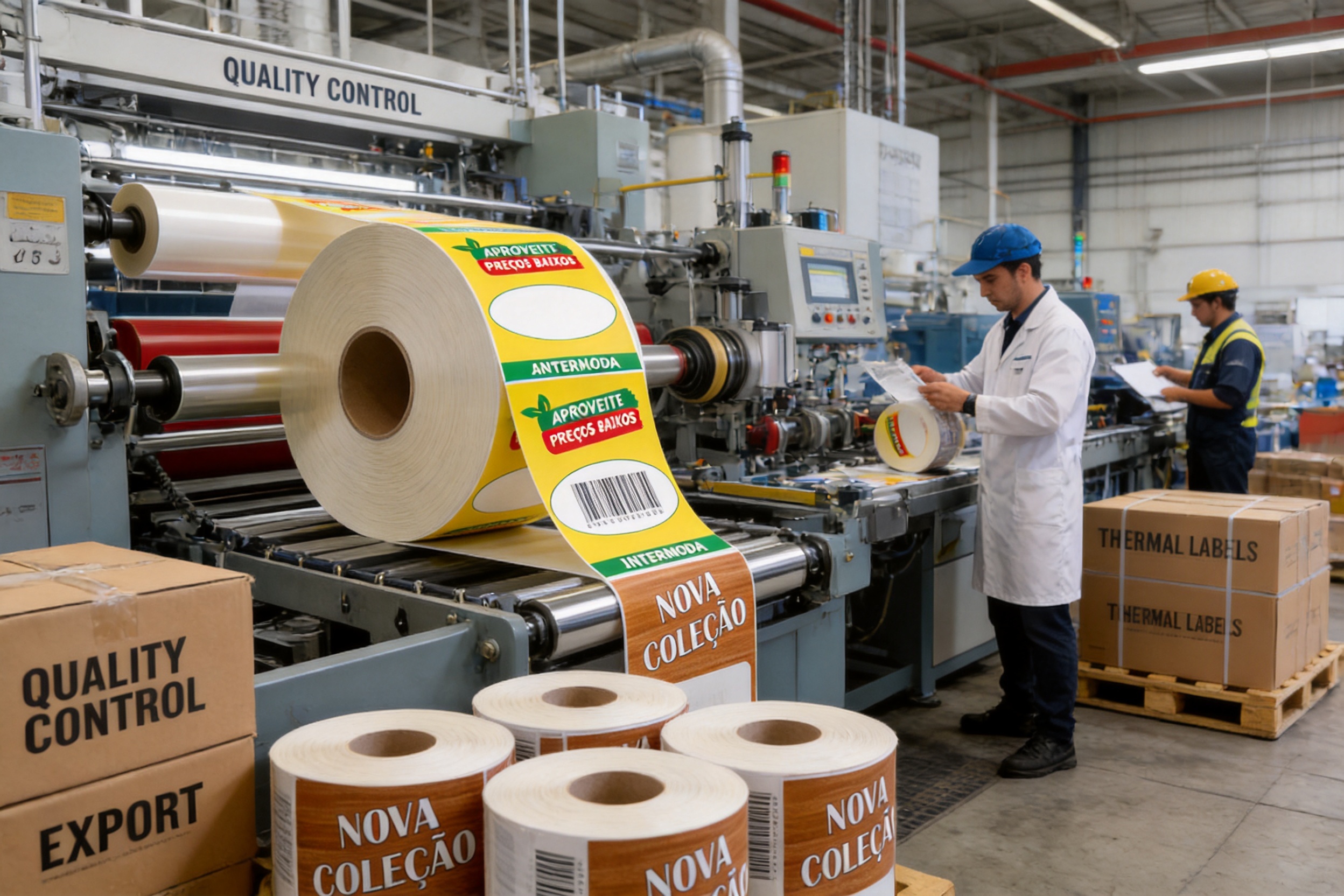
In modern retail, price information must be accurate, visible, easy to update, and consistent across every shelf. Supermarkets manage thousands of products, frequent promotions, member pricing programs, seasonal changes, and regional price adjustments. Traditional handwritten cards and manually designed paper tags can make these tasks slow, inconsistent, and vulnerable to human error. Supermarket price thermal printing labels provide a practical alternative by combining standardized formats, clear variable-data printing, durable materials, and efficient store-level replacement.
These labels are specifically developed for shelf price slots, retail display rails, price tags, and similar supermarket merchandising systems. They can display essential product information such as barcodes, product names, specifications, member prices, and non-member prices. Through compatibility with mainstream thermal label printers, they support both centralized data management from retail headquarters and rapid local price changes at individual stores.
The product is manufactured by Shanghai Rongyang Industrial Development Co., Ltd., an integrated pressure-sensitive label and RFID smart-label solutions provider. With research and development, manufacturing, sales, and service capabilities, the company supplies customized label products for retail, food and beverage, healthcare, logistics, industrial, and other sectors. Its production capabilities, inspection systems, certified management processes, and international manufacturing presence support the stable supply of high-quality retail labels.
Why Supermarket Price Labels Matter
Price labels are a small component of a supermarket’s physical infrastructure, but they have a direct effect on customer confidence and store efficiency. Shoppers expect the price on the shelf to match the price at checkout. If shelf information is missing, unclear, outdated, or difficult to read, customers may hesitate to purchase or request assistance from store employees. Repeated pricing discrepancies can also affect the perceived professionalism of the retailer.
For store staff, changing shelf labels is a routine but time-sensitive responsibility. A supermarket may need to update prices before opening, after a promotion ends, during a supplier adjustment, or in response to market conditions. The greater the number of products and branches, the more important it becomes to use labels with a consistent size, reliable print quality, and easy replacement process.
Thermal printing labels address these needs by allowing variable information to be generated directly from a digital pricing system. Instead of ordering a new batch of preprinted tags for every price change, a retailer can print the required content when needed. This reduces the dependence on large inventories of preprinted materials and makes it easier to respond to frequent changes.
The standardized nature of supermarket price thermal printing labels also supports visual consistency. When every shelf uses a similar label size, layout, and information hierarchy, customers can locate prices more quickly. Store employees can replace labels with less training, and retail managers can establish clear procedures for price updates across multiple locations.
Product Design for Shelf Price Slots and Retail Tags
The product is designed around the practical requirements of supermarket shelving. Most supermarket shelves include price rails or slots that hold cards and printed tags in a fixed position. A suitable label must fit these structures accurately, remain flat during use, and present information in a readable format. A label that curls, slips, tears, or becomes visually distorted can reduce both efficiency and customer confidence.
Supermarket price thermal printing labels are available in standardized sizes and formats that can be adapted to regular shelf price slots. The format can be organized to accommodate a barcode, product name, product specification, member price, and non-member price. The arrangement can also be adjusted according to the retailer’s information requirements, printer model, and shelf system.
The design focuses on clear and prominent communication. The main price can be emphasized through suitable font sizing, spacing, and layout. Supporting information can be arranged so that customers can quickly understand the product and pricing conditions without unnecessary visual clutter. The barcode can be positioned for scanning and inventory-related use, while member and non-member pricing can be distinguished through a logical information hierarchy.
For retailers operating many branches, standardization is especially valuable. A common template can be approved by headquarters and distributed to stores, helping ensure that shelf labels follow the same format regardless of location. Local teams can then print and install labels while maintaining the retailer’s overall visual and operational standards.
Thermal Printing Performance and Variable Data Flexibility
Thermal printing is well suited to retail price labels because it can produce text, numbers, barcodes, and other variable information quickly. The printing process eliminates the need for conventional ink cartridges in direct thermal applications and supports efficient short-run production. This is important when a store needs only a limited quantity of labels for a few products or a temporary promotion.
Compatibility with various thermal label printers gives retailers flexibility in selecting or maintaining their existing equipment. The labels can support workflows in which price data is managed centrally and sent to branch stores, as well as workflows in which stores make approved changes locally. This combination improves responsiveness without requiring a complete change to the retailer’s information system.
Digital pricing information can include different fields for different product groups. A standard tag may show a product name, specification, barcode, regular price, and member price. Another format may include promotional wording, a unit price, weight information, or an internal product code. The label material and printing format can be selected according to the expected use, shelf conditions, and required service life.
Thermal printing also reduces the time between a pricing decision and the physical replacement of a shelf tag. When the digital file is ready, the store can print only the number of labels required. This avoids waiting for a new batch of preprinted cards and reduces the risk of outdated printed inventory remaining in storage.
Clear printing is essential because price labels are usually viewed from a standing position and under different store lighting conditions. High contrast, sharp characters, and well-defined barcodes help customers read the price and enable store personnel to scan or verify information more easily. Proper printer settings, suitable ribbon or direct thermal configuration, and appropriate material selection all contribute to stable print results.
High-Strength Thermal Cardstock and Synthetic Materials
The product uses high-strength thermal cardstock and synthetic material substrates. Material selection is one of the most important factors affecting the service life of a shelf label. A label may be handled repeatedly during stocking, exposed to friction from baskets or packaging, and subject to changes in temperature and humidity. Weak or poorly matched materials may crease, curl, tear, or lose their visual quality before the next scheduled price update.
Thermal cardstock can provide a practical balance between printability, stiffness, and cost. It is suitable for many indoor retail environments where the label is installed in a shelf rail or price holder. Its structure helps the finished tag maintain a stable shape, allowing it to remain visible and properly positioned.
Synthetic substrates can provide additional resistance in applications requiring greater durability. Depending on the selected material and construction, synthetic labels may be better suited to environments involving repeated handling, moisture exposure, abrasion, or longer use periods. The exact choice can be made according to shelf conditions, cleaning practices, product category, and expected replacement frequency.
Both substrate options are intended to reduce the common problems of curling and deformation. A label that remains flat is easier to install, easier to read, and less likely to interfere with neighboring labels. Stable materials also help preserve a uniform appearance across a complete shelf section.
Material performance is not limited to the face stock. The complete label construction may include a suitable coating, adhesive system, liner, or die-cut configuration depending on the intended installation method. When labels are inserted into shelf price slots, the physical dimensions and stiffness must be matched to the holder. When labels are applied directly to a surface, adhesion and removability may become more important considerations.
Advantages Compared with Conventional Price Cards
One of the main advantages of supermarket price thermal printing labels is their ability to support frequent updates. Conventional preprinted cards may need to be designed, printed, stored, sorted, and distributed before they can be installed. This process becomes inefficient when prices change often or when different branches require different data. Thermal printing allows the retailer to produce current information closer to the time of use.
A second advantage is improved standardization. Handwritten or manually modified cards can vary in font, alignment, spacing, and legibility. Standardized thermal templates create a more consistent appearance and make it easier for customers to compare products. Consistency is also useful for internal audits and brand presentation.
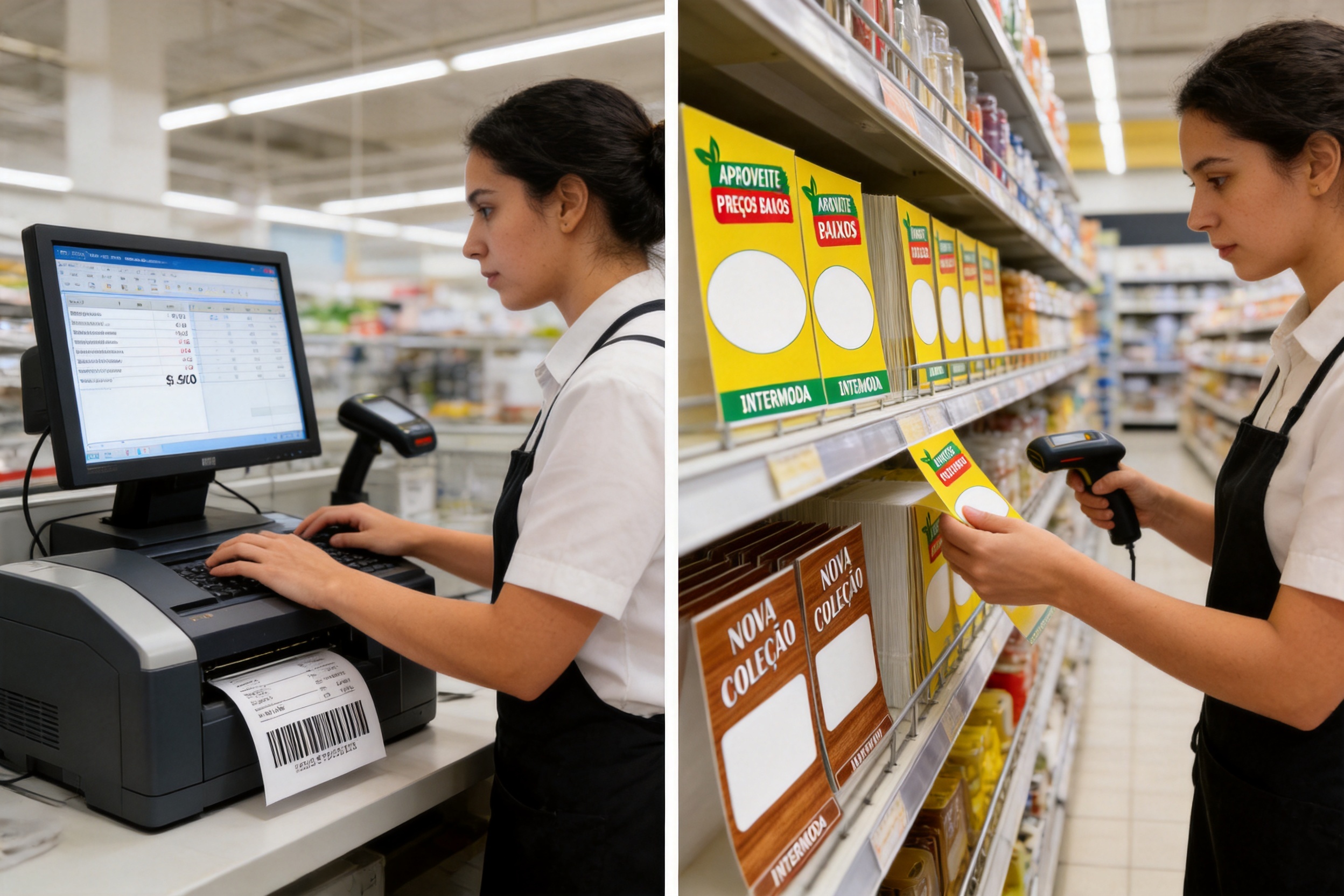
A third advantage is the reduction of replacement labor. A store clerk can print a batch of labels using approved data and replace the shelf tags according to a clear sequence. Because the size and format are standardized, the clerk does not need to cut, trim, or redesign each card manually. The process can be integrated into a daily price-change routine.
Thermal printing labels can also improve data accuracy. Product names, specifications, prices, and barcodes can be generated from a connected retail or inventory system rather than typed repeatedly by hand. Although proper system controls and employee verification remain necessary, automated data preparation can reduce transcription errors.
Another advantage is inventory efficiency. Retailers do not need to hold large quantities of every possible price variation. They can keep a manageable supply of blank or standard thermal labels and print the required information as needed. This can reduce storage requirements and lower the likelihood of obsolete printed cards.
| Evaluation Area | Traditional Handwritten or Preprinted Cards | Supermarket Price Thermal Printing Labels |
|---|---|---|
| Price update speed | Often requires manual rewriting or a new print order | Can be printed promptly from updated digital data |
| Information consistency | May vary between employees or store locations | Uses standardized templates and formats |
| Variable information | Limited flexibility for barcodes and multiple price types | Supports product data, barcode, member price, and non-member price |
| Replacement labor | May require cutting, handwriting, sorting, or manual correction | Supports batch printing and straightforward replacement |
| Material durability | Depends heavily on the paper or card selected | Uses high-strength thermal cardstock or synthetic substrates |
| Centralized management | More difficult to control across multiple branches | Compatible with headquarters distribution and store-level updates |
| Visual presentation | Can become inconsistent or faded | Provides clear, prominent thermal printing when properly configured |
Centralized Headquarters Control and Local Store Agility
Large supermarket groups often need a balance between centralized control and local flexibility. Headquarters may define the approved price, promotion, product description, and label layout. Branches, however, may need to respond quickly to local inventory conditions, regional campaigns, clearance activity, or approved emergency changes.
These thermal printing labels support both operating models. A headquarters team can prepare and distribute pricing files to multiple stores, helping ensure that every branch receives consistent and current information. Store employees can then print the required tags using compatible thermal printers. Alternatively, authorized personnel can update selected prices locally when the retail management process permits it.
Centralized control helps protect data integrity. The retailer can establish rules for product names, price formats, barcode structure, member information, and approval procedures. It can also schedule price changes to take effect at a defined time. Once the data is released, the store can produce labels in the approved format.
Local printing improves speed and reduces transportation requirements. A branch does not have to wait for physical tags to arrive from a central office or external printer. This is especially helpful for temporary promotions, short-dated products, stock clearance, and changes that apply only to one location.
For the best results, retailers should combine the labels with clear operating procedures. These procedures may include a daily price-change report, a printer maintenance checklist, a verification step before installation, and a process for removing expired labels. The label itself enables the workflow, while effective management ensures that the workflow remains accurate.
Clear Information Display for Customers and Employees
Price labels should make essential information easy to identify at a glance. Product names help shoppers confirm that the label belongs to the intended item. Specifications may include size, flavor, model, weight, pack count, or other distinguishing information. The barcode supports scanning and identification, while the member and non-member prices communicate the conditions of the sale.
Displaying both member and non-member prices can be particularly useful for loyalty programs. Customers can immediately understand the benefit of membership, while staff can answer pricing questions more efficiently. The layout should clearly distinguish the two values and avoid ambiguity about which price applies under which condition.
Barcodes must be printed with sufficient clarity for the intended scanning process. The print density, quiet zones, dimensions, and contrast should match the requirements of the selected barcode format and scanner. Retailers should validate the printed barcode before large-scale deployment, particularly when changing printer settings or label materials.
Readable product information also supports shelf replenishment and internal checks. Store employees can compare the tag with the product facing, verify that the correct product is in the correct position, and identify mismatches more quickly. This can help reduce the risk of placing a tag under the wrong item.
The label format should balance information density with legibility. Adding too many fields can make the tag crowded, while omitting important details can cause customer confusion. A professional label supplier can help retailers determine the appropriate size, print area, layout, material, and production method for the application.
Manufacturing Strengths and Quality Management
Shanghai Rongyang Industrial Development Co., Ltd. integrates research and development, manufacturing, sales, and service. This integrated structure allows product requirements to be evaluated from multiple perspectives. Material selection, artwork preparation, die-cutting, printing, quality inspection, packaging, and delivery can be coordinated within one supply relationship.
The company operates advanced automated production lines and precision inspection equipment. Automation can help maintain repeatability in processes such as material feeding, printing, coating, die-cutting, slitting, rewinding, and packaging. Repeatable production is important for retail labels because customers often require large quantities with consistent dimensions and stable print performance.
Precision inspection equipment supports verification of physical and visual characteristics. Depending on the project, quality controls may include checks for label dimensions, die-cut accuracy, roll winding, material integrity, surface condition, print clarity, barcode readability, adhesive behavior, and packaging quality. Inspection requirements can be defined according to the retailer’s specifications and intended operating environment.
A stringent quality control system is applied from raw materials through finished products. Controlling the process at multiple stages is more effective than relying only on final inspection. Incoming materials can be checked before production, work-in-process samples can be assessed during manufacturing, and completed goods can be examined before shipment.
The company’s ISO 9001 certification reflects the implementation of a quality management framework. ISO 14001 certification indicates an environmental management framework. The company has also passed the SMETA social responsibility audit. These systems and audits provide a structured foundation for process control, continuous improvement, environmental awareness, and responsible operations.
For international retail customers, manufacturing reliability is closely connected to communication and service. Clear technical discussions are needed to confirm label size, material, printer compatibility, barcode requirements, packaging method, roll direction, core size, quantity, and delivery schedule. An integrated supplier can support these discussions from initial development through repeat orders.
Production Process for Retail Thermal Labels
Requirement Assessment
The production process begins with an assessment of the retail application. Important questions include where the label will be installed, how long it must remain in service, whether it will be inserted into a shelf rail or applied to a surface, what information must be printed, and which thermal printer will be used. The answers guide the selection of substrate, size, format, and finishing method.
Material Selection
High-strength thermal cardstock or synthetic material is selected according to the required durability and operating conditions. The supplier may review exposure to moisture, abrasion, temperature variation, cleaning activity, handling frequency, and expected replacement intervals. The material must also be suitable for the chosen printing method and support clear variable-data output.
Artwork and Data Layout
The label layout is developed to organize the product name, specification, barcode, member price, and non-member price. Font size, alignment, spacing, barcode position, and price emphasis are reviewed for readability. If the retailer uses an existing shelf rail, the physical dimensions and insertion area must be checked carefully.
Printing and Converting
Depending on the product structure, production may involve coating, printing of fixed elements, laminating, slitting, die-cutting, perforating, or rewinding. The finished label must be compatible with the customer’s thermal printer and dispensing process. Roll direction, core size, outer diameter, label gap, and winding tension can be important for automatic or semi-automatic printing equipment.
Inspection and Release
Finished rolls or sheets are inspected according to the approved quality plan. The inspection may verify appearance, dimensions, material condition, winding, separation, and packaging. Test prints can be produced to confirm that variable information is clear and that barcodes can be read with the customer’s scanning equipment.
Packaging and Delivery
Packaging should protect the labels from dust, moisture, crushing, and deformation during storage and transportation. Appropriate identification helps warehouse personnel confirm the product specification, batch, quantity, and destination. For international orders, coordinated production and logistics planning helps support reliable delivery to retail groups, distributors, and printing partners.
Customization Options for Different Retail Environments
Although the standard product is intended for supermarket shelf pricing, retail environments differ in shelf design, product range, printer equipment, and information policy. Customization may therefore be required. Options can include label width and height, material type, thermal sensitivity, format, die-cut shape, roll configuration, core size, and packaging quantity.
Food and grocery sections may require compact labels that display unit pricing, weight, or promotional information. Household goods sections may need larger tags for longer product names or detailed specifications. Pharmacy and healthcare retail areas may require highly controlled information presentation and clear identification of product variants.
Convenience stores and smaller retailers may benefit from short-run or frequently changing label formats. Large supermarket chains may require high-volume production, multiple regional versions, and consistent packaging across distribution centers. Wholesale clubs and cash-and-carry stores may need labels that remain visible on larger shelves, pallets, or bulk displays.
Retailers may also request different versions for standard pricing, promotional pricing, clearance pricing, loyalty pricing, or special events. A modular template system can make these versions easier to manage. The supplier can help prepare the physical label format while the retailer controls the variable data and pricing rules.
When customization is requested, it is important to confirm the actual printer and installation conditions before mass production. A label that appears suitable in a design file may not feed correctly if the gap, thickness, roll direction, or liner characteristics do not match the printer. Sampling and testing reduce the risk of problems during rollout.
Operational Benefits for Retail Store Staff
Retail staff often work under time pressure, particularly before opening or during major promotional changes. Standardized thermal labels make the replacement sequence easier to organize. Employees can print a list of required tags, sort them by aisle or category, and replace the old labels systematically.
The clear layout also reduces the time required to interpret each tag. Staff can compare the product name and specification, confirm the barcode, and check the price before placing the label. This is more efficient than deciphering handwriting or locating a matching preprinted card from a large storage box.
Because the labels can be printed in batches, stores can prepare updates in advance. A manager may print labels for the next morning’s promotion, review them before installation, and assign replacement tasks by department. This supports better coordination between pricing, merchandising, and inventory teams.
Standardized labels can also contribute to training. New employees can learn one replacement procedure and apply it across departments. Clear instructions regarding removal of old tags, verification of product position, and disposal of expired labels can further reduce mistakes.
Benefits for Retail Management and Brand Presentation
At the management level, consistent shelf labeling supports better control of pricing operations. Managers can define label templates, approve information fields, monitor price-change completion, and investigate discrepancies. The process becomes more measurable than an informal system based on handwritten notes or individually designed cards.
Professional shelf labels also contribute to the store’s image. Customers tend to associate orderly shelves and clear prices with reliable management. A consistent visual system helps create a cleaner and more organized shopping environment. Even when labels are small, their repeated presence across the store creates a noticeable effect.
The labels can support centralized retail standards without eliminating the ability of branches to respond to local needs. Headquarters can establish the format and data rules, while stores complete approved printing and installation tasks. This balance is useful for retailers expanding into multiple cities or countries.
For retailers using customer loyalty programs, the ability to display member and non-member prices in a consistent format can make the program more visible. Customers can understand savings at the point of selection rather than waiting until checkout. The same label structure can be used across different product departments.
Environmental and Resource Considerations
Thermal printing workflows can support more efficient material use when labels are printed on demand. Instead of producing large quantities of preprinted tags that may become obsolete after a price change, retailers can print the amount required for the current task. This can reduce wasted printed stock, although the overall environmental impact depends on material selection, printer settings, disposal, and operational practices.
ISO 14001-based environmental management provides a structured approach to identifying and improving environmental aspects of manufacturing. Responsible production may include attention to energy consumption, waste handling, material efficiency, process controls, and compliance with applicable requirements.
Retailers should also establish suitable disposal practices for removed or obsolete labels. Depending on the substrate and adhesive construction, recycling options may vary. A supplier can provide material information to help customers evaluate storage, use, and end-of-life handling.
Environmental performance should be considered together with durability. A label that fails prematurely may need to be replaced more often, increasing material consumption and labor. Selecting a substrate that matches the actual service conditions can help balance durability, cost, and resource use.
How to Select the Right Thermal Price Label
Confirm the Printer
The first step is to identify the thermal printer model and printing method. Retailers should confirm whether the equipment uses direct thermal printing or thermal transfer printing, as well as the supported label width, thickness, roll diameter, core size, and sensor requirements.
Define the Required Information
List every field that must appear on the tag. Typical fields include barcode, product name, specification, member price, non-member price, unit price, promotional message, and internal reference code. The amount of information affects label dimensions and layout.
Evaluate the Shelf System
Measure the shelf price rail or holder. Confirm the available height, width, insertion depth, and viewing angle. If labels will be applied directly to a surface, evaluate adhesion, removability, and surface cleanliness instead.
Assess the Environment
Consider humidity, temperature, friction, cleaning, handling, and expected service duration. Indoor dry-goods aisles may allow a different material selection from refrigerated, fresh-food, warehouse, or high-traffic areas.
Test Print Quality
Before placing a large order, print representative product data and barcodes. Check readability from the normal customer viewing distance, scan performance, contrast, alignment, and resistance to handling. Testing should be performed using the actual printer and, where possible, the intended shelf holder.
Review Supply and Service Requirements
Confirm order quantity, production lead time, packaging, delivery location, repeat-order process, technical support, and quality documentation. A reliable supplier should be able to maintain consistency across repeat batches and communicate clearly about any material or production change.
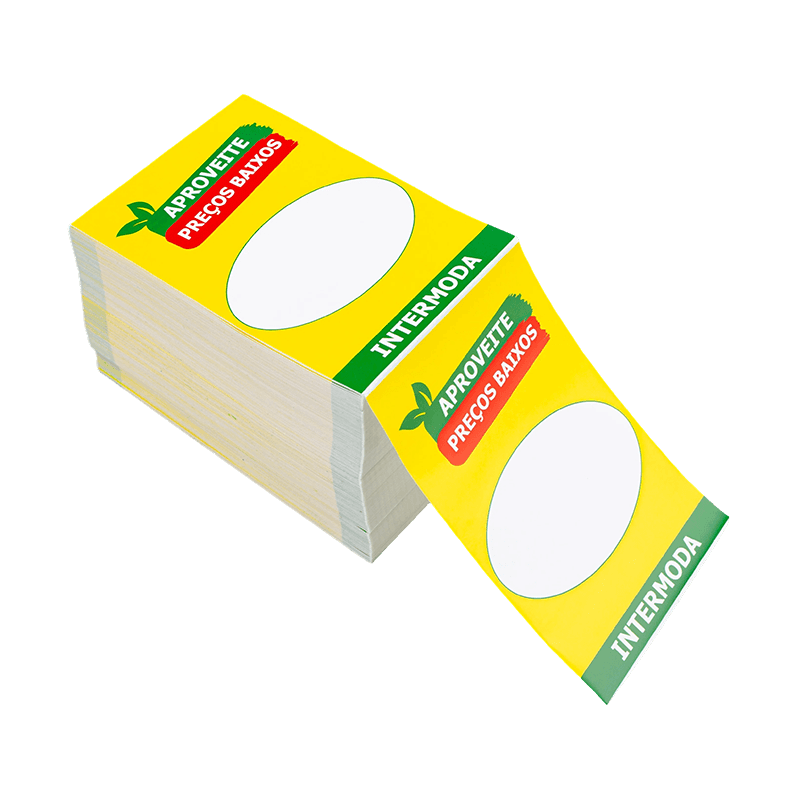
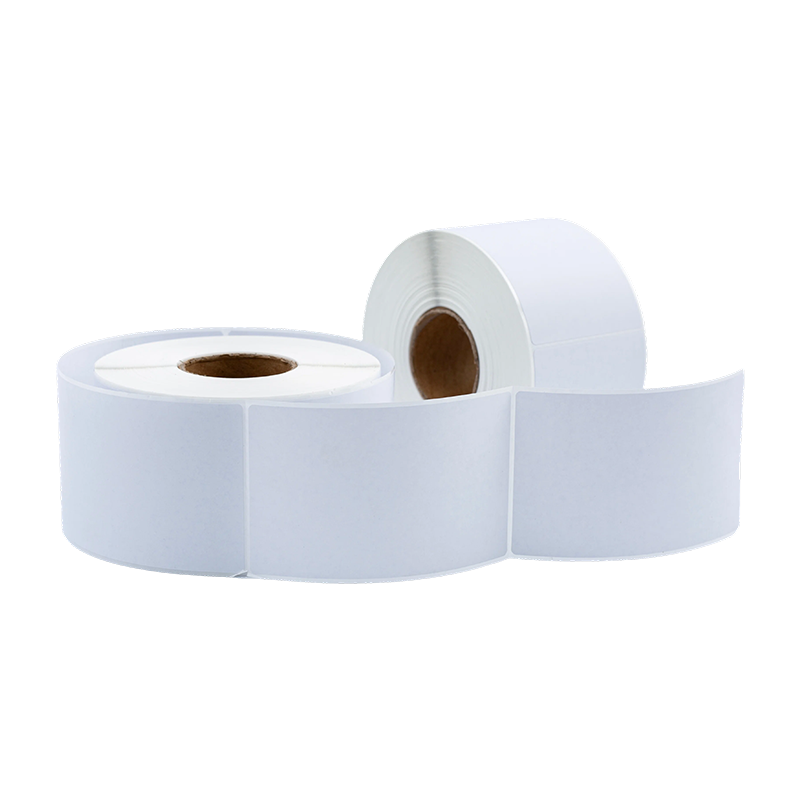
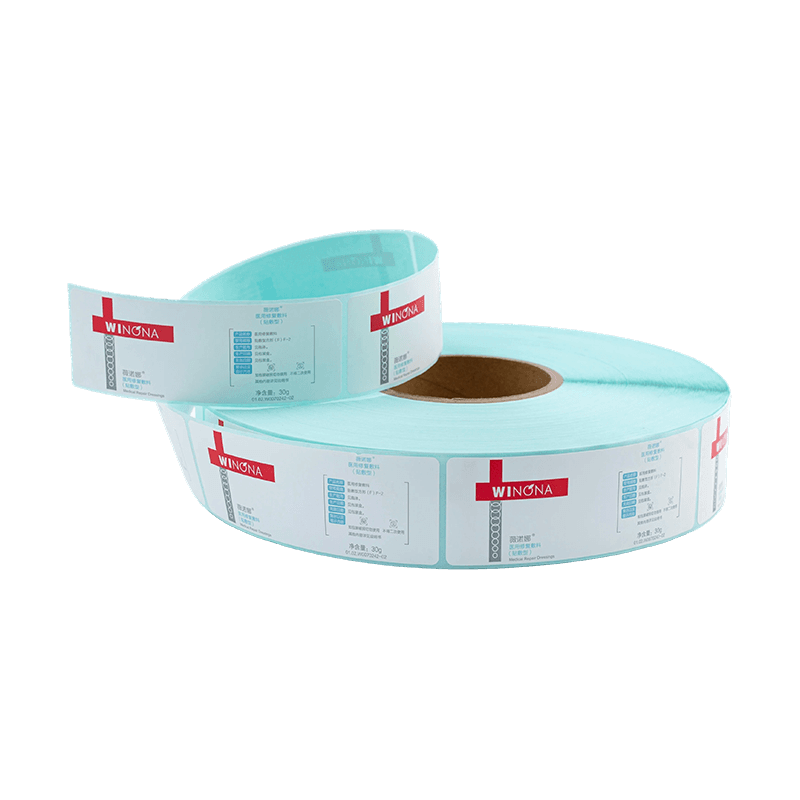
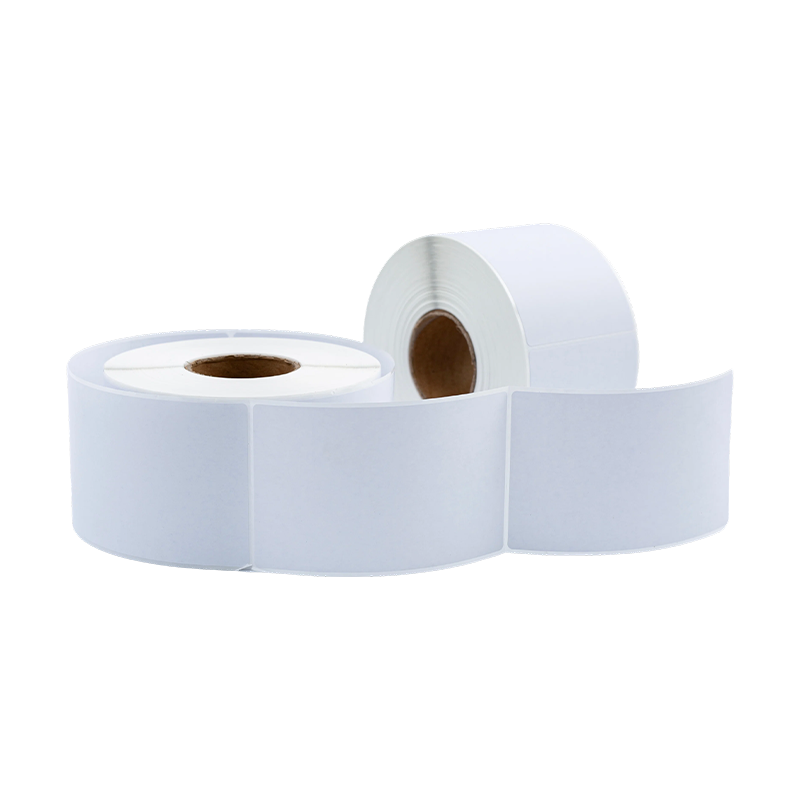
Supermarket price thermal printing labels
Recommended Implementation Workflow
A successful retail label program benefits from a structured implementation. First, the retailer should select a representative group of products from different departments. The group should include short and long product names, different price lengths, multiple barcode types if applicable, and both standard and promotional pricing.
Next, the retailer should test the proposed labels in actual store conditions. The test should cover printing, barcode scanning, installation, shelf visibility, handling, cleaning, and removal. Employees who will use the labels should participate because they can identify practical issues that may not be visible during a laboratory review.
After the pilot, the retailer can refine the format and prepare operating instructions. These instructions may define who approves a price change, when labels are printed, how old labels are removed, how the new tags are verified, and how discrepancies are reported.
For a multi-store rollout, implementation can be phased by region, department, or store type. A phased approach allows the retailer to monitor material consumption, printer performance, employee workload, and customer feedback before expanding the program.
Regular review is also important. Retailers should examine whether the label remains appropriate as shelf systems, printer models, loyalty programs, and pricing policies change. A flexible label supplier can assist with revised formats, new materials, and updated production requirements.
Supplier Capabilities Supporting Global Customers
Shanghai Rongyang Industrial Development Co., Ltd. serves customers across pressure-sensitive labeling and RFID applications. Its product experience covers FMCG, food and beverage, pharmaceuticals, logistics, retail, warehouse management, asset management, anti-theft applications, and smart manufacturing.
In addition to conventional labels, the company provides RFID inlays, tags, and finished products in HF and UHF frequencies. This broader technical background is useful for customers that may eventually connect shelf labeling with inventory management, logistics identification, product traceability, or smart retail systems.
The company also offers specialized functions such as anti-counterfeiting, high-temperature resistance, removable adhesion, and specialized die-cutting. These capabilities do not need to be included in a standard supermarket price label, but they demonstrate the ability to develop materials and constructions for more demanding applications.
Production facilities in China and Malaysia support large-scale and international customer requirements. Multiple manufacturing locations can be valuable for customers seeking production capacity, regional supply coordination, or international project support. Final arrangements should be confirmed according to product specifications, order volume, destination, and delivery schedule.
Founded in 2008, the company has developed experience across label research, manufacturing, and service. Its commitment to continuous improvement and innovation supports the development of retail label products that address changing demands for speed, accuracy, durability, and information visibility.
Quality, Reliability, and Long-Term Cooperation
Retail label supply is often a repeat-order business. A customer may begin with a pilot order and later require large quantities for multiple stores. Consistency between the initial order and subsequent batches is therefore essential. Differences in material thickness, surface finish, thermal response, dimensions, or winding can create problems for printers and store workflows.
Documented specifications help protect consistency. The supplier and retailer should maintain records for material type, label size, print area, barcode position, roll configuration, packaging, inspection criteria, and approved artwork. If any change becomes necessary, it should be reviewed and communicated before production.
Quality reliability also depends on storage. Thermal materials should be protected from excessive heat, humidity, direct sunlight, and contamination. Retailers should rotate stock according to a sensible inventory policy and follow the supplier’s storage recommendations. Proper storage helps preserve print performance and material stability.
Long-term cooperation is strengthened when technical, commercial, and operational teams communicate effectively. A supplier that understands the retailer’s workflow can provide more useful recommendations than one that only supplies a generic label. Discussions should include the practical experience of store clerks, IT or pricing teams, procurement personnel, and quality managers.
Cost Efficiency Beyond the Unit Price
The unit price of a label is only one part of the total cost. Retailers should also consider printing labor, inventory storage, obsolete stock, price-change speed, barcode errors, rework, customer service inquiries, and the cost of inconsistent shelf presentation.
A durable label may have a slightly higher material cost but reduce replacement frequency in high-contact areas. A standardized format may reduce staff training and installation time. A compatible roll configuration may improve printer uptime. A reliable barcode may reduce scanning and verification problems.
On-demand printing can also reduce the financial impact of obsolete information. When a product price changes, the retailer prints the current version rather than discarding a large inventory of old preprinted tags. The actual savings depend on the retailer’s pricing frequency and procurement model, but the operational benefit can be significant.
Retailers should evaluate the complete workflow during trials. Measuring the time required to generate, print, sort, install, and verify labels provides a more realistic comparison than comparing material prices alone.
Frequently Asked Questions
What are supermarket price thermal printing labels?
They are shelf price tags designed for thermal label printers and retail shelf price slots. They can display variable information such as a product barcode, product name, specifications, member price, and non-member price.
What materials are used for these labels?
The product uses high-strength thermal cardstock and synthetic material substrates. The choice depends on the required durability, handling conditions, installation method, printer compatibility, and expected service life.
Can the labels be used with different thermal printers?
They are designed to be compatible with various mainstream thermal label printers. However, the exact printer model, printing method, label dimensions, roll configuration, sensor requirements, and thermal settings should be confirmed before mass production.
Can headquarters control label data for multiple stores?
Yes. The labels support centralized price data distribution from headquarters while also allowing approved local price adjustments at individual stores. Retailers can establish data permissions and verification procedures according to their management system.
What information can be printed on the label?
Typical information includes a product barcode, product name, product specification, member price, and non-member price. Other fields may be possible if the selected size, printer, and layout provide sufficient space.
Are the labels resistant to curling?
The high-strength thermal cardstock and synthetic substrates are selected to provide wear resistance and help prevent curling or deformation during normal shelf use. Actual performance depends on storage, environmental conditions, handling, and the selected material construction.
Are these labels suitable for promotional pricing?
Yes. Because the content is printed from variable digital data, the labels can support regular price changes and approved promotional formats. Retailers may use different templates for standard pricing, member pricing, seasonal promotions, or clearance activity.
Can the labels be customized?
Customization may include size, material, layout, roll format, core size, die-cutting, printing requirements, and packaging. The final specification should be developed around the retailer’s printer and shelf system.
How should barcode quality be verified?
Representative labels should be printed using the intended printer and scanned with the equipment used in the store. Verification should confirm adequate contrast, correct dimensions, alignment, quiet zones, and reliable scanning from the expected distance.
What should retailers test before placing a large order?
Retailers should test printer feeding, print clarity, barcode scanning, label installation, shelf visibility, resistance to handling, storage conditions, and removal or replacement procedures. Employees who will use the labels should participate in the evaluation.
What manufacturing capabilities support this product?
The supplier operates automated production lines, precision inspection equipment, and a quality management system covering raw materials, production, inspection, and finished goods. It also provides research and development, customized label solutions, and international manufacturing support.
Does the supplier provide other label technologies?
Yes. Its capabilities include pressure-sensitive labels, RFID inlays, RFID tags, finished RFID products, anti-counterfeiting solutions, high-temperature-resistant labels, removable-adhesion labels, and specialized die-cut products.
How can retailers request a suitable quotation?
Retailers should provide the intended application, printer model, label dimensions, material preference, information fields, estimated quantity, roll requirements, destination, and any inspection or certification requirements. These details allow the supplier to prepare a more accurate technical and commercial proposal.
Conclusion
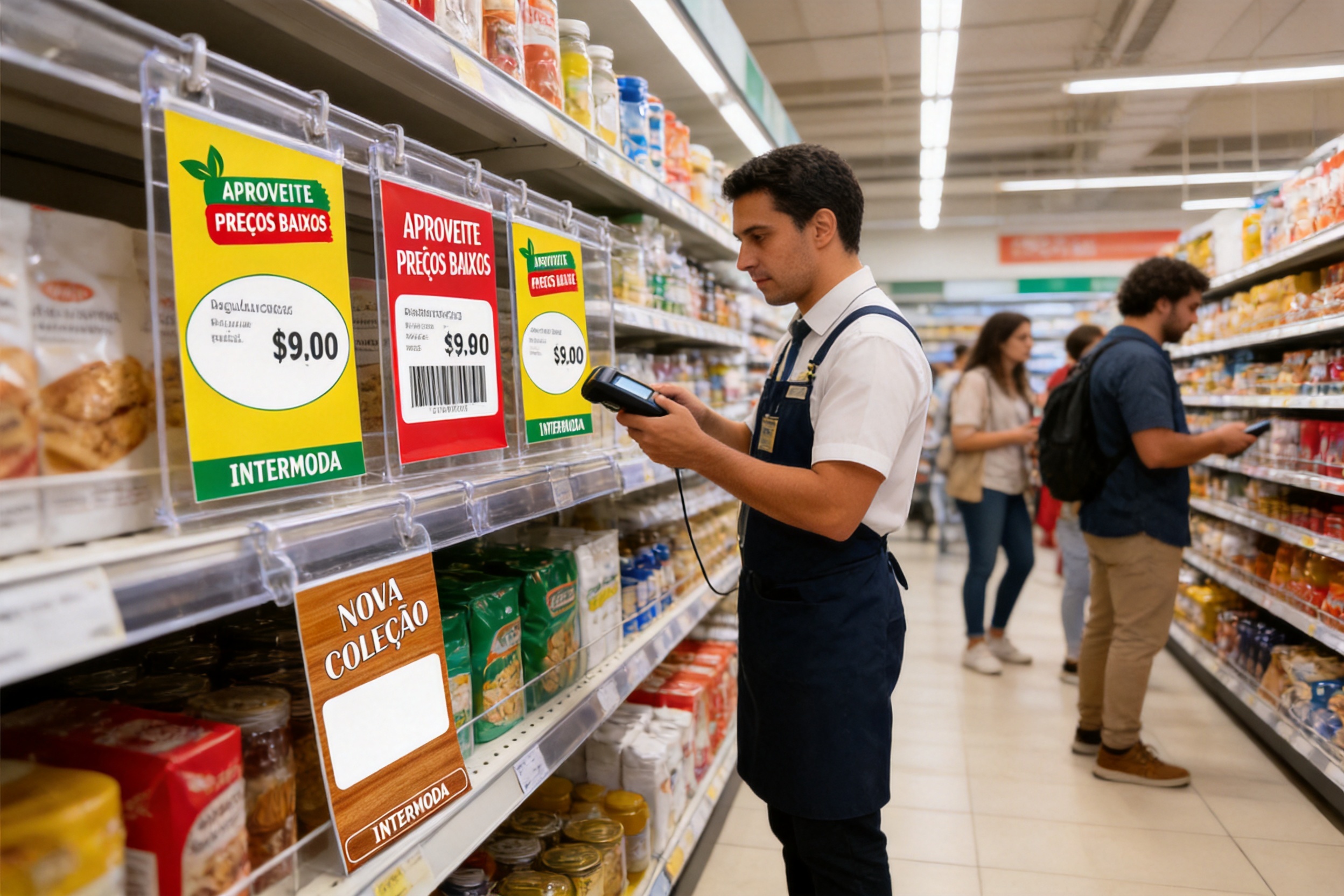
Supermarket price thermal printing labels provide a practical foundation for faster and more accurate retail price management. Their standardized formats simplify shelf replacement, while thermal printing supports frequent updates, variable data, and centralized or local workflows. Clear display of barcodes, product names, specifications, member prices, and non-member prices helps customers and employees understand product information quickly.
The use of high-strength thermal cardstock and synthetic materials improves resistance to wear, curling, and deformation. Compatibility with mainstream thermal printers allows retailers to integrate the labels into existing digital pricing operations. Compared with handwritten or heavily preprinted alternatives, the product can reduce replacement effort, obsolete inventory, inconsistency, and the time required to respond to pricing changes.
The manufacturing strength behind the product is equally important. Shanghai Rongyang Industrial Development Co., Ltd. combines research and development, automated production, precision inspection, certified management systems, customized solutions, and international production capabilities. This integrated approach supports reliable supply for individual stores, retail chains, distributors, and global customers.
For the best outcome, retailers should evaluate the complete application rather than selecting a label solely by appearance or unit price. Printer compatibility, shelf dimensions, material durability, barcode performance, workflow requirements, storage, packaging, and long-term supply consistency should all be considered. With the right specification and implementation process, supermarket price thermal printing labels can strengthen daily operations and contribute to a more organized, responsive, and professional retail environment.
References
1. International Organization for Standardization. ISO 9001: Quality Management Systems — Requirements.
2. International Organization for Standardization. ISO 14001: Environmental Management Systems — Requirements with Guidance for Use.
3. GS1 General Specifications. Barcode Symbol Data Quality, Identification, and Retail Scanning Principles.
4. Association for Print Technologies. Thermal Printing Materials, Print Quality, and Variable Data Production Practices.
5. Retail Operations and Merchandising Management Guidelines. Shelf Labeling, Price Accuracy, and Store-Level Workflow Control.
6. Shanghai Rongyang Industrial Development Co., Ltd. Product and Manufacturing Information for Pressure-Sensitive Labels, Thermal Labels, and RFID Solutions.
Product: Supermarket price thermal printing labels


Messae Us Right Now!

- Quick Links
- Products
- Quality Control
- Our Story
- News
- Contact
- Our Product
-
- Beauty and Personal Care Labels
- Home cleaning and laundry care labels
- Liquor and Beverage Labels
- Food and dairy product labels
- Healthcare Labels
- Promotional and Interactive Labels
- Specialty and industrial solution
- Labels Thermal printing and logistics labels
- Anti-counterfeiting traceability and RFID Labels
- Contact us
- Tel:+86-573-86867861
- Phone:+86-18621872035
- E-mail:allen.men@rylabel.com
- Add:No. 111 Xincheng Road, Haiyan Economic Development Zone, Jiaxing City, Zhejiang Province


