
 English
 русский
 Español


Home / Author / Thandiwe Mbeki — Regional Label Solutions Sales Director / Aviation and Logistics RFID Tracking Management Labels for Smarter, More Secure Supply Chains
News

Aviation and Logistics RFID Tracking Management Labels for Smarter, More Secure Supply Chains
2026-10-07
Airports, freight terminals, express delivery networks, distribution centers, and manufacturing supply chains are under constant pressure to move more items with greater speed, accuracy, and accountability. Every baggage item, cargo container, pallet, parcel, and logistics unit must be identified, sorted, loaded, transferred, tracked, and retrieved with minimal delay. At the same time, operators must reduce manual scanning, prevent misrouting, protect high-value goods, and maintain reliable information across multiple handling points.
Aviation and Logistics RFID Tracking Management Labels provide a practical foundation for meeting these requirements. Using UHF RFID inlays, high-strength PET or synthetic materials, and precision manufacturing processes, these labels create a durable digital identity for baggage and cargo. When paired with fixed or handheld RFID readers, they enable contactless identification and simultaneous reading of numerous items over several meters. This makes it possible to connect physical goods with real-time operational data throughout the logistics process.
Unlike ordinary printed labels or barcodes that require direct visibility and individual scanning, RFID tracking labels can be read automatically and in groups. They can continue to perform in demanding environments involving high throughput, rapid handling, metal surfaces, liquid products, vibration, abrasion, and changing temperatures. Their ability to support automated data collection helps organizations improve logistics visibility, transportation security, operational efficiency, and customer service.
What Are Aviation and Logistics RFID Tracking Management Labels?
Aviation and logistics RFID tracking management labels are identification products that combine printed information with an embedded radio frequency identification inlay. The inlay contains a microchip and antenna that store and transmit a unique electronic identity when activated by an RFID reader. Depending on the application, the electronic identity can be associated with information such as a baggage record, cargo reference, shipment number, destination, flight number, container number, handling instruction, or warehouse location.
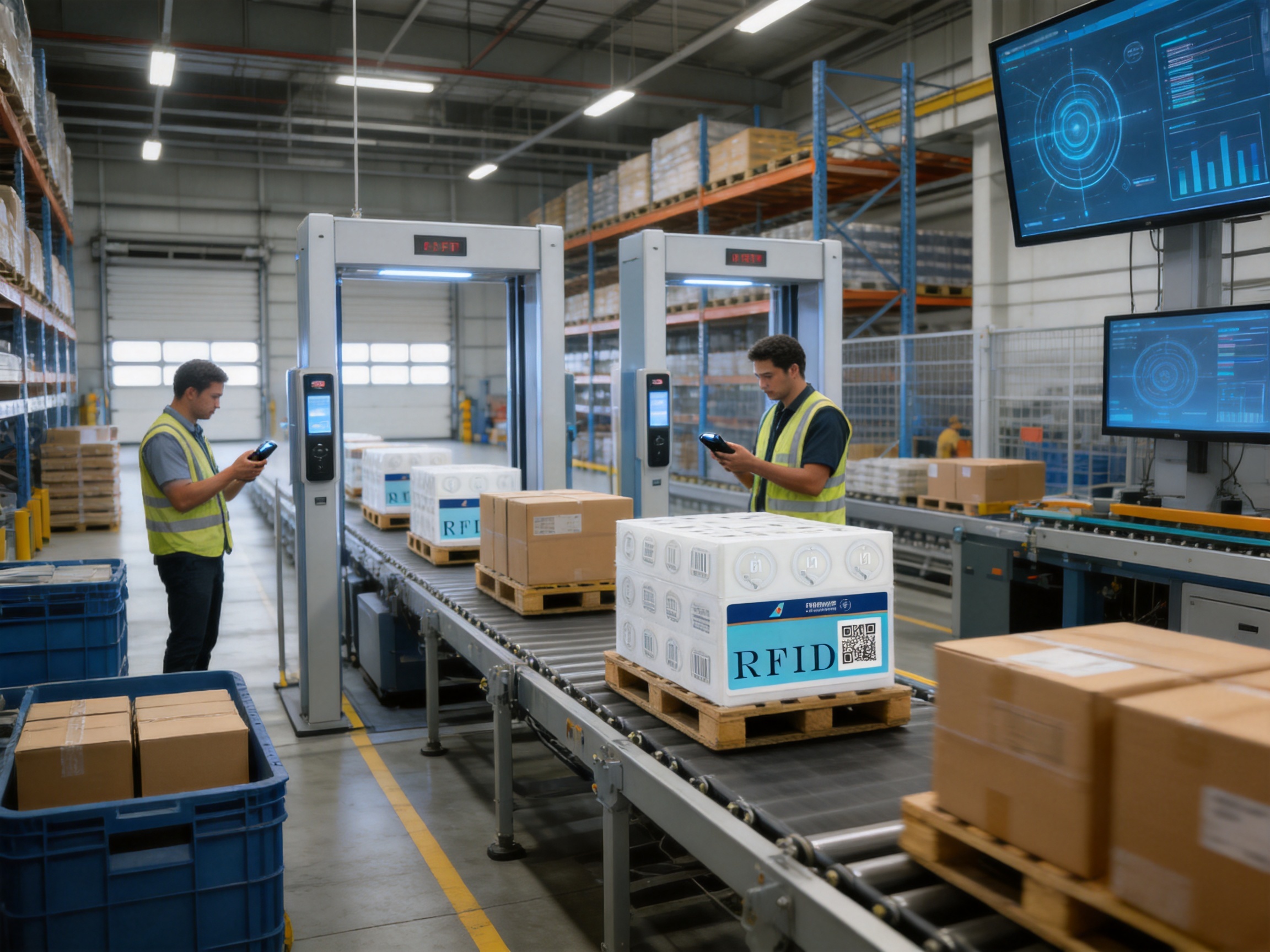
The labels are designed for use in systems based on UHF RFID technology. UHF RFID is particularly suitable for aviation, warehousing, distribution, and transportation because it supports longer reading distances and rapid multi-tag identification. A fixed reader installed at a conveyor, loading area, sorting gate, or transfer point can automatically capture multiple tags as they pass through. A handheld reader can be used by airport, warehouse, or delivery personnel for exception handling, inventory checks, retrieval operations, and field verification.
The RFID inlay is encapsulated or laminated within a robust label structure. High-strength PET and synthetic materials help protect the inlay from tearing, moisture, abrasion, bending, and the repeated handling associated with transportation. Depending on the application, the label construction can be customized with different adhesives, face materials, print finishes, dimensions, die-cut shapes, and encoding formats.
These labels are not limited to a single transportation stage. They can support the complete operational journey of an item, including acceptance, sorting, security inspection, storage, loading, departure, transfer, arrival, unloading, retrieval, delivery, and return. By giving each item a consistent digital identity, they help create a connected information chain rather than a series of isolated manual checkpoints.
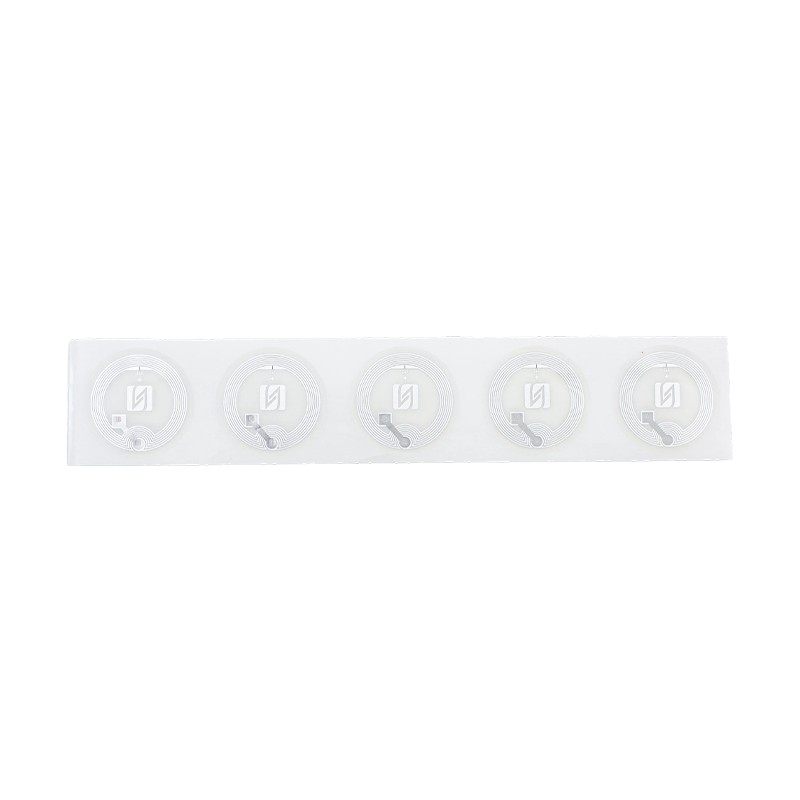
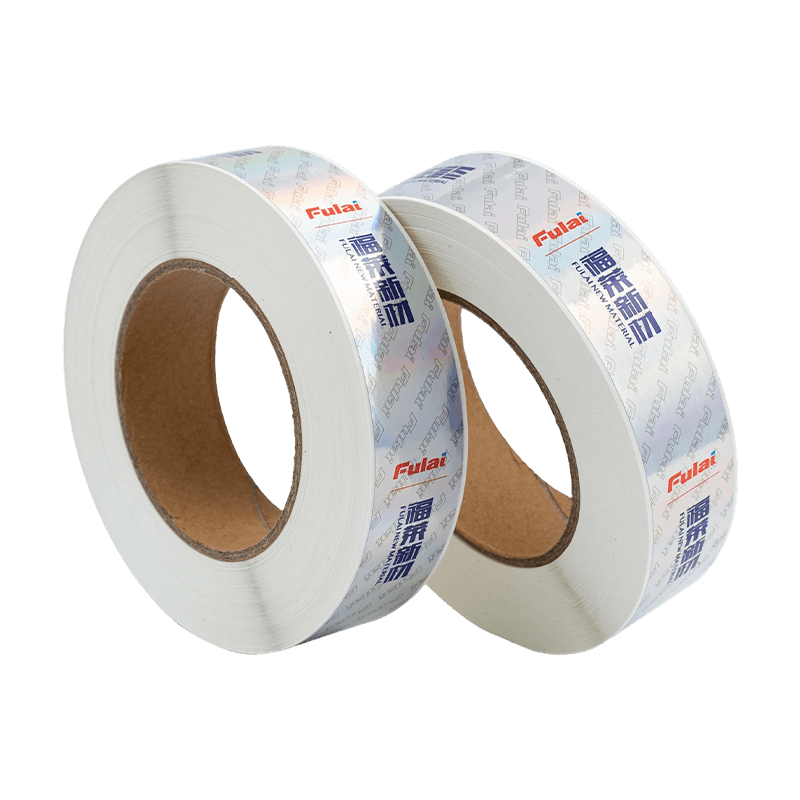
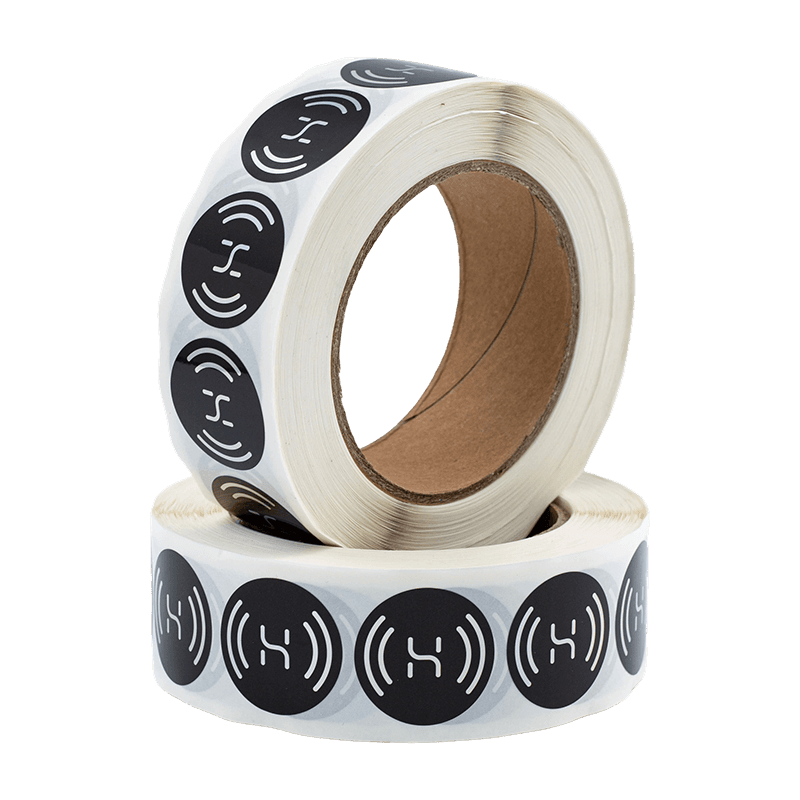
Aviation and Logistics RFID Tracking Management Labels
Why RFID Is Valuable in Aviation and Logistics
Traditional identification methods remain useful, but they often depend on line-of-sight scanning, manual positioning, and one-at-a-time processing. A barcode or printed number may be difficult to read when a label is covered, dirty, folded, poorly oriented, or located inside a group of packages. In a high-volume airport or distribution center, these limitations can create bottlenecks and increase the risk of human error.
RFID provides a contactless alternative. A reader does not need to see the printed surface directly in order to identify the tag. As long as the tag is within the effective reading zone and the application environment is properly configured, the reader can capture data automatically. Multiple items can be identified during one reading event, which supports faster throughput at conveyor lines, gates, staging areas, vehicle loading points, and warehouse locations.
Another important advantage is the ability to connect identification with event data. When an RFID tag is detected at a specific reader, the management system can record the time, location, equipment, process stage, and associated transaction. This creates a chronological history of an item’s movement. If a bag is transferred to another flight, a container is moved to a different dock, or a pallet is held for inspection, the relevant event can be recorded with less dependence on manual data entry.
RFID can also support exception management. If a baggage item appears at the wrong sorting point, if a cargo container has not reached a loading zone, or if a shipment is detected outside its expected route, the system can generate a warning. This allows staff to investigate problems earlier, before they become missed departures, delayed deliveries, or customer complaints.
Core Advantages of the Product
High-Speed Multi-Item Reading
The most visible advantage of UHF RFID tracking labels is the ability to read many tagged items quickly and simultaneously. In an airport baggage system or logistics hub, hundreds of items may pass through a process within a short period. Manually scanning each item creates a direct relationship between processing speed and labor availability. RFID can reduce this dependence by allowing a reader to identify multiple tags in a single area.
This capability is especially valuable at sorting and transfer points. A fixed reader can collect tag identities as baggage or containers move along a conveyor. A handheld reader can rapidly check a group of units during loading, inventory counting, or retrieval. The result is faster processing, shorter queues, and improved utilization of personnel and equipment.
Contactless Identification
Contactless operation makes RFID suitable for fast-moving and difficult-to-access items. Operators do not need to align a scanner with a barcode or handle every package individually. The label can remain attached while the item is transported, staged, stacked, or placed in a container. This helps reduce physical handling and supports more continuous workflows.
Contactless identification is also beneficial in environments where gloves, protective equipment, weather conditions, or safety rules make frequent manual scanning inconvenient. It can reduce repetitive movements for employees and create safer, more ergonomic operating procedures.
Resistance to Metal and Liquid Interference
Metal and liquid can affect radio frequency performance, particularly when conventional tags are used without considering the application environment. Aviation and logistics operations may involve metal containers, metal racks, vehicle bodies, liquid products, damp storage areas, and mixed cargo compositions. The product is designed with inlays and constructions that provide strong anti-interference performance in complex logistics and aviation applications.
This does not mean that every installation has identical reading performance. Reader power, antenna position, tag orientation, surrounding materials, conveyor speed, package density, and system configuration all influence results. However, the use of appropriate UHF inlays and durable synthetic encapsulation gives the label a stronger foundation for reliable performance than a basic paper identification label.
Durability for Demanding Handling Conditions
Baggage and cargo labels may be exposed to friction, compression, bending, moisture, dust, temperature changes, and repeated contact with equipment. A weak label can tear, detach, or become unreadable before the shipment reaches its destination. High-strength PET and synthetic materials help maintain label integrity during transportation and handling.
Durability is important not only for the electronic function of the RFID inlay but also for the printed information. Human-readable data may be needed for manual exceptions, security checks, customer service, or recovery operations. A durable construction helps preserve both the electronic identity and the visible information throughout the handling cycle.
Improved Logistics Visibility
Each RFID tag provides a unique identity that can be associated with an item record in a software platform. As the item passes through connected reading points, the system can build a more complete view of its location and status. This supports real-time or near-real-time monitoring of baggage, cargo, containers, pallets, and other logistics units.
Better visibility helps managers measure process performance, identify delays, evaluate transfer points, and improve resource planning. It also helps customer-facing teams respond to inquiries with more reliable information. When a shipment’s last recorded event is known, investigations can be directed toward the correct process stage rather than relying solely on manual recollection.
Support for Transportation Security
Transportation security depends on accurate identification, controlled movement, and reliable records. RFID labels can help organizations verify that the correct item is present at the correct location and process stage. If a tagged unit is missing, misrouted, or detected in an unexpected area, the system can support faster investigation.
RFID should be integrated with appropriate security procedures, access controls, software rules, and operational audits. The label itself is not a complete security system, but it is an effective data carrier for connecting physical items with authorized processes. Its unique identification capability can also support chain-of-custody records for valuable or sensitive cargo.
Reduced Manual Data Entry
Manual recording introduces risks such as typing errors, missed scans, duplicate entries, and delayed updates. RFID automation allows information to be captured at the point of movement. This reduces the amount of repetitive data entry required from workers and allows personnel to focus on handling exceptions, coordinating operations, and serving customers.
Fewer manual steps can also improve consistency between departments. Airport ground handling teams, freight forwarders, warehouse operators, carriers, and distribution partners can work from more consistent event records when RFID data is integrated with a shared management system.
Product Construction and Technical Design
UHF RFID Inlay Selection
The RFID inlay is the core electronic component. It combines an integrated circuit with an antenna designed to communicate in the UHF frequency range. The appropriate inlay must be selected according to the required reading distance, tag orientation, item material, reader configuration, data capacity, environmental exposure, and regulatory requirements.
For aviation and logistics use, the inlay should provide stable operation when items are moving rapidly through a reading zone. It should also support reliable identification when multiple tags are present. Careful inlay selection helps control read sensitivity, collision performance, memory capability, and overall system compatibility.
High-Strength PET and Synthetic Materials
PET and other synthetic face materials provide a balance of strength, dimensional stability, moisture resistance, and printability. Compared with ordinary paper, synthetic materials are better suited to environments where labels may encounter water, condensation, abrasion, or repeated handling.
The material structure can be adapted according to the product’s application. A baggage label may prioritize flexibility and secure adhesion. A cargo container label may require greater resistance to impact and surface contamination. A warehouse label may need strong contrast for both human reading and automated printing. Material selection should therefore be based on the full operating environment rather than on appearance alone.
Adhesive Engineering
Adhesive performance is essential because an RFID label cannot provide reliable tracking if it detaches from the item. Different substrates require different adhesive characteristics. Smooth plastic, corrugated board, coated cartons, painted metal, untreated wood, and synthetic containers each present different bonding conditions.
Depending on the application, the label may use a permanent adhesive, a removable adhesive, or a specialized adhesive designed for difficult surfaces. Factors such as application temperature, storage temperature, moisture, surface cleanliness, pressure, dwell time, and expected removal conditions should be considered during product development.
Printing and Encoding
The label can carry printed information such as a unique identification number, barcode, destination, flight reference, handling instruction, company data, or human-readable sequence. Variable information can be printed and encoded through an integrated production workflow. This reduces the risk of mismatches between printed data and electronic data.
Encoding quality is particularly important in automated logistics. Each RFID chip must be associated with the correct item record. Verification systems can be used to confirm that the encoded identity matches the printed information before the label is released for use. This type of process control contributes to data accuracy and prevents avoidable tracking errors.
Die-Cutting and Finishing
Precision die-cutting allows the label to be produced in application-specific shapes and dimensions. Special shapes can improve the way a label fits on baggage, containers, pallets, cartons, documents, or equipment. Rounded corners, reinforced areas, liner selections, and finishing treatments may be used to improve handling and reduce premature lifting.
Finishing options can include protective coatings, lamination, variable printing, serial numbering, barcodes, and customized rolls or sheets. The final structure should balance performance, production efficiency, application convenience, and total cost.
Performance Across the Complete Logistics Process
Process Stage |
Typical RFID Function |
Operational Benefit |
Acceptance and Registration |
Associate the tag identity with baggage or cargo information. |
Creates a traceable digital record from the beginning of the journey. |
Sorting |
Identify multiple items as they pass through automated reading zones. |
Supports accurate routing and reduces manual scanning. |
Loading |
Verify that the correct baggage, pallet, or container is assigned to a vehicle or flight. |
Improves loading accuracy and transportation security. |
Transfer |
Record movement through transfer stations and intermediate facilities. |
Improves visibility and helps identify delays or misroutes. |
Warehouse Handling |
Track storage, picking, staging, and dispatch events. |
Improves inventory accuracy and labor productivity. |
Retrieval and Delivery |
Confirm item identity and location at the final handling point. |
Supports faster retrieval, fewer disputes, and better customer service. |
At the acceptance stage, the RFID identity can be connected with the shipment or baggage record. This creates the foundation for all later events. During sorting, fixed readers can identify items without requiring operators to stop the flow. At loading points, the system can compare the detected identities against an expected list and notify staff of missing or incorrectly assigned units.
During transfer operations, RFID helps maintain continuity between transportation legs. A shipment may move through multiple terminals, carriers, warehouses, and vehicles. Each reading event can strengthen visibility across this chain. In warehouse operations, RFID can support receiving, put-away, picking, staging, and dispatch. At the final retrieval point, the technology can help personnel locate and confirm the correct item more quickly.

Advantages Compared with Conventional Identification Labels
RFID Compared with One-Dimensional Barcodes
One-dimensional barcodes are cost-effective and widely understood, but they generally require line-of-sight scanning. The scanner must read the symbol at a suitable distance and angle. If the barcode is hidden, damaged, folded, or contaminated, the operator may need to reposition the item or enter the information manually.
RFID labels can be read without direct visual alignment and can support multiple-item reading. This makes them more suitable for high-throughput processes where items are moving continuously. Barcodes may still be retained as a visible backup, while RFID provides the automated data layer.
RFID Compared with QR Codes
QR codes can store more information than many traditional barcodes and can be scanned by cameras or mobile devices. However, they still depend on visual access and typically require the operator or system to position the camera correctly. RFID can identify items when the printed surface is not directly visible and can capture multiple tag identities within the reader field.
For operations requiring fast group reading, automated portals, conveyor integration, or hands-free identification, RFID offers important advantages. A combined RFID and QR or barcode label can deliver both machine automation and accessible visual information.
RFID Compared with Basic Paper Labels
Paper labels are inexpensive and convenient for short-term applications, but they can be vulnerable to moisture, tearing, scuffing, and poor print quality. They also do not provide an electronic identity. The PET and synthetic construction used for aviation and logistics RFID labels is better suited to demanding handling conditions and supports both physical durability and digital traceability.
RFID Compared with Low-Quality Generic Tags
Not all RFID tags deliver the same performance. Low-quality products may use inconsistent inlays, weak adhesive, unsuitable face materials, or insufficient encoding verification. These issues can result in unstable read rates, tag detachment, and data mismatches.
A professionally engineered label combines inlay selection, substrate design, adhesive testing, precision converting, printing, encoding, inspection, and application validation. This integrated approach is a significant advantage over generic tags produced without sufficient attention to the operating environment.
Manufacturing Strengths and Quality Control
The manufacturer behind these RFID tracking labels operates as an integrated provider of pressure-sensitive labels and RFID smart label solutions. Its capabilities cover research and development, manufacturing, sales, technical support, and service. This integrated structure allows the product to be developed as a complete application solution rather than as a simple printed item.
Advanced automated production lines support stable output, repeatable processing, and high-volume manufacturing. Automation can improve material feeding, printing consistency, die-cutting accuracy, lamination quality, and production efficiency. It also helps reduce variation between batches, which is important for customers operating standardized systems across multiple facilities.
Precision inspection equipment is used to evaluate materials and finished products. Inspection may include visual checks, dimensional checks, print quality verification, adhesive evaluation, RFID encoding verification, and performance testing. A strong inspection system helps identify defects before products are delivered to the customer.
Quality control begins with raw materials. The face stock, adhesive, liner, RFID inlay, ink, coating, and packaging materials must be selected and managed according to the intended application. Incoming material controls help prevent unsuitable components from entering production. In-process inspections help identify problems during printing, converting, encoding, and finishing. Final inspections confirm that the completed labels meet agreed specifications.
The manufacturer maintains ISO 9001 and ISO 14001 certifications and has passed a SMETA social responsibility audit, according to the supplied company information. ISO 9001 reflects the presence of a structured quality management approach, while ISO 14001 relates to environmental management systems. A social responsibility audit provides additional evidence of attention to ethical operating practices and supply chain expectations.
Production facilities in China and Malaysia support large-scale and international customer requirements. Having multiple manufacturing locations can contribute to capacity planning, regional supply support, and business continuity. It also allows the manufacturer to serve customers with different delivery, sourcing, and localization requirements.
Research and Development Capability
RFID applications are not identical. A label that works well on a cardboard parcel may not perform the same way on a metal container or a liquid-filled package. Research and development capability is therefore important for adapting the product to different substrates, reading environments, temperatures, handling methods, and data requirements.
Technical teams can evaluate tag placement, reader distance, antenna orientation, application surfaces, adhesive selection, and packaging structure. They can also help customers determine whether a standard product is appropriate or whether a customized construction is required. This consultative approach reduces the risk of selecting a label based only on nominal specifications.
Customization Capability
Customization can include dimensions, material combinations, adhesive types, surface finishes, die-cut shapes, printed information, numbering sequences, barcodes, encoding formats, packaging methods, and roll specifications. Specialized functions such as anti-counterfeiting, high-temperature resistance, removable adhesion, and custom die-cutting can also be incorporated where appropriate.
For an airport or logistics operator, customization may involve integrating a customer’s data format and visual identification requirements. For a cargo owner, it may involve a stronger adhesive, a protective laminate, or a tag optimized for a difficult surface. For a warehouse, it may involve a label designed for high-speed thermal printing and automated application.
Integration with Fixed and Handheld Readers
The product is designed to work with both fixed and handheld RFID readers. Fixed readers are typically installed at permanent control points. These may include conveyor lines, dock doors, sorting gates, warehouse aisles, vehicle entrances, loading zones, and transfer corridors. Their main strength is continuous, automated data capture without requiring an employee to operate the reader at every event.
Handheld readers are useful for mobile activities. Staff can scan baggage in storage areas, verify cargo during loading, locate missing containers, conduct cycle counts, and investigate exceptions. Handheld equipment is particularly useful when a tag cannot be brought to a fixed portal or when an operator needs to search a large area.
Successful deployment requires more than attaching labels and installing readers. The RFID system should be planned around the physical flow of goods. Reader zones must be positioned so that tags are detected at the correct process stage. Antenna orientation, power settings, shielding, conveyor speed, and reader software should be tested under realistic operating conditions.
The management platform should also define how reading events are interpreted. A tag detected at a reader may represent arrival, departure, loading, transfer, or another process event depending on the location and business rules. Clear data mapping is essential for turning raw RFID reads into useful operational information.
Data Accuracy and Traceability
An RFID project is successful only when the electronic identity remains accurate throughout the item’s life cycle. The tag number must be correctly associated with the intended baggage item, cargo unit, or container. Encoding processes should therefore be linked with order management, warehouse management, baggage handling, transportation management, or enterprise resource planning systems where applicable.
Data validation can include checking the electronic identifier against printed information, confirming that the tag is readable after application, and verifying that duplicate identities are not introduced into the system. These controls are particularly important when labels are produced in high volumes or applied at multiple sites.
Traceability also depends on reliable event storage. A system should record the tag identity, reader location, date, time, process stage, and any relevant transaction reference. Authorized users can then review the movement history of a shipment or identify the last known location of an item.
For high-value cargo, traceability can support stronger chain-of-custody procedures. Each handover can be associated with a reading event, a responsible department, and a defined operational checkpoint. This creates a more transparent record than relying solely on handwritten forms or isolated manual scans.
Applications in Aviation
Baggage Identification and Sorting
Airports handle large volumes of baggage under strict time requirements. RFID labels can support automated identification as bags move from check-in through sorting, loading, transfer, and retrieval. Rapid reading helps reduce manual scanning and can assist in directing bags to the correct flight or transfer route.
The durable label structure is valuable because baggage is frequently handled by conveyors, carts, loading equipment, and aircraft hold operations. The label must remain attached and readable despite movement, friction, and environmental changes. A combined printed and electronic identity also provides a visible backup for staff.
Cargo Container Tracking
Air cargo containers and units require accurate coordination between warehouse teams, ground handlers, carriers, and aircraft loading personnel. RFID labels can identify containers as they enter a facility, move to a staging area, pass through security procedures, and reach the aircraft loading zone.
The system can compare detected container identities with expected loading records. This supports faster reconciliation and helps reduce the risk of loading an incorrect unit or leaving an assigned unit behind. For temperature-sensitive, high-value, or time-critical cargo, improved visibility can be especially valuable.
Transfer and Retrieval Operations
Transfer operations often involve tight timelines and multiple handoffs. RFID event records can help personnel determine whether an item reached the transfer area, was loaded onto the next flight, or remains at an earlier process point. At arrival, RFID can support baggage reconciliation and faster retrieval operations.
Applications in Logistics and Supply Chain Management
Warehouse Receiving and Dispatch
At receiving docks, RFID labels can help identify inbound pallets, cartons, and containers as they arrive. The system can compare the detected items with advance shipment information and record the receiving event. At dispatch, RFID can confirm that the correct units are staged for the correct vehicle or route.
Automated identification can reduce congestion at docks and improve the speed of receiving and shipping processes. It also supports better inventory accuracy because movement events are recorded as goods pass through defined points.
Distribution Centers
Distribution centers handle large numbers of items from multiple suppliers and destinations. RFID labels can support sorting, cross-docking, route assignment, consolidation, and exception management. Because many items can be read at once, the technology is suitable for high-volume operations where individual scanning would create delays.
Returnable Transport Items
Reusable pallets, totes, cages, bins, and containers represent valuable assets that often move between suppliers, warehouses, carriers, and customers. RFID labels can provide each asset with a unique identity and help organizations track utilization, location, return status, and maintenance requirements.
High-Value and Sensitive Cargo
High-value equipment, pharmaceuticals, electronics, luxury goods, and sensitive documents require stronger visibility and security. RFID can help document custody events and identify unexpected movement. When combined with access controls and appropriate software alerts, the labels can contribute to a more secure logistics process.
Manufacturing Supply Chains
Manufacturers can use RFID labels to track components, work-in-progress units, finished products, reusable containers, and shipments between facilities. Automated identification can improve production material control and help synchronize physical movement with digital manufacturing records.
Implementation Recommendations
Analyze the Operating Environment
Before selecting a label, organizations should evaluate the items to be tagged, surface materials, temperature range, moisture exposure, expected handling, reading distance, tag orientation, and density of surrounding objects. Metal and liquid conditions should be tested rather than assumed. A label optimized for one application may need modification for another.
Define the Required Reading Performance
Reading distance should be considered together with reader type, antenna layout, item speed, tag placement, and desired read rate. A long nominal reading distance does not automatically guarantee the same performance in a crowded operational environment. Application testing with real baggage, containers, cartons, and equipment is recommended.
Combine Electronic and Human-Readable Information
RFID offers automation, but printed information remains useful for manual handling and exception processes. A well-designed label can include the RFID identity, barcode, destination, flight information, shipment number, or handling instruction. This hybrid approach improves operational resilience when a reader, network connection, or software system is temporarily unavailable.
Establish Encoding and Verification Procedures
Encoding should be managed through controlled production and data validation. Each label must receive the correct identity, and the identity must match the associated business record. Finished labels should be tested for readability, print accuracy, adhesion, and physical integrity before shipment.
Test at Full Operational Speed
Laboratory tests are useful, but field tests should reflect real conditions. Items should be moved at expected conveyor or vehicle speeds, with realistic spacing, orientation, packaging density, and surrounding materials. Testing should include normal operation and exception scenarios, such as partially obstructed labels, stacked cargo, and mixed item types.
Plan for System Expansion
A successful RFID project often expands from one process stage to multiple facilities or business units. The tag identity structure, data storage design, reader network, and reporting rules should allow future growth. Standardized labels and encoding practices make it easier to connect additional sites and logistics partners.
Sustainability and Responsible Manufacturing
Modern label buyers increasingly evaluate not only performance and price but also material efficiency, production waste, energy use, and supply chain responsibility. ISO 14001 certification reflects an organized approach to environmental management. Manufacturing controls can help reduce material waste through accurate die-cutting, optimized layouts, process monitoring, and responsible handling of production residues.
Material selection should consider the full life cycle of the label. In some applications, a lightweight construction can reduce material consumption while still meeting performance requirements. In other applications, a more durable label may reduce the need for replacement and prevent tracking failures. The most appropriate choice depends on the operating environment and the required service life.
Responsible manufacturing also includes worker welfare, ethical business practices, and transparent supply chain management. The supplier’s SMETA social responsibility audit provides relevant evidence that social compliance is considered within the manufacturing organization.
Why Choose an Integrated RFID Label Manufacturer?
An integrated supplier can coordinate the electronic, printed, adhesive, mechanical, and data requirements of the label. This is more efficient than managing separate vendors for inlays, printing, converting, encoding, and packaging. A single technical partner can take responsibility for the complete product and help resolve problems across the entire label structure.
Integrated manufacturing also supports better customization. The same organization can adjust the inlay, face material, adhesive, shape, printed content, and encoding method in response to application testing. This reduces communication gaps and can shorten the path from concept to production.
For international customers, production capacity in China and Malaysia provides additional support for large-scale requirements and regional supply planning. The manufacturer’s broader portfolio includes pressure-sensitive labels, RFID inlays, HF and UHF tags, anti-counterfeiting labels, high-temperature products, removable labels, and specialized die-cut solutions. This range allows customers to source related identification products from a supplier with experience across multiple label technologies.
Frequently Asked Questions
What information can an aviation or logistics RFID label carry?
The RFID chip can carry a unique identifier and, depending on the selected chip and system design, additional data. The identifier may be linked in software to a flight number, destination, baggage record, cargo reference, container number, route, or handling instruction. Many systems store detailed operational information in a database while using the RFID chip primarily as a secure identity key.
Can these labels be used on metal containers?
They are designed to provide strong anti-interference performance in challenging environments that may include metal. However, the final result depends on the container design, label placement, reader configuration, tag orientation, and surrounding materials. Application testing is recommended, particularly for direct attachment to large metal surfaces.
Can they be used with liquid products?
The product construction and UHF inlay selection are intended to support stable performance in environments involving liquid interference. Because liquid volume, container material, tag position, and reader setup affect radio frequency behavior, the label should be tested on the actual package or logistics unit.
Do the labels require a direct line of sight?
No. RFID is a radio-based technology and does not generally require the direct visual alignment needed by a barcode scanner. The tag must still be within an effective reader field, and performance can be influenced by orientation, shielding, metal, liquid, and tag density.
Can multiple labels be read at the same time?
Yes. UHF RFID systems are designed for rapid multi-tag reading. A fixed or handheld reader can identify multiple baggage items, cargo containers, pallets, or packages within its effective range. The exact number and read rate depend on the reader, antenna arrangement, item spacing, tag placement, and operating environment.
Can the label include a barcode as well as RFID?
Yes. Including a barcode or other printed information provides a visual backup for manual scanning and exception handling. A hybrid RFID and barcode label can support automated identification while remaining compatible with existing procedures and equipment.
Are the labels suitable for high-speed conveyor systems?
They can be suitable for conveyor operations when the inlay, label placement, reader configuration, and reading zone are properly matched. Testing should be conducted at the actual conveyor speed and with realistic item spacing to confirm the required read rate.
What materials are used to protect the RFID inlay?
High-strength PET and synthetic materials are used to encapsulate or laminate the inlay. These materials help improve resistance to tearing, moisture, abrasion, and handling stress. The exact material structure can be customized according to the application.
Can the labels be customized?
Yes. Customization can include dimensions, shape, adhesive, face material, printed information, barcode format, encoding data, surface finish, packaging, and special functions. Specialized solutions may include high-temperature resistance, removable adhesion, anti-counterfeiting features, and precision die-cutting.
How does the manufacturer support quality consistency?
Quality consistency is supported through automated production lines, precision inspection equipment, raw material controls, in-process monitoring, encoding verification, and final product inspection. The company also operates under ISO 9001 and ISO 14001 management systems, according to the supplied information.
Can the labels support international supply chains?
Yes. The product is intended for aviation, logistics, warehouse, transportation, and supply chain applications. Manufacturing facilities in China and Malaysia provide capacity and regional support for international customer requirements, while the company’s integrated technical and production capabilities support customized projects.
Conclusion
Aviation and Logistics RFID Tracking Management Labels provide a durable and intelligent identification layer for modern transportation and supply chain operations. By combining UHF RFID inlays with high-strength PET or synthetic materials, they support contactless, high-speed, multi-item identification in environments where ordinary labels and one-at-a-time scanning may be less efficient.
The product’s major advantages include reliable operation in complex environments, resistance to metal and liquid interference, strong physical durability, compatibility with fixed and handheld readers, improved logistics visibility, reduced manual data entry, and support for automated management from sorting and loading to transfer and retrieval.
Its value is strengthened by the manufacturer’s integrated capabilities in research and development, pressure-sensitive label production, RFID inlay and tag manufacturing, variable printing, precision die-cutting, encoding, inspection, and customized application engineering. Automated production lines, quality management systems, environmental management practices, international production capacity, and a broad product portfolio provide a solid foundation for serving demanding customers.
For airports, cargo operators, freight forwarders, warehouses, manufacturers, and distribution networks, RFID tracking labels can help transform physical movement into reliable digital information. When supported by suitable readers, software, testing, and process design, they become more than identification stickers. They serve as core data carriers for secure transportation, efficient logistics, connected warehouses, and smarter supply chains.
References
1. EPCglobal, UHF RFID Air Interface and Electronic Product Code technology principles.
2. International Air Transport Association, baggage tracking and air cargo handling guidance.
3. ISO 9001, Quality Management Systems: Requirements.
4. ISO 14001, Environmental Management Systems: Requirements with Guidance for Use.
5. RFID Journal, RFID system design, tag selection, and logistics deployment principles.
6. GS1, RFID identification and supply chain data standards.
7. ASTM International, general practices for testing labels, adhesives, and identification materials.
8. Supplier-provided technical information for Aviation and Logistics RFID Tracking Management Labels.

Product: Aviation and Logistics RFID Tracking Management Labels



Messae Us Right Now!

- Quick Links
- Products
- Quality Control
- Our Story
- News
- Contact
- Our Product
-
- Beauty and Personal Care Labels
- Home cleaning and laundry care labels
- Liquor and Beverage Labels
- Food and dairy product labels
- Healthcare Labels
- Promotional and Interactive Labels
- Specialty and industrial solution
- Labels Thermal printing and logistics labels
- Anti-counterfeiting traceability and RFID Labels
- Contact us
- Tel:+86-573-86867861
- Phone:+86-18621872035
- E-mail:allen.men@rylabel.com
- Add:No. 111 Xincheng Road, Haiyan Economic Development Zone, Jiaxing City, Zhejiang Province


