
 English
 русский
 Español


Home / Author / Ayesha Rahman — Product After-Sales Service Manager / Scratch-Off Silver and Temperature-Sensitive Anti-Counterfeiting Labels: Interactive Promotion and Product Protection
News

Scratch-Off Silver and Temperature-Sensitive Anti-Counterfeiting Labels: Interactive Promotion and Product Protection
2026-09-23
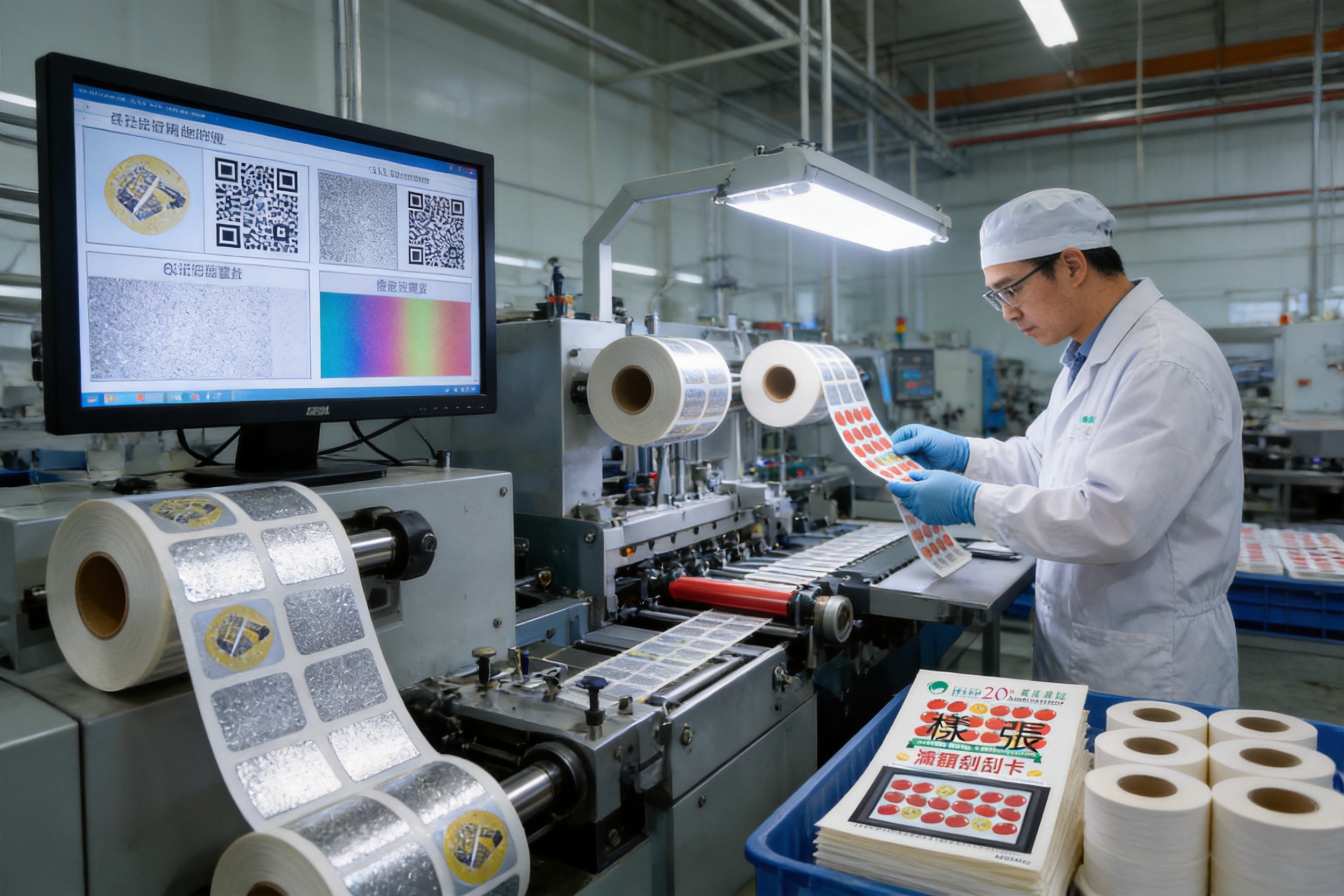
In competitive consumer markets, a label is no longer limited to displaying a product name, ingredient list, barcode, or regulatory statement. Modern labels can also attract attention, encourage participation, protect promotional information, and provide consumers with a simple method of checking product authenticity. Scratch-off silver and temperature-sensitive anti-counterfeiting labels combine these functions in a compact, customizable, and highly interactive format.
These labels are designed for brands that want to connect promotional campaigns with basic anti-counterfeiting protection. A removable silver ink layer conceals information such as prize results, QR codes, verification codes, discount codes, or campaign instructions. Consumers reveal the hidden content by scratching the surface. A temperature-sensitive version uses thermochromic ink to make selected patterns or text appear or disappear when exposed to warmth from a finger or breath, then return to their original appearance as the label cools.
The combination of physical interaction and visual change gives these labels an advantage over ordinary printed stickers. Instead of simply reading a static message, the consumer performs an action and receives an immediate response. This interaction can make a promotion more memorable while creating an additional barrier against unauthorized copying. For manufacturers, distributors, and brand owners, the format supports a wide variety of campaigns, including beverage promotions, food prizes, telecommunications recharge cards, lottery-style tickets, event activities, and consumer loyalty programs.
What Are Scratch-Off Silver and Temperature-Sensitive Labels?
Scratch-off silver labels generally consist of a pressure-sensitive label construction with a printed information layer and a removable scratch-off coating. The concealed layer may contain a unique code, a prize message, a QR code, a URL identifier, a serial number, or another promotional instruction. The silver coating is printed above this information with sufficient opacity to prevent easy viewing before use.
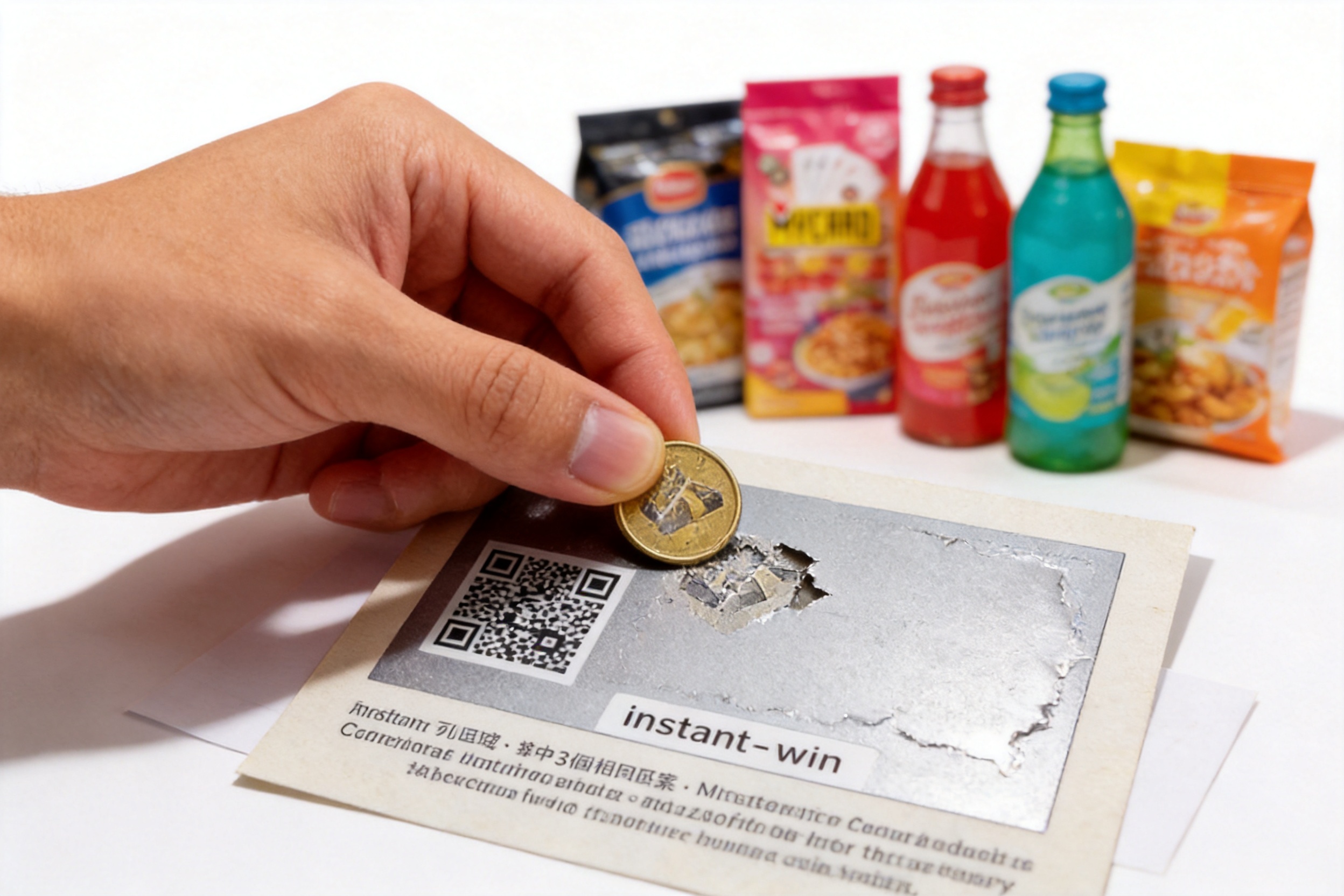
When the consumer scratches the covered area, the silver layer is removed or disrupted, exposing the content beneath. The coating must be strong enough to hide the message during transportation and normal handling, while remaining sufficiently easy to remove with a coin, fingernail, or similar object. A well-designed scratch-off layer provides a smooth and controlled scraping experience without excessively damaging the printed information underneath.
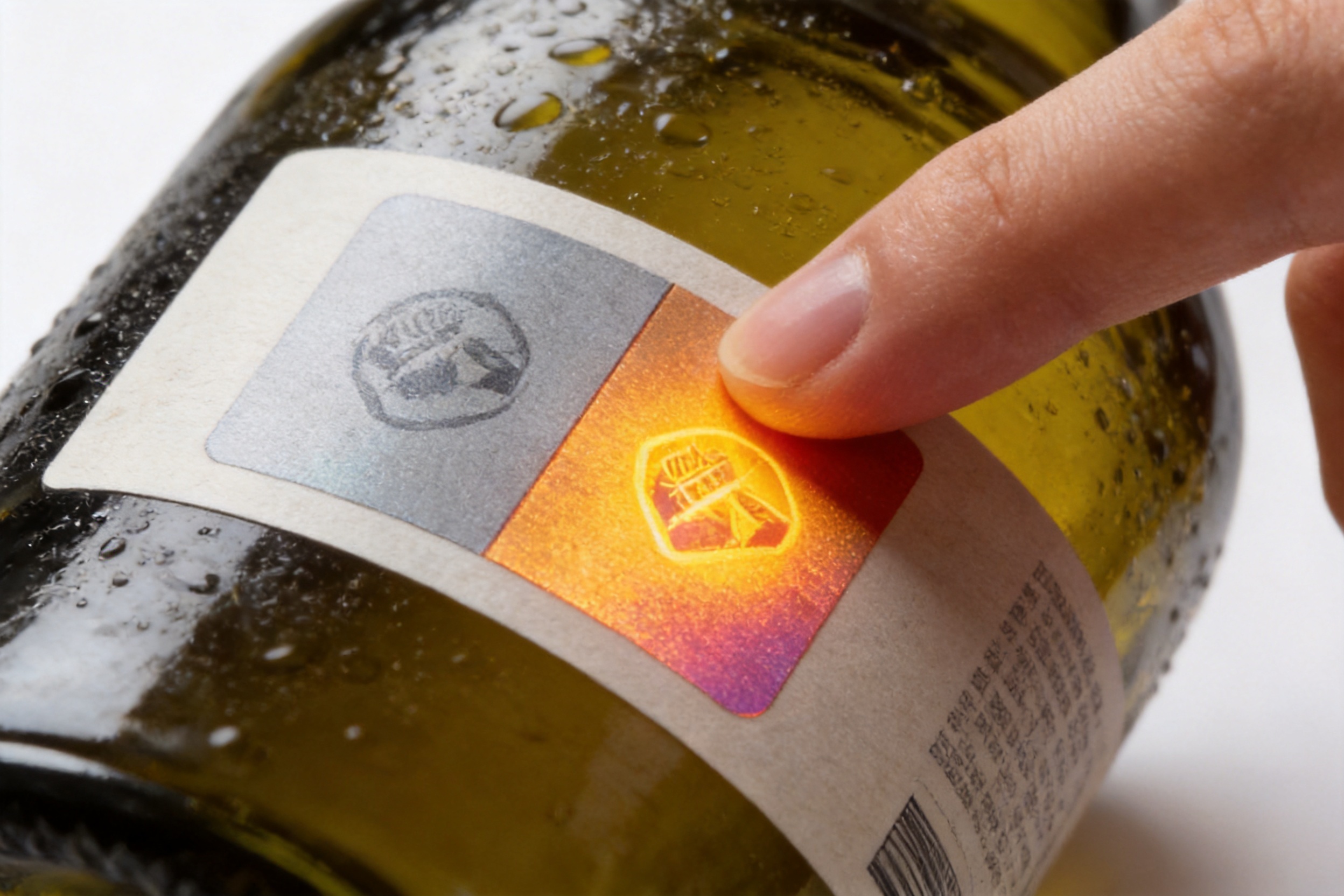
Temperature-sensitive labels use thermochromic ink, a specialized formulation that changes its visible condition when exposed to heat. Depending on the selected ink system and construction, a symbol, word, pattern, or security mark may appear when the label is warmed, or an existing printed element may temporarily disappear. Rubbing with a finger or breathing gently on the label can produce the thermal reaction. After the temperature returns to normal, the image generally recovers its previous appearance.
The two technologies can be supplied separately or combined within a broader promotional label program. A brand may use scratch-off silver ink for hidden prize information and thermochromic ink for a quick visual authenticity feature. This layered approach can create two distinct consumer experiences: one for revealing promotional content and another for checking a visible response from the label surface.
How the Product Supports Brand Protection
Counterfeiters often reproduce ordinary labels by copying static artwork, color combinations, logos, and printed text. A conventional label may therefore be visually attractive but relatively easy to imitate. Scratch-off and thermochromic features introduce functional elements that are more difficult to reproduce accurately than standard graphics alone.
A scratch-off label can conceal individualized information beneath an opaque silver layer. If each label contains a different code or unique campaign result, the information is not visible until the consumer intentionally removes the coating. This design makes casual copying less effective because duplicating the exterior artwork does not automatically reproduce the concealed information.
Thermochromic ink adds another level of visual differentiation. The appearance of the label changes in response to warmth, creating a simple physical reaction that consumers can observe directly. An imitation label printed only with ordinary ink may look similar at room temperature but fail to reproduce the same temporary color change, disappearance, or reappearance effect.
These technologies should be understood as practical anti-counterfeiting measures rather than a complete security system by themselves. The level of protection can be increased by combining them with variable data, serialized codes, QR code verification, microtext, special substrates, tamper-evident materials, database validation, or RFID technology. Rongyang’s broader technical capabilities in pressure-sensitive and RFID label production make it possible to consider these technologies as part of a wider label security strategy.
Key Advantages Over Conventional Promotional Labels
Interactive Consumer Participation
Ordinary promotional labels communicate information passively. The consumer reads a message, sees a discount, or scans a printed code. Scratch-off and temperature-sensitive labels make the user part of the campaign. Scratching a silver area or warming a thermochromic mark produces an immediate physical response, which can increase curiosity and encourage continued participation.
This experience is especially valuable in high-volume consumer markets where brands compete for attention on crowded shelves. A bottle, package, card, or ticket with an interactive feature can stand out from products that use only conventional printing. The interaction may also encourage consumers to keep the package longer, share the experience with others, or participate in repeat purchase programs.
Concealed Promotional Information
The scratch-off silver layer provides strong visual coverage over the information below. Depending on the campaign design, the hidden area can contain prize results, one-time redemption codes, QR codes, coupon numbers, or promotional instructions. This allows the brand to present a clean and attractive outer design while reserving a secure area for information that should remain concealed until the point of use.
Compared with an uncovered printed code, the scratch-off format offers better protection against casual code collection. A person handling a product cannot immediately read the concealed content without disturbing the coating. This is useful for campaigns in which the code is intended to be used by the final purchaser rather than by an intermediary during warehousing, transportation, or retail display.
Clear and Intuitive Authentication
Thermochromic labels offer a simple authentication experience. The consumer does not necessarily need special equipment to observe the reaction. Gentle rubbing or the warmth of a fingertip can activate the feature. The temporary visual change is easy to understand and can be incorporated into printed instructions such as “Rub to reveal” or “Warm to check.”
This intuitive operation is an important advantage in consumer environments. Complex verification systems may require an application, a special reader, or an internet connection. A temperature-sensitive feature can provide an initial physical check immediately, even when the user is offline. For higher-value products, this physical check can be used together with digital verification for stronger protection.
Flexible Customization
Both label technologies can be adapted to different artwork, shapes, sizes, colors, and promotional rules. Scratch-off areas can be positioned over a specific code or message, while thermochromic elements can be incorporated into logos, icons, warning marks, decorative patterns, or short instructions.
Customization can also include different degrees of opacity, scratch resistance, activation temperature, visual contrast, adhesive selection, face materials, and finishing methods. These options enable the label to match the product’s surface and the campaign’s intended consumer experience.
Improved Campaign Memorability
A promotion is more effective when consumers remember it and understand how to participate. The tactile action of scratching and the visual response of thermochromic ink provide memorable elements that can distinguish a campaign from ordinary price messages. This is particularly valuable for beverage brands, food companies, telecommunications operators, and event organizers that use short-term promotional campaigns to generate immediate consumer response.
Product Construction and Functional Layers
The final performance of an interactive anti-counterfeiting label depends on the coordination of multiple layers. The label is not defined only by the special ink. Its face material, printed graphics, functional coating, adhesive, liner, and finishing process all affect usability and durability.
Face Material
The face material provides the main printable surface. Paper may be suitable for cards, tickets, coupons, and dry indoor applications. Film materials such as polypropylene or polyester may be preferred when the label must resist moisture, condensation, abrasion, or handling during distribution.
For beverage containers and chilled products, the material must be selected with attention to condensation, refrigeration, bottle curvature, and expected contact with water. For telecommunications cards or tickets, a smooth surface with good print definition may be more important. For food packaging, material selection must also consider the package structure, intended application, and relevant compliance requirements.
Printed Information Layer
The information layer is located beneath the scratch-off coating. It can contain variable data, campaign text, unique numbers, QR codes, or other information. Print quality is especially important because the content may be small or scanned after the silver layer is removed.
Variable information can be generated and controlled according to the campaign design. Code sequencing, data management, print inspection, and reconciliation are important elements in preventing duplication and ensuring that the correct quantity of valid codes is delivered. The exact data-management method depends on the customer’s promotional and verification system.
Scratch-Off Silver Layer
The silver layer is formulated to conceal the content beneath while allowing controlled removal. Its visual appearance commonly contrasts with the surrounding artwork, making the scratch area easy to locate. The coating must maintain adhesion during normal logistics but release in a predictable way under scratching.
A balanced scratch performance is essential. If the layer is too weak, it may be damaged during packing, transportation, or retail display. If it is too strong, consumers may struggle to remove it and may damage the underlying code. A smooth hand feel, strong coverage, clean removal, and low risk of premature exposure are key performance goals.
Thermochromic Ink Layer
The thermochromic layer contains special temperature-sensitive ink. It can be printed as a standalone security mark or integrated into a larger design. The formulation and printing structure determine the temperature response, color transition, recovery behavior, and visual contrast.
Because thermochromic performance can be affected by the surrounding environment, product development should consider the intended application temperature, storage conditions, label color, substrate, coating sequence, and exposure time. Samples and functional testing are valuable before full-scale production.
Pressure-Sensitive Adhesive and Liner
The adhesive must match the product surface and application conditions. Different adhesives may be needed for glass, plastic, coated paper, corrugated packaging, metal, or flexible film. Surface energy, curvature, temperature, moisture, and required permanence all influence adhesive selection.
The liner protects the adhesive before application and supports die-cutting, handling, and dispensing. A properly engineered liner helps maintain label dimensions and reduces production problems during converting or automatic application.
Manufacturing Process and Quality Control
Reliable interactive labels require more than a special ink. The manufacturing process must control artwork preparation, material inspection, printing, variable data, coating, drying, die-cutting, inspection, packaging, and delivery. Shanghai Rongyang Industrial Development Co., Ltd. integrates research and development, manufacturing, sales, and service, supporting customers from initial requirements through finished label production.
Requirement Analysis and Product Engineering
Production begins with an assessment of the product, application environment, promotional objective, label size, substrate, adhesive requirement, security level, and expected volume. The engineering team can evaluate whether a paper or film face is more appropriate, whether the label requires permanent or removable adhesion, and whether the special feature should be scratch-off, thermochromic, or a combination of both.
Artwork is reviewed for the placement of functional areas. The scratch-off panel must cover the intended information accurately, while the thermochromic mark must remain visible and usable after printing and finishing. The label design should also allow enough space for instructions so that consumers can understand how to activate the feature.
Material and Ink Preparation
Materials are checked before entering production. Important considerations include surface cleanliness, thickness consistency, printability, coating compatibility, adhesive performance, and dimensional stability. Special inks and coatings are selected according to the target effect and application requirements.
For scratch-off labels, the silver ink must achieve adequate opacity and scratch performance. For thermochromic labels, the ink must provide a repeatable response under the intended activation method. Ink preparation and process control help reduce variation between production batches.
High-Precision Printing
Printing may include brand graphics, instructions, barcodes, QR codes, serial numbers, variable data, and security elements. Registration accuracy is critical because the scratch-off coating must align with the concealed information. Poor registration can leave part of a code exposed or cover an incorrect area.
Modern automated production lines and precision inspection equipment help manufacturers monitor printing quality and alignment. Depending on the order requirements, inspection can cover color, missing print, code readability, registration, surface defects, and coating consistency.
Application of Functional Coatings
The scratch-off coating is applied over the specified information area. Its thickness, coverage, and curing or drying conditions must be controlled to achieve a consistent user experience. The thermochromic ink is printed in the designated area and processed according to its material characteristics.
Functional coating processes require careful sequencing. A layer that is printed too early, too late, too heavily, or too lightly may affect adhesion, readability, activation, or scratch behavior. Production technicians therefore monitor process parameters and conduct sample checks during the run.
Die-Cutting and Finishing
After printing and coating, the label web is die-cut into the required shape. Standard rectangles, circles, custom contours, neck labels, card formats, and other shapes can be considered according to the product design. Die-cutting must preserve the face material and functional area without damaging the liner or creating unwanted lifting at the edges.
Finishing may include slitting, rewinding, sheet conversion, roll identification, protective packaging, and preparation for automatic dispensing. The final format should match the customer’s application equipment and production workflow.
Inspection and Traceability
Quality control is applied from incoming raw materials to finished products. Inspection may include appearance, dimensions, adhesive behavior, print registration, scratch performance, thermochromic response, barcode or QR code readability, and packaging condition.
Traceability is especially important for promotional labels containing unique information. Production records can help identify the material batch, manufacturing date, order details, and inspection status. A systematic quality approach helps customers manage campaign inventory and respond efficiently if a technical question occurs.
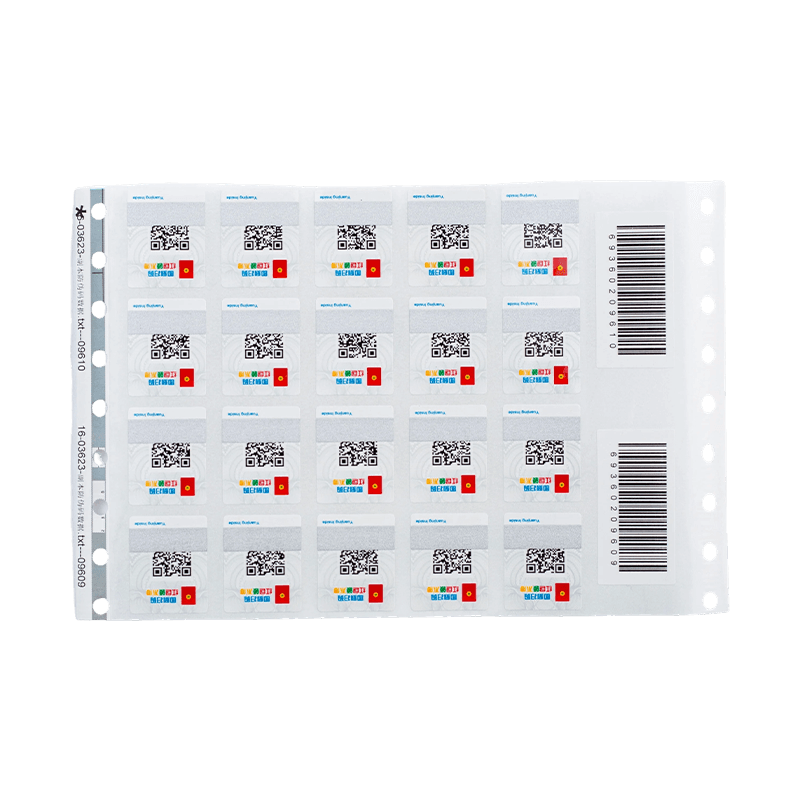
| Feature | Scratch-Off Silver Label | Thermochromic Anti-Counterfeiting Label | Typical Application Value |
|---|---|---|---|
| Activation method | Scratch with a fingernail, coin, or similar object | Warm by rubbing with a finger or breathing on the surface | Simple consumer participation without special equipment |
| Primary visible effect | Silver coating is removed to reveal hidden information | Printed pattern or text appears, disappears, or changes temporarily | Promotion, authentication, and product differentiation |
| Concealed content | Prize information, QR codes, serial numbers, or promotional codes | Usually a visual security mark, symbol, or changing message | Supports campaign control and basic authenticity checking |
| Main performance requirement | Strong coverage with smooth and controlled scratching | Consistent thermal response and natural recovery after cooling | Reliable interaction throughout the campaign |
| Customization options | Panel size, shape, artwork, opacity, and variable information | Activation temperature, color effect, pattern, and placement | Adaptation to different brands and packaging formats |
| Common markets | Recharge cards, prize tickets, bottle caps, coupons, and food promotions | Beverages, promotional packaging, authentication marks, and interactive products | Broad use across consumer and promotional industries |
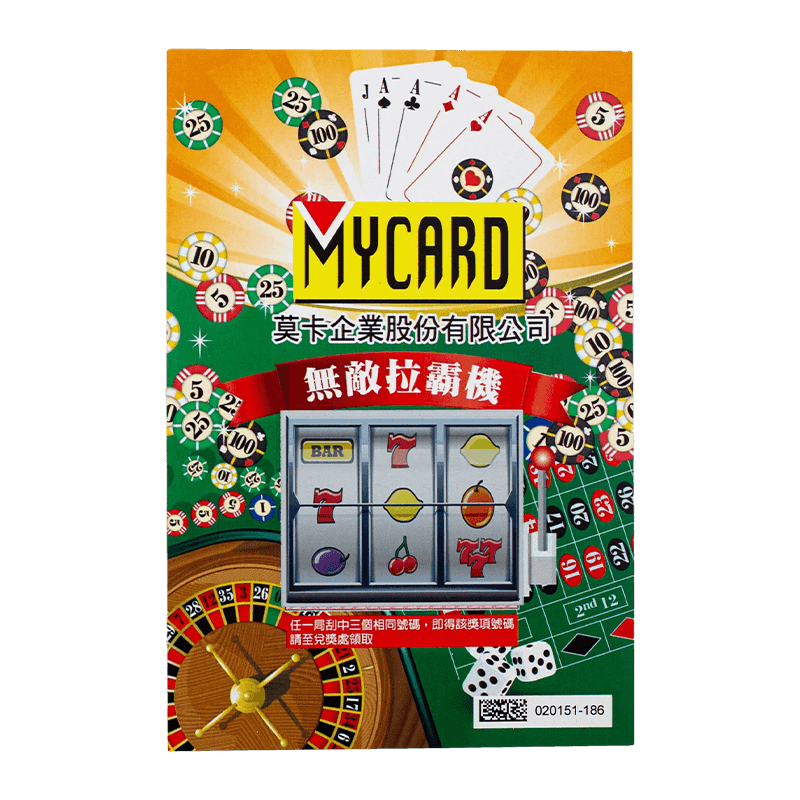
Scratch-off silver/temperature-sensitive anti-counterfeiting labels
Advantages of Working with an Integrated Label Manufacturer
An integrated manufacturer can provide more consistent coordination than a supplier that performs only one step of the label process. When design support, material selection, printing, converting, inspection, and service are handled within one organized production system, technical decisions can be evaluated as a complete label solution.
Shanghai Rongyang Industrial Development Co., Ltd. provides pressure-sensitive labels and RFID smart labels for multiple industries, including fast-moving consumer goods, food and beverage, pharmaceuticals, logistics, retail, and industrial applications. This broad experience supports the development of labels that must balance appearance, adhesion, functionality, durability, and production efficiency.
The company operates automated production lines, precision inspection equipment, and a quality control system covering raw materials and finished products. Such infrastructure is important for interactive labels because small variations in coating position, ink coverage, or code quality can affect the consumer experience and campaign results.
Rongyang also has experience with specialized label functions, including anti-counterfeiting, high-temperature resistance, removable adhesion, and special die-cutting. These capabilities are relevant when a scratch-off or thermochromic label must be adapted to an unusual package, a demanding environment, or a particular application process.
Production facilities in China and Malaysia support large-scale and international customer requirements. The company’s ISO 9001 and ISO 14001 certifications, along with its SMETA social responsibility audit, reflect formal attention to quality management, environmental management, and responsible business practices. Certification does not replace product-specific testing, but it provides an organized foundation for repeatable manufacturing and customer communication.
Applications Across Different Industries
Telecommunications Recharge Cards
Recharge cards traditionally use concealed codes that consumers reveal after purchase. A scratch-off silver layer is well suited to this format because it hides the code until the card reaches the authorized user. The label or card can include a brand logo, instructions, customer service information, and a scratch panel with a controlled removal experience.
Variable data management is important in this application. Each code must be unique, correctly printed, and readable after scratching. Inspection and reconciliation help reduce the risk of duplicate, missing, or invalid information.
Beverage Bottle Promotions
Beverage brands frequently use prize draws, instant-win activities, discounts, and loyalty campaigns. A label or bottle-cap application can include a scratch-off area for a prize code or a thermochromic element that responds to touch. The interactive effect can be coordinated with a seasonal launch, sporting event, festival, or retail promotion.
Because beverage containers may be exposed to refrigeration and condensation, the face material and adhesive must be selected carefully. The special ink and coating should also be tested under the expected storage and handling conditions.
Food Promotions
Food manufacturers can use interactive labels for coupons, recipe campaigns, prize activities, and consumer engagement programs. The hidden area may contain a code that directs consumers to a digital campaign or confirms participation in a promotion.
Food packaging requires careful consideration of label placement, surface contact, storage conditions, and applicable regulatory requirements. The label should be designed for its intended package rather than treated as a universal component.
Prize Tickets and Event Materials
Scratch-off silver labels can be integrated into lottery-style tickets, event cards, membership materials, and promotional vouchers. The technology creates a clear moment of discovery and can be used for winning and non-winning results, discount levels, access codes, or event instructions.
Thermochromic features can add an additional visual effect to event passes or campaign cards. A changing logo or symbol may encourage users to interact with the material and can help staff identify a particular campaign format.
Consumer and Retail Campaigns
Retailers and consumer brands can use these labels for loyalty programs, instant discounts, product launches, sampling events, and seasonal activities. A compact interactive label can be applied to a package without requiring a complete redesign of the container.
Where campaign data is connected to a digital platform, a concealed QR code or serial number can guide the consumer to a verification or registration page. The physical label then acts as the first step in a wider online and offline campaign.
Design Considerations for Better Performance
Make the Interaction Easy to Understand
Instructions should be short, clear, and placed near the relevant functional area. For scratch-off panels, wording such as “Scratch to reveal” can be sufficient. For thermochromic features, the label may instruct the consumer to “Rub to check” or “Warm to reveal.” The language and symbols should suit the target market and product category.
Use Adequate Contrast
The scratch-off area should be visually distinct from the surrounding design. After removal, the revealed text must have sufficient contrast for reading or scanning. For thermochromic effects, the original and activated states should be distinguishable under expected lighting conditions.
Protect Variable Data
Codes should be positioned so that scratching does not remove essential characters. The underlying print should be durable enough to remain readable after the silver layer is removed. If QR codes are used, their size, quiet zone, contrast, and print quality should support reliable scanning.
Match the Adhesive to the Package
A label designed for a flat paper card may not perform well on a curved bottle or a low-surface-energy plastic container. Adhesive selection should account for the package material, surface curvature, application speed, temperature, humidity, and expected service life.
Test the Complete Finished Label
Testing only the ink may not reveal problems caused by the complete construction. The finished label should be evaluated on the actual or representative package. Tests may include scratching after storage, thermal activation at different temperatures, exposure to moisture, handling abrasion, refrigeration, and application through production equipment.
Scratch-Off Performance and Consumer Experience
The tactile quality of a scratch-off label has a direct effect on campaign satisfaction. Consumers expect the silver area to remove without excessive force and without leaving a confusing residue. The action should feel deliberate and controlled rather than rough or unpredictable.
Strong ink coverage is important because the hidden message should not be visible through the silver layer. At the same time, coverage should not create an unnecessarily thick coating that is difficult to remove. The best result comes from balancing opacity, adhesion, coating structure, drying, and the properties of the printed layer below.
Scratch testing can be performed using common tools and realistic consumer behavior. The test should consider fingernails, coins, repeated rubbing, angled scratching, and different storage conditions. The goal is not only to confirm that the layer can be removed, but also to ensure that the concealed message remains protected before intentional use.
Thermochromic Performance and Recovery
A thermochromic label should respond in a clear and repeatable manner. The change may be triggered by finger contact, rubbing, breath, or another specified source of warmth. The response must be visible enough for a consumer to understand without specialized training.
Recovery after cooling is another important feature. The label should return naturally toward its original state within a reasonable period under expected conditions. The exact recovery time may vary according to the ink formulation, substrate, ambient temperature, heat exposure, and label construction.
Thermochromic labels should be tested at different environmental temperatures. A feature designed for indoor use may respond differently in a refrigerated beverage environment or a hot outdoor retail display. Testing helps establish suitable activation instructions and prevents unrealistic consumer expectations.
Combining Physical and Digital Verification
Scratch-off and thermochromic features are particularly effective when they complement digital tools. A hidden QR code can lead to a campaign page, product registration form, prize notification system, or authenticity-checking platform. A serial number can be printed beneath the scratch layer and matched with a database.
The physical response provides an immediate interaction, while the digital system can provide more detailed information. For example, a consumer may first scratch the label to reveal a code, then enter or scan the code to check whether it is valid. The thermochromic mark may provide a quick visual indication that the label contains a genuine security feature.
Digital verification should be designed carefully. If codes are reusable, copied, or not connected to a controlled database, the security benefit may be reduced. Campaign operators should define how codes are generated, activated, validated, recorded, and retired. The label manufacturer can support the physical production and variable-data process, while the brand or campaign operator generally manages the final verification platform.
Environmental and Operational Considerations
Label selection should consider the full life cycle of the product. Paper and film materials have different characteristics related to moisture resistance, durability, recyclability, and separation from packaging. The correct choice depends on the package type, use environment, performance requirements, and applicable sustainability objectives.
Environmental management is also relevant to the manufacturing process. Rongyang has obtained ISO 14001 certification, providing a framework for environmental management. Customers may request information about material choices, ink systems, production waste, packaging, and supply-chain practices when developing an environmental program.
Operational efficiency is another important consideration. Automated printing, converting, inspection, and roll or sheet packaging can support large promotional campaigns. Standardized specifications, approved samples, and clear purchase-order information help reduce delays and minimize production variation.
Why Customization Matters in Anti-Counterfeiting Labels
There is no single construction suitable for every product. A beverage label, recharge card, pharmaceutical package, food pouch, and industrial component may require different materials, adhesives, dimensions, and security features. Customization allows the label to address the actual risks and operating conditions of the product.
Customization may include the visible design, hidden information, code structure, special ink, scratch panel shape, activation method, adhesive, material, die-cutting, winding direction, roll diameter, and packaging format. It may also include multiple inspection requirements for variable data and customer-specific quality documentation.
For brands with an established visual identity, the interactive feature can be integrated into the artwork instead of appearing as an unrelated add-on. A silver panel can follow the shape of a logo or campaign icon. A thermochromic mark can be designed as part of a product emblem, temperature symbol, or graphic pattern.
Comparison with Other Security and Promotion Methods
Static printed promotions are economical and easy to understand, but they provide limited concealment and little physical interaction. Holographic labels create a striking visual effect and can be difficult to reproduce accurately, but they may not be suitable when a campaign requires hidden prize information. QR codes offer digital connectivity but generally depend on a smartphone and a working network connection.
Scratch-off and thermochromic labels occupy a useful middle position. They can provide a physical interaction without requiring specialized equipment, while still supporting QR codes, serial numbers, and digital campaigns. They may also be combined with holographic elements, microtext, tamper-evident construction, or RFID depending on the required security level.
The appropriate solution depends on the value of the product, the counterfeiting risk, the campaign budget, the distribution environment, and the desired consumer experience. A professional label manufacturer can help evaluate these factors and recommend a practical combination of technologies.
Recommended Development Process
A successful project normally begins with a clear product brief. The brief should identify the product type, package material, label dimensions, quantity, application method, storage conditions, promotional mechanism, hidden information, and required security level.
The next stage is construction development. The manufacturer can recommend the face material, adhesive, scratch-off coating, thermochromic effect, printing method, and finishing format. Artwork and variable data specifications should be reviewed before samples are produced.
Sample approval should include functional testing. The customer should check the appearance, code readability, scratch experience, thermal response, recovery behavior, adhesive performance, and compatibility with the package. If the label will be applied automatically, testing on the customer’s equipment is recommended.
After approval, production documentation should define the agreed materials, colors, dimensions, functional performance, inspection requirements, packing method, and delivery format. These details help maintain consistency for repeat orders and future campaign extensions.
Frequently Asked Questions
What information can be hidden beneath the silver scratch-off layer?
The concealed area can contain prize results, unique promotional codes, QR codes, serial numbers, discount information, redemption instructions, or other campaign data. The exact content depends on the customer’s verification and promotion system.
Can the scratch-off area be customized in shape and size?
Yes. The scratch-off area can be designed according to the artwork and the size of the information beneath it. Custom shapes, panels, icons, and placement positions can be considered during product development.
How does a thermochromic label work?
A thermochromic label uses temperature-sensitive ink. When the printed area is warmed by a finger, rubbing, breath, or another approved heat source, the pattern or text may appear, disappear, or change temporarily. As the label cools, it returns toward its original state.
Does the thermochromic effect remain permanently changed?
The intended effect is generally temporary. After cooling, the printed appearance naturally recovers. Recovery behavior depends on the ink, label construction, heat exposure, and environmental conditions.
Can these labels be used on beverage bottles?
They can be developed for beverage applications, including bottle labels and promotional formats, provided that the material and adhesive are selected for the bottle surface, curvature, condensation, refrigeration, and handling conditions.
Can QR codes be printed under the scratch-off coating?
Yes. QR codes can be placed beneath the scratch-off area, provided that the code is printed with adequate size, contrast, and quality. The exposed code should be tested after scratching to confirm reliable scanning.
Are scratch-off and thermochromic labels complete anti-counterfeiting systems?
They provide practical physical and visual barriers, but the required protection level may vary. For higher security, they can be combined with unique variable data, online verification, tamper-evident materials, microtext, holographic features, or RFID technology.
What products commonly use these labels?
Common applications include telecommunications recharge cards, beverage bottle promotions, food campaigns, prize tickets, coupons, retail promotions, event materials, loyalty programs, and selected industrial or consumer products requiring basic authenticity identification.
What should be tested before mass production?
Customers should test print appearance, code readability, scratch performance, silver coverage, thermal activation, recovery behavior, adhesive compatibility, moisture resistance, storage stability, abrasion resistance, and application performance on the actual package.
Can the labels be supplied in rolls or sheets?
The finished format can be discussed according to the customer’s application equipment and handling process. Roll labels may be suitable for automatic application, while sheet formats may be useful for cards, tickets, coupons, and manual processing.
Does the company provide other specialized label solutions?
Shanghai Rongyang Industrial Development Co., Ltd. provides pressure-sensitive labels, RFID labels, and customized solutions involving anti-counterfeiting, high-temperature resistance, removable adhesion, special die-cutting, and other functional requirements.
Conclusion
Scratch-off silver and temperature-sensitive anti-counterfeiting labels provide a practical way to unite promotion, consumer interaction, and product protection. The scratch-off layer conceals valuable information and reveals it through a smooth physical action. Thermochromic ink creates a temporary visual response that can support intuitive authenticity checking and make a campaign more engaging.
The main advantages of these labels include strong visual coverage, controlled scratching, simple operation, customizable designs, support for variable information, compatibility with QR codes, and suitability for multiple industries. Compared with static promotional labels, they provide a more memorable experience. Compared with digital-only verification, they offer a physical interaction that can work as an immediate first-level check. When integrated with serialized data, online verification, RFID, or other security methods, they can form part of a broader brand-protection strategy.
Manufacturing quality is central to the final result. Correct material selection, accurate printing, functional coating control, precise die-cutting, variable-data management, and finished-label inspection all contribute to reliable performance. With automated production lines, precision inspection equipment, integrated technical support, and experience in pressure-sensitive and smart labels, Shanghai Rongyang Industrial Development Co., Ltd. is positioned to develop customized solutions for promotional, consumer, logistics, and industrial requirements.
For brands planning a new campaign, the most effective approach is to define the consumer interaction, security objective, package environment, data requirements, and application process at the beginning of development. A well-engineered label can then provide not only an attractive printed surface, but also a controlled product experience that encourages participation and strengthens confidence in product authenticity.
References
1. International Organization for Standardization. Quality Management Systems: Requirements and Principles of Quality Management.
2. International Organization for Standardization. Environmental Management Systems: Guidelines and General Requirements.
3. FINAT. Technical Guidance for Pressure-Sensitive Label Materials, Adhesives, and Converting Practices.
4. Technical literature on thermochromic inks, reversible color-change systems, and temperature-sensitive printing applications.
5. Technical literature on scratch-off coatings, opaque security inks, and promotional code concealment.
6. Industry guidance on variable-data printing, barcode quality, QR code readability, and promotional campaign traceability.
7. Packaging engineering references covering pressure-sensitive label adhesion, substrate selection, moisture resistance, and automatic label application.
8. Shanghai Rongyang Industrial Development Co., Ltd. Product and manufacturing information for pressure-sensitive labels, RFID labels, anti-counterfeiting labels, and customized functional label solutions.
Product: Scratch-off silver/temperature-sensitive anti-counterfeiting labels


Messae Us Right Now!

- Quick Links
- Products
- Quality Control
- Our Story
- News
- Contact
- Our Product
-
- Beauty and Personal Care Labels
- Home cleaning and laundry care labels
- Liquor and Beverage Labels
- Food and dairy product labels
- Healthcare Labels
- Promotional and Interactive Labels
- Specialty and industrial solution
- Labels Thermal printing and logistics labels
- Anti-counterfeiting traceability and RFID Labels
- Contact us
- Tel:+86-573-86867861
- Phone:+86-18621872035
- E-mail:allen.men@rylabel.com
- Add:No. 111 Xincheng Road, Haiyan Economic Development Zone, Jiaxing City, Zhejiang Province


