
 English
 русский
 Español


Home / Author / Lin Yuchan — International Sales Manager / High-Adhesion Moisture-Proof Labels for Cleaning and Laundry Products
News

High-Adhesion Moisture-Proof Labels for Cleaning and Laundry Products
2026-10-17
Labels used on household cleaning and laundry products must withstand some of the most demanding conditions in consumer packaging. Detergent refills, bathroom cleaners, kitchen degreasers, fabric softeners, bleach products, and other chemical formulations are frequently stored in bathrooms, utility rooms, kitchens, garages, and warehouses where moisture, splashing, condensation, temperature changes, friction, and chemical exposure are common. Under these conditions, an ordinary paper label or general-purpose adhesive may curl, wrinkle, lift, detach, or lose its printed appearance.
High-adhesion, moisture-proof, and anti-detachment labels are designed to solve these problems at the material, adhesive, printing, and manufacturing levels. By combining an ultra-strong acrylic latex or rubber-based adhesive with a moisture-resistant film or paper coating, this label solution creates a reliable bond on difficult packaging surfaces, including high-density polyethylene and polypropylene bottles. The result is a durable label that remains firmly attached and visually stable even in humid, condensation-prone environments.
This advanced label solution is manufactured for brands that need more than attractive graphics. It is intended for products that must maintain clear identification, usage instructions, regulatory information, branding, and promotional messages throughout transportation, storage, handling, and consumer use. Its performance is particularly valuable where bottles are repeatedly exposed to water, wet hands, splashes, damp shelves, and rapid changes between warm and cool environments.
Why Cleaning and Laundry Product Labels Need Special Performance
Cleaning and laundry containers are often made from plastic substrates such as HDPE and PP. These materials are lightweight, chemically resistant, economical, and suitable for many household formulations. However, they can be challenging surfaces for label adhesion. Their relatively low surface energy makes it more difficult for conventional adhesives to spread evenly and develop a strong bond.
In addition, a bottle may not be completely dry when a label is applied. Moisture can originate from the production environment, condensation on the container, residual liquid from filling, or the surrounding atmosphere. A thin moisture film between the adhesive and the bottle can reduce contact and create weak areas. Over time, those weak areas may develop into edge lifting, bubbling, wrinkling, or complete label detachment.
The usage environment can make the problem even more serious. A bottle of bathroom cleaner may be stored next to a shower or bathtub. A laundry detergent refill may be handled with wet hands and placed on a damp washing machine. A kitchen degreaser may be exposed to steam, splashes, grease, and repeated wiping. A label that performs well in a dry warehouse may not perform equally well after weeks of household use.
Cleaning formulations can also contain surfactants, solvents, fragrances, alkaline ingredients, acids, or other active components. If a label edge becomes exposed, the liquid may gradually migrate beneath the label. This can stain the facestock, weaken the adhesive, affect the printed image, and make the package appear old or poorly maintained.
For these reasons, cleaning and laundry packaging requires a label system in which the facestock, coating, ink, adhesive, liner, and application process work together. High-adhesion moisture-proof labels address this need through a coordinated structure rather than relying on adhesive strength alone.
Product Overview
The high-adhesion, moisture-proof, and anti-detachment label solution uses a strong pressure-sensitive adhesive system combined with a moisture-resistant face material. Depending on the application, the facestock may be a coated paper or a synthetic film. The adhesive may be formulated with acrylic latex or rubber-based technology to provide strong initial tack and dependable long-term bonding.
The product is engineered to create instant, firm contact on plastic bottles, including HDPE and PP containers. It is especially suitable for surfaces that are slightly textured, curved, flexible, or difficult to wet with conventional adhesive systems. The design helps overcome the effects of moisture films and low surface energy, enabling the label to attach securely during high-speed packaging operations.
After application, the label maintains adhesion and dimensional stability during high temperature, high humidity, and frequent condensation. It resists common forms of failure such as curling corners, edge lifting, peeling, bubbling, and loss of shape. This makes it suitable for products that remain in wet or humid environments for extended periods.
| Performance Requirement | Product Response | Packaging Benefit |
|---|---|---|
| Low surface energy of HDPE and PP | High-tack acrylic latex or rubber-based adhesive | Fast and secure bonding to difficult plastic surfaces |
| Moisture and condensation | Moisture-resistant film or paper coating | Reduced swelling, wrinkling, and edge deterioration |
| Repeated handling | Strong cohesive and adhesive performance | Lower risk of peeling during transport and use |
| High humidity and temperature variation | Stable adhesive and dimensionally controlled facestock | Better appearance and label integrity over time |
| Curved or flexible bottles | Conformable label construction and controlled die-cutting | Improved contact and a cleaner package appearance |
| Household chemical exposure | Protective coating and application-specific material selection | Better resistance to staining, fading, and surface damage |
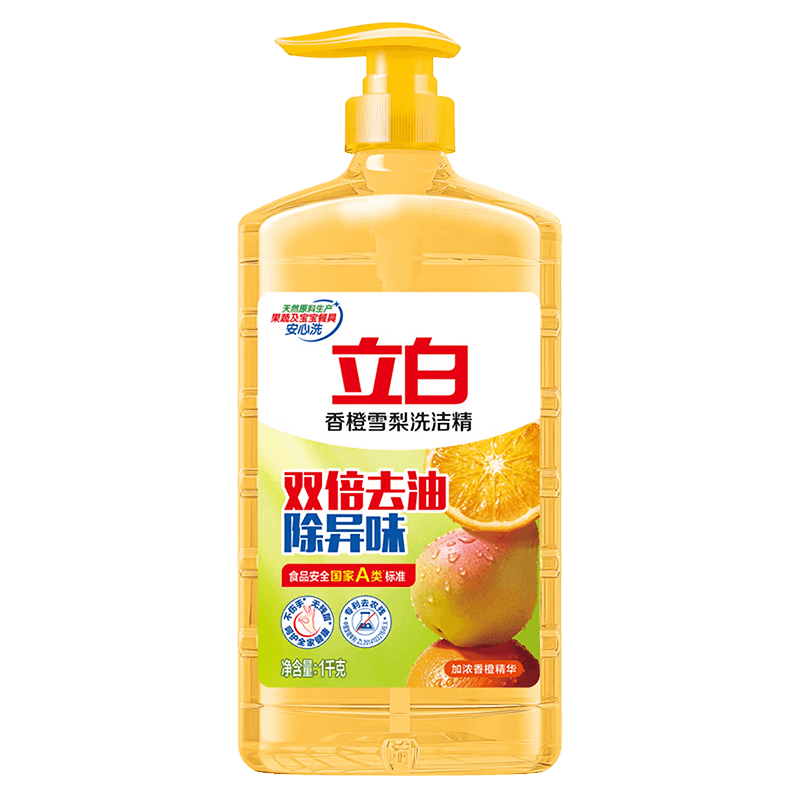
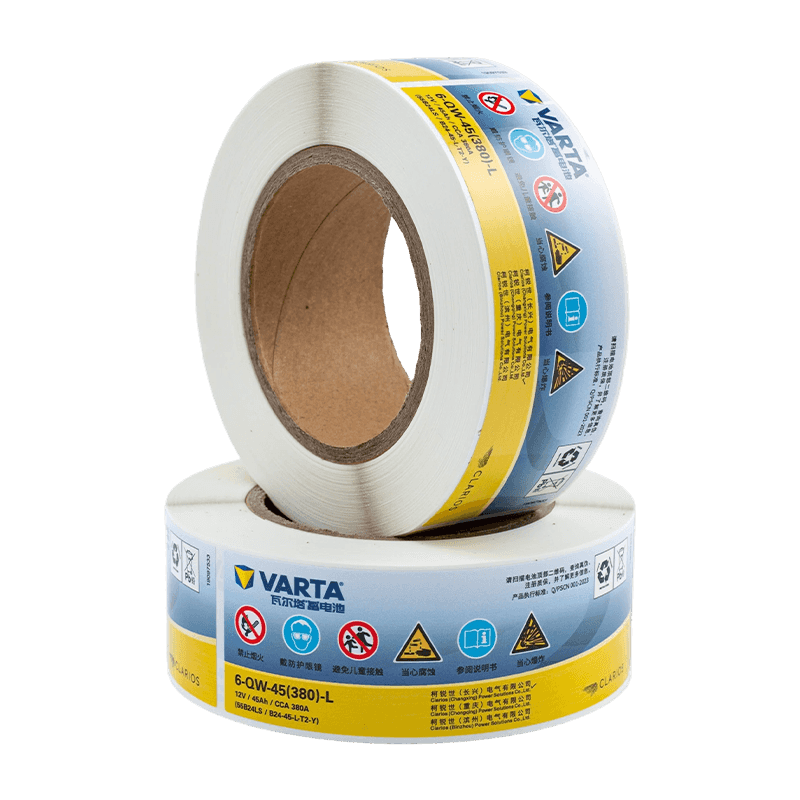
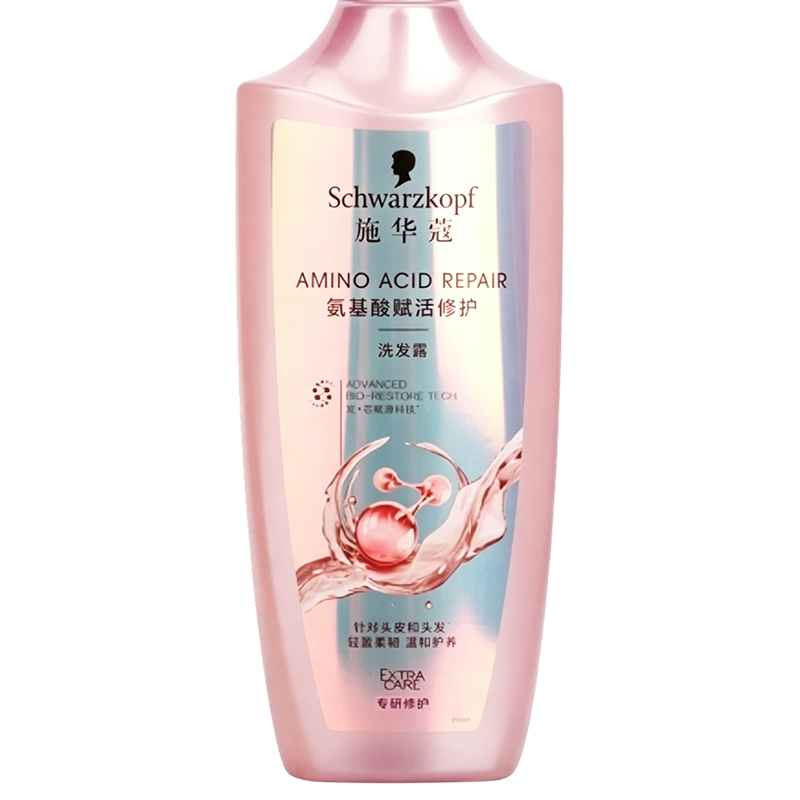
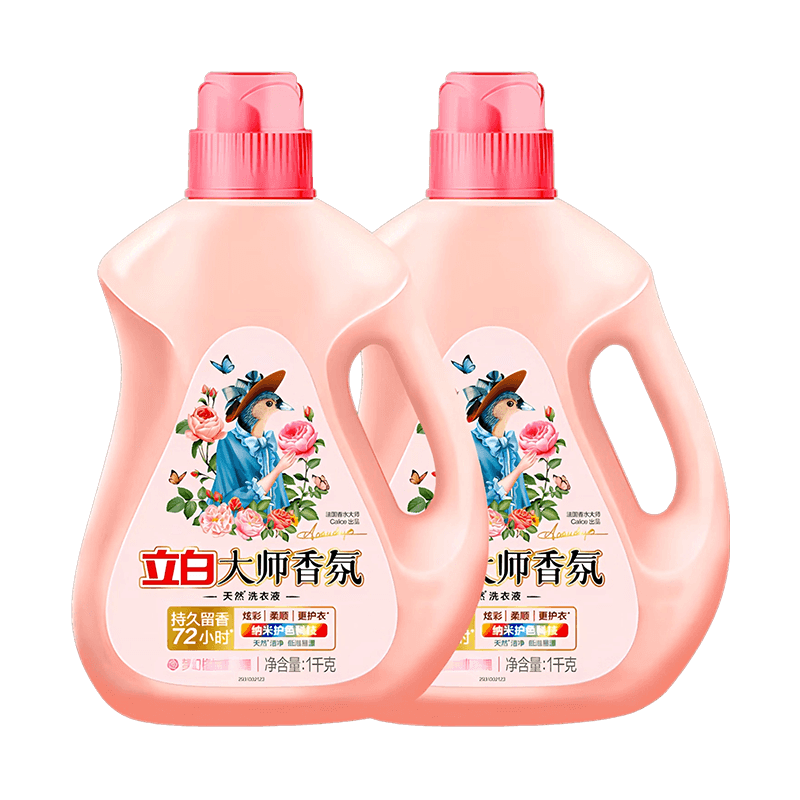
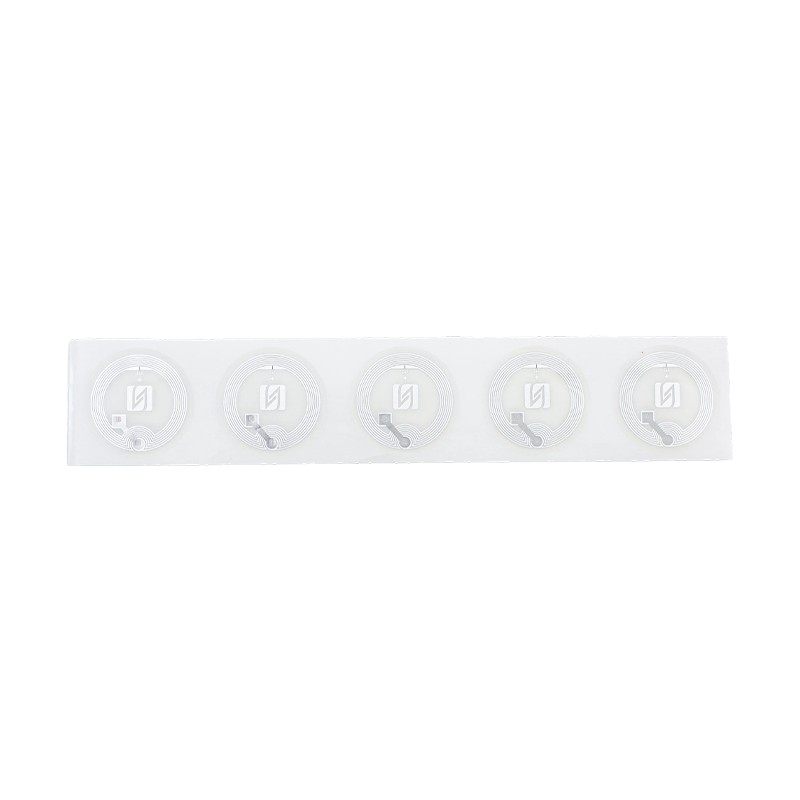
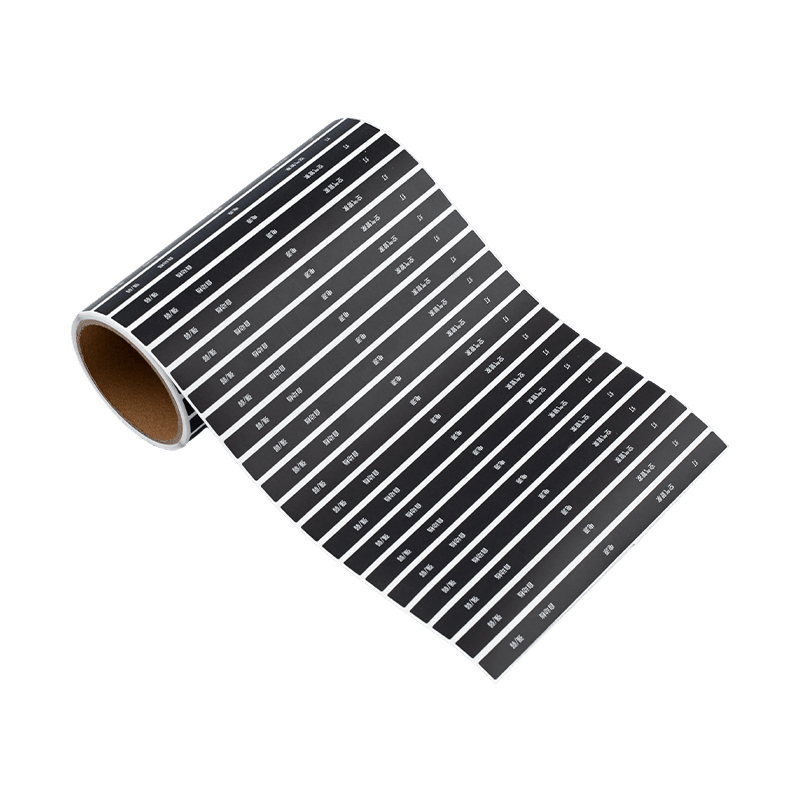
High-adhesion, moisture-proof and anti-detachment labels
Ultra-Strong Adhesion on Difficult Plastic Bottles
The central advantage of this product is its ability to bond strongly to plastic bottles that are difficult for standard label adhesives. HDPE and PP are widely used in household chemical packaging because they are durable, lightweight, and resistant to many chemicals. Yet their low surface energy can prevent an adhesive from spreading and anchoring effectively.
The adhesive system is designed to improve wet-out across the bottle surface. Wet-out describes the ability of the adhesive to make intimate contact with the substrate. Greater contact creates more opportunities for the adhesive to develop its bonding strength. In practical terms, this means the label is less dependent on a perfectly dry, perfectly smooth bottle surface.
Initial tack is important in high-speed filling and labeling operations. Once the label is applied, the package may move immediately through conveyors, packing stations, cartons, and palletizing equipment. If the adhesive requires a long dwell time before developing sufficient strength, labels can shift or detach during handling. The high-tack formulation supports instant firm bonding, helping maintain label position from the moment of application.
At the same time, a high initial tack does not replace the need for balanced adhesive design. The adhesive must also provide sufficient cohesion, meaning internal strength within the adhesive layer. A well-balanced formulation resists splitting, residue, edge flow, and adhesive transfer. This is particularly important when the packaging line operates at speed or when products are exposed to heat and pressure during transportation.
Compared with ordinary general-purpose paper labels, this product offers a more application-focused solution. It is developed around the actual challenges of cleaning and laundry containers instead of treating them as standard dry-goods packages. The result is stronger performance on difficult substrates and improved resistance to the environmental conditions that cause label failure.
Moisture Resistance for Humid and Splash-Prone Environments
Moisture resistance involves more than preventing water from reaching the printed surface. A durable label must manage moisture at several levels: the face material, the printed layer, the coating, the adhesive interface, and the exposed label edge.
The moisture-resistant film or paper coating helps protect the label surface from humidity, water droplets, and splashes. It can reduce the tendency of paper fibers to absorb water, swell, soften, or deform. On a film construction, the barrier properties of the material help maintain surface integrity and dimensional stability. On a coated paper construction, the coating helps preserve print quality while improving resistance to wet conditions.
Moisture resistance is especially important for labels wrapped around curved bottles. When a paper-based label absorbs moisture unevenly, different areas may expand at different rates. This can result in wrinkles, distortion, or tension at the label edges. A controlled coating and suitable adhesive reduce the risk of these changes and help the label remain smooth against the container.
In a bathroom, labels may experience repeated cycles of wetting and drying. In a kitchen, a container may be splashed, wiped, and placed on a wet counter many times. In a laundry room, the package may be exposed to steam and condensation. The product is designed to retain its appearance and adhesion through these repeated conditions rather than offering only short-term resistance to a single splash.
Moisture resistance also supports better brand presentation. A label that remains clean, flat, and readable communicates product quality. In contrast, a label with curled edges or blurred graphics can reduce consumer confidence, even when the liquid inside remains safe and effective.
Anti-Detachment Performance and Edge Stability
Label detachment usually begins at a vulnerable point. This may be a corner, a seam, a raised area on the bottle, a section with insufficient pressure during application, or a portion exposed to moisture. Once the edge lifts, water and cleaning liquid can enter beneath the label. The exposed area can then expand rapidly.
The anti-detachment design addresses this process through strong adhesive contact, a moisture-resistant face material, and accurate converting. The label is produced with attention to die-cutting, edge quality, liner release, and construction balance. Clean edges reduce unnecessary stress points and help the label maintain a neat profile around the container.
Edge stability is particularly important for refill pouches, flexible bottles, trigger-spray containers, and squeeze packages. These packages may flex during use, creating repeated movement between the label and the container. A rigid or poorly matched label may crease or lift under this movement. A suitable construction can provide sufficient conformability while maintaining dimensional control.
The product also helps protect the label during transportation. Bottles may rub against one another inside cartons or against secondary packaging. Pallet vibration and repeated handling can create friction at label edges. Strong adhesion reduces the likelihood that this friction will initiate peeling or cause the label to shift.
Anti-detachment performance delivers both operational and commercial advantages. It reduces the need for manual rework, lowers the risk of rejected products, and helps finished goods arrive at retailers with a consistent appearance. For consumers, it preserves essential information and makes the package easier to identify throughout its service life.
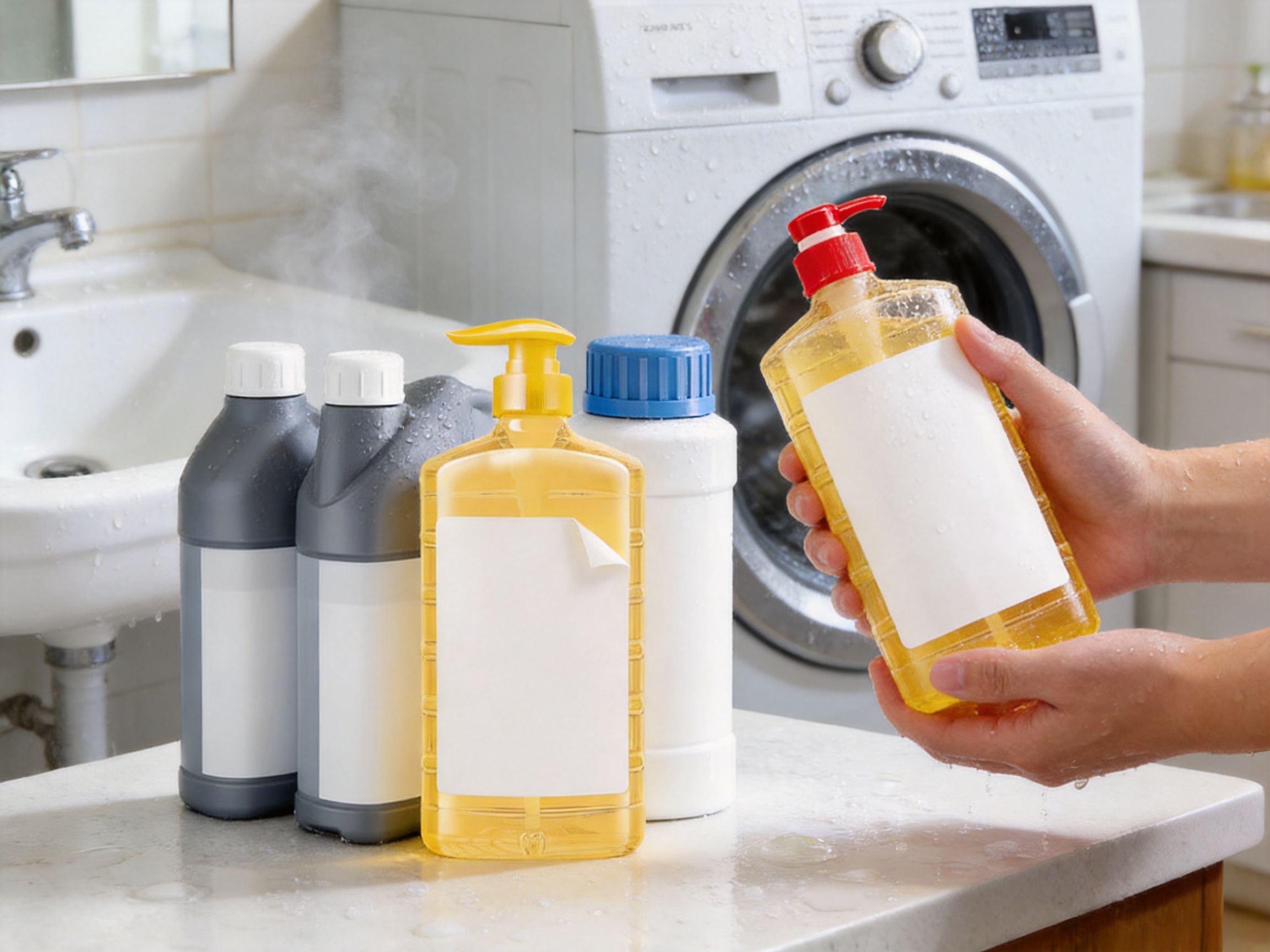
Dimensional Stability in High Temperature and High Humidity
Cleaning and laundry products may pass through several different environments between production and final use. A product can be labeled in a controlled factory, transported through a warm region, stored in a humid warehouse, displayed in an air-conditioned store, and then used in a steamy bathroom. These changes can create expansion and contraction in both the bottle and the label.
Dimensional stability refers to the ability of the label to retain its intended size and shape under environmental stress. A stable label is less likely to shrink, expand, wrinkle, buckle, or develop uneven tension. This characteristic is important for labels that contain small text, barcodes, regulatory symbols, or carefully registered graphics.
The material selection process considers the interaction between the facestock and the bottle. A flexible plastic bottle may deform when squeezed, while the label must remain attached without excessive stress. A rigid bottle may experience changes in temperature that affect its dimensions. The label construction must accommodate these movements without losing contact.
High humidity can also affect paper-based materials. Without suitable moisture protection, paper may absorb water from the surrounding air, causing changes in size and stiffness. The moisture-resistant coating helps limit this effect. Film options can provide additional resistance where the application requires a stronger barrier and greater wet-environment durability.
Stable dimensions support accurate scanning and reliable visual communication. A distorted barcode, stretched product name, or misaligned front panel may affect line operations and consumer recognition. By helping the label retain its designed geometry, the product supports both packaging performance and brand consistency.
Suitable Applications in Home Cleaning and Laundry Care
The product is designed for a wide range of household care applications. Its high-adhesion and moisture-resistant characteristics make it especially useful for products that are handled around water or stored in humid conditions.
Laundry Detergents and Fabric Care Products
Laundry detergent bottles, concentrated liquid detergents, fabric softeners, stain removers, and detergent refills may be handled with wet hands and stored near washing machines. These packages often have curved or flexible surfaces and may be exposed to detergent residue. High-adhesion labels help maintain a firm bond and keep instructions, dosage information, and product identity visible.
Bathroom Cleaners
Bathroom cleaners, toilet cleaners, shower sprays, glass cleaners, and mold removers are commonly stored in humid rooms. The products may be placed beside sinks, bathtubs, showers, or toilets. Moisture-resistant labels help prevent peeling and surface deterioration when the package is repeatedly exposed to water vapor and splashes.
Kitchen Degreasers and Surface Cleaners
Kitchen degreasers and surface cleaners may encounter steam, oil mist, water droplets, and frequent wiping. Their labels must remain readable while the bottle is moved between cabinets, countertops, and cleaning areas. A strong adhesive and protective coating help preserve the package appearance in this demanding environment.
Dishwashing Products
Dishwashing liquids, automatic dishwasher detergents, rinse aids, and cleaning concentrates are often stored close to sinks or dishwashers. These products can experience direct contact with water and repeated handling. A suitable label construction can help the package remain presentable and informative throughout its use.
Refill Packages and Flexible Containers
Refill pouches and flexible packages require labels that can follow movement without excessive wrinkling or detachment. The adhesive must maintain contact when the package bends, while the face material must retain sufficient strength for printing and handling. Application-specific selection can help achieve a balance between flexibility and durability.
Comparison with Conventional Label Solutions
General-purpose labels may perform adequately on dry, rigid, high-energy surfaces under moderate storage conditions. However, household cleaning packaging often falls outside those conditions. The combination of difficult plastics, moisture, chemical exposure, condensation, and repeated handling requires a more specialized construction.
| Characteristic | Conventional General-Purpose Label | High-Adhesion Moisture-Proof Label |
|---|---|---|
| Target substrate | Commonly optimized for ordinary smooth surfaces | Designed for difficult HDPE, PP, and other plastic containers |
| Moisture handling | May soften, wrinkle, or lose strength in wet conditions | Uses moisture-resistant film or paper coating |
| Initial bonding | May require a clean and dry surface for reliable adhesion | High-tack adhesive supports rapid bonding on challenging surfaces |
| Condensation resistance | Performance may decline after repeated wet-dry cycles | Designed for humid and condensation-prone environments |
| Edge performance | Greater risk of curling or lifting at corners | Strong adhesive and controlled converting support edge stability |
| Application focus | Broad, general packaging use | Cleaning, laundry, bathroom, kitchen, and other demanding applications |
| Customization | Often limited to standard materials and sizes | Can be tailored by facestock, adhesive, coating, shape, and printing requirements |
The main competitive advantage is not simply that the label is waterproof or sticky. Its advantage comes from the integration of multiple performance characteristics. A strong adhesive without a moisture-resistant face may still produce a poor result. A durable film without suitable adhesive may detach from a low-energy bottle. A good material with inaccurate die-cutting or insufficient application pressure may also fail.
This integrated approach allows the label to be selected according to the actual package, formulation, production speed, storage conditions, and expected consumer use. It gives manufacturers a more dependable alternative to adapting an ordinary label to an unusually demanding environment.
Advanced Manufacturing Process
Reliable performance begins with controlled manufacturing. The production process for high-adhesion moisture-proof labels involves material selection, adhesive evaluation, coating control, printing, inspection, converting, and final quality verification.
Material Selection and Application Analysis
Before production, the label structure can be evaluated against the container material, bottle curvature, product formulation, application temperature, storage conditions, and expected handling. HDPE and PP require particular attention because their low surface energy can influence adhesive selection. The label format, roll direction, die-cut shape, and dispensing requirements are also considered.
This application-based approach is important because no single label construction is ideal for every product. A smooth rigid bottle may require a different facestock from a flexible refill pouch. A label exposed to continuous water may need a stronger moisture barrier than a label used in a mildly humid room. Matching the construction to the application improves performance and reduces unnecessary material cost.
Adhesive Coating Control
Acrylic latex and rubber-based adhesive systems must be applied with controlled thickness and uniformity. Variation in coating weight can produce inconsistent tack, uneven adhesion, edge flow, or insufficient coverage. Advanced production lines use controlled coating and drying processes to help maintain a stable adhesive layer across the web.
The adhesive must also be compatible with the selected facestock and release liner. The relationship between adhesive strength and liner release affects dispensing performance. If the liner releases too easily, the label may lift prematurely during converting or application. If it releases with excessive force, high-speed labeling may become unstable.
Process control helps ensure that the finished label delivers consistent initial tack and long-term adhesion from roll to roll. This consistency is important for customers operating automated packaging lines, where small variations can affect throughput and waste.
Moisture-Resistant Coating and Surface Treatment
The coating process contributes to resistance against water, humidity, abrasion, and chemical contact. Depending on the required result, the surface may be treated to improve print receptivity, ink anchorage, scuff resistance, and moisture protection.
A well-controlled coating must remain uniform without pinholes, streaks, or weak areas. It must also support the intended printing process and preserve the visual quality of fine text, graphics, and barcodes. The coating is therefore selected as part of the complete label system rather than as an isolated decorative layer.
High-Quality Printing
Cleaning and laundry product labels often contain multiple design elements, including product names, usage instructions, warnings, ingredient information, dosage directions, safety statements, recycling marks, batch information, and barcodes. Printing must maintain clarity across these elements.
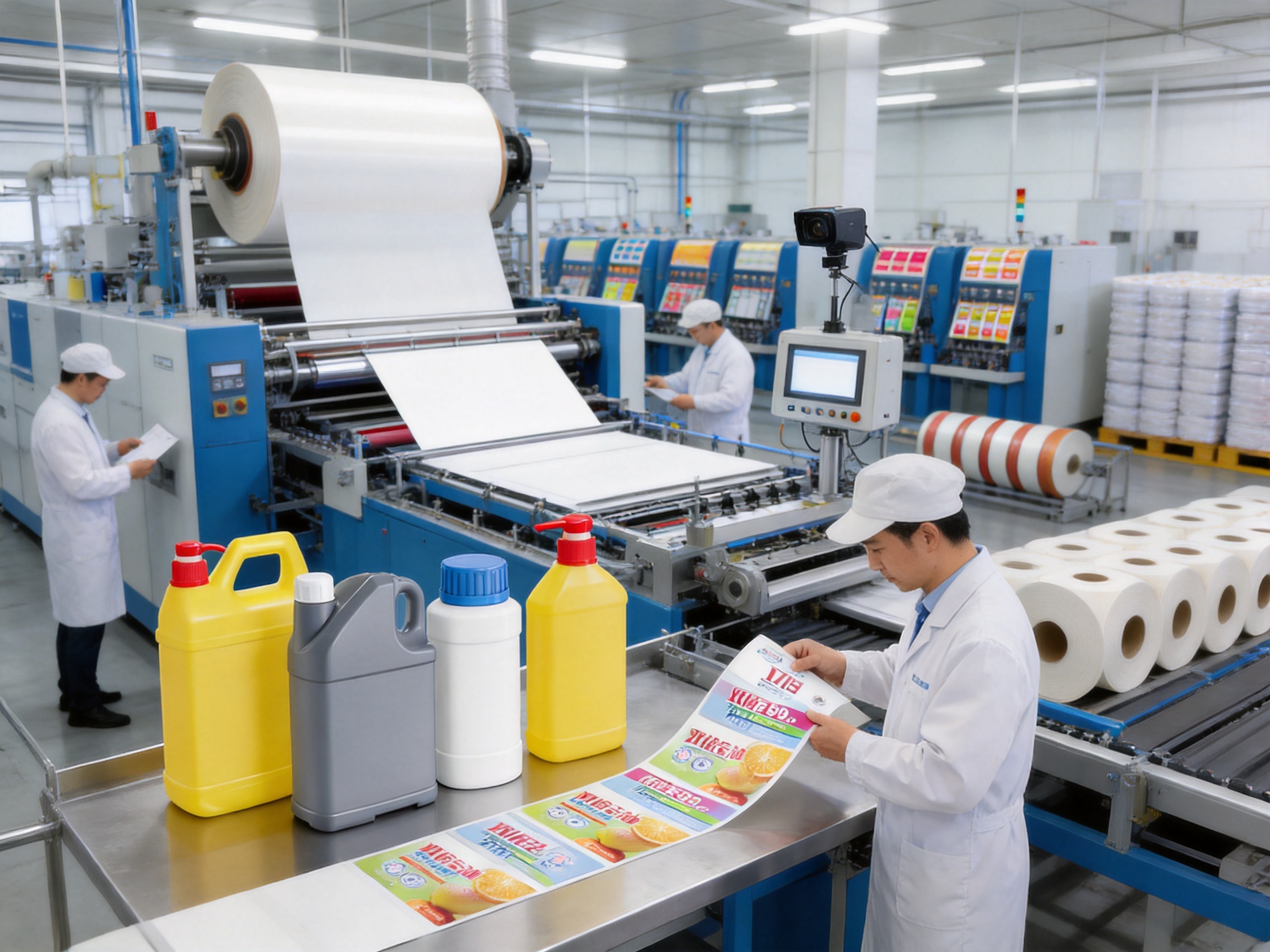
Advanced printing equipment and controlled color management help deliver stable graphics and consistent brand presentation. Registration control is particularly important for multi-color designs, small text, and die-cut shapes. The printed layer may also require protection against rubbing, moisture, and chemical exposure.
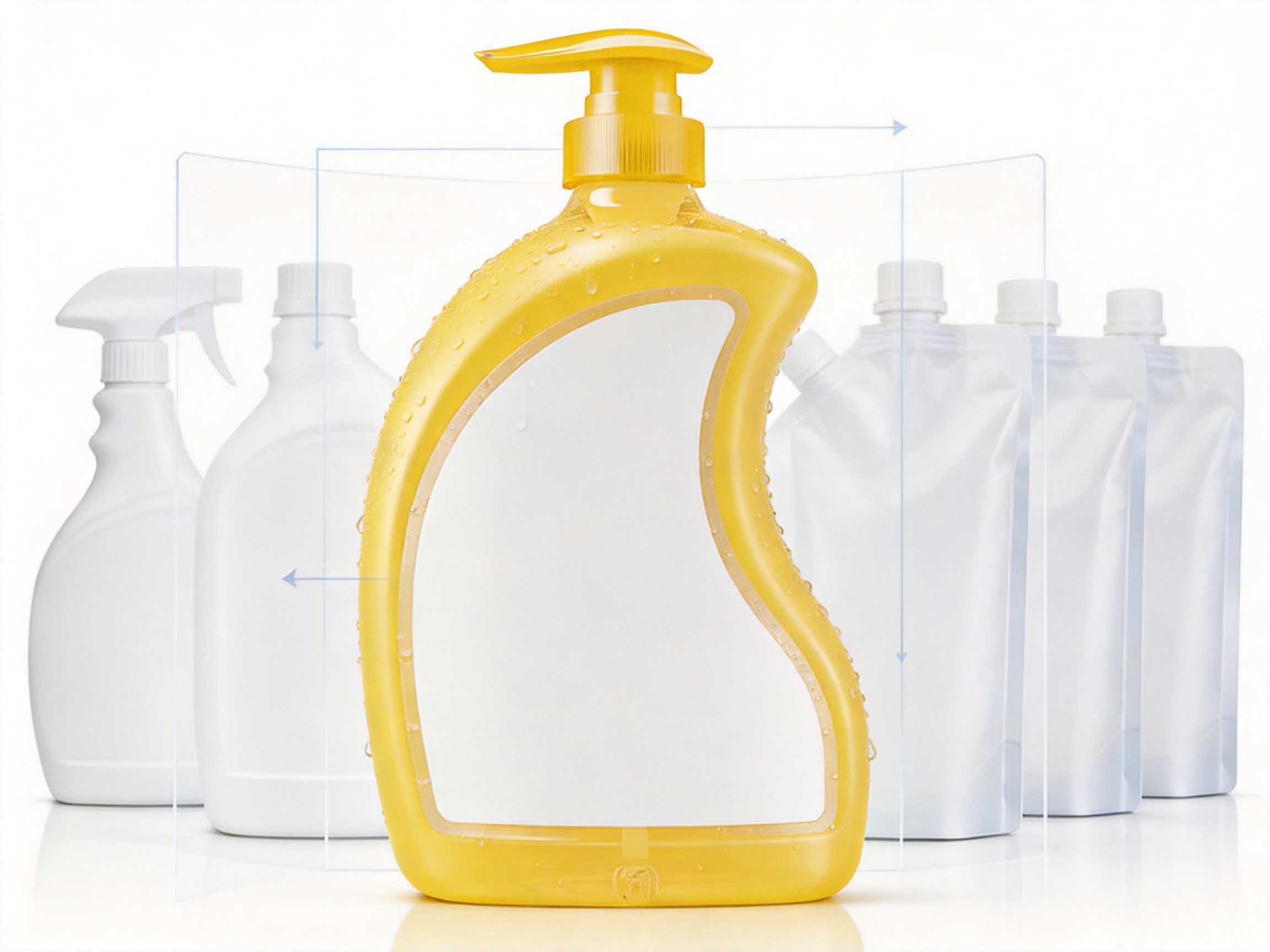
Precision Die-Cutting and Converting
Die-cutting determines the final label shape and contributes to edge performance. Clean, accurate cutting helps the label follow the intended bottle contour and reduces unnecessary edge stress. It also supports efficient dispensing and consistent spacing between labels on the roll.
Converting may include slitting, rewinding, inspection, waste removal, perforation, and roll preparation. Each step must be controlled to prevent telescoping, wrinkling, misalignment, or damage to the label edge. Proper roll formation is essential for automated application because unstable rolls can create tension variations and dispensing interruptions.
Special shapes, front-and-back labels, wraparound formats, small labels, and multi-layer constructions can be developed according to customer requirements. The manufacturing process can be adapted to support both standard production and customized packaging programs.
Inspection and Quality Assurance
Quality assurance is performed throughout the production chain rather than only at the end. Incoming materials can be checked for specification and consistency. During coating and printing, production parameters are monitored. Finished rolls can be inspected for visual defects, dimensional accuracy, registration, winding quality, and label continuity.
Performance testing may include adhesion evaluation on representative HDPE and PP containers, moisture exposure, condensation cycles, temperature and humidity conditioning, rub resistance, and visual inspection after aging. The exact test program can be matched to the customer’s product and use environment.
A stringent quality control system helps reduce variation between batches. It also provides a basis for technical communication, corrective action, and continuous improvement. For brands serving multiple markets, consistent production is particularly important because the same package design may be manufactured in large volumes and distributed through different climate zones.
Manufacturing Strengths and Integrated Supply Capability
Shanghai Rongyang Industrial Development Co., Ltd. operates as an integrated provider of pressure-sensitive labels and RFID smart label solutions. Its capabilities include research and development, manufacturing, sales, and service. This integrated structure supports communication between material specialists, production teams, quality personnel, and customers.
The company operates automated production lines and uses precision inspection equipment to support stable output. Automation can improve repeatability in coating, printing, die-cutting, and rewinding, while inspection systems help identify defects before products are shipped. These capabilities are valuable for high-volume cleaning and laundry product programs where consistency and delivery reliability are essential.
Its product portfolio covers pressure-sensitive labels for fast-moving consumer goods, food and beverage, pharmaceuticals, logistics, and retail. This broad experience provides a strong foundation for developing specialized constructions for household chemicals. Knowledge gained from different industries can support improvements in adhesive selection, surface protection, printing quality, and converting accuracy.
The company also provides customized label solutions with functions such as high-temperature resistance, removable adhesion, anti-counterfeiting, specialized die-cutting, and RFID integration. This range of technical options allows customers to develop a label platform that can support multiple product lines or future packaging requirements.
Production facilities in China and Malaysia provide additional capacity and support international customer requirements. A multi-site manufacturing structure can help with supply planning, regional service, production continuity, and large-scale order fulfillment. Customers can work with a supplier that understands both local production needs and international packaging expectations.
Founded in 2008, the company has obtained ISO 9001 and ISO 14001 certifications and has passed the SMETA social responsibility audit. ISO 9001 supports a structured quality management approach, while ISO 14001 reflects attention to environmental management practices. The SMETA audit demonstrates commitment to responsible business and social compliance expectations.
These certifications and audits do not replace application-specific performance testing, but they provide an important organizational foundation. They indicate that production, documentation, environmental management, and social responsibility are addressed through defined systems rather than informal procedures.
Customization Options for Brand Owners and Packaging Producers
Different cleaning and laundry products require different label specifications. Customization may include label size, shape, material, adhesive, coating, color, finish, liner, roll direction, core size, and packaging format.
For premium product lines, a high-quality film label with a clear or satin finish may provide a modern appearance while maintaining moisture resistance. For cost-sensitive applications, a coated paper option may deliver the required balance of print quality and durability. For products that need strong resistance to repeated wetting, a synthetic face material and protective surface treatment may be more appropriate.
Adhesive selection can also be adjusted according to the bottle surface and application conditions. A flexible container may require an adhesive that can tolerate repeated movement. A textured bottle may require a construction capable of maintaining contact across microscopic surface irregularities. A product applied in a cool warehouse may require different initial tack from one applied in a warm production area.
Design and functional features can be combined. Labels may include variable data, batch information, barcodes, QR codes, promotional elements, tamper-evident features, or traceability functions. Where supply chain visibility is important, RFID technology can be considered as part of a broader labeling program.
Customized die-cutting can improve both appearance and performance. Rounded corners may reduce the likelihood of corner lifting. Wraparound formats may provide more printable area. Multi-panel labels may organize extensive instructions without requiring a larger bottle. The optimal format depends on the product design and the available application equipment.
Application Guidance for Best Results
Even a high-performance label requires suitable application conditions. The bottle surface should be reasonably clean and free from excessive oil, dust, release agents, and liquid residue. Where possible, containers should be stabilized at the recommended application temperature before labeling.
Application pressure is important because it helps the adhesive make intimate contact with the bottle. Rollers, wipe-down systems, or other application equipment should provide consistent pressure across the label. Special attention should be given to curved surfaces, seams, recessed areas, and bottle shoulders.
Labels should be stored in a clean, dry environment away from direct sunlight and extreme temperature changes. Rolls should remain in their protective packaging until needed. Proper storage helps preserve liner release, adhesive properties, print quality, and roll stability.
Testing should be performed with the actual bottle, formulation, label construction, and application process. Laboratory testing provides valuable information, but production trials and environmental simulation are also recommended. A representative trial can reveal issues related to bottle curvature, filling residue, conveyor contact, application speed, condensation, or secondary packaging.
Clear communication between the label manufacturer and the packaging team is essential. Information about bottle material, surface treatment, filling process, storage climate, product chemistry, application speed, and expected service conditions allows the label structure to be selected more accurately.
Commercial Benefits for Cleaning and Laundry Brands
Reliable adhesion protects more than the physical label. It supports the complete commercial presentation of the product. A clean, flat, readable label improves shelf appearance and helps consumers quickly identify the product, brand, fragrance, size, and intended use.
Reducing label failure can also lower operational costs. Fewer detached or damaged labels mean less product rework, fewer manual inspections, lower waste, and fewer complaints from distributors or retailers. Stable labels can help maintain smoother packaging-line operation and reduce interruptions caused by inconsistent dispensing.
The product supports brand protection by keeping safety instructions, usage directions, warnings, and regulatory information visible. This is especially important for household chemicals, where consumers need reliable access to product information throughout the package life.
Consistent label performance can strengthen customer trust. Consumers may associate peeling, wrinkled, or damaged packaging with poor manufacturing quality. A label that remains attractive in a humid bathroom or beside a kitchen sink helps reinforce the perception of a dependable product.
For international brands, moisture-proof construction can provide greater confidence across diverse distribution conditions. Products may be shipped through humid ports, stored in warm warehouses, or sold in regions with frequent rainfall. A label designed for environmental variation helps reduce the risk that the package will deteriorate before reaching the consumer.
Sustainability and Responsible Production Considerations
Label sustainability should be evaluated as part of the entire packaging system. Longer-lasting labels can help reduce product waste caused by damaged identification or rejected packaging. Efficient production, accurate converting, and reduced rework can also improve material utilization.
Customers may select paper or film constructions according to the requirements of the product, recycling system, and local regulations. The choice should consider the complete package, including the bottle material, adhesive, ink, coating, and disposal pathway. In some applications, a durable label that prevents premature package rejection may provide an important practical benefit.
Environmental management systems support responsible control of production activities, resource use, waste, and emissions. ISO 14001 certification provides a structured framework for this type of management. Customers seeking more sustainable packaging should discuss material choices, production practices, and end-of-life considerations with the label supplier at the design stage.
Responsible manufacturing also includes social and ethical practices. Social responsibility audits such as SMETA can provide customers with additional information about working conditions, labor standards, health and safety, and business ethics within the supply chain.
Quality Evaluation Checklist
When evaluating labels for cleaning and laundry products, buyers should consider the following questions.
Does the adhesive bond quickly and firmly to the actual HDPE, PP, or other bottle material?
Can the construction withstand moisture, condensation, splashing, and repeated wet-dry cycles?
Does the label remain dimensionally stable under the expected temperature and humidity range?
Are the printed graphics, barcodes, warnings, and instructions readable after handling and environmental exposure?
Do the label edges remain flat on curved or flexible packaging?
Is the adhesive compatible with the product formulation and any bottle surface treatment?
Can the supplier provide consistent roll quality for automated application?
Does the manufacturer offer material customization, specialized die-cutting, and technical support?
Are quality management, environmental management, and social responsibility systems established?
Can the supplier support both current volumes and future international or multi-site requirements?
High-adhesion moisture-proof labels answer these questions through a combined material and manufacturing strategy. Their value lies in reliable performance under real use conditions, not merely in laboratory claims or surface appearance at the time of application.
Frequently Asked Questions
What types of bottles are suitable for these labels?
The labels are particularly suitable for HDPE and PP bottles, which are common in household cleaning and laundry packaging. They can also be developed for other plastic containers, flexible packages, and selected coated or rigid surfaces after application testing.
Why are HDPE and PP difficult for ordinary labels?
HDPE and PP generally have low surface energy. This can make it harder for conventional adhesives to spread and form strong contact. Their surfaces may also be curved, flexible, textured, or exposed to moisture, adding further challenges.
Can the labels be applied when the bottle has some moisture?
The adhesive is designed to overcome the effects of a moisture film more effectively than ordinary general-purpose adhesives. However, the best results are normally achieved on clean surfaces with controlled moisture. Application trials should be conducted with the actual production conditions.
Are these labels waterproof?
The labels are designed for moisture resistance and demanding humid environments. The exact level of water resistance depends on the selected film or paper, coating, adhesive, printing system, and exposure conditions. Specifications should be confirmed for continuous immersion or unusually severe chemical exposure.
Will the labels remain attached in a bathroom?
They are designed for humid, splash-prone, and condensation-prone environments such as bathrooms. Strong adhesive and moisture-resistant construction help reduce curling and peeling during repeated exposure to moisture.
Can the labels be used on laundry detergent refills?
Yes. They are suitable for many detergent refill bottles and flexible packages. The construction should be selected according to the flexibility, texture, shape, and handling behavior of the specific refill package.
Can the product support high-speed labeling lines?
Yes. High-tack adhesive, controlled liner release, accurate die-cutting, and stable roll preparation support automated labeling. A production trial is recommended to confirm dispensing performance at the customer’s operating speed.
Can the labels include barcodes and variable information?
Yes. Printing and converting can be customized for product identification, barcodes, batch codes, usage information, safety warnings, promotional messages, and other variable or fixed content.
Can the labels be customized in shape and size?
Yes. Customized dimensions, shapes, rounded corners, wraparound formats, front-and-back labels, and specialized die-cutting can be considered according to the container and application equipment.
What is the difference between a film label and a coated paper label?
Film labels generally provide strong moisture resistance, flexibility, and dimensional stability. Coated paper labels can offer excellent printability and an attractive tactile appearance. The appropriate choice depends on the moisture exposure, budget, design, recycling considerations, and required service life.
How should the labels be stored before use?
Labels should remain in their original protective packaging and be stored in a clean, dry environment away from direct sunlight and extreme temperature changes. Rolls should be protected from crushing, excessive humidity, and contamination.
Does the manufacturer provide other specialized label solutions?
Yes. In addition to pressure-sensitive labels, the company provides solutions involving RFID, anti-counterfeiting, high-temperature resistance, removable adhesion, specialized die-cutting, and other functional requirements.
What certifications and audits support the manufacturer’s capabilities?
The company has obtained ISO 9001 and ISO 14001 certifications and has passed the SMETA social responsibility audit. These systems support quality management, environmental management, and responsible supply chain practices.
How can a customer begin a product evaluation?
A customer can provide the bottle material, container drawings or samples, product type, application speed, storage conditions, expected moisture exposure, label size, artwork, and performance requirements. The supplier can then recommend a suitable construction and arrange testing or sampling.
Conclusion
High-adhesion, moisture-proof, and anti-detachment labels provide a specialized answer to the challenges of household cleaning and laundry packaging. Their ultra-strong acrylic latex or rubber-based adhesive is designed to bond quickly to difficult low-surface-energy plastics such as HDPE and PP. Their moisture-resistant film or paper coating helps protect the label from humidity, splashing, condensation, and repeated wet-dry cycles.
The product offers advantages over conventional labels by combining adhesion, moisture resistance, dimensional stability, edge protection, print durability, and application flexibility. It is suitable for laundry detergents, bathroom cleaners, kitchen degreasers, dishwashing products, surface cleaners, refill packages, and other products used in demanding environments.
Its performance is supported by an integrated manufacturing process that includes application analysis, controlled adhesive coating, moisture-resistant surface treatment, high-quality printing, precision die-cutting, automated production, and stringent inspection. Shanghai Rongyang Industrial Development Co., Ltd. adds experience in pressure-sensitive labels, RFID smart labels, customized functional solutions, international production support, and certified management systems.
For brands seeking packaging that remains attractive, informative, and firmly attached throughout distribution and consumer use, this label solution provides a practical foundation. By matching the material structure to the bottle, product, environment, and application line, manufacturers can improve package reliability while protecting brand presentation and customer confidence.
References
1. Pressure-Sensitive Adhesive Technology and Label Construction Principles. Industry technical reference materials.
2. Plastic Packaging Surface Energy and Adhesion Performance. Packaging materials engineering references.
3. Moisture Resistance, Coatings, and Dimensional Stability in Label Materials. Label converting and substrate technology references.
4. ISO 9001 Quality Management Systems. International Organization for Standardization.
5. ISO 14001 Environmental Management Systems. International Organization for Standardization.
6. SMETA Best-Practice Guidance for Social Audits. Sedex stakeholder guidance materials.
7. Household Chemical Packaging and Label Performance Requirements. Packaging quality and consumer product industry references.
Product: High-adhesion, moisture-proof and anti-detachment labels


Messae Us Right Now!

- Quick Links
- Products
- Quality Control
- Our Story
- News
- Contact
- Our Product
-
- Beauty and Personal Care Labels
- Home cleaning and laundry care labels
- Liquor and Beverage Labels
- Food and dairy product labels
- Healthcare Labels
- Promotional and Interactive Labels
- Specialty and industrial solution
- Labels Thermal printing and logistics labels
- Anti-counterfeiting traceability and RFID Labels
- Contact us
- Tel:+86-573-86867861
- Phone:+86-18621872035
- E-mail:allen.men@rylabel.com
- Add:No. 111 Xincheng Road, Haiyan Economic Development Zone, Jiaxing City, Zhejiang Province


