
 English
 русский
 Español


Home / Author / Lin Yuchan — International Sales Manager / High-Temperature Resistant and Flame-Retardant Battery Labels for Safer Energy Systems
News

High-Temperature Resistant and Flame-Retardant Battery Labels for Safer Energy Systems
2026-10-15

Battery technology is advancing rapidly across electric vehicles, portable electronics, industrial equipment, renewable-energy storage, and backup power systems. As energy density increases, the materials used in battery packs must perform reliably under more demanding thermal, mechanical, chemical, and electrical conditions. While cells, modules, enclosures, busbars, and battery-management systems receive most of the engineering attention, a small component often plays an equally important role in safety management: the identification label.
A battery label is not simply a printed sticker. It may carry the cell model, production batch, voltage information, warning symbols, certification marks, manufacturing date, traceability code, and handling instructions. If the label becomes unreadable, burns away, melts, detaches, or produces unwanted residue during an accident, critical information may be lost when it is needed most. This is particularly serious during battery overheating, short circuits, thermal runaway, transportation incidents, maintenance, recycling, and accident investigation.
High-temperature resistant and flame-retardant battery labels are developed for precisely these demanding applications. Using a ceramic substrate or specially treated polyimide film combined with high-temperature resistant silicone, these labels are engineered to retain their physical integrity and visual information in conditions that would destroy ordinary paper, polyester, or conventional adhesive labels. They are designed for long-term exposure to temperatures of at least 150°C and can provide immediate resistance to open flames or electric arcs reaching up to 1000°C without burning or melting under the stated application conditions.
For lithium batteries, electric vehicle battery packs, energy storage systems, and consumer electronics, this performance creates an additional layer of safety traceability. The label does not replace thermal-management systems, protective enclosures, fuses, sensors, or battery-management software. Instead, it complements them by preserving essential identity and warning information when other systems or external conditions become compromised.
The Role of Labels in Battery Safety
Battery labels support several essential functions throughout the product life cycle. During manufacturing, they identify raw-material lots, cell types, modules, production lines, inspection status, and assembly sequences. During logistics, they communicate handling requirements, hazard classifications, orientation instructions, and transportation information. During installation and service, they help technicians identify voltage ratings, connection points, battery chemistry, serial numbers, and safety warnings.
During a failure or accident, the role of the label becomes even more important. A damaged battery may no longer be connected to its original packaging, production records may be incomplete, and visual identification may be difficult. If the label remains legible, investigators and service teams can determine the model, batch, warning information, and other key data more quickly. This supports more accurate root-cause analysis, product recalls, maintenance decisions, and regulatory reporting.
Ordinary labels are often suitable for controlled indoor environments, but battery applications can combine high heat, electrical energy, vibration, pressure, electrolyte exposure, ultraviolet radiation, and mechanical abrasion. A label that performs well on a warehouse carton may not be appropriate for a cell, module, pack enclosure, charging system, or energy-storage cabinet. The substrate, adhesive, ink, surface treatment, and die-cut structure must all be selected according to the environment.
High-temperature resistant battery labels are therefore part of a broader safety architecture. Their purpose is not merely decorative or administrative. They provide durable information that can remain available during production, operation, maintenance, transportation, recycling, and emergency response.
Product Construction and Material Technology
Ceramic Substrate Options
Ceramic substrates are selected for applications in which extreme temperature resistance, dimensional stability, and non-combustibility are priorities. Ceramic materials can tolerate severe thermal exposure and can provide a stable base for printed warning information, serial numbers, barcodes, and identification graphics. Their inherent resistance to burning makes them suitable for environments where conventional polymer films may deform or ignite.
A ceramic-based label can be engineered for use on battery components that may experience intense heat or direct exposure to a flame. The substrate helps protect the printed information while the adhesive system is selected to support reliable attachment to the intended surface. Depending on the application, the label can be supplied in different shapes, sizes, thicknesses, and finishing configurations.
Ceramic construction is especially useful for labels placed close to heat-producing components, electrical interfaces, power-conversion equipment, or protective structures. It can also provide a premium, technical appearance appropriate for industrial products where durability and safety communication must be visible and credible.
Specially Treated Polyimide Film
Specially treated polyimide film provides another high-performance substrate option. Polyimide is widely recognized for its thermal stability, electrical insulation properties, flexibility, and resistance to demanding industrial environments. Through specialized treatment and printing processes, it can be adapted for battery labels that must remain stable under high temperatures while fitting curved, narrow, or irregular surfaces.
Compared with a rigid ceramic construction, polyimide film can provide greater flexibility during installation. This is valuable for cylindrical cells, compact consumer electronics, battery modules with limited clearance, and complex pack geometries. The film can be processed into precise shapes, helping manufacturers place information near terminals, weld points, inspection zones, or enclosure edges without interfering with assembly.
The selection between ceramic substrate and treated polyimide film depends on the operating temperature, exposure time, surface geometry, required flexibility, printing method, adhesive compatibility, and customer specifications. A professional label manufacturer can recommend a construction based on the complete application rather than treating the label as a standard commodity.
High-Temperature Resistant Silicone Adhesive
The adhesive is a critical part of the label system. A label may have a strong substrate, but it cannot perform its function if it detaches, curls, bubbles, or shifts during heating. High-temperature resistant silicone is used to support adhesion under demanding thermal conditions and on surfaces where conventional acrylic or rubber-based adhesives may lose strength.
Silicone adhesive technology can offer a combination of thermal stability, flexibility, and surface conformity. This is important when a battery label must bond to coated metal, polymer housings, painted surfaces, powder-coated enclosures, or other materials with different coefficients of thermal expansion. The adhesive layer must accommodate temperature changes while maintaining contact with the substrate.
Adhesive selection also depends on the cleanliness and energy of the application surface. Oil, dust, release agents, moisture, and certain coatings can reduce adhesion. For this reason, label specifications should include application temperature, service temperature, surface preparation, dwell time, and expected exposure conditions. Product testing should be performed on the actual battery material or enclosure whenever possible.
Printing and Information Protection
High-temperature resistance is meaningful only if the printed information remains readable. The printing system must therefore be selected with the substrate and end-use conditions in mind. Model numbers, batch codes, serial numbers, warning text, symbols, QR codes, barcodes, and variable data may all need to remain visually clear after thermal exposure.
Specialized inks, controlled curing, protective coatings, and suitable print resolution can improve resistance to fading, smearing, abrasion, and chemical attack. Variable information can be integrated into the production workflow so that every label corresponds to a specific cell, module, or battery pack. This supports digital traceability and helps connect the physical label to manufacturing records, quality data, and service history.
Readable information is especially important when a battery has been exposed to an abnormal event. In a thermal runaway scenario, a standard label may become charred or detached, while a properly engineered high-temperature label can preserve the identifying information needed by emergency personnel, engineers, and investigators.
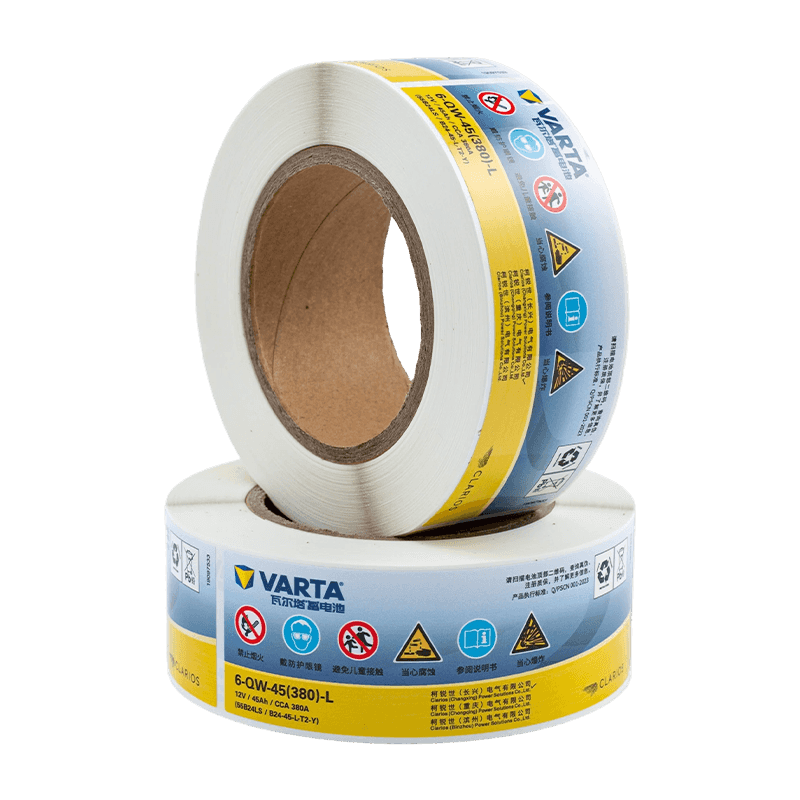
High-temperature resistant and flame-retardant battery labels
Performance in Extreme Thermal Conditions
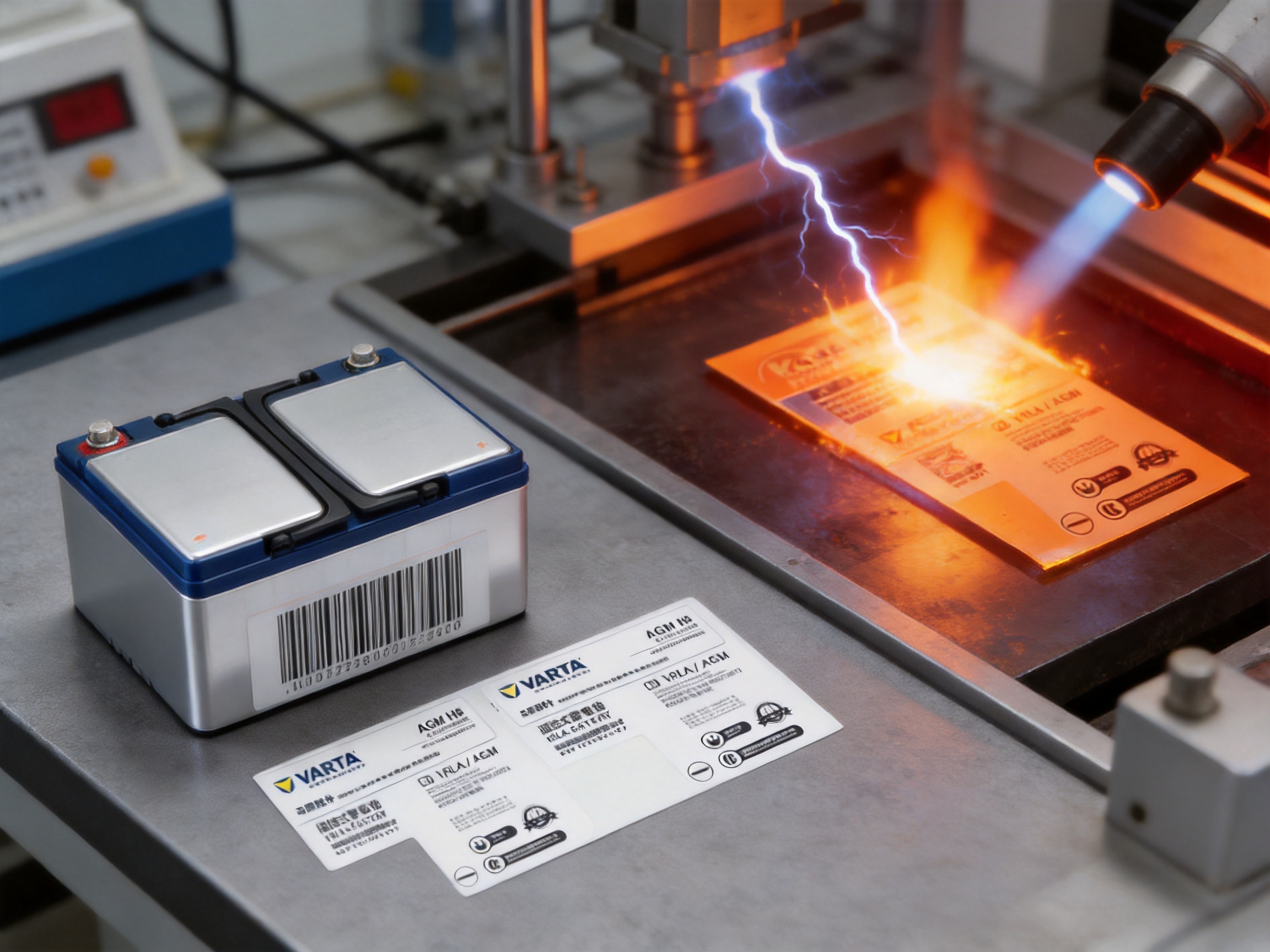
The defining feature of this product is its ability to withstand extreme thermal conditions beyond the capabilities of conventional labels. The labels are designed for long-term use at temperatures of 150°C or higher, depending on the selected construction and final application. They can also provide immediate resistance to open flames or electric arcs up to 1000°C under specified test or exposure conditions.
Long-term thermal resistance and short-term flame resistance are different performance requirements. A battery label may operate for extended periods near a warm battery enclosure, power converter, or charging system. It may also experience a sudden and intense thermal event lasting only seconds or minutes. The label construction must address both situations without allowing the information to disappear.
During long-term high-temperature exposure, ordinary adhesive labels may discolor, shrink, curl, soften, or lose adhesion. The printed image can fade, and the film may become brittle. During a sudden flame or arc event, conventional materials may ignite, melt, drip, or release the label from the surface. A ceramic or specially treated polyimide construction with high-temperature silicone is designed to reduce these failure modes.
Flame-retardant and fire-resistant performance is particularly valuable in battery applications because thermal events can develop rapidly. An overheated cell may affect neighboring cells, causing a chain reaction within a module or pack. The label is not intended to stop thermal runaway, but its ability to remain present and legible can preserve important information after the event and support safer response procedures.
Why Conventional Labels May Be Inadequate
Conventional paper labels are generally designed for low-cost identification, packaging, or indoor use. They can provide excellent print quality in ordinary environments, but paper is vulnerable to moisture, heat, tearing, and flame. It can char rapidly and may lose its structural integrity before emergency or service teams can read the information.
Standard polyester labels offer better dimensional stability and moisture resistance, but they are not automatically suitable for direct flame or electric-arc exposure. Depending on their grade, they may shrink, soften, deform, or release from the surface at elevated temperatures. Their adhesive and ink systems may also fail before the film itself.
Metal labels can provide durability and heat resistance, but they may add weight, require special attachment methods, and create design limitations for compact or curved battery components. They may also be less suitable when electrical insulation, flexibility, or die-cut precision is required.
High-temperature battery labels provide a more targeted balance of performance. They combine a specialized substrate, high-temperature adhesive, durable printing, and application-specific converting. This integrated construction allows them to address thermal, identification, and installation requirements in one engineered product.
Applications Across Battery and Energy Industries
Lithium-Ion Cells and Battery Modules
Lithium-ion cells require clear identification throughout manufacturing and assembly. Labels can display cell type, capacity, voltage, polarity information, batch data, safety warnings, and traceability codes. In module production, labels can identify the module number, production date, inspection status, and connection information.
Because cells and modules may be exposed to heat during welding, charging, testing, or abnormal operation, a high-temperature label can provide greater reliability than a general-purpose product. Flexible polyimide constructions may be suitable for compact cell assemblies, while ceramic constructions may be selected for locations with especially severe thermal exposure.
Electric Vehicle Battery Packs
Electric vehicle battery packs contain numerous cells, modules, busbars, sensors, cooling structures, connectors, and control components. Identification must remain organized even when the pack is installed beneath the vehicle, inside a protected chassis area, or within a service enclosure.
Labels can identify the battery-pack model, voltage category, production batch, serial number, service warning, emergency response information, and high-voltage hazard symbols. They may be applied to module housings, pack covers, service disconnects, electrical interfaces, or internal components. In the event of a collision, fire, water exposure, or maintenance procedure, durable labels support rapid recognition of the pack configuration.
Electric vehicles also experience vibration, temperature cycling, humidity, road contaminants, and repeated charging and discharging. A label construction designed for high-temperature applications can be combined with suitable resistance to abrasion and environmental exposure. The final design should be evaluated against the specific location and vehicle operating conditions.
Energy Storage Systems
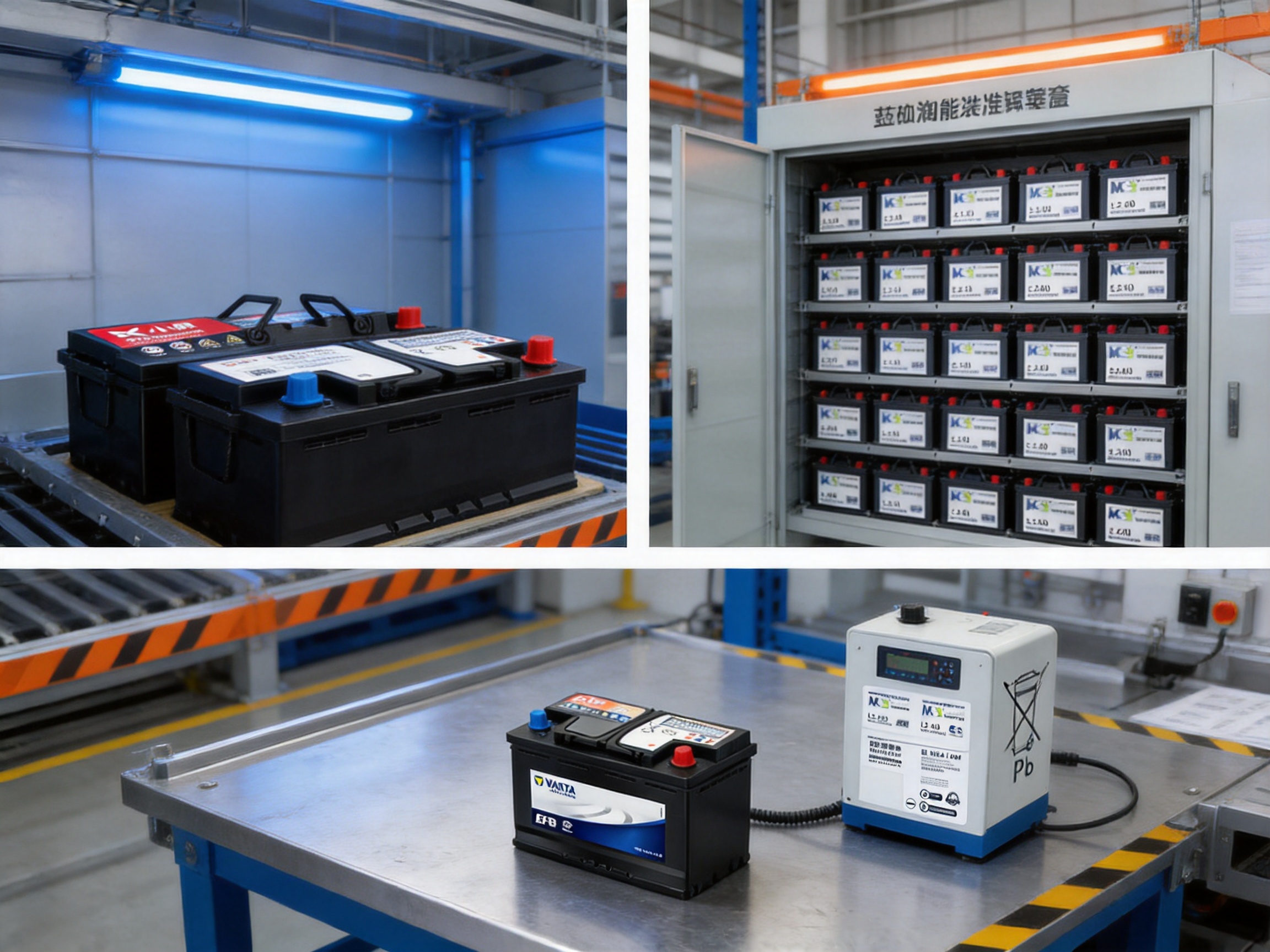
Stationary energy storage systems may contain large numbers of battery modules arranged in racks, cabinets, containers, or outdoor enclosures. Clear identification is essential because service personnel may need to isolate a module, trace a failure, or determine the status of a particular rack during an emergency.
Labels for energy storage systems can carry equipment numbers, module identities, warning information, electrical specifications, installation dates, maintenance records, and scannable codes. High-temperature resistance is important in battery rooms and cabinets where heat may accumulate or where a localized incident could expose nearby components to flame.
In large systems, consistent label design improves communication between manufacturers, installers, operators, maintenance contractors, and emergency responders. A durable label program can also support asset management by linking physical equipment to digital records and service platforms.
Consumer Electronics
Portable computers, smartphones, tablets, power tools, cameras, wearable devices, and other electronics use compact battery packs that require precise identification. Space is limited, surfaces may be curved, and the label may be close to heat-generating electronics or charging circuitry.
Specially treated polyimide labels can be useful where flexibility and small dimensions are important. They can be produced with fine text, compact symbols, barcodes, and customized die-cut shapes. Their thermal performance helps protect information in products that may experience repeated charging cycles, internal heat, and accidental overheating.
Battery Transportation and Recycling
Battery logistics require accurate identification and clear hazard communication. During transportation, labels may be exposed to vibration, temperature changes, handling friction, and storage conditions that differ from the original manufacturing environment. Durable labels can help keep package and product information visible during movement across factories, warehouses, distribution centers, and service locations.
At the end of a battery’s useful life, labels continue to support safe handling and recycling. Recyclers need to identify chemistry, pack configuration, manufacturer data, and potential hazards before disassembly or processing. If a label remains legible after years of service, it can reduce uncertainty and improve sorting and risk assessment.
Competitive Advantages of the Product
High Thermal Endurance
The most direct advantage is the ability to support long-term operation at temperatures of at least 150°C, together with rapid resistance to open flames or electric arcs up to 1000°C under the specified conditions. This gives the product a broader thermal performance range than ordinary identification labels.
Manufacturers selecting this type of label can reduce the risk that essential information will disappear during a thermal event. The label continues to serve its identification function when lower-grade materials may have burned, melted, or detached.
Flame-Retardant and Fire-Resistant Construction
The ceramic or specially treated polyimide substrate is combined with a high-temperature silicone adhesive to create a construction designed for severe exposure. The label is intended not to burn or melt under the specified flame and arc conditions, helping preserve its physical presence and printed information.
This characteristic is especially valuable for high-energy-density devices. As battery capacity increases, the consequences of a failure can become more severe. A fire-resistant identification component contributes to a more complete safety design.
Readable Traceability Information
Product identity is useful only when it can be read. High-temperature battery labels are designed to maintain the clarity of model numbers, batch numbers, warning information, and other variable data. This supports quality control, service, recall management, and accident investigation.
Clear traceability can shorten response time. A technician who can immediately identify a battery module may avoid unnecessary disassembly. An investigator who can read the batch information may connect the damaged unit to manufacturing records. An emergency responder who can identify the warning symbols may make safer decisions around a damaged battery.
Design Flexibility
The product can be customized according to the battery design. Options may include different substrate materials, adhesive types, dimensions, shapes, colors, printing layouts, variable-data formats, and die-cut profiles. This flexibility helps integrate the label into automated assembly lines and compact product architectures.
Customers can request labels for flat surfaces, curved housings, narrow gaps, recessed areas, or irregular components. The ability to adapt the label to the product can reduce interference with connectors, cooling channels, welding areas, and protective covers.
Integration with Digital Traceability
In addition to human-readable text, the labels can support barcodes, two-dimensional codes, serial numbers, and other machine-readable information. This allows the physical battery component to connect with enterprise resource planning systems, manufacturing execution systems, warehouse platforms, inspection databases, and after-sales service records.
When high-temperature durability is combined with digital identification, the label becomes a reliable physical link between the product and its data. This is increasingly important as battery manufacturers implement closed-loop quality systems and lifecycle management programs.
Suitability for International Supply Chains
Battery products are often designed in one country, assembled in another, and distributed globally. A label supplier with integrated research, manufacturing, sales, and service capabilities can provide more consistent quality across large orders and international programs.
Production facilities in China and Malaysia support supply flexibility and help serve customers with different regional requirements. A coordinated manufacturing network can also improve capacity planning, delivery stability, and response speed for customers operating across multiple markets.
Advanced Manufacturing Capabilities
Shanghai Rongyang Industrial Development Co., Ltd. is an integrated provider of pressure-sensitive labels and RFID smart labels. The company combines research and development, manufacturing, sales, and service, allowing it to manage the product journey from material selection and structural design to printing, converting, inspection, and delivery.
This integrated model is important for high-temperature battery labels because performance depends on the interaction of multiple components. A substrate may be thermally stable, but the label can still fail if the adhesive, ink, coating, die-cutting process, or application method is unsuitable. Coordinating these factors within one technical system helps improve consistency.
Automated Production Lines
Advanced automated production lines support stable processing and repeatable quality. Automation can improve control over web tension, coating uniformity, printing registration, curing conditions, lamination, slitting, and die-cutting. These controls are important when labels contain small text, detailed warning symbols, barcodes, or precisely positioned variable information.
Automation also helps reduce variation between batches. For battery manufacturers, consistency is essential because labels may be applied by high-speed equipment or integrated into an assembly process. A slight difference in dimensions, adhesive coverage, or liner release can cause interruptions on the production line.
Precision Inspection Equipment
Precision inspection equipment is used to examine raw materials, printed products, and finished labels. Inspection may include visual quality, dimensions, color, print registration, barcode readability, surface defects, adhesive coverage, and die-cut accuracy.
For safety labels, inspection is more than a cosmetic step. Missing characters, incomplete warning symbols, incorrect batch codes, or unreadable barcodes can create serious traceability problems. Quality-control systems should therefore identify defects before the labels reach the customer’s production line.
Inspection can also support customer-specific requirements. A battery manufacturer may require a defined barcode grade, exact label dimensions, controlled adhesive residue, or special packaging for clean-room or automated application. A capable supplier can establish inspection standards that reflect these operational needs.
Research and Development
Research and development supports the creation of specialized label structures for new battery designs. As battery chemistries, pack architectures, cooling systems, and enclosure materials evolve, label requirements also change. R&D teams can evaluate new substrates, adhesives, coatings, inks, and converting methods to address these changes.
Technical development may include prototype production, material comparisons, thermal exposure evaluation, adhesion studies, print durability assessment, and application trials. Working from actual customer samples or drawings enables a more accurate design than selecting a generic label from a standard catalog.
Quality Management and Certifications
Rongyang was founded in 2008 and has obtained ISO 9001 and ISO 14001 certifications. ISO 9001 supports a structured quality-management approach, while ISO 14001 reflects attention to environmental management. The company has also passed the SMETA social responsibility audit.
These certifications and audits do not replace application-specific testing, but they provide an important foundation for controlled manufacturing, documented procedures, continual improvement, and responsible operations. Customers in automotive, electronics, energy, pharmaceutical, logistics, and industrial sectors often require suppliers to demonstrate disciplined management systems.
For high-temperature labels, quality management should cover incoming materials, formulation and coating controls, printing parameters, curing, die-cutting, inspection, packaging, storage, and shipment. Traceable production records help identify the source of any issue and support corrective action.
Manufacturing Process for High-Temperature Battery Labels
1. Application Review and Technical Specification
The process begins with a review of the battery application. Important information includes the substrate material, surface finish, application temperature, operating temperature, expected peak temperature, duration of exposure, flame or arc risk, chemical exposure, mechanical stress, label dimensions, printing content, and installation method.
Other questions include whether the label will be applied manually or automatically, whether it must withstand battery welding, whether it will be placed inside or outside an enclosure, and whether the customer needs a barcode or QR code. These details determine the suitable substrate, adhesive, ink, coating, liner, and converting method.
2. Material Selection
The manufacturer selects ceramic substrate or specially treated polyimide film according to the application requirements. High-temperature silicone adhesive is selected based on the intended surface and service conditions. The material combination must balance heat resistance, flexibility, adhesion, printability, dimensional stability, and cost.
Material verification at the incoming stage helps confirm that the supplied rolls, sheets, adhesives, inks, and liners match the approved specification. This is particularly important for safety-related labels, where unapproved substitutions may affect performance.
3. Artwork and Data Preparation
Artwork is prepared for clear communication and reliable production. Text size, symbol proportions, barcode dimensions, contrast, quiet zones, and variable-data placement are reviewed before printing. The layout should remain readable after the label is cut and applied to the battery surface.
For serialized production, data files may be processed to ensure that each label receives the correct model number, batch number, serial number, or traceability code. Digital verification can help identify duplicate, missing, or incorrectly formatted data before production.
4. Printing and Curing
The selected printing process is adjusted to the substrate and ink system. Registration must be controlled carefully when the label contains multiple colors, fine symbols, or a combination of fixed and variable information. Curing or drying must be sufficient to establish the required print durability without damaging the substrate.
At this stage, operators and inspection systems check color consistency, print completeness, character sharpness, and code readability. A production sample may be retained for comparison with future batches.
5. Adhesive Application and Lamination
The silicone adhesive is applied or laminated under controlled conditions. Coating uniformity is important because insufficient adhesive may reduce bonding strength, while excessive adhesive can cause ooze, contamination, or difficulty during die-cutting and automatic application.
Lamination pressure, web tension, temperature, and alignment are managed to produce a stable multilayer structure. The final construction should remain flat and easy to process while providing the required bond to the battery surface.
6. Precision Die-Cutting
Die-cutting converts the laminated material into the required label shape. Precision tooling can produce rounded corners, narrow strips, holes, notches, tabs, and other customized features. Accurate die-cutting helps the label fit around terminals, fasteners, sensors, and enclosure edges.
Cutting depth must be controlled so that the label is separated from the liner without damaging the liner or creating unwanted loose edges. Poorly controlled edges can interfere with automated dispensing or become vulnerable to lifting during service.
7. Final Inspection and Packaging
Finished labels are inspected according to the approved quality plan. Checks may include dimensions, print clarity, code readability, adhesion-related characteristics, surface cleanliness, roll direction, quantity, and packaging condition.
Packaging protects the labels from moisture, dust, deformation, and handling damage. Roll labels may be supplied with specified core sizes, winding directions, and splice controls for automated application. Sheet labels may be packed with separators or protective materials to prevent scratching and blocking.
8. Customer Application Support
A complete label solution includes guidance on storage, surface preparation, application pressure, application temperature, dwell time, and handling. Testing on the customer’s actual battery housing or enclosure is recommended because real surfaces may differ from laboratory samples.
For high-volume customers, the supplier can support trial runs, application-line evaluation, packaging optimization, and continuous improvement. This technical cooperation can reduce start-up problems and improve line efficiency.
Performance Evaluation and Validation
High-temperature battery labels should be validated according to their intended use rather than relying only on general material claims. A suitable evaluation program may include thermal aging, short-term flame exposure, electric-arc exposure where relevant, adhesion testing, print legibility, abrasion, chemical resistance, humidity, temperature cycling, and dimensional stability.
Testing should define the exposure temperature, duration, sample preparation, surface material, application method, and acceptance criteria. For example, a label applied to a coated aluminum enclosure may behave differently from one applied to a textured polymer housing. The application surface should therefore be included in the evaluation whenever possible.
Thermal Aging
Thermal-aging tests expose the label to an elevated temperature for a specified period. After exposure, inspectors examine substrate condition, edge lifting, shrinkage, bubbling, discoloration, adhesive failure, and print readability. The results help confirm whether the label is suitable for long-term service.
Flame and Arc Exposure
Short-term flame or electric-arc testing evaluates the label’s response to an intense thermal event. The purpose is to determine whether the substrate burns, melts, drips, detaches, or loses essential information. The exact test method should be agreed upon with the customer because real battery incidents vary in duration, intensity, direction, and surrounding ventilation.
Legibility and Traceability Testing
After thermal and environmental exposure, the model number, batch number, warning text, symbols, barcode, or two-dimensional code should be checked. Human-readable information must remain clear enough for service and emergency personnel, while machine-readable information should meet the customer’s scanning requirements.
Traceability testing can also verify that variable data remains accurate throughout production. A label may be physically durable but still fail its purpose if the wrong code is printed or if the data cannot be linked to the correct battery record.
Environmental and Operational Considerations
The label should be designed as part of the total battery environment. Temperature is only one factor. Humidity, condensation, electrolyte vapor, cleaning agents, lubricants, dust, ultraviolet exposure, abrasion, vibration, and pressure can also influence performance.
Storage conditions before application matter as well. Labels should be stored in their original packaging and protected from excessive heat, moisture, and direct sunlight. The customer should follow the recommended shelf life and allow materials to reach the application environment before use when required.
Surface preparation is equally important. The battery surface should generally be clean, dry, and free from oil, dust, release agents, and loose coatings. Application pressure should be sufficient to establish contact across the label area. The label should not be repositioned repeatedly after application because this can reduce adhesion and introduce contamination.
When labels are applied to curved surfaces, designers should consider the bend
Product: High-temperature resistant and flame-retardant battery labels



Messae Us Right Now!

- Quick Links
- Products
- Quality Control
- Our Story
- News
- Contact
- Our Product
-
- Beauty and Personal Care Labels
- Home cleaning and laundry care labels
- Liquor and Beverage Labels
- Food and dairy product labels
- Healthcare Labels
- Promotional and Interactive Labels
- Specialty and industrial solution
- Labels Thermal printing and logistics labels
- Anti-counterfeiting traceability and RFID Labels
- Contact us
- Tel:+86-573-86867861
- Phone:+86-18621872035
- E-mail:allen.men@rylabel.com
- Add:No. 111 Xincheng Road, Haiyan Economic Development Zone, Jiaxing City, Zhejiang Province


