
 English
 русский
 Español


Home / Author / Lin Yuchan — International Sales Manager / High-Performance Tire Labels for Durable, Compliant, Full-Lifecycle Traceability
News

High-Performance Tire Labels for Durable, Compliant, Full-Lifecycle Traceability
2026-09-29
Tires operate in one of the most demanding environments encountered by any industrial product. They flex continuously, absorb shocks, encounter road debris, experience rapid temperature changes, and remain exposed to sunlight, ozone, moisture, salts, oils, and other chemicals. At the same time, every tire must be identifiable throughout its useful life. Manufacturers, distributors, fleet operators, service centers, regulators, and recycling organizations all require dependable information about a tire’s origin, specifications, production history, inspection status, and end-of-life processing.
A tire label must therefore perform far more effectively than an ordinary product sticker. It must remain securely bonded to a curved and constantly moving rubber surface while preserving readable information under high-speed rolling and severe mechanical stress. A label that peels, cracks, fades, or loses its printing can interrupt traceability, create compliance concerns, and increase operating costs.
Tire Labels are specialized identification products designed to address these requirements. They combine high-strength synthetic substrates, tire-compatible construction, and super-adhesive rubber-based adhesive technology. Their performance is focused on the specific challenges of tire marking, including dynamic bending, ozone exposure, ultraviolet radiation, stress cracking, road debris impact, temperature cycling from approximately -40°C to +70°C, and chemical exposure such as de-icing agents.
Shanghai Rongyang Industrial Development Co., Ltd. develops and manufactures pressure-sensitive labels and RFID smart labeling products for demanding industrial and commercial applications. With integrated research and development, manufacturing, sales, and service capabilities, the company provides customized label solutions for sectors that require reliable identification, consistent quality, and specialized performance.
This article examines the construction, advantages, applications, manufacturing strengths, quality considerations, and lifecycle value of Tire Labels. It also explains why specialized tire marking products can offer important advantages over general-purpose labels and how a controlled manufacturing process helps ensure stable performance in global tire production and distribution.
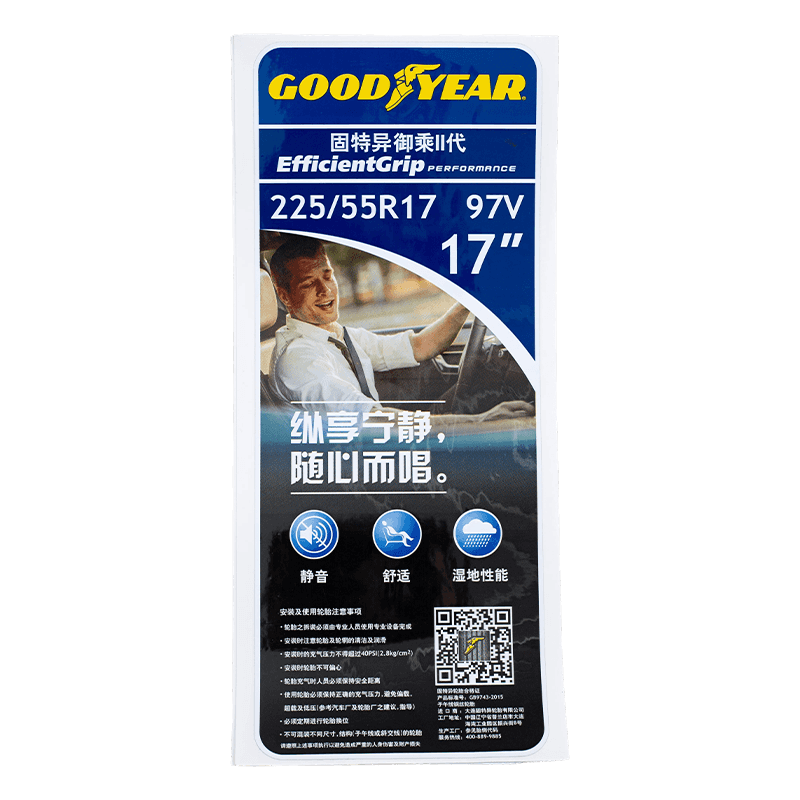
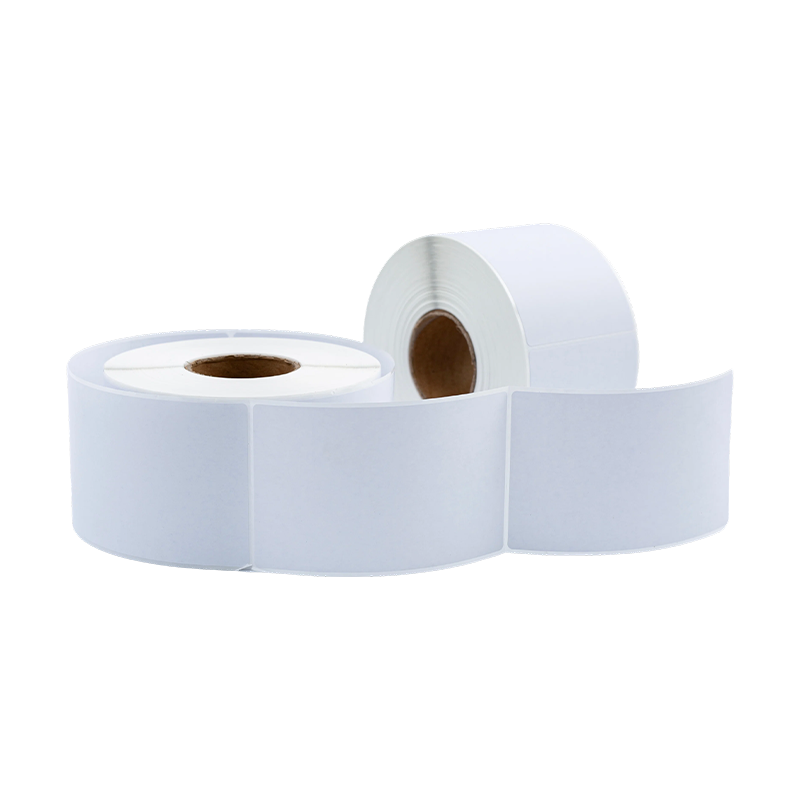
Tire Labels
Why Tire Identification Requires Specialized Label Technology
Many conventional adhesive labels are designed for smooth, stable surfaces such as cartons, glass bottles, plastic containers, or warehouse shelves. These labels may perform well in ordinary indoor or short-term applications, but they are not necessarily suitable for tires. A tire is not a static substrate. It is a flexible, elastic, textured, and chemically active surface that changes shape continuously during use.
When a tire rotates, the sidewall repeatedly bends and relaxes. The label must accommodate this movement without splitting, lifting at the edges, or losing contact with the rubber. During driving, the tire may also encounter potholes, gravel, curbs, mud, standing water, snow, and road treatment chemicals. These conditions generate impact, vibration, shear forces, and contamination that can challenge both the label material and its adhesive system.
Environmental exposure creates another set of demands. Sunlight can degrade ordinary printing and cause films to become brittle. Ozone can attack vulnerable polymers and contribute to surface cracking. Temperatures can shift from intense summer heat to freezing winter conditions, producing expansion and contraction in the label, adhesive, and tire substrate. De-icing salt solutions and other chemicals may weaken unsuitable adhesives or damage printed information.
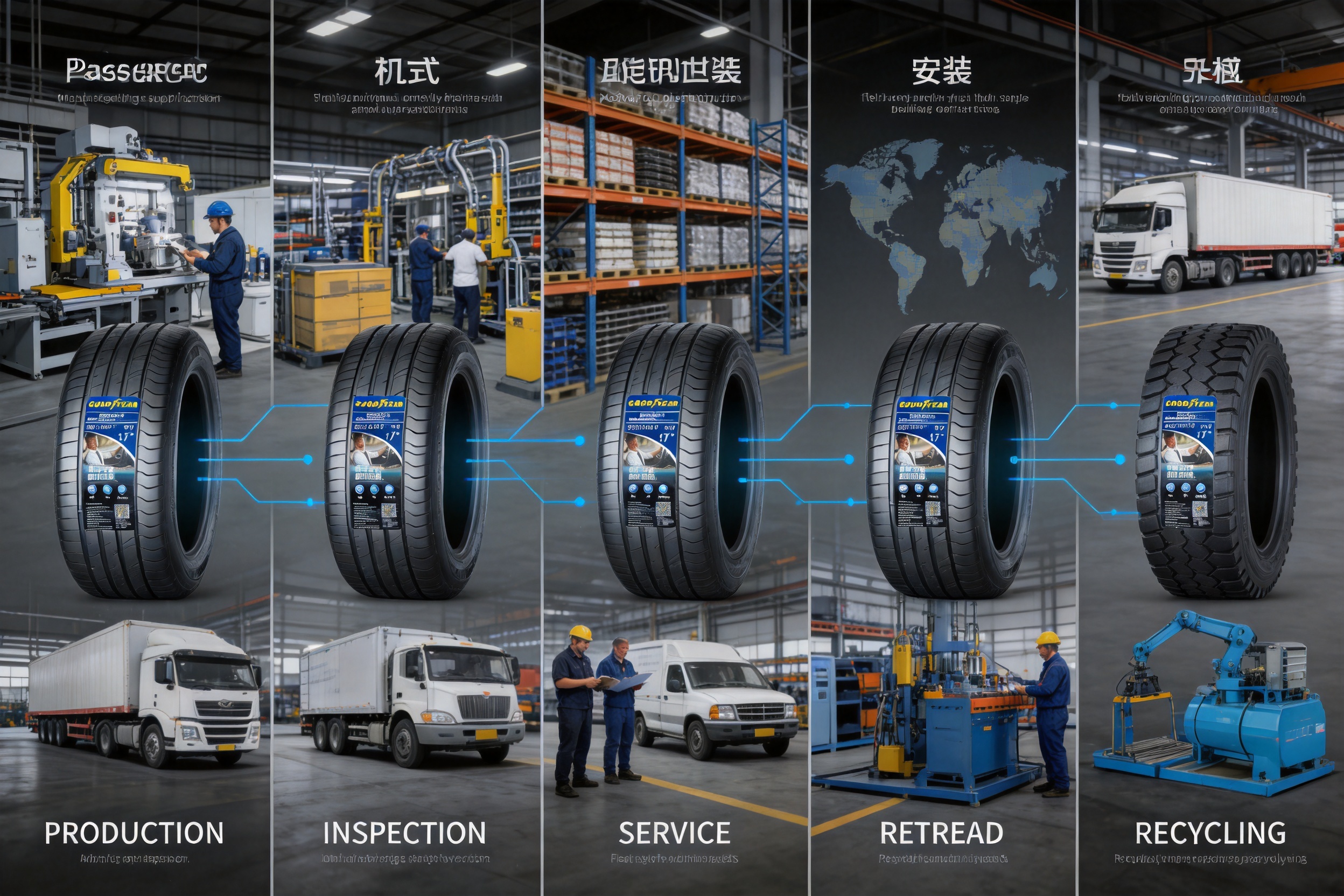
Traceability requirements make durability particularly important. A tire may pass through multiple stages during its lifecycle:
1. Raw material preparation and tire production.
2. Curing, inspection, and quality release.
3. Warehousing and distribution.
4. Installation on a vehicle.
5. Fleet or consumer use.
6. Maintenance, repair, retreading, or replacement.
7. Collection, recycling, or disposal.
At every stage, clear identification can support inventory management, warranty administration, quality investigations, service records, and regulatory documentation. A durable label helps preserve the connection between the physical tire and its associated data.
Core Construction of Tire Labels
High-Strength Synthetic Substrates
The substrate is the structural foundation of a tire label. Tire Labels use high-strength synthetic materials, including tire-grade fabrics and specialty films, selected for their ability to resist mechanical and environmental stress. Compared with ordinary paper or low-performance film, these materials are better suited to flexible, outdoor, and industrial applications.
A high-strength synthetic substrate contributes several important properties. It helps the label withstand repeated bending without rapid fatigue. It provides dimensional stability when temperatures change. It supports clear printing and graphic definition. It also creates a durable base for adhesives, protective coatings, barcodes, variable data, and other identification elements.
Substrate selection can be adjusted according to the intended use. A label for short-term production identification may require a different balance of flexibility and printability than a label intended to remain on a tire throughout distribution and road service. The manufacturing process can accommodate different constructions, sizes, shapes, and information formats according to customer requirements.
Rubber-Based Super-Adhesive Technology
The adhesive is equally important. Even a strong label material cannot deliver reliable performance if it does not bond effectively to the tire sidewall. Tire Labels use a high-adhesion rubber-based adhesive formulated for firm contact with rubber surfaces.
Rubber-based adhesive technology is particularly suitable for applications that involve flexibility and repeated movement. It can provide strong initial tack while maintaining useful adhesion as the label experiences bending, vibration, and temperature variation. The adhesive must also work with the surface condition of the tire, which may include texture, curvature, processing residues, or surface energy characteristics that differ from common packaging materials.
Adhesive performance is not measured only by how strongly a label sticks immediately after application. A dependable tire label must also resist edge lifting, cohesive failure, adhesive migration, and loss of contact over time. The adhesive layer must remain compatible with the substrate and the tire surface throughout the expected application period.
Printing and Information Integrity
Identification is useful only when the information remains readable. Tire Labels are designed to support stable and clear printing for product codes, serial numbers, production dates, specifications, inspection information, barcodes, QR codes, and other variable data.
Readable printing helps manufacturers connect individual tires with production records and quality-control results. Distributors can use the information for stock rotation and order accuracy. Service providers can record installation and maintenance history. Fleet managers can improve asset visibility, while recycling and disposal organizations can identify tire categories and processing information.
The final print construction should be selected according to the expected exposure. For outdoor and high-stress applications, appropriate inks, printing processes, curing conditions, and protective finishes can help preserve contrast and scanning reliability. The label’s visual design should also allow sufficient space for machine-readable codes and human-readable information.
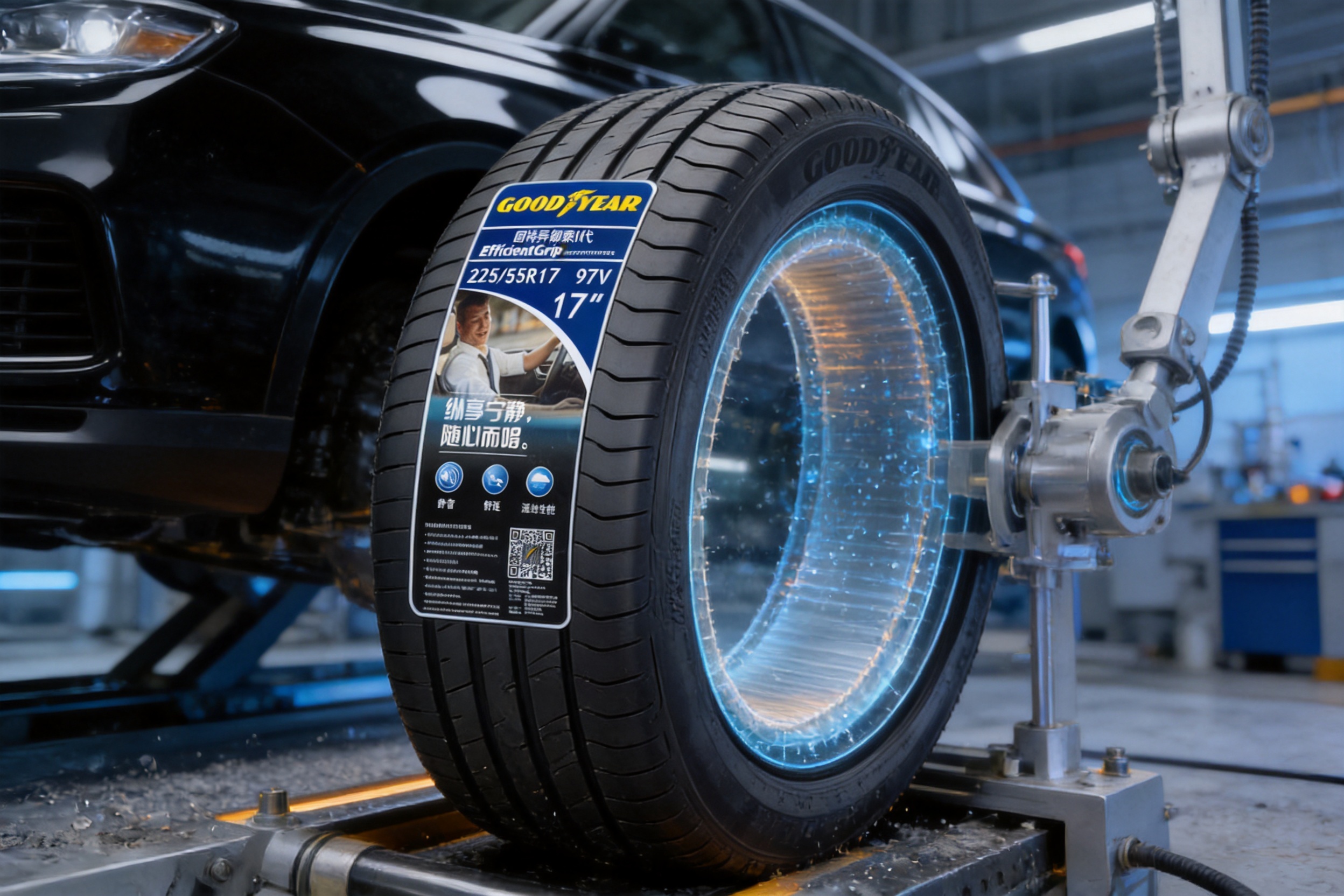
Performance Advantages Over General-Purpose Labels
Resistance to Dynamic Bending
Dynamic bending is one of the defining challenges of tire labeling. A sidewall moves repeatedly as the tire rotates, carries weight, absorbs impacts, and responds to steering and road conditions. A label must flex with the tire rather than behave like a rigid plate attached to a moving surface.
The combination of a flexible, high-strength substrate and a compatible rubber-based adhesive enables Tire Labels to maintain integrity during repeated movement. The label is engineered to resist cracking and separation caused by cyclical deformation. This makes it more suitable than standard paper labels or rigid films for applications in which the marked surface is continuously stressed.
Resistance to dynamic bending can reduce the risk of early label failure. It supports longer information retention and can help avoid the labor associated with replacing missing or damaged identification marks. For tire manufacturers and fleet operators, this reliability contributes to more consistent tracking and fewer exceptions in production or maintenance records.
Ozone and Ultraviolet Resistance
Outdoor tires are exposed to atmospheric ozone and ultraviolet radiation. Ozone can contribute to polymer degradation and surface cracking, while ultraviolet radiation can fade printing and weaken some label materials. These effects may occur even when a tire is stored outdoors or used in regions with strong sunlight.
Tire Labels are designed with materials and construction features that provide resistance to ozone and ultraviolet exposure. This helps preserve the physical structure of the label and supports the continued readability of printed information. The result is a more dependable identification mark for tires that spend long periods in warehouses, yards, parking areas, or outdoor operating environments.
Resistance to Stress Cracking
Stress cracking can occur when a material is exposed to repeated mechanical stress, environmental exposure, or chemical contact. A small defect may expand over time until the label becomes visibly damaged or loses its functional integrity.
Specialized synthetic substrates help reduce vulnerability to this failure mode. By matching the material construction to the tire’s mechanical behavior, Tire Labels can remain more stable under repeated flexing and environmental stress. This is particularly valuable where a label is expected to remain in service for an extended period rather than being removed after a short production step.
Wide Temperature Performance
Tire Labels are intended to remain serviceable across a broad temperature range of approximately -40°C to +70°C. This range covers many cold-weather storage and operating conditions as well as hot outdoor environments.
Temperature changes can cause the tire, label, and adhesive to expand or contract at different rates. If the construction is poorly matched, this movement can produce wrinkles, edge lifting, adhesive failure, cracking, or distortion. A specialized label system reduces these risks through appropriate substrate selection and adhesive formulation.
Wide temperature resistance is important for international supply chains. Tires may be manufactured in one climate, stored in another, transported through several regions, and used in environments with very different seasonal conditions. A label designed for a narrow temperature range may not provide consistent performance across that journey.
Resistance to Road Debris and Mechanical Impact
Road debris can strike the tire sidewall or create repeated abrasion during use. Gravel, dust, mud, water spray, and contact with roadside materials may affect the label surface and edges. A label that is too fragile can become scratched, torn, or partially detached.
The high-strength construction of Tire Labels is designed to support resistance against these everyday stresses. Although application conditions vary, a robust label provides a stronger foundation for long-term marking than a conventional low-strength sticker. This is especially useful for commercial vehicles, construction equipment, agricultural machinery, and fleets that operate on rough or unpaved roads.
Resistance to Chemical Exposure
Tires may encounter de-icing agents, road salt, cleaning products, oils, moisture, and other chemicals. Chemical exposure can attack the label material, affect the printed layer, or reduce adhesive performance.
Tire Labels are designed to withstand chemical challenges such as de-icing agents while maintaining adhesion and information clarity. Their chemical resistance supports use in regions where winter road treatment is common and in industrial fleets where tires may be exposed to cleaning and maintenance substances.
| Performance Requirement | Challenge in Tire Applications | Relevant Tire Label Advantage |
|---|---|---|
| Dynamic flexibility | Repeated sidewall bending and rolling movement | Flexible, high-strength construction designed to resist cracking and separation |
| Outdoor durability | Sunlight, ozone, moisture, and changing weather | Resistance to ultraviolet and ozone exposure |
| Temperature stability | Conditions from approximately -40°C to +70°C | Substrate and adhesive system selected for wide temperature performance |
| Mechanical integrity | Road debris, vibration, impacts, and abrasion | Strong synthetic substrate and durable label construction |
| Chemical resistance | De-icing agents, salts, and maintenance chemicals | Materials designed to maintain adhesion and information integrity |
| Traceability | Need for information throughout production and service | Stable printed identification and support for variable data and codes |
| Regulatory alignment | Global tire marking requirements | Solutions developed to support requirements such as DOT marking |
Supporting Tire Traceability Throughout the Lifecycle
Traceability is more than simply placing a number on a tire. It is the ability to connect a physical product with reliable information at each stage of its lifecycle. A durable label serves as a visible and scannable bridge between the tire and the manufacturer’s information systems.
Production Traceability
During production, labels can identify tire models, sizes, batches, compounds, production dates, curing information, inspection results, or internal routing data. Clear identification helps prevent mix-ups between similar products and assists operators in controlling movement between manufacturing steps.
When a quality issue is discovered, traceable identification can support faster investigation. Production teams may use label data to locate related batches, review process conditions, and determine whether other products require inspection. This supports more focused corrective action than a system based only on general shipment or warehouse information.
Warehouse and Distribution Traceability
Tire warehouses may contain large numbers of visually similar products. Durable labels can improve receiving, put-away, picking, cycle counting, and shipment verification. Barcodes or other machine-readable elements can connect the tire to an enterprise resource planning or warehouse management system.
Because tire labels must remain readable through storage and handling, resistance to dust, temperature changes, sunlight, and abrasion is important. A label that remains intact can reduce manual identification and support more accurate inventory records.
Service and Fleet Traceability
Fleet operators manage tires as valuable operational assets. They may need to track installation dates, vehicle assignments, mileage, rotation schedules, inspections, repairs, and replacement decisions. A reliable tire label can support these records by preserving a unique identifier on the physical product.
For commercial transportation, construction, mining, agriculture, and logistics operations, tire history can influence safety, maintenance planning, and cost control. Accurate identification helps maintenance teams distinguish between tires with different service histories and avoid unnecessary replacement or incorrect installation.
End-of-Life Traceability
At the end of a tire’s service life, identification can remain useful for collection, sorting, retreading assessment, recycling, and disposal. Information about tire type, source, and previous handling may support more appropriate downstream processing.
Full-lifecycle traceability contributes to a more organized approach to tire management. It can help connect production responsibility with recovery and disposal processes, support documentation, and improve visibility across the product’s complete journey.
Compliance and Global Tire Marking Requirements
Tire manufacturers operate in international markets where marking, product identification, and safety documentation are subject to regulatory and industry requirements. Tire Labels are developed to support global tire marking regulations such as the Department of Transportation, or DOT, requirements referenced in the United States.
Compliance is not limited to selecting a suitable material. The complete marking solution must preserve required information, remain attached in the expected location, and support the manufacturer’s approved production and quality procedures. Label dimensions, information layout, print contrast, code structure, adhesive behavior, and environmental durability may all influence practical compliance.
A specialized label supplier can work with tire manufacturers to understand the marking environment and create a suitable specification. This may include reviewing application temperature, tire surface characteristics, storage conditions, expected service duration, printing method, variable-data requirements, and inspection procedures.
Manufacturers should confirm the exact requirements applicable to their products, markets, and production systems. Tire Labels can support compliance-oriented identification, but the final regulatory responsibility remains with the tire producer and relevant authorities. A well-controlled label program helps reduce the risk that required information becomes unreadable or detached before the tire reaches the end of its intended service.
Applications Across Tire and Industrial Operations
Passenger Vehicle Tires
Passenger vehicle tires may pass through manufacturing plants, distribution centers, dealerships, workshops, and consumer use. Identification labels can support production control, warehouse accuracy, warranty management, and service records.
Because passenger tires are often exposed to sunlight, temperature changes, water, cleaning agents, and road debris, a label must provide a balance of flexibility, adhesion, print quality, and environmental resistance.
Truck and Bus Tires
Commercial vehicle tires are subject to high loads, long operating hours, frequent highway travel, and demanding maintenance schedules. Their traceability requirements can be especially important because tire condition is directly connected with fleet efficiency and safety management.
Tire Labels can help identify casing information, production data, inspection status, and fleet maintenance records. Their resistance to rolling stress and changing conditions supports the needs of heavy-duty transport operators.
Off-Road and Construction Tires
Construction, quarrying, agricultural, and mining equipment may operate on gravel, soil, mud, rock, and uneven surfaces. Tires used in these environments can encounter more severe impact and contamination than tires used primarily on paved roads.
A high-strength label construction can provide a more dependable identification method for equipment owners and service teams. Applications may include asset identification, inspection control, replacement management, and documentation of tire usage on specialized machinery.
Retreading and Tire Service Operations
Retreading operations require accurate information about the tire casing, inspection history, and service status. Durable identification helps service personnel connect a casing with its inspection and processing records.
Labels can be customized for different stages of a retreading workflow, including incoming inspection, repair status, processing instructions, and final release. The label construction should be selected according to whether it is intended for temporary process identification or longer-term service traceability.
Industrial Rubber Products and Specialized Equipment
The same material and adhesive principles can apply to other rubber-based industrial products that experience movement, outdoor exposure, and chemical contact. Depending on the technical specification, related solutions may be adapted for hoses, molded rubber components, industrial equipment, and other specialty applications.
Each application requires engineering review. The appropriate label design depends on the surface, service temperature, movement pattern, expected exposure, information format, and required service life.
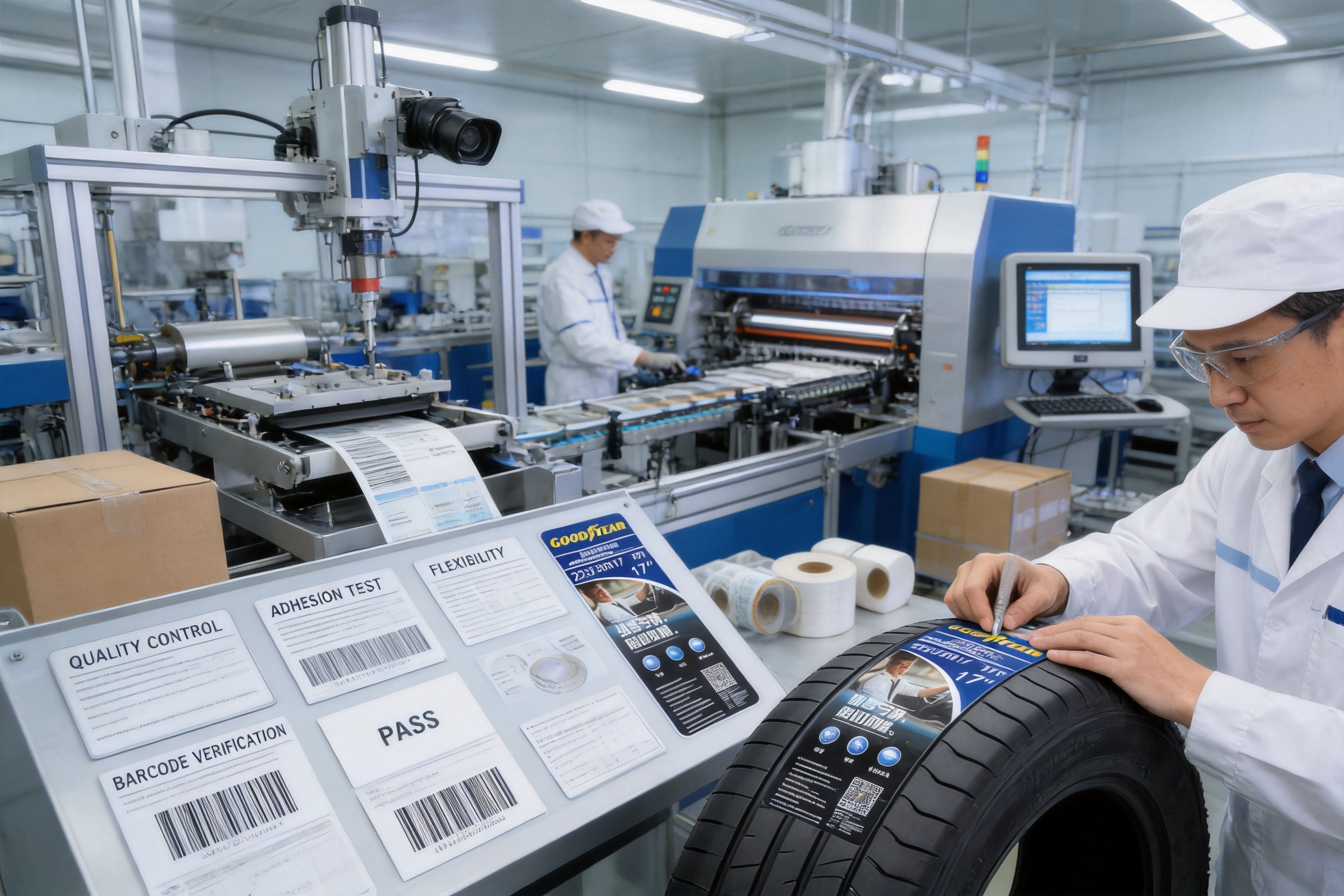
Advanced Manufacturing Processes
Research and Development Integration
Shanghai Rongyang Industrial Development Co., Ltd. integrates research and development with manufacturing, sales, and technical service. This structure allows product requirements to be evaluated across the full development process rather than treated as isolated purchasing specifications.
For Tire Labels, research and development may address substrate selection, adhesive compatibility, printing performance, die-cutting accuracy, application behavior, and environmental resistance. The objective is to create a solution that functions as a complete system rather than simply combining an adhesive sheet and printed information.
Technical collaboration with customers can help identify the actual conditions of use. Important questions may include whether the label is applied before or after tire curing, whether application occurs manually or automatically, how long the label must remain in place, what scanning system is used, and what temperature and contamination conditions are present during application.
Automated Production Lines
Advanced automated production lines support consistency in coating, laminating, printing, slitting, die-cutting, and finishing. Automation can reduce variation between production batches and improve control over dimensions, registration, adhesive coverage, and material handling.
Stable production is particularly important for industrial labels because customer processes often depend on predictable roll dimensions, consistent liner release, reliable die-cutting, and uniform adhesive performance. Automated equipment helps maintain repeatability while supporting large-volume orders.
Precision Inspection Equipment
Precision inspection equipment provides objective control over the finished product. Depending on the specification, inspection may address label dimensions, print registration, barcode readability, color consistency, surface defects, adhesive coverage, die-cutting quality, and packaging integrity.
Inspection is important because a label may appear acceptable at a glance while still containing defects that affect automated application or scanning. A small dimensional difference can influence roll feeding, while incomplete die-cutting can cause liner lifting or application problems. Consistent inspection helps identify these issues before shipment.
Strict Quality Control From Raw Materials to Finished Products
Quality control begins with incoming materials. Synthetic substrates, adhesives, inks, liners, protective films, and packaging materials must be assessed against defined specifications. Controlling raw material quality creates a more stable foundation for the subsequent manufacturing stages.
Process controls then monitor critical parameters during coating, printing, curing, laminating, converting, and packing. Finished-product checks verify that the completed labels meet agreed requirements. This end-to-end approach is more reliable than depending only on a final visual inspection.
Quality documentation can also support customer audits, product approval, process improvement, and long-term traceability. A well-organized quality system helps manufacturers identify trends, investigate nonconformities, and implement corrective or preventive actions.
Flexible Converting and Custom Die-Cutting
Tire sidewalls and related industrial surfaces may require labels with specific shapes, radii, corners, perforations, or roll formats. Customized die-cutting allows the label geometry to match the application surface and customer handling process.
Accurate converting can improve application efficiency and reduce unnecessary waste. It can also help keep the label within a designated marking area, avoid interference with nearby information, and support automatic dispensing or robotic application.
International Production Capability
Rongyang operates production facilities in China and Malaysia, supporting international customer requirements and larger-scale supply programs. A geographically capable manufacturing structure can help customers manage regional supply needs, production continuity, and delivery planning.
International capability is especially valuable for tire manufacturers with multiple plants or global distribution networks. Consistency between production locations, technical communication, documentation, and quality expectations remains essential when a label program serves more than one market.
Company Capabilities and Quality Credentials
Founded in 2008, Shanghai Rongyang Industrial Development Co., Ltd. provides pressure-sensitive labels, RFID inlays, RFID tags, and finished smart labeling products. Its product portfolio serves FMCG, food and beverage, pharmaceutical, logistics, retail, warehouse, asset management, anti-theft, and smart manufacturing applications.
The company’s experience across multiple label categories supports the development of specialized solutions for demanding environments. Its technical scope includes anti-counterfeiting features, high-temperature resistance, removable adhesion, specialized die-cutting, and RFID integration. This breadth can be useful when a tire manufacturer requires more than a basic printed label.
Rongyang has obtained ISO 9001 and ISO 14001 certifications and has passed the SMETA social responsibility audit. ISO 9001 relates to quality management systems, while ISO 14001 relates to environmental management systems. These credentials indicate structured management practices, although customers should review the specific scope and current validity of certifications during supplier qualification.
The company’s stated commitment to continuous improvement, innovation, and mutual success aligns with the long-term requirements of industrial label programs. Tire manufacturers typically need stable supply, technical responsiveness, consistent quality, and the ability to develop improvements as product and regulatory requirements change.
Customization Options for Tire Marking Programs
Label Size and Shape
Label dimensions can be developed according to the available sidewall space, required information volume, application equipment, and visual marking area. Small labels may be suitable for compact variable data, while larger formats may accommodate multiple codes, instructions, or inspection details.
Corner radius, die-cut shape, perforation, and edge design can influence resistance to lifting and application convenience. The best configuration should be determined through testing on the actual tire surface.
Information and Coding
Customers can specify human-readable text, serial numbers, batch codes, barcodes, QR codes, logos, symbols, and other variable information. Code selection should reflect the customer’s scanning equipment, data volume, printing process, and environmental requirements.
Where information must remain machine-readable after outdoor exposure, the complete system should be validated. This includes print contrast, code size, error correction, protective coating, surface texture, and scanning distance.
Adhesive Selection
The super-adhesive rubber-based system provides strong bonding for tire sidewalls, but the final adhesive specification may depend on the application stage and surface condition. Application temperature, storage time before use, tire compound, surface contamination, and required removability can all influence the choice.
If the label is intended for a temporary manufacturing step, controlled removal may be important. If it is intended for long-term lifecycle identification, maximum durability and permanent adhesion may be the priority. These objectives should be defined before production approval.
Printing and Surface Protection
Printing options can be adjusted to support variable information, high-resolution graphics, strong contrast, or specialized brand and compliance requirements. Protective layers may be considered where abrasion, chemicals, or prolonged ultraviolet exposure create additional risks.
The chosen construction should balance durability with flexibility. An overly rigid surface layer may reduce the ability of the label to follow tire movement, while insufficient protection may reduce print longevity. Product testing helps identify the appropriate balance.
Packaging and Delivery Format
Labels may be supplied in rolls, sheets, fan-folded formats, or other configurations based on the customer’s application equipment. Roll direction, core size, winding tension, splice management, and outer packaging can affect production efficiency.
Packaging should protect the labels from moisture, dust, compression, and excessive temperature during transport and storage. Clear identification of batches and specifications supports warehouse control and production scheduling.
Application and Handling Recommendations
Even a high-performance label requires correct application. The tire surface should be as clean and dry as practical, with loose dust, mud, oil, moisture, and other contaminants removed. The surface should be inspected for irregularities that could prevent full contact.
Application pressure should be sufficient to establish uniform contact between the adhesive and the sidewall. Air pockets, folded edges, wrinkles, and contamination trapped beneath the label can reduce performance. Operators should follow the specified dwell time before exposing the label to severe handling or environmental conditions.
Storage conditions also matter. Label stock should generally be kept in its original packaging until use and protected from excessive humidity, heat, direct sunlight, and contamination. First-in, first-out inventory control can help ensure that materials are used within the recommended storage period.
For automated application, the roll specification should match the dispensing equipment. Factors such as label gap, liner release, web tension, winding direction, roll diameter, and splice position should be confirmed during qualification. A production trial can identify feeding or placement issues before full-scale deployment.
Testing and Validation Considerations
Before a Tire Label is approved for production, customers should evaluate it under conditions that represent actual use. Laboratory testing can provide useful data, but field or simulated-field testing is also valuable because tire movement and environmental exposure can interact in complex ways.
Potential validation areas include:
1. Adhesion to the intended tire surface.
2. Resistance to edge lifting and peeling.
3. Repeated dynamic bending or flexing.
4. Exposure to ultraviolet radiation.
5. Exposure to ozone or accelerated aging conditions.
6. Temperature cycling between low and high extremes.
7. Contact with de-icing agents, road salt, water, and cleaning chemicals.
8. Abrasion and simulated road debris impact.
9. Print contrast and barcode or QR code readability.
10. Application compatibility with manual or automated equipment.
11. Storage stability and liner release performance.
12. Compliance with the customer’s internal and market-specific marking requirements.
Acceptance criteria should be defined in advance. For example, a customer may specify minimum readable code quality, maximum allowable edge lift, minimum adhesion after aging, or acceptable visual appearance after environmental exposure. Clear criteria make supplier approval more objective and help both parties understand the intended performance.
Why Specialized Tire Labels Improve Operational Efficiency
A durable tire label can create value beyond the label’s purchase price. Reliable identification reduces the risk of manual errors, product confusion, and lost records. It helps employees find information faster and allows digital systems to connect physical tires with production and service data.
Improved traceability can also support targeted quality actions. If a manufacturing issue is linked to a particular batch or production period, accurate tire identification may help locate affected products without unnecessarily disrupting unrelated inventory. This can reduce the scope and cost of investigations.
In warehouse operations, machine-readable labels can accelerate receiving, picking, and shipment verification. In fleet operations, consistent identification can make tire rotation and inspection records easier to maintain. In service environments, durable labeling can reduce the chance that information is lost when tires move between vehicles, storage areas, and workshops.
Lifecycle visibility may also support sustainability objectives. Better information can assist with collection, sorting, retreading, reuse, recycling, and responsible disposal. While the label itself is only one part of a broader management system, it can provide the physical identifier needed to connect these processes.
Comparing Tire Labels With Alternative Identification Methods
Paper Labels
Paper labels are economical and printable, but they are generally less suitable for long-term outdoor exposure and repeated dynamic bending. Moisture, abrasion, ultraviolet radiation, and chemical contact can damage paper substrates. Paper may still be useful for temporary indoor production steps, but it is not normally the preferred choice for demanding tire service conditions.
Standard Plastic Stickers
General-purpose plastic labels can offer better moisture resistance than paper, but their performance depends heavily on the polymer, adhesive, printing process, and thickness. A film designed for bottles or packaging may not have the flexibility, rubber compatibility, or environmental resistance required for a moving tire sidewall.
Direct Marking
Direct marking methods can provide permanent identification in some manufacturing processes. However, they may require specialized equipment, affect the surface, limit design flexibility, or be less convenient for variable information and replacement workflows. Labels offer a flexible approach that can be customized, printed in advance, and integrated with existing application systems.
RFID Identification
RFID can provide automated, non-line-of-sight identification and may be valuable for inventory, logistics, and smart manufacturing. However, RFID and printed visual labels serve different purposes. RFID may require specialized readers and system integration, while a printed tire label provides immediate human-readable information and can support visual inspection. In some applications, the two technologies can complement each other.
Rongyang’s experience with both pressure-sensitive labels and RFID products allows customers to consider combined identification strategies where appropriate. The final choice should be based on data requirements, reading distance, cost, infrastructure, regulatory needs, and expected service environment.
Procurement and Supplier Evaluation Guide
When selecting a Tire Label supplier, customers should evaluate more than unit price. The label is part of a safety- and traceability-related process, so material consistency, technical support, quality documentation, delivery reliability, and manufacturing capability are all important.
Key evaluation questions may include:
1. Does the supplier have experience with rubber, tire, or other dynamic industrial surfaces?
2. Can the supplier provide substrate and adhesive specifications?
3. What environmental and mechanical tests are available?
4. Can the supplier support customized shapes, codes, and roll formats?
5. What inspection equipment and quality controls are used?
6. Can the supplier maintain consistent production across large volumes?
7. Does the supplier have experience supporting international customers?
8. Are quality and environmental management systems documented?
9. Can the supplier provide samples and pilot production before approval?
10. How are nonconforming products, complaints, and corrective actions managed?
11. Can the supplier provide technical support during application qualification?
12. Are production facilities and supply arrangements suitable for the customer’s continuity requirements?
A supplier with integrated R&D, manufacturing, and service capabilities can often respond more effectively when performance requirements change. This is particularly important for global tire manufacturers, who may need standardized products across plants while also accommodating regional regulations and application differences.
Frequently Asked Questions
What are Tire Labels used for?
Tire Labels are used to provide durable identification on tire sidewalls and related tire products. They can display production information, serial numbers, batch data, inspection details, barcodes, QR codes, and other traceability information.
Why are ordinary labels unsuitable for many tire applications?
Ordinary labels may not be designed for continuous bending, rubber adhesion, ozone, ultraviolet radiation, road debris, temperature cycling, or chemical exposure. Tire Labels use specialized synthetic substrates and rubber-based adhesive technology to address these conditions.
What temperature range can these labels support?
The described construction is designed for temperature conditions from approximately -40°C to +70°C. Actual performance depends on the specific material combination, application conditions, exposure duration, and customer requirements, so qualification testing is recommended.
Can Tire Labels remain attached during high-speed rolling?
They are designed to remain firmly bonded and intact under high-speed rolling, dynamic bending, impact, and complex mechanical stress. Proper surface preparation, application pressure, and product selection remain essential for achieving the expected result.
Are Tire Labels resistant to ozone and ultraviolet radiation?
Yes. The product is designed to provide resistance to ozone and ultraviolet exposure, helping preserve both the label structure and printed information in outdoor operating environments.
Can the labels resist de-icing agents?
The labels are designed to resist chemical exposure such as de-icing agents. Customers with especially aggressive chemical environments should provide details during specification and complete application-specific validation.
Do the labels support DOT-related marking requirements?
The product is intended to support global tire marking requirements, including requirements such as DOT. Manufacturers should confirm the exact regulations applicable to their products and markets and validate the final label configuration accordingly.
Can the labels be customized?
Yes. Customization may include size, shape, adhesive selection, printing, variable data, barcodes, QR codes, protective finishes, roll format, and packaging. The final design should be based on the tire surface, application process, environmental exposure, and information requirements.
Can these labels be used with automated application equipment?
They can be supplied in formats intended for manual or automated application, subject to equipment requirements. Roll direction, liner specification, label spacing, core size, web tension, and winding configuration should be confirmed before production.
How should Tire Labels be stored?
They should remain in their original packaging and be protected from excessive heat, humidity, direct sunlight, dust, and contamination. Customers should follow the supplier’s storage recommendations and use appropriate inventory rotation.
Can Tire Labels support RFID programs?
The company also provides RFID inlays, tags, and finished RFID products in HF and UHF frequencies. A customer may evaluate printed labels, RFID solutions, or a combined approach depending on the required reading method and information system.
How can customers begin a technical evaluation?
Customers should provide the tire material, application location, expected service life, application temperature, environmental conditions, information content, printing requirements, and application method. Samples and pilot testing can then be used to confirm adhesion, readability, durability, and production compatibility.
Conclusion
Tire identification demands a purpose-built solution. A tire label must follow continuous movement, remain bonded to a curved rubber sidewall, withstand road and weather exposure, and preserve readable information throughout production, distribution, operation, maintenance, and disposal.
Tire Labels provide this specialized performance through the combination of high-strength synthetic materials, tire-grade fabrics or specialty films, and super-adhesive rubber-based adhesives. Their resistance to dynamic bending, ozone, ultraviolet radiation, stress cracking, temperature variation, road debris, and chemical exposure gives them important advantages over ordinary packaging labels.
Their value extends beyond physical durability. By preserving clear and reliable identification, Tire Labels support production control, warehouse management, fleet maintenance, quality investigation, regulatory alignment, and end-of-life traceability. They help connect a tire with the information required to manage it throughout its complete lifecycle.
Shanghai Rongyang Industrial Development Co., Ltd. strengthens this product offering through integrated research and development, automated production lines, precision inspection equipment, strict quality control, specialized converting, international manufacturing capability, and experience across pressure-sensitive and RFID label technologies. Its ISO 9001 and ISO 14001 certifications and SMETA social responsibility audit further support a structured approach to quality, environmental management, and responsible operations.
For tire manufacturers and industrial customers, the best labeling program is one that combines material performance, adhesive compatibility, accurate printing, regulatory awareness, dependable manufacturing, and application validation. With the correct specification and quality controls, Tire Labels can provide a stable and durable foundation for full-lifecycle tire traceability in demanding global environments.
References
1. U.S. Department of Transportation, Federal Motor Vehicle Safety Standards, Tire Identification and Marking Requirements.
2. International Organization for Standardization, ISO 9001, Quality Management Systems — Requirements.
3. International Organization for Standardization, ISO 14001, Environmental Management Systems — Requirements With Guidance for Use.
4. International Organization for Standardization, Standards and Guidance Relating to Pressure-Sensitive Adhesive Materials and Label Testing.
5. International Organization for Standardization, Standards Relating to Rubber Products, Tire Performance, and Environmental Durability.
6. ASTM International, Methods for Evaluating Adhesion, Peel Strength, Shear Resistance, Abrasion, Temperature Exposure, and Aging of Adhesive Products.
7. Society of Automotive Engineers, Technical Literature Concerning Tire Identification, Tire Marking, and Vehicle Service Traceability.
8. SMETA, Sedex Members Ethical Trade Audit Methodology and Responsible Supply Chain Guidance.
Product: Tire Labels



Messae Us Right Now!

- Quick Links
- Products
- Quality Control
- Our Story
- News
- Contact
- Our Product
-
- Beauty and Personal Care Labels
- Home cleaning and laundry care labels
- Liquor and Beverage Labels
- Food and dairy product labels
- Healthcare Labels
- Promotional and Interactive Labels
- Specialty and industrial solution
- Labels Thermal printing and logistics labels
- Anti-counterfeiting traceability and RFID Labels
- Contact us
- Tel:+86-573-86867861
- Phone:+86-18621872035
- E-mail:allen.men@rylabel.com
- Add:No. 111 Xincheng Road, Haiyan Economic Development Zone, Jiaxing City, Zhejiang Province


