
 English
 русский
 Español


Home / Author / Sofía Velasco — Customer Success and Technical Support Executive / NFC Interactive Marketing Labels: Transforming Product Packaging into Digital Brand Experiences
News

NFC Interactive Marketing Labels: Transforming Product Packaging into Digital Brand Experiences
2026-10-09
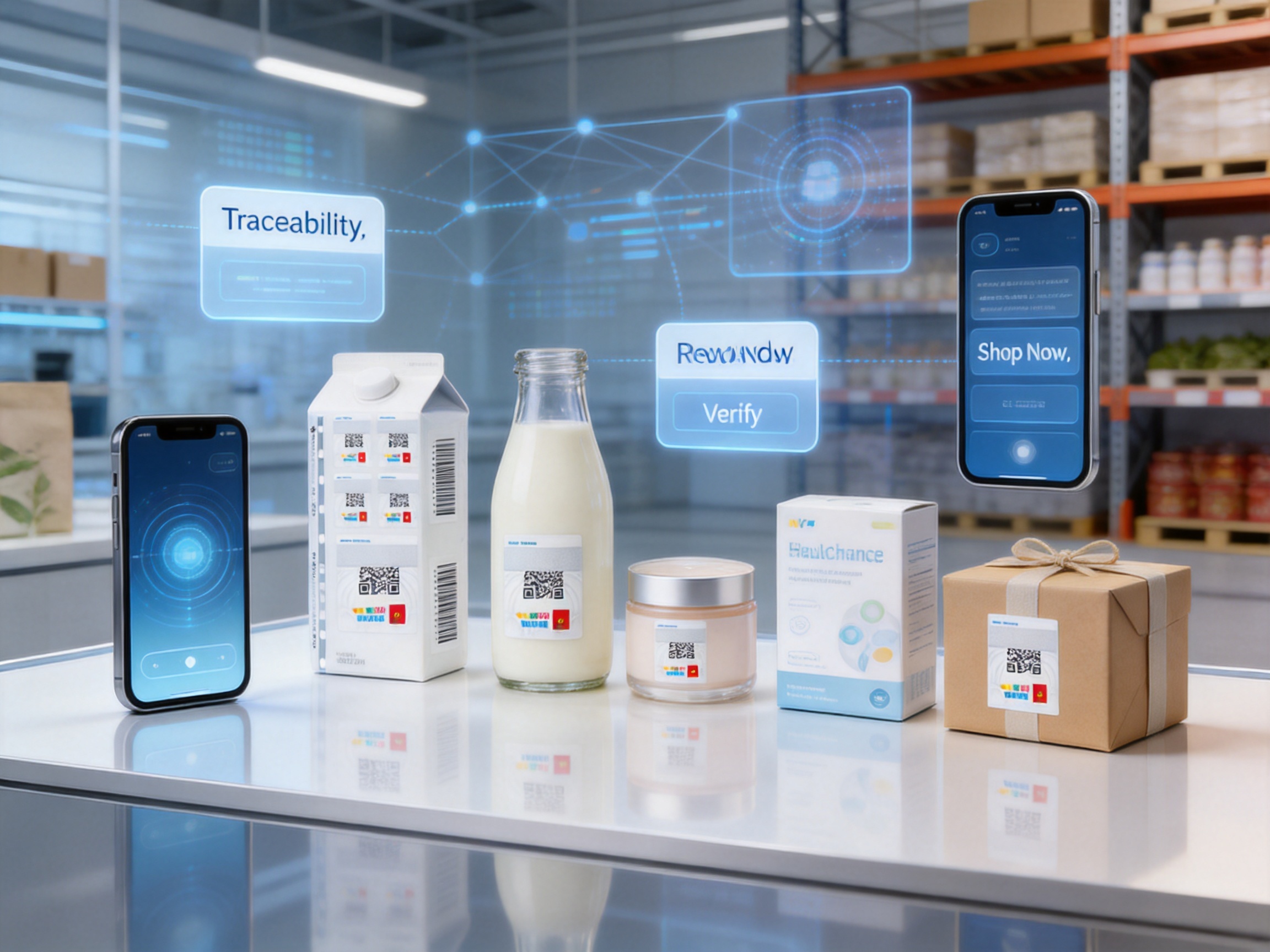
Packaging has traditionally served three basic purposes: protecting a product, presenting brand information, and supporting transportation or storage. Today, however, packaging is becoming an active communication channel. Consumers expect immediate access to product information, brand stories, promotional offers, membership services, traceability records, and online purchasing options. NFC interactive marketing labels respond to this changing market by turning ordinary product packaging into a convenient digital entry point.
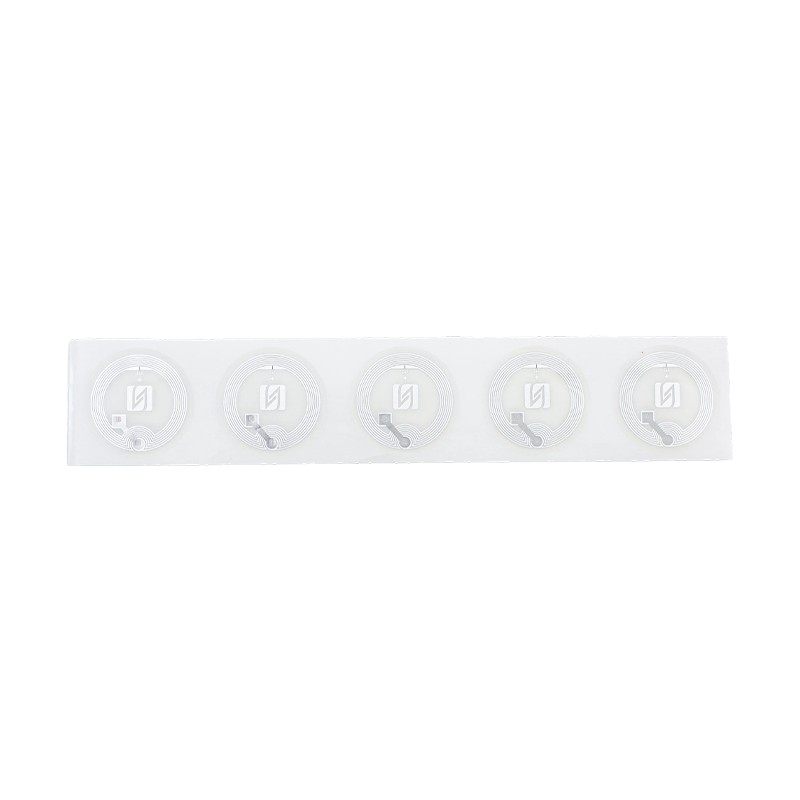
An NFC interactive marketing label contains a miniature Near Field Communication chip and antenna structure integrated into a printed label. When a consumer taps an NFC-enabled smartphone against the label, the phone can open a digital destination or trigger an online service without requiring a QR code scan, manual web address entry, or separate application in many common use cases. Depending on the campaign design, the same tap may provide access to an official website, product traceability information, short-form video advertising, membership registration, an online store, a loyalty program, or other digital content.
This combination of printed communication and contactless interaction gives brands a practical way to connect physical products with digital ecosystems. It also creates opportunities to update campaigns, collect useful engagement information, improve customer service, and build longer-lasting relationships with consumers. Unlike a conventional printed label, an NFC label can continue to deliver new experiences after the product has left the factory and entered the retail environment.
Shanghai Rongyang Industrial Development Co., Ltd. is an integrated provider of pressure-sensitive labels and RFID smart label solutions. Its capabilities include research and development, manufacturing, quality inspection, sales, and technical service. Through automated production lines, precision inspection equipment, established quality systems, and customized converting capabilities, the company supports clients seeking reliable interactive labels for consumer packaging, promotional campaigns, traceability programs, and smart retail applications.
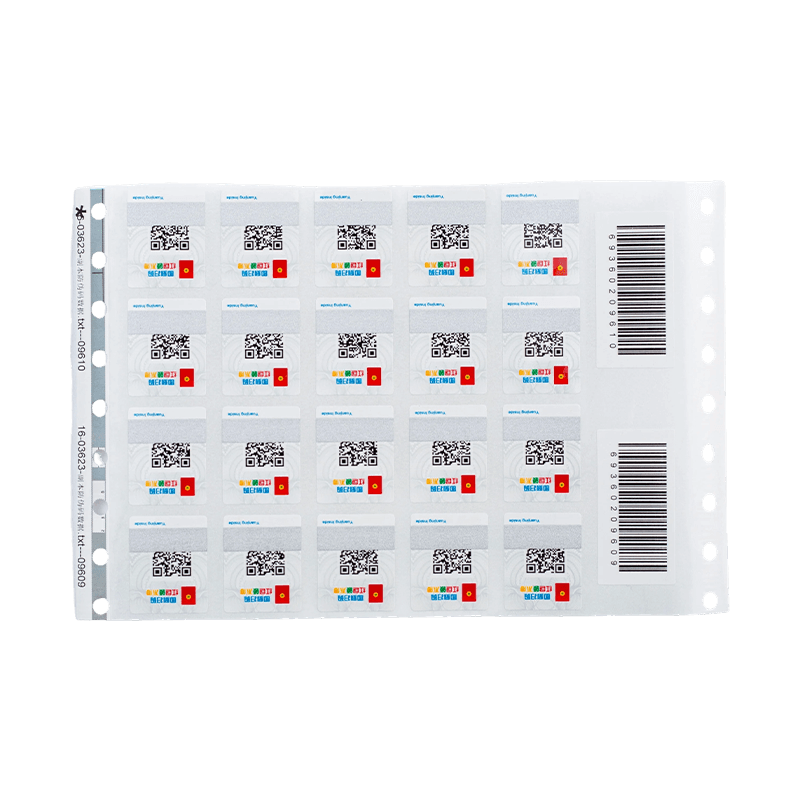
NFC Interactive Marketing Labels
What Are NFC Interactive Marketing Labels?
NFC interactive marketing labels are adhesive labels equipped with a small NFC chip and antenna. The chip stores or communicates a digital identifier, while the antenna enables short-range wireless communication with a compatible mobile device. The label itself can be printed with brand graphics, product information, promotional messages, instructions, decorative elements, or security features.
The digital destination connected to the tag may be a web page, a campaign landing page, a product registration system, an online marketplace, a traceability platform, a membership portal, or a content management system. The physical label can therefore remain attached to the product while the digital experience changes over time. This characteristic makes the solution especially useful for brands that regularly update promotions, product stories, seasonal content, or consumer services.
The interaction is based on proximity. A consumer brings a compatible smartphone close to the designated area of the label, and the device detects the NFC signal. The phone can then present a notification or open the configured digital experience. Compared with interactions that require typing, scanning, downloading, or searching, tapping is direct and easy to understand.
Although the NFC function is technologically advanced, the label remains a familiar pressure-sensitive product. It can be produced with a face material, adhesive layer, NFC inlay, release liner, and protective or decorative finishes selected for the intended application. This allows the label to be integrated into existing packaging and labeling workflows instead of requiring a completely new package structure.
Key Components
The first component is the NFC inlay. It normally consists of the microchip and antenna. The chip provides memory and communication functions, while the antenna enables the exchange of information with a nearby NFC reader or smartphone. In a marketing label, the inlay is selected according to the required memory capacity, read performance, form factor, and application environment.
The second component is the label substrate or face stock. Paper, coated paper, synthetic film, and other specialty materials may be considered depending on appearance, durability, moisture resistance, surface texture, and printing requirements. A premium beverage label may require a high-quality decorative surface, while a logistics or industrial application may prioritize abrasion resistance and dimensional stability.
The third component is the adhesive. Adhesive selection influences application performance, initial tack, long-term holding power, temperature resistance, removability, and compatibility with glass, plastic, metal, coated cartons, or other packaging surfaces. A well-designed NFC label must remain securely attached without interfering with the product’s intended use.
The fourth component is the printed communication layer. This is the part that tells consumers that an interaction is available. It may include a tap symbol, a short instruction, a campaign message, a call to action, or visual branding. Clear communication is important because consumers need to recognize that the label offers more than printed information.
The fifth component is the digital content and data system connected to the NFC identifier. The label can direct different audiences to different content based on campaign goals, geographic markets, language settings, or product categories. When supported by an appropriate platform, the content can be managed and updated without replacing the physical label.
How the Consumer Experience Works
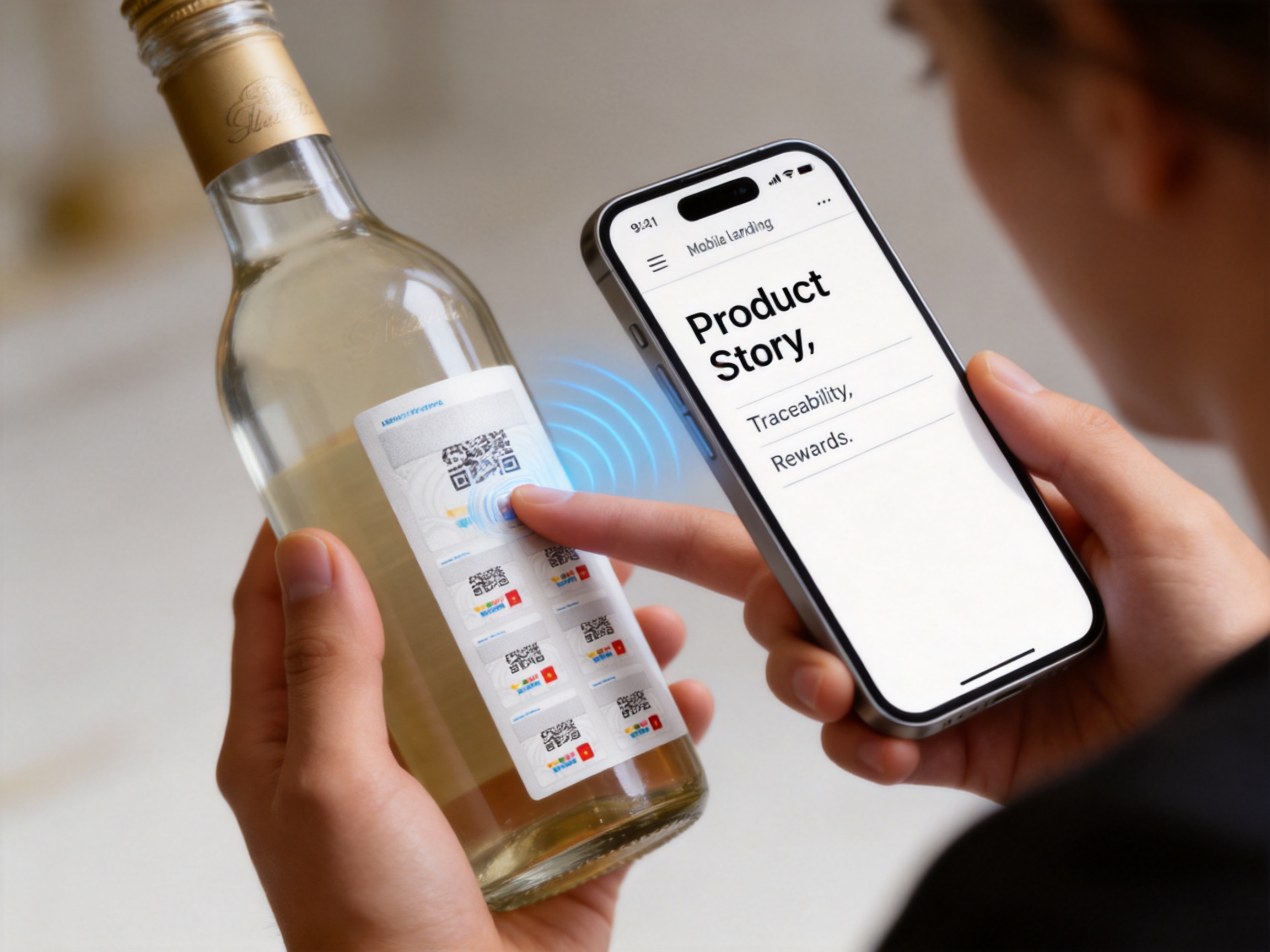
A successful interactive label experience should be simple from beginning to end. The consumer sees the label on the product and notices a concise instruction such as “Tap to discover,” “Tap for authenticity,” or “Tap for rewards.” The consumer then places an NFC-enabled smartphone near the label. The device detects the chip and displays a notification or opens the assigned digital destination.
After the connection is established, the consumer may view a brand story, watch a short video, check the origin of a product, register for membership, receive a coupon, or proceed directly to an online store. The experience can be designed for a single action or for a series of connected services. For example, a beverage label may first present product origin information and then offer a loyalty registration option and a link to the brand’s online shop.
This process removes several points of friction associated with traditional promotional methods. Consumers do not necessarily need to type a long address, search for a product online, or position a camera to scan a printed code. The tap action is intuitive and can be used in a retail aisle, at a trade event, during a product demonstration, or after purchase.
Convenience is particularly important for mobile users. Every additional step creates a possibility that the consumer will abandon the interaction. NFC reduces the number of manual actions and helps brands provide information at the moment when the product is physically in front of the consumer.
Typical Digital Destinations
An official brand website can provide general company information, product education, customer support, and corporate communication. The NFC label can direct consumers to a campaign-specific page rather than to a generic home page, allowing the content to match the product and marketing objective.
Product traceability information can explain manufacturing origin, supply chain milestones, batch details, raw material sources, or quality procedures. Traceability content can increase confidence in categories such as food, beverages, cosmetics, healthcare products, and premium goods.
Short video advertising can communicate product demonstrations, usage instructions, recipes, customer stories, behind-the-scenes content, or seasonal campaigns. Video is particularly useful when a product’s value is difficult to communicate through static packaging alone.
Membership registration can connect the physical product with a loyalty program. The consumer may register for points, warranty services, product updates, event invitations, or personalized offers. This changes packaging from a one-way communication surface into an entry point for an ongoing relationship.
An online store redirection function can make purchasing more convenient. Consumers who discover a product in a physical environment can use the same label to obtain additional products, accessories, refills, gift sets, or replacement items through an online channel.
Interactive surveys and feedback forms can help brands understand consumer opinions. A label can invite customers to review a product, answer a short questionnaire, report a service issue, or vote in a campaign. This information can support product improvement and marketing planning.
Advantages over Conventional Promotional Labels
Conventional printed promotional labels remain useful, but their content is fixed at the time of printing. If a campaign changes, the original label usually cannot be modified without producing and applying a new version. NFC interactive marketing labels introduce a digital layer that can be revised after production.
Compared with labels that contain only printed text, an NFC label can provide substantially more content without increasing the visible size of the package. A small label can connect to videos, technical information, frequently asked questions, multilingual pages, interactive forms, and online services. The printed surface remains clean while the digital platform carries the larger information load.
Compared with QR-only solutions, NFC offers a tap-based alternative that can be faster and more convenient in many situations. QR codes require the user to open a camera or scanning application and correctly frame the code. NFC requires close proximity and a compatible device, but the action can be more direct. Some campaigns use both technologies so that consumers can choose their preferred interaction method.
Compared with one-time advertising, NFC enables continuing communication. A brand can update a landing page, introduce a new promotion, add a seasonal video, or revise service information while keeping the same physical label in circulation. This can reduce the need for frequent reprinting and help extend the useful life of packaging artwork.
Compared with generic digital advertisements, an NFC label is physically connected to a specific product. The interaction occurs at the point of contact between consumer and packaging. This improves contextual relevance because the consumer is already viewing or holding the item when the digital content appears.
Compared with basic promotional stickers, an NFC label can support measurable engagement. Depending on the digital platform and privacy-compliant analytics configuration, brands may evaluate interaction volume, campaign response, content performance, repeat engagement, and conversion behavior. These insights can help determine whether a campaign is reaching its intended audience.
Core Competitive Benefits
Immediate access: Consumers can reach digital content with a simple tap, reducing the effort required to move from physical discovery to online engagement.
Content flexibility: The associated digital destination can be changed or updated when campaigns, product information, or promotional priorities evolve.
Higher engagement potential: Interactive pages, videos, loyalty services, and purchasing options provide more opportunities for meaningful participation than static printed claims.
Compact information delivery: A small embedded chip can connect to extensive digital content without filling the physical package with dense text.
Data-enabled marketing: Properly configured systems can provide information about user interactions and campaign performance while respecting applicable privacy requirements.
Brand differentiation: Contactless interaction gives products a modern and technologically enabled presentation, helping brands stand out on crowded retail shelves.
Integration with smart retail: NFC can connect packaging with e-commerce, loyalty programs, traceability systems, customer service platforms, and other digital channels.
Rewritable Content and Campaign Flexibility
One of the most valuable characteristics of the NFC interactive marketing label is its support for rewrite operations. The physical label may remain unchanged while the digital content associated with it is updated. This is particularly important for brands managing multiple campaigns, changing prices, seasonal promotions, regional content, or evolving product information.
For example, a beverage producer may use the same label structure throughout a year while changing the digital page from a summer promotion to a holiday gift campaign. A cosmetics brand may update a tutorial video when a new product usage method is introduced. A food company may revise a recipe library or add new traceability information as its digital system develops.
Rewritable functionality can also support staged marketing. Before a product launch, the tag may lead to a preview page. During the launch, it may provide a product introduction and special offer. After the launch, it may direct consumers to reviews, loyalty benefits, customer support, or replenishment services.
Updating digital content does not mean that every NFC chip must be rewritten in the same way. Campaign architecture should be planned carefully. In many cases, the chip stores a stable identifier or address that leads to a controlled digital platform. The content management system then determines what consumers see. This approach can make updates efficient while preserving continuity in printed materials and distribution.
Brands should define permissions, update procedures, data ownership, and content approval processes before launching a campaign. A clear management structure helps prevent unauthorized changes and ensures that consumers receive accurate information. It also supports coordination between marketing, product, information technology, compliance, and customer service teams.
Applications Across Consumer and Industrial Markets
Food and Dairy Products
Food and dairy packaging can use NFC to provide origin information, ingredient education, preparation suggestions, recipes, storage guidance, and campaign participation. Consumers may tap a package to understand where ingredients came from or to access product-specific content in their preferred language.
Interactive labels can also support customer feedback and loyalty programs. A brand may invite consumers to submit recipes, enter a promotional drawing, collect points, or receive notifications about related products. For premium or specialty food products, digital storytelling can communicate production methods, regional heritage, and quality standards without overcrowding the package.
Liquor and Beverage Products
Beverage packaging is well suited to NFC because the product often has a strong brand story and high promotional value. A label can connect a bottle to tasting notes, cocktail recipes, event invitations, product history, authentication services, or an online store.
For premium beverages, NFC can help establish a more direct relationship between the brand and the purchaser. The label may provide information about the production region, aging process, serving recommendations, or collection programs. A promotional campaign can also use the label to deliver limited content and encourage repeat engagement.
Beauty and Personal Care
Beauty products often require education because consumers want to understand ingredients, routines, application methods, and expected results. NFC can lead to tutorials, skin-care routines, product compatibility guidance, influencer content, and customer support.
Interactive labels can also help brands introduce complementary products. After learning how to use a skin-care product, the consumer may be directed to a recommended routine or refill option. For personal care products with multiple variants, digital content can help consumers select the most appropriate formulation.
Healthcare Products
Healthcare-related packaging can use NFC to provide instructions, product information, support services, and educational content. The design must take account of regulatory requirements, accessibility, data protection, and the need for accurate information.
In suitable applications, the label can direct users to dosage reminders, usage demonstrations, frequently asked questions, warranty registration, or authorized support channels. Digital content should complement, not replace, required printed information and professional guidance.
Retail and Promotional Campaigns
Retail brands can use NFC labels for instant coupons, product demonstrations, membership registration, prize campaigns, event participation, and social engagement. The label may be placed directly on primary packaging, a gift box, a display card, or a promotional accessory.
At trade shows and events, interactive labels can provide exhibitor information, digital catalogs, appointment registration, and lead-generation forms. This reduces the need to distribute large quantities of printed materials while allowing visitors to access updated information after the event.
Logistics and Asset-Related Applications
Although the product described is designed for promotional and interactive marketing, the broader smart-label expertise behind its manufacture can support related applications. NFC and RFID technologies can be used for product identification, asset records, service history, internal handling, and inventory processes, depending on the selected frequency, chip, read range, and system architecture.
For industrial products, an interactive label may connect operators to maintenance instructions, inspection records, technical documents, or service registration. These use cases require careful consideration of durability, surface compatibility, environmental exposure, and access control.
Design and Customization Options
Successful NFC label design balances visual communication, electronic performance, adhesive behavior, and production feasibility. A label that looks attractive but performs poorly on the intended package will not deliver a successful consumer experience.
The label shape can be customized through precision die-cutting. Standard rectangles and circles may be suitable for many products, while specialty shapes can follow a bottle contour, highlight a campaign symbol, or fit a limited package area. The dimensions must leave sufficient space for the selected inlay and maintain consistent read performance.
Printing can include brand colors, product information, instructions, icons, variable data, barcodes, and other visual elements. Finishing options may include protective coatings, laminations, gloss or matte effects, metallic appearances, and other surface treatments appropriate to the product image and usage environment.
Material selection should reflect the package surface and expected conditions. Paper may provide a natural or premium appearance. Film materials can offer enhanced moisture resistance, tear resistance, and dimensional stability. Specialty materials may be considered for high-temperature, removable, durable, or industrial applications.
Adhesive selection is equally important. Permanent adhesive may be appropriate when the label must remain attached throughout the product life. Removable adhesive may be preferred for temporary campaigns, returnable containers, or applications where residue must be minimized. The final recommendation should be based on the substrate, application temperature, storage conditions, and expected service period.
The NFC inlay must be positioned so that the label performs effectively on the target package. Metal surfaces and certain package structures can affect electromagnetic behavior. Product testing should therefore use representative packaging rather than relying only on laboratory samples or isolated inlay tests.
Visual Communication Principles
The label should make the interaction easy to understand. A recognizable NFC symbol, a short instruction, and a clear benefit can encourage participation. “Tap to learn more” is less motivating than a benefit-led message such as “Tap for recipes,” “Tap to verify,” or “Tap for member rewards.”
Instructions should be brief and legible. If the campaign is intended for an international market, language, symbols, and cultural expectations should be considered. The label may also include a fallback QR code when broad device compatibility is important.
Digital content should match the visual identity of the package. A mismatch between premium packaging and a poorly designed mobile page can weaken consumer confidence. Responsive pages, concise navigation, fast loading, accessible typography, and clear calls to action are essential parts of the total experience.
Advanced Manufacturing and Quality Strengths
The performance of an NFC interactive label depends on more than the chip itself. Consistent converting, accurate printing, reliable adhesive application, controlled die-cutting, and comprehensive inspection are all necessary for dependable production. Shanghai Rongyang Industrial Development Co., Ltd. combines label manufacturing experience with smart-label capabilities to address these requirements.
The company operates automated production lines designed to improve repeatability and production efficiency. Automation can help control material feeding, printing alignment, adhesive processing, lamination, die-cutting, rewinding, and other stages. Stable process control is particularly valuable for large-volume orders where variation between batches must be minimized.
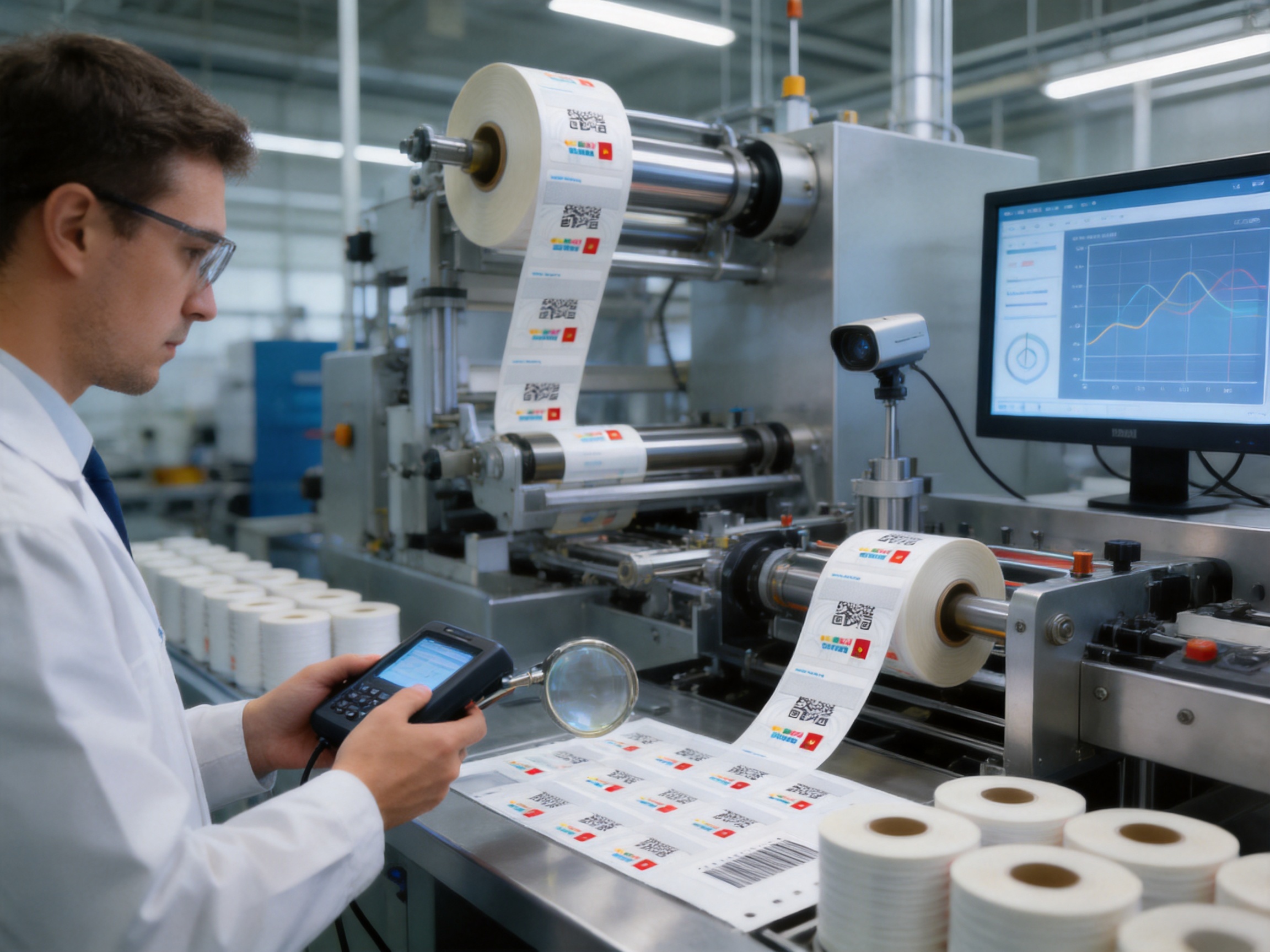
Precision inspection equipment supports the identification of visual and functional defects. Depending on the project, inspection may address print registration, color consistency, surface contamination, die-cut accuracy, material defects, adhesive coverage, and inlay positioning. Electronic testing can also be incorporated to verify NFC performance according to the required specification.
A stringent quality control system helps manage the entire process from incoming raw materials to finished labels. Material documentation, production records, process checks, sample retention, and final inspection provide a structured basis for consistent delivery. This is important for brands whose labels must operate across multiple package formats and distribution regions.
Rongyang’s capabilities extend beyond standard pressure-sensitive labels. The company develops and manufactures RFID inlays, tags, and finished products for HF and UHF applications, as well as labels with special functions such as anti-counterfeiting, high-temperature resistance, removable adhesion, and specialized die-cutting. This broader technical background supports informed decisions when customers require a combination of visual design, electronic function, and physical performance.
Production facilities in China and Malaysia provide support for international customer requirements and large-scale supply. Multiple production locations can help customers evaluate capacity, regional supply considerations, and project continuity. The company’s integrated structure also enables communication between product development, manufacturing, quality assurance, and service teams.
Research and Development Support
Interactive label projects often involve more than selecting a stock product. The development process may include defining the user journey, choosing a chip and inlay structure, evaluating package compatibility, selecting adhesive and face materials, creating artwork, testing read performance, and preparing production specifications.
An experienced technical team can help identify potential issues before mass production. For example, a label intended for a curved bottle may need a particular inlay orientation and adhesive construction. A label applied to a metal container may require a specialized structure. A product stored in cold or humid conditions may need different materials from a dry indoor package.
Prototyping is a valuable part of development. Sample labels should be applied to actual packaging and tested with the smartphones or readers expected to be used in the market. Testing can cover different tap positions, device models, label orientations, package fills, lighting conditions, surface materials, and handling conditions.
Quality Management and Certifications
Rongyang was founded in 2008 and has obtained ISO 9001 and ISO 14001 certifications. ISO 9001 reflects a structured quality management approach, while ISO 14001 addresses environmental management practices. The company has also passed the SMETA social responsibility audit, supporting customer expectations related to ethical business and responsible operations.
Certifications do not replace product-specific testing, but they provide an organized framework for process management and continual improvement. For international buyers, documented systems can make supplier evaluation more efficient and provide greater confidence in production consistency.
Environmental considerations are increasingly relevant to label procurement. Brands may evaluate material efficiency, liner management, adhesive selection, production waste, packaging of finished goods, and the suitability of different substrates. NFC labels should be assessed as part of the complete packaging system rather than as an isolated component.
Recommended Project Development Process
A structured development process reduces risk and improves the probability of a successful launch. The first step is to define the business objective. The campaign may focus on brand awareness, traceability, loyalty registration, direct sales, customer education, authentication, or a combination of these goals.
The second step is to define the target audience and interaction environment. A label used on a high-value bottle may have a different user journey from one used on a fast-moving consumer product. The brand should consider where the tap will occur, how much time consumers have, whether the product is likely to be held in one hand, and whether the label will remain accessible after purchase.
The third step is to determine the digital destination. The landing page should be mobile-friendly, fast, secure, and aligned with the campaign objective. Content should be organized so that the most important information appears quickly. If the campaign collects personal information, the data collection process should be transparent and appropriate.
The fourth step is to select materials and electronic components. This includes the NFC chip, inlay design, face stock, adhesive, protective finish, label dimensions, and printing method. Package samples should be supplied to the label manufacturer whenever possible.
The fifth step is to create prototypes and perform testing. Testing should include physical application, read performance, visual inspection, adhesion, environmental exposure where relevant, and user experience evaluation. The brand should confirm that the label works on the final package rather than only on a flat sample.
The sixth step is to finalize specifications and approve a production sample. Important details include artwork version, material construction, chip configuration, encoding requirements, adhesive type, roll direction, core size, winding direction, packaging method, inspection standards, and delivery schedule.
The final step is to monitor the campaign after launch. Engagement data, consumer feedback, failed interactions, page performance, and conversion results should be reviewed. The ability to update digital content allows the brand to improve the campaign without immediately changing the printed label.
Production and Performance Considerations
One important consideration is the relationship between the NFC label and the package material. Glass, paperboard, plastic, and metal may produce different performance results. Liquids and metal surfaces can influence the effective reading conditions, so the label should be evaluated in the finished product configuration.
Another consideration is label placement. The NFC area should be easy for consumers to approach with a smartphone. If the label is hidden under a thick package layer, placed near a challenging material, or positioned where the consumer cannot comfortably tap, the campaign may receive fewer interactions.
Environmental conditions also matter. Products may experience humidity, refrigeration, heat, abrasion, chemicals, sunlight, compression, or repeated handling. Face material, adhesive, ink, protective coating, and inlay construction should be selected according to the expected conditions.
Storage and transportation requirements should be discussed before production. Labels may be supplied on rolls or in other formats based on the customer’s application equipment. Winding direction, roll diameter, core specifications, splicing requirements, and packaging protection can affect downstream efficiency.
Encoding and data management should be planned alongside physical production. The brand must determine whether tags will be pre-encoded, encoded during application, or associated with a digital identifier through a separate process. Serial-number management, access permissions, database integration, and quality verification are important for traceability and campaign control.
Business Value and Return on Investment
NFC interactive marketing labels can generate value in several ways. First, they can improve consumer engagement by making brand content accessible at the moment of product interaction. Second, they can support conversion by connecting physical discovery to online purchasing. Third, they can strengthen retention through membership, loyalty, and follow-up services.
They can also reduce the limitations of fixed printed content. If a promotion changes, updating the digital destination may be more efficient than redesigning and reprinting the label. This does not eliminate the need for accurate physical information, but it gives brands additional flexibility for campaign content.
Data can improve decision-making. Instead of evaluating a promotion only through sales results or general impressions, the brand may analyze interactions with specific products, campaigns, locations, or content types, subject to appropriate privacy and data governance practices. These insights can help determine which messages encourage deeper engagement.
The return on investment depends on the product category, label volume, digital platform, campaign quality, consumer incentives, and business objective. NFC should not be treated as a technology solution alone. The strongest results come when the physical label, digital experience, customer value, and measurement plan are designed together.
For premium products, even a relatively small increase in consumer confidence, repeat purchase, or authenticity verification may justify the investment. For high-volume consumer products, the value may come from scalable loyalty programs, digital education, and more efficient campaign management. For industrial products, reduced service time or improved information access may be more important than advertising revenue.
Privacy, Security, and Responsible Use
Interactive labels can collect information about digital interactions, but data collection should be designed responsibly. Brands should explain what information is collected, why it is needed, how it is used, and how consumers can manage their preferences. Personal data should not be collected simply because the technology makes it possible.
Campaign platforms should use suitable security controls. Access to content management tools should be restricted to authorized personnel, and updates should follow approval procedures. If tags are rewritable, the brand should protect the writing process so that unauthorized parties cannot alter the intended destination.
Authentication applications require special planning. An NFC tap can be one part of an authentication system, but the overall solution should consider cloning risks, secure identifiers, backend verification, user education, and response procedures. Marketing convenience and security objectives should be balanced according to the product’s risk profile.
Accessibility should also be considered. The experience should not depend entirely on one type of smartphone or one visual instruction. Where appropriate, a printed fallback, QR code, customer service route, or accessible web design can help broaden participation.
Comparison of Label Solutions
| Solution | Primary Interaction | Main Strength | Typical Limitation | Suitable Use |
|---|---|---|---|---|
| Conventional printed label | Visual reading | Simple, familiar, and economical for static information | Content cannot be updated after printing | Basic product identification and fixed communication |
| QR promotional label | Camera scanning | Broad smartphone familiarity and visible code format | Requires camera access and accurate scanning | Campaign pages, coupons, menus, and digital information |
| NFC interactive marketing label | Contactless smartphone tap | Fast interaction, rewritable digital destination, and strong physical-digital connection | Requires a compatible NFC-enabled device and suitable package testing | Brand engagement, traceability, loyalty, video, and online store access |
| RFID logistics label | Reader-based wireless identification | Efficient inventory, logistics, and asset data capture | Usually requires dedicated readers and system infrastructure | Warehouse, supply chain, asset management, and smart manufacturing |
The comparison shows that NFC is not intended to replace every label technology. Instead, it occupies a valuable position between visible consumer communication and digital interaction. It is especially effective when the brand wants a direct, premium, contactless experience linked to a specific physical product.
Why Integrated Manufacturing Matters
Purchasing an NFC label from a supplier with both conventional label expertise and smart-label experience can simplify project management. The customer does not need to coordinate separate vendors for printed label production, electronic inlay integration, adhesive construction, and specialty finishing.
An integrated supplier can evaluate how changes in one component affect the others. A different face material may alter label flexibility. A new adhesive may influence application speed. A change in die shape may affect inlay placement. A protective coating may influence appearance or performance. Coordinated engineering helps prevent isolated decisions that create problems later in the process.
Rongyang’s product range includes pressure-sensitive labels for FMCG, food and beverage, pharmaceuticals, logistics, and retail, together with RFID inlays, tags, and finished products for HF and UHF frequencies. This combination provides a broader technical foundation for companies developing smart packaging programs.
The company’s experience with anti-counterfeiting, high-temperature resistance, removable adhesion, and specialized die-cutting can also be valuable when an interactive marketing label must perform additional functions. A campaign label may need to look premium, withstand moisture, remain secure on a curved container, or support product verification. Customized construction can address these requirements more effectively than a one-size-fits-all label.
Future Development of Interactive Packaging
Interactive packaging is likely to become more connected as brands seek measurable relationships with consumers. NFC labels can serve as a practical starting point because they are compact, contactless, and compatible with familiar mobile behavior.
Future applications may combine NFC with dynamic content personalization, loyalty ecosystems, product lifecycle services, digital product passports, circular packaging programs, and authenticated resale or refill models. The physical label may become a persistent identity layer that connects manufacturing, retail, ownership, service, and recycling information.
For brands, the challenge will be to avoid adding technology without adding value. Consumers are more likely to tap when the benefit is clear, the interaction is fast, and the content is genuinely useful. The best campaigns will combine an attractive physical label with a well-designed digital service.
Manufacturing quality will remain essential as interactive features become more common. Reliable inlay placement, stable adhesive performance, accurate printing, controlled die-cutting, and traceable inspection will determine whether a digital promise is delivered successfully at the package level.
Frequently Asked Questions
What is an NFC interactive marketing label?
It is a printed adhesive label containing a miniature NFC chip and antenna. When a consumer taps the label with a compatible smartphone, the label can open digital content such as a website, product information page, video, membership registration form, traceability system, or online store.
Does the consumer need to scan a QR code?
No. The primary interaction is a contactless tap. However, a QR code may be added as an optional fallback for consumers whose devices do not support NFC or who prefer camera-based interaction.
Can the digital content be updated after the labels are produced?
Yes. The label supports rewrite operations and can be connected to a digital destination whose content is managed through an online system. Brands can update campaigns, videos, offers, and information without necessarily replacing the physical labels.
Can one label support multiple marketing functions?
Yes. A single tap can lead to a page containing several services, including product education, traceability, video content, membership registration, loyalty benefits, customer support, and online purchasing.
Will NFC work on every package material?
NFC performance depends on the package structure, surface material, liquid content, label position, and selected inlay. Glass, paperboard, and plastic are often suitable, while metal or liquid-heavy applications may require special construction and testing.
Can the labels be customized in shape and appearance?
Yes. Label size, shape, printed artwork, face material, adhesive, protective finish, and packaging format can be customized. Precision die-cutting supports specialty shapes and package-specific designs.
What industries can use NFC interactive labels?
Common applications include food, dairy, liquor, beverages, cosmetics, personal care, healthcare, retail, promotional products, premium goods, events, and selected industrial or service applications.
Can NFC labels support traceability?
Yes. The NFC tag can direct consumers or authorized users to product origin, batch, supply chain, quality, or related information. The effectiveness of the traceability program depends on the supporting database and data management system.
Can NFC labels be used for anti-counterfeiting?
They can contribute to an anti-counterfeiting or authentication program, but the level of security depends on the chip, identifier architecture, backend verification, packaging design, and system controls. A complete security assessment is recommended for high-risk products.
How should a brand test an NFC label?
The label should be applied to the actual finished package and tested with representative smartphones or readers. Testing should cover different tap positions, package orientations, environmental conditions, label lots, and the complete mobile user journey.
What information should be provided when requesting a quotation?
Useful information includes label dimensions, artwork, application surface, package material, expected environment, quantity, adhesive preference, desired NFC function, encoding requirements, roll specifications, delivery location, and any regulatory or inspection requirements.
What makes an NFC label supplier reliable?
A reliable supplier should have experience with both pressure-sensitive label production and electronic inlay integration. Automated equipment, precision inspection, documented quality management, material expertise, sample testing, customization capability, and responsive technical support are important factors.
Conclusion
NFC interactive marketing labels provide a practical way to connect physical products with digital brand ecosystems. By embedding a micro NFC chip into a customized pressure-sensitive label, brands can give consumers immediate access to product information, traceability content, videos, membership services, online stores, and promotional experiences.
The principal advantage is not simply the presence of NFC technology. The greater value comes from combining contactless convenience, rewritable digital content, measurable interaction, flexible customization, and strong physical label performance. This allows packaging to become an active communication and service platform rather than a static printed surface.
Shanghai Rongyang Industrial Development Co., Ltd. supports this type of solution through integrated research and development, automated manufacturing, precision inspection, quality management, specialty converting, and international production capacity. Its experience with pressure-sensitive labels, RFID products, anti-counterfeiting features, high-temperature materials, removable adhesives, and specialized die-cutting provides a strong foundation for customized interactive label projects.
For brands seeking deeper consumer engagement and a more connected retail experience, NFC labeling offers a scalable path forward. When the chip, label construction, package design, digital content, data system, and quality process are developed together, the result can be a reliable and memorable bridge between offline products and online services.
References
1. International Organization for Standardization. Quality Management Systems: Fundamentals and Vocabulary.
2. International Organization for Standardization. Quality Management Systems: Requirements.
3. International Organization for Standardization. Environmental Management Systems: Requirements with Guidance for Use.
4. NFC Forum. Near Field Communication Technology and Device Interaction Principles.
5. GS1. Identification, Data Capture, and Digital Information Standards for Products and Supply Chains.
6. International Electrotechnical Commission. Radio-Frequency Identification and Contactless Communication Guidance.
7. Smart Packaging Industry Practices. Consumer Engagement, Traceability, and Connected Product Design.
8. Pressure-Sensitive Adhesive Label Manufacturing Practices. Material Selection, Converting, Application, and Quality Inspection.
9. Responsible Digital Marketing Practices. Consumer Privacy, Consent, Data Governance, and Secure Campaign Management.
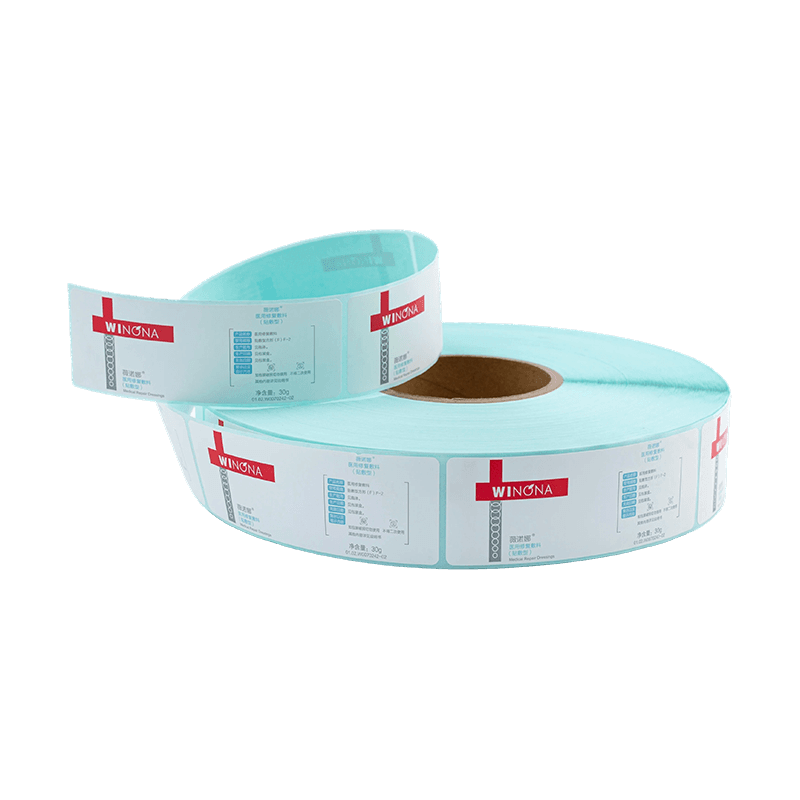
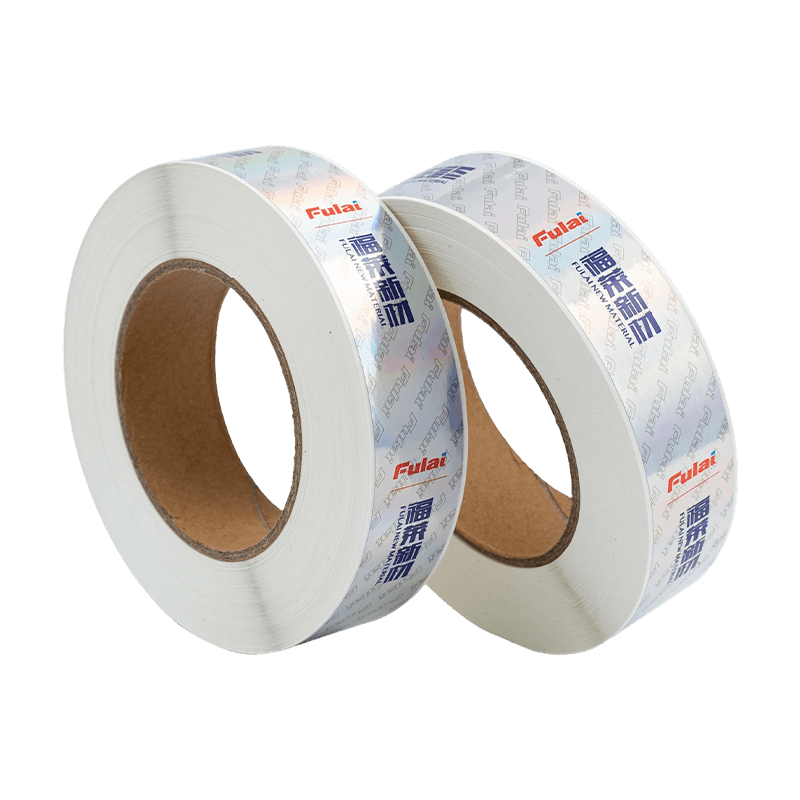
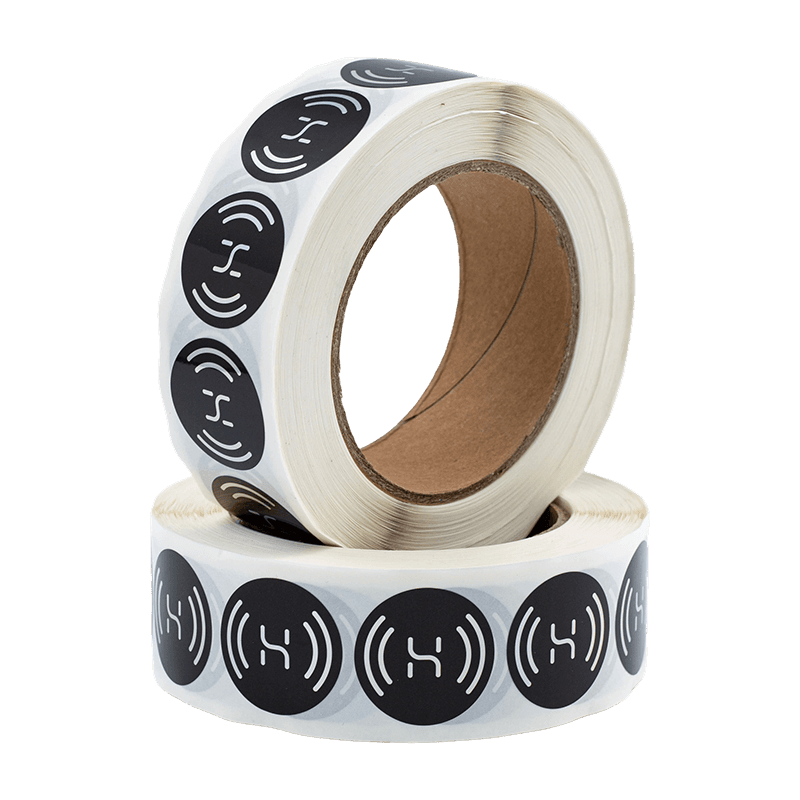
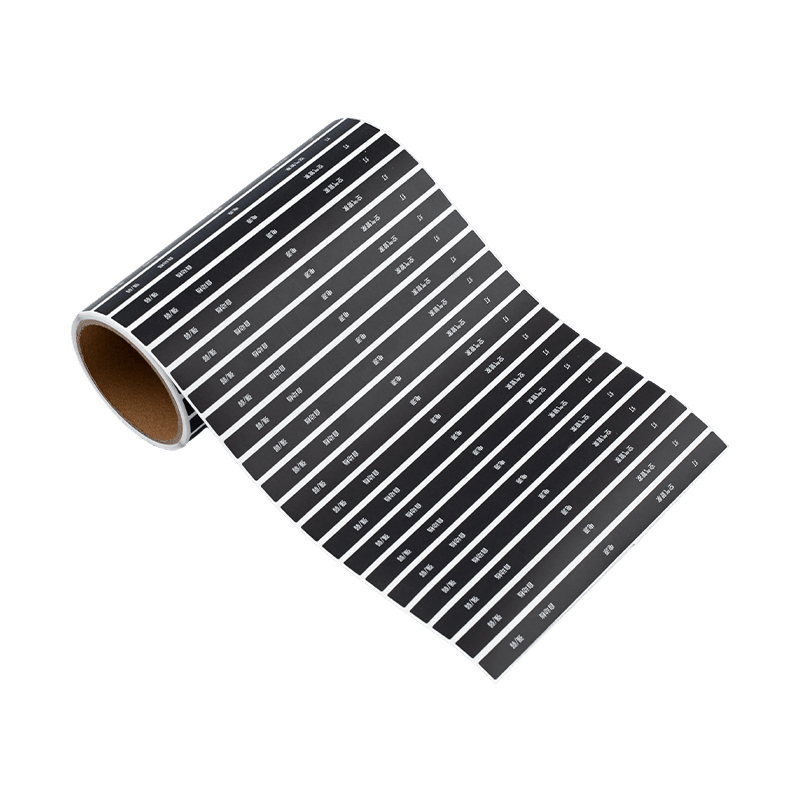
Product: NFC Interactive Marketing Labels


Messae Us Right Now!

- Quick Links
- Products
- Quality Control
- Our Story
- News
- Contact
- Our Product
-
- Beauty and Personal Care Labels
- Home cleaning and laundry care labels
- Liquor and Beverage Labels
- Food and dairy product labels
- Healthcare Labels
- Promotional and Interactive Labels
- Specialty and industrial solution
- Labels Thermal printing and logistics labels
- Anti-counterfeiting traceability and RFID Labels
- Contact us
- Tel:+86-573-86867861
- Phone:+86-18621872035
- E-mail:allen.men@rylabel.com
- Add:No. 111 Xincheng Road, Haiyan Economic Development Zone, Jiaxing City, Zhejiang Province


